Hag-Seed by Margaret Atwood

Brave New World, Brave Old Questions: Hag-Seed by Margaret Atwood
image

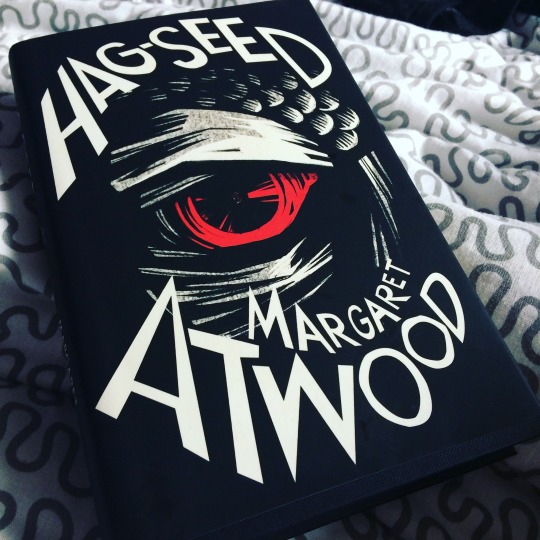
What does it mean to adapt Shakespeare? Margaret Atwood’s contribution to the Hogarth Shakespeare series, a take on The Tempest titled after an insulting name for Caliban, asks this question, with knowledge that it is a old question without an easy answer. When discussing previous novels in the series, I have pointed out how many reworkings of Shakespeare there have been and how these end up inevitably compared with each other. Hag-Seed is open to comparison for sure.

For starters, comparisons with the Canadian TV series Slings & Arrows are beyond obvious. Hag-Seed is also set in the world of Shakespeare festivals, breakdowns, and life imitating art. In both, actors and directors fail to see the divide between the play and the world, inhabiting a certain famous line of Shakespeare’s. Reworking Shakespeare often requires this sense that Shakespeare’s world can easily bleed into ours, as is required in Atwood’s novel to engage the inmate actors.

Hag-Seed also focuses upon the use of Shakespeare in prison rehabilitation, a subject discussed both academically and in theatrical productions like the Donmar’s current trilogy (which also uses The Tempest). However, in Hag-Seed the rehabilitation is more focused upon the central character of Felix than the prisoners who, while important, do not learn as much as the grief and revenge stricken man who teaches and directs them.

Atwood’s method of combining performance of The Tempest with a man who – delusional or not – sees himself as a version of Prospero creates a metanarrative about trying to fit Shakespeare to particular purposes that ultimately ends up more ambivalent than perhaps to be expected. It is true that the plot concludes in keeping with the ending of The Tempest, but the play is also something that must be broken away from, with Felix needing to relinquish his version of his dead daughter Miranda. The actors imagine afterlives for their characters, performing more reworkings suggesting how Shakespeare can be full of possibility.

The novel is both enjoyable and at moments a touching look at grief, but also feels in some ways to be a comment on the Hogarth series: full of literary references winking to those in the know, but also questioning the usefulness of projecting Shakespeare onto everything. A late written play that questions genre and all-mighty authorial power, The Tempest can be both a strange and an engaging play. Like The Tempest, Hag-Seed questions what comes before it but also uses these tropes and expectations. Felix’s plot involving the play may seem contrived, but it has to work, because it works in The Tempest.
Miss Treadway and the Field of Stars

I won a copy of this upcoming book in a Goodreads giveaway recently and I have written up a proper review on the site, so if you’re interested in detailed comments or other details, it’s here. Over here, however, I’m going to do a quick fun review.

Miss Treadway and the Field of Stars by Miranda Emmerson is a mystery about a missing actress and the woman trying to find her, set in 1960s London. Read if you like:

  • diverse, interesting cast of characters
  • well-written London
  • not romanticising the past but looking at problems within the plot
  • the BBC tv series The Hour, especially when in series 2 they won’t stop saying Vice
  • fairly light but not shying away from big issues type fiction
  • the kind of accuracy that means the 68 bus does indeed go via Elephant and Castle to Tulse Hill

Vinegar Girl, Vinegar Taste

image

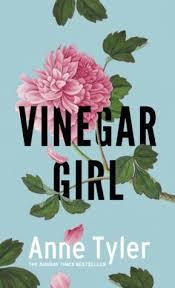
The problem with writing a modern American-set version of The Taming of the Shrew is that 10 Things I Hate About You exists. For anyone, myself included, who grew up with that film, with its lightly sprinkled references and liberally changed plot, it is perhaps difficult to read another version without comparing. Anne Tyler’s Vinegar Girl is another book in the Hogarth Shakespeare series, which I am broadly for (loved The Gap of Time, medium on Shylock Is My Name because I didn’t get along with the writing style). It moves The Taming of the Shrew to America, makes Kate’s father a scientist trying to arrange a marriage in order to keep his beloved research assistant in the country.

Although relevant to the source material, I didn’t feel Kate had enough character. Her sense of wasting her life thus far was apparent, but her textbook vague crush on the one guy in her workplace was pointless. Her eventual husband Pyotr was ambivalently dealt with, a guy trying to get on in a foreign country but also prone to fits of anger. Kate’s younger sister Bunny was the character I found most engaging: warning her sister off the scheme, rebelling against her dad, and constantly referred to as stupid by the other characters. Obviously, she has intelligence they don’t understand, as blunt and logical scientific thought comes up against other ways of thinking.

Kate’s choices weren’t totally nonsensical. She wanted to first help her father, who she mostly looked after, and then get out of his house to try and start a fresh chapter in her life. To follow the play, she has to commit to the wedding even when the need to keep Pyotr in the country is under threat, but it was hard not to root for her to just up and leave, both the wedding and her father’s house. The required ending speech was a bit forced and something that men’s rights’ activists might appreciate: her pity for the difficulties men faced seemed a bit too apparent in other points in the novel, as she realised how much they had to hold in their feelings, for the speech to seem particularly ironic.

Vinegar Girl was, for me, close to the original but without doing anything particularly interesting when updating it. The ending, whilst it gave Kate the freedom and second chance at college that she wanted, left me with a bitter taste in my mouth. Going back to college and achieving success required her to marry a guy with anger management issues. Sure, things can be tough for men too, but what Vinegar Girl suggested was that women should bend to them because of this. And there was no Letters to Cleo playing ‘I Want You To Want Me’ at the end, either.