Don’t Feed The Trolls by Erica Kudisch

Battling the trolls under the (online) bridge: Don’t Feed The Trolls by Erica Kudisch

image

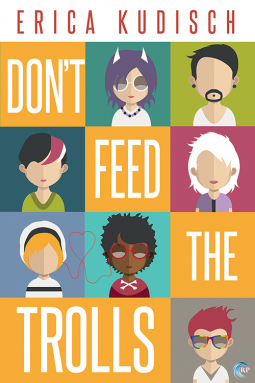
Don’t Feed The Trolls is an enjoyable and incredibly relevant novel about online harassment, friendship, and discovering yourself even when times are hard. The narrative centres around anonymous male trolls going after a player on an online multiplayer game and how this affects the lives of various people. Alongside this, the main character realising some stuff about their gender and presentation during the fallout from this online abuse. The highs and lows of modern technology and the problems when online free speech turns into harassment are dealt with, but the novel also focuses on the ways in which friends can help out and people can find their strength.

Kudisch’s style is easy to get into and the novel was not difficult to engage with for a non-gamer. The characters, particularly the main character Daphnis, are vividly painted and form a crucial core to the book, making it easy to be frustrated and angry at the effect that the trolls can have upon them. Many elements of fan culture run throughout the novel, including gaming, conventions, and musical references, and these give it a modern and relevant feel not only in the subject matter, but in the world it depicts.

Don’t Feed The Trolls is ultimately an uplifting novel about how the internet trolls can be beaten and how there’s always space to explore yourself and your identity in order to feel more comfortable as yourself. It is exactly the kind of novel that is perhaps needed these days, engaging with current issues but also a light and fun read.

A Line Made By Walking by Sara Baume

Escape to the country: A Line Made By Walking by Sara Baume

image

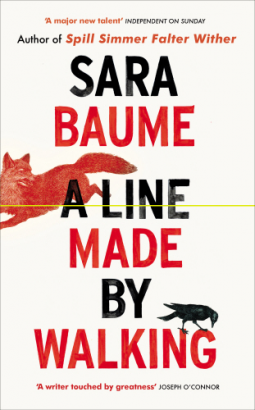
A Line Made By Walking is about Frankie, a twenty five year old artist who moves from Dublin into her grandmother’s old bungalow in the countryside near her parents’ house, and what she does in this retreat from the world. Written in a relatable, immediate style, Baume’s novel is about loss, of self, of how you thought the world was, and of the grandmother whose home she stays in and the dead animals that she finds and photographs. It is about being in your twenties and feeling lost.

Frankie’s photographing of dead animals and her attempts to test her art knowledge through finding works that fit the theme of whatever she is thinking about strike a chord for anyone whose creativity or knowledge seem to be unable to find an outlet or are languishing away whilst their owner is unsure of life. The book is full of knowledge, about artwork, nature, and other things, and how knowing things cannot help against difficulties of life, loneliness, and depression. Details in the book, from Frankie’s description of getting caught obsessively smelling her old carpet to a reference to The Land Before Time to describe a leaf, help to make it a vivid and moving account of a relatable subject, feeling lost and alone in the world.

Comparisons to Olivia Laing’s The Lonely City feel inevitable, with art and loneliness deeply intertwined in both, but in Baume’s novel art does not seem to offer the same comparison or comfort that loneliness is not new, but rather a frame of reference for Frankie to try and cling to and use to create order. A Line Made By Walking is full of quotable lines about being in your twenties, being sad, and finding the world an overwhelming place, and it is a book to be savoured whether you are experiencing that right now or have done so in the past.

Radio Sunrise

Radio Sunrise by Anietie Isong

Radio Sunrise is a satirical novel about radio broadcasting and underhand corruption in Nigeria which gives a humourous insight into the problems of being a journalist for a state-funded station. Ifiok works for Radio Sunrise and things start going wrong when his radio drama has its funding cut and his girlfriend leaves him after he cheats on her, but when he is sent back to his home town to make a documentary on a government-funded project he discovers there’s plenty more to go wrong yet.

Isong’s novel focuses on hypocrisy and corruption on both a large and a small scale, but it is the smaller scale moments that really capture the satire particularly well, with journalists only writing news stories if they are paid enough in their brown envelopes. The narrator Ifiok is a naive idealist much of the time which makes him an ideal satiric character, shocked by other’s adulterous relationships and unable to stand up to the system even when he wants to expose its flaws. Isong depicts a complex mix of problems across Nigeria, but all with a light satiric touch that makes for a fun and engaging novel.

The Lonely City by Olivia Laing

Loneliness and art in NYC: The Lonely City by Olivia Laing

The Lonely City is a fluid book, part memoir on loneliness in New York, part history of art and certain artists in the later 20th century, and part exposition on how being alone and being different has affected different kinds of art. The witty subtitle, ‘adventures in the art of being alone,’ summarises the reading experience: it is an adventure, not always a happy one, through art and loneliness and the sometimes harsh environment of the city.

The title initially drew me to the book, which I didn’t realise was about art and the lives of artists in New York as well as about loneliness in a big city. As someone who knows extremely little about art, I found it easily engaging and a fascinating look at artists of varying levels of general fame. Chapters focus around elements of her own time in New York and a specific artist and their work and history, but later chapters bring together aspects of previous ones to form the larger picture. From Warhol to various artists working in photography, music, and other media, the way in which Laing draws lines between art, loneliness and New York, particularly in relation to the AIDS crisis and LGBT communities, is deeply interesting and moving. Gender and sexuality play an important part throughout the book, which I did not expect from the blurb but was pleasantly surprised to find.

The kinds of loneliness on display in art and in life, being physically isolated and emotionally alone and socially outcast to name a few, are discussed to show that the concept of ‘the lonely city’ is not a simple one. Ultimately, Laing focuses on positivity that can come from looking at loneliness as well as on great pieces of art in different forms. The way in which The Lonely City blends ideas of loneliness, self, and art, not rigidly in one genre or focus, makes it a versatile and engaging read for anyone interested in social issues, art, LGBT history, or how cities can shape the people and work within them.

The Blood Miracles by Lisa McInerney

The Blood Miracles by Lisa McInerney

image

The Blood Miracles is a fast paced novel, a gangster film with heart, and a story of one guy’s messy involvement with a new route for getting drugs into Cork. Ryan Cusack is half-Irish and half-Italian, but caught between far more things and people than that: his own issues chase him, his girlfriend’s not happy, and his allies are not always so allied.

The plot follows a fairly expected chase around deals, betrayal, and the mix between business and pleasure, but with Ryan holding the narrative together as he attempts to deal with everything at once. He is a gripping character, one who is barely holding together family problems and mental health issues, and who is trying to be clever but also facing mounting danger as allegiances and threats come to a head. His musical ability and inability to make something of it show how it is not always talent that can be a miraculous escape, but instead luck and circumstance. The supporting characters are the kind to be expected from a book about deals and drugs, from the paranoid user boss to the rival with a connection to the hero, but McInerney paints them well, forming a vivid picture of the Cork world that Ryan lives in.

Though The Blood Miracles may sound from its description like another kind of Trainspotting or a Guy Ritchie film, in reality it is a modern take on the genre, with references to cloud storage and Orange is the New Black serving as reminders that McInerney is perhaps the future of the gangster story, bringing cleverness and charm to her work.

(Catch it out on 20th April 2017 – I read a proof thanks to John Murray and Netgalley)

The Witchfinder’s Sister by Beth Underdown

Persecution and injustice (in the 17th century): The Witchfinder’s Sister by Beth Underdown

image

The Witchfinder’s Sister is a captivating historical novel about the real life witch hunter Matthew Hopkins, as told by his imagined sister Alice. The narrative occurs during the English Civil War, with a backdrop of mistrust and religious difference, though this is only the context to the more personal story of Alice Hopkins and how she is drawn into her brother’s world against her will. Mystery and intrigue are wound throughout the book as Alice tries to discover exactly what her brother is doing and secrets about their family’s past.

The style is easy to read and feels fitting to the time, without being bogged down in historical detail or attempts at accurate speech that fall flat. The novel is framed as Alice’s written account of events, printed afterwards, and in this way it acts as a fictional version of giving a woman a voice in the context of events that preyed upon vulnerable women, those who were mentally ill or lonely or confused. Alice herself has lost babies and, just before her narrative begins, her husband, and is a character trying to do good, but without the freedom or position to be morally unblemished. Though the novel does not actively condemn power hierarchies and the abuse of power, it is clear throughout the book that money, gender, and social position are playing an important part.

Using witch hunting fiction as a parallel to contemporary unjust persecution is well known since The Crucible and this novel does not need to be compared to any modern events to be a gripping read. However, it is easy in this time of seemingly rising prejudice to see even greater interest in books which show those caught between trying to help and also being trapped by those with the power of persecution. The Witchfinder’s Sister is therefore both a rich historical mystery and a tale of power injustice and preying on the weak.

Hamlet: Globe to Globe

Today being the day that I technically graduate (in absentia) from my Shakespeare MA, I’m celebrating with a review of a Shakespeare-related upcoming book that I got to read thanks to Canongate and Netgalley.

Hamlet: Globe to Globe by Dominic Dromgoole

Hamlet: Globe to Globe is a book about a huge project and one that those interested in Shakespearean theatre in the UK and beyond probably have heard about: Shakespeare’s Globe theatre took Hamlet on a tour to, as far as possible, every country in the world. In this book, Dominic Dromgoole describes their endeavours alongside thoughts on Hamlet and performing the play around the globe. Part memoir and part book about Hamlet and performance, Hamlet: Globe to Globe gives a sense of the excitement of the project whilst telling anecdotes about the reality of the undertaking.

Each chapter is focused around a theme and jumps between anecdotes about the tour and certain countries and Dromgoole’s discussions about Hamlet, which are fairly light and open, focused on character and performance. His vision of Hamlet as elusive and protean, as a play that should be less revered than actively used, fits with the book and project, suggesting that the play was right to be performed around the world in English. Whilst Dromgoole gives a rather romanticised image of Hamlet as a play at the beginning of the book, throughout the book he emphasises how it worked differently at different points in the tour, suggesting that he believes his romantic image of Hamlet as universal play full of human themes.

The specific anecdotes are the best part of the book, from playing in refugee camps and in hostile environments to the company doing speeches at the Globe in front of Obama. Political context is given for some of the performances and, though not perfect, shows an appreciation for the histories and contexts in which they ended up bringing their production. Descriptions of rotational casting practices and rehearsal methods adds theatrical interest, as does information about how they worked around some of the more difficult venue issues.

Hamlet: Globe to Globe is a subjective, endearing description of a touring production, one which accepts with self-deprecation that originally they naively believed they could change the world, but instead discovered that the world was a turbulent and difficult place, much like the world of the play.

Another Brooklyn

Another Brooklyn by Jacqueline Woodson

Another Brooklyn is a photographic kind of novel, one that creates vivid images and snapshots to show how fleeting time can be and how images might not tell the whole story. It is about the friendship between four girls in 1970s Brooklyn, told from the perspective of one of them, August, and what they saw of each other’s difficulties and differences.

The novel’s non chronological structure and writing style invoke a sense of memory, so the act of remembering feels built into the form and narrative. As with most non-chronological novels, details are hinted out and fleshed out later, but in this short novel, this feels less like holding back information and more akin to the act of telling an old memory, adding in detail that wasn’t meant to come yet. The sketches given of each of the girls’ lives leave plenty of questions, but also show how four girls can come together to be friends and yet that friendship cannot overcome the troubles of the world and the city in which they live.

The title and the narrator dream of ‘another Brooklyn,’ a place beyond the life that has been given, but the novel is also tied to location, to the journeys characters have made to live in Brooklyn, and how Brooklyn seemed like theirs but also not. Another Brooklyn is a welcome change from the often long and male-dominated books set in New York that have proliferated, portraying female friendship and how friendship can be tied to place and time.

Juliet Takes A Breath by Gabby Rivera

Juliet Takes A Breath by Gabby Rivera

image

Juliet Takes A Breath is the kind of book that simultaneously kicks you into action and warms your heart. It is the story of a summer in which Juliet, a Puerto Rican girl from the Bronx, discovers a lot about her own identity and others’, a coming of age tale that aggressively runs away from the straight white boy type story epitomised by Holden Caulfield and many after him. It is also a story about friendship, love, and the universe, about understanding the politics of your own self and of other people, and realising that the world may not be exactly as you see it.

From its summary, Juliet Takes A Breath promises the kind of novel where the main character’s questions are not always answered, a book where growing up isn’t learning the answers, but learning new questions. This is an accurate impression, as Gabby Rivera leaves Juliet full of possibility, ready to take steps to change or become more herself. As she learns more about the wider LGBT world, intersectional feminism, and racial politics, so can the reader, but the reader can also want to look further, just as Juliet does, as she discovers what relates most to her. A lot of different people contribute their suggestions to what Juliet should do, but she ultimately learns that she has ultimate control over that.

The side characters also help to make the novel a heartwarming and funny read, from Juliet’s sweet younger brother Lil’ Melvin to her cousin Ava who is always there to answer her questions about newfound ideas and terminology. This is the kind of book to share with people who you think might need it, whether to feel support and solidarity or to see more in the world.

Stay With Me

Stay With Me by Ayobami Adebayo

Stay With Me is an addictive read about a woman, Yejide, her husband, and her attempts to have children, set in Nigeria from 1985 to 2008. It is a novel about hope and it is the hope that keeps you reading, a hope for Yejide and for her husband Akin and for the hope that hope is worth it after all.

Adebayo’s book is often a subtle one, showing character relationships and moments rather than immediately telling the reader what to think or how everybody felt. The main characters are rounded and flawed, often thinking they know everything but missing crucial details. Yejide’s emotions in particular, from her huge desire to get pregnant to her feelings in the important final moments of the book, come across through the writing very effectively, making this a novel thoroughly grounded in its characters. The writing style is easy to get into and gripping, with the narrative jumping from Yejide’s point of view to Akin’s in order to show events from both sides. Neither character is wrong, but both characters think, hope, and love in different ways.

I read a proof of Stay With Me from Canongate (via NetGalley) after having been interested by the promotion of the book so far and it didn’t disappoint. It is a novel that draws you into the world of its characters and their lives. Stay With Me is literary fiction with emotion.