Quick book picks for August

Another month, more new books coming out. Not as many this month, but they’re quite a varied selection with a lot of metafiction in there. Expect the full reviews for some of these later in the month, but for now here are my August book picks with links to reviews on here or Goodreads where posted.

  • My Absolute Darling by Gabriel Tallent – A horrific and absorbing novel about a fourteen year old girl brought up by an apocalypse-obsessed father who is forced to fight to survive, with a writing style that impressively gets across her troubled mindset.
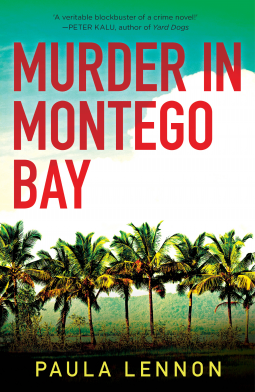
  • Murder in Montego Bay by Paula Lennon – Procedural crime novel set in Jamaica, featuring an outsider Scottish detective, local politics, and questionable police practices. An enjoyable read that uses different regional dialects and language to depict its characters and hierarchies.
  • Christopher Wild by Kathe Koja – An unusual novel split into three parts, that tells the story of Elizabethan playwright Christopher Marlowe in his own time and then reimagined in two other settings. Very transformative and will appeal to Marlowe fans for sure.
  • The Word Is Murder by Anthony Horowitz – A metafictional whodunnit from the acclaimed author of the Alex Rider books and various Bond and Sherlock Holmes stories, combining crime fiction and the art of writing itself.
  • The Book of Luce by L. R. Fredericks – A literary mystery as a meta book featuring a mysterious messiah rock star figure.
Reservoir 13 by Jon McGregor

A troubled village over thirteen years: Reservoir 13 by Jon McGregor

image

Reservoir 13 is a surprising novel which charts the rhythms of life in a distinctive prose style, letting seasons rise and fall and people’s lives ebb and flow through the pages of the book. A teenage girl goes missing whilst on holiday in a hilly village in England and the whole area is called in to help look for her. However, the searching is not fruitful, and meanwhile the villagers’ lives must go on, their personal dramas, crops, hopes, and dreams. Thirteen years pass, with the memory of the missing girl still lingering over the village.

The style of the novel takes a moment to settle into, with the narrative voice quickly moving between villagers and short sections denoting chunks of time. Once settled in, though, it finds a rhythm that gets across the idea of everyday life going on in this place where something terrible happened, a kind of relentless moving forward at a mundane pace. The characters, like a real community, vary a lot and many stay fairly mysterious throughout, but there are a great number of small details in their lives picked up by the narrative as part of the tapestry of the village. What is perhaps most notable is the way in which, like in real life, people can disappear entirely from the story when they move away, or only return for brief visits, showing great change in comparison to the more constant progression of those who stay in the village.

Despite the missing girl concept, what McGregor has most memorably done is find a style that captures a community changing over thirteen years, whilst being something interesting to read. Reservoir 13 is an understated book in many ways, with drama often played out in a passing way and moved on from as it would in real life, but also a very literary novel in an unusual style without dialogue.

The longlist so far…

image

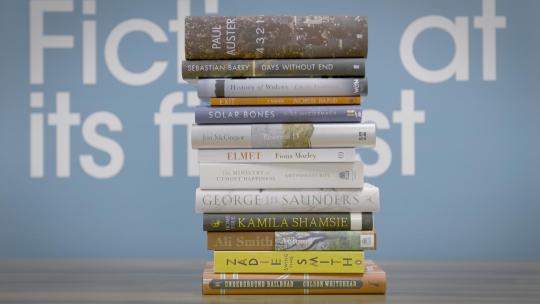
This week the Man Booker Prize longlist was published, ahead of the shortlist announcement in September and the actual winner being revealed in October. The prize, awarded to literary fiction written in English, tends to make a big name of its winner, at least for a while, and this year’s longlist is full of books you might have seen on a bookshop table, looking shiny and new (or brown and new in the case of Ali Smith’s Autumn).

Whilst you can read the longlist here, I’m going to write some mini reviews of the five books from the list I’ve already read, with links to longer reviews where they exist. Expect a few reviews of others in the coming weeks (any help sourcing copies is appreciated!).

  • Days Without End by Sebastian Barry – A moving story of love, family, and living outside of society during the American Civil War, which can be horrific at times, but also shows how two men loved one another despite these conditions. Searing descriptive writing and worth trying even if the setting doesn’t sound appealing (as it didn’t to me).
  • Solar Bones by Mike McCormack – The single sentence novel that is actually split up using line breaks and feels poetic in its execution, as well as being a kind of microcosm of life held within this sentence. Far more readable that that description may sound. (full review)
  • The Ministry of Utmost Happiness by Arundhati Roy – Roy’s highly anticipated book weaves together the stories of different characters across the Indian subcontinent, such as the life of a transgender woman who finds community in different ways and how fighting and spying can come together through one woman who is loved by many. (full review)
  • Autumn by Ali Smith – I hate to call this her ‘Brexit’ novel, but in some ways it is, a book about divisions and modern British society in the mundane, which is also about finding your place and trying to follow other people’s stories, written in her characteristically witty style. And yes, she is meant to be writing more for the other seasons.
  • Swing Time by Zadie Smith – The lives of two girls who dream of dancing, though only one of them can dance. The characters form the core of the novel, which feels distinctly Zadie Smith (though I still prefer N-W). (full review)

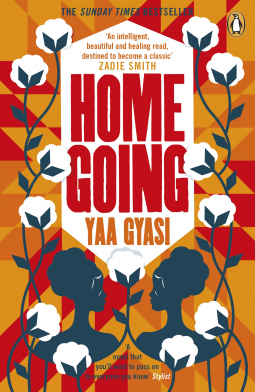
Homegoing by Yaa Gyasi

Two sisters, seven generations, one novel: Homegoing by Yaa Gyasi

image

Homegoing is an epic, absorbing novel that spans seven generations, showing how characters’ lives and their consequences reverberate through time. It starts on the Gold Coast of Africa, with two half-sisters, Effia and Esi, who don’t know each other. One is sold into slavery, the other becomes a slave trader’s wife. The book follows their descendants across Ghana and America as they face war, imprisonment, tragedy, and love, and dream of fire and water.

The narrative follows one character at a time in small segments jumping between the sides of the family and then to the next generation, which gives it a fast pace that is easy to follow. The way the story is weaved together as it moves forward is masterful, giving enough detail to fill in the picture of characters’ lives whilst always feeling lightly done. It is difficult to pick stand out characters because the whole thing fits together so distinctly, but the way that the progress of America is shown through slavery, civil war, discrimination, and imprisonment alongside the depiction of British colonialism in Ghana from the first pair of stories to the final two is perhaps most memorable.

Homegoing is the kind of novel that spans so much time and place that it cannot be defined as being one historical period or location, but rather has an epic scope with a huge variety of characters. It tells the story of how two people who started off in a certain close proximity can have lives and then generations of descendants that go so far apart, yet still have similarities. This is one for fans of novels that draw you into the lives of their characters and can’t be confined to boundaries.

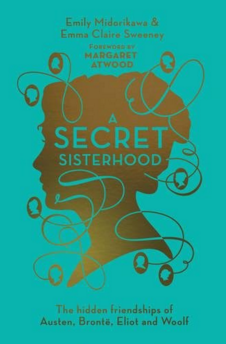
A Secret Sisterhood by Emily Midorikawa and Emma Claire Sweeney

Female literary friendships: A Secret Sisterhood: The Hidden Friendships of Austen, Bronte, Eliot and Woolf by Emily Midorikawa and Emma Claire Sweeney 

image

A Secret Sisterhood is a look at the friendships that some of the best known female writers had with other women who wrote and how these affected their lives. It sets out to show the importance of the support, rivalry, and inspiration that characterises famous male literary friendships to these authors, in friendships that have been often overlooked by biographers and critics. The writers, real-life friends, emphasise how these friendships are a major part of literary history and suggest by the end that more female literary friendships should be appreciated and studied, to compare with famous male ones like Byron and Shelley or Fitzgerald and Hemingway.

The book is very much literary history, focused upon the writers’ lives and mentioning a great deal of other writers and literary trends on the way. It is split into four sections, covering each of the writers named in the subtitle and their relationship with a particular other female writer in their life. Reading it does not require a huge familiarity with each writer, making it accessible to those with an interest in writers, but who don’t necessarily know a huge deal about the lives of the individuals covered already. There is quoting from letters and diaries to give detail of these friendships, but no literary analysis of the writers. Instead, it is very much biography, opening the way for people to look at these and other female literary friendships in the context of their writing and specific elements of their texts.

A Secret Sisterhood is an enjoyable book about lesser known literary history and an important one for showing that female writers do not have to either be reclusive and isolated, or tightly bound to a man without female support.

Well-adapted

Book adaptations are not always a disappointment. Whilst plenty of fans complain about the misrepresentation or loss of their favourite character or the changing of major plot points or important themes, there are also the films and TV shows that do books justice, transforming them into a different format whilst keeping essential parts that make them good adaptations. Maybe they capture an notable narrator in some way, make changes or cut out unnecessary material that actually make it a better experience, or just faithfully capture a book in a new way. However these adaptations work, they form an extra way to enjoy your favourite books, or even make a book even better.

There are plenty of books that don’t work in certain adapted formats. The Harry Potter films have to cut out so much that without book knowledge they can be at times confusing or incomprehensible. I couldn’t make it further than one episode of the Wolf Hall TV series before I got before, despite enjoying both books. The Baz Luhrmann film of The Great Gatsby is fun, but it can’t quite match up to the book.

On the other hand, both Trainspotting and Filth show that adapting Irvine Welsh’s books can make very different yet still fantastic and dark films. Plenty of classic and hugely popular films and TV shows are based on books, though sometimes loosely. I’ve picked out a few where I think the adaptation has been particularly notable to me, and would be interested to know which book adaptations are most important to other people.

  • American Psycho – Bret Easton Ellis’ novel is an onslaught of brand names, restaurant reservations, and graphic violence and sex. The film version pares this down into an unnerving vision of a psychopathic killer hidden in yuppie culture, talking over the action and dancing around the room to Huey Lewis and the News.
  • The Shining – Even though I was a fan of Stephen King, I didn’t actually read the book until after I’d seen Kubrick’s film. The psychological tension of following Danny around the Overlook Hotel can’t quite be matched by the novel, which differs in some major ways.
  • A Single Man – Tom Ford’s film of Christopher Isherwood’s novel somehow takes the breathtaking prose style and uses a visual beauty to get across a different, but somehow recognisably similar too, take on how the story is told. The ending differs too, but it is a case where both the book and the film feel valid in their own right.
  • Fight Club – One of the most famous cases of the adaptation surpassing the fame of the book, Fight Club has contributed to the cultural zeitgeist in a way that angers its author Chuck Palahniuk and allowed plenty of people to misunderstand and misrepresent its ideas of toxic masculinity and violence. Regardless, the film is incredibly good, with a great soundtrack and cinematography that gets across its twist and the bizarre perspective of its messed-up protagonist.

Blog tour: The Upstairs Room

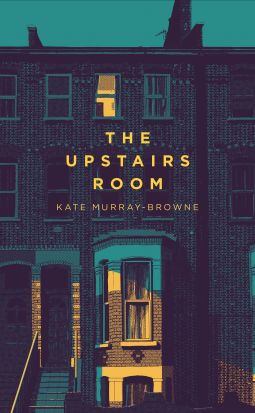
The Upstairs Room by Kate Murray-Browne

The Upstairs Room is both a tense mystery and a gripping novel about happiness and knowing when something isn’t working. When Eleanor and Richard move to a Victorian house in London Fields with their two young daughters, it is meant to be a great opportunity for them, even though the cost of potential renovations mean they have to take a lodger, the at-a-loose-end Zoe. Eleanor quickly thinks there is something wrong with the house, something connected with the mysterious wall scribblings in the upstairs room done by an ‘Emily’.

The novel is a character-driven mystery, focusing on the lives of Eleanor, Richard, and Zoe and their discontentments both in and outside of the house. That doesn’t mean that Murray-Browne does not keep up the tension, with eerie moments and an unnerving combination of obvious and unexplainable mysteries throughout. Problems like a lack of communication and the perils of the London housing market exacerbate issues as they attempt to live in the house that Eleanor comes to believe doesn’t want her there. The style is easy to devour and the combination of characters and ambiguous mystery make it a good book to sit down with and be drawn into.

In some ways, The Upstairs Room is like a slow burn horror film, the kind focused on the happiness and lives of the characters as much as the potential mystery and threat, or The Shining rewritten for the modern London housing crisis. It will also appeal to anyone who enjoys reading about character relationships and life uncertainty, with a background mystery plot and not too much overt revelation, but rather an understated approach to the genre.

Murder in Montego Bay by Paula Lennon

Murder in Montego Bay by Paula Lennon

image

Murder in Montego Bay is a police procedural crime novel set in Jamaica, featuring an unlikely partnership and a fight to solve the case despite funding issues and inside involvement. When the son of a prominent entrepreneur family is found killed, Detective Preddy wants to solve the case and prove he’s better than the failures that haunt his past. To do so, however, the Jamaican detective will have to work with Glaswegian Harris, seconded into their force and sticking out like a sore, ginger thumb. The pair, plus female colleagues Spence and Rabino, must hunt through lies and cover-up to find out what was really going on with the family and whether local criminal types were involved.

Lennon’s novel is a solid crime story focused on the police difficulties and the quirks of solving a murder in Jamaica. The story is mostly told from Preddy’s point of view, showing his personal struggles at work and at home, but cuts to other characters to give key scenes and information to the reader. The dialogue is stellar, with Jamaican patois and moments of Glaswegian dialect to show characters’ similarities, differences, and ability to fit into different situations, and giving the novel a realistic feel by showing the varying voices of characters.

This is an enjoyable read, perfect for crime fiction fans and people who like the use of dialect and regional language to create realistic characters. The issues of police funding, racial differences and tension in Montego Bay, and police reputation and brutality form the backdrop to the novel alongside the sunny location. It is a police crime novel with social issues and a message that even the rich won’t stop wanting more.

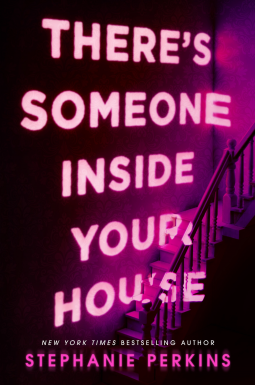
There’s Someone Inside Your House by Stephanie Perkins

Is there somebody lurking inside your home?: There’s Someone Inside Your House by Stephanie Perkins

image

There’s Someone Inside Your House is a young adult thriller that makes for an exhilarating read. Makani Young moved from her Hawaiian home to her grandma’s house in small town Nebraska, escaping her parents’ divorce and her own secrets. After a year, she has two best friends—a Goth girl and a trans guy—and a crush on a school loner, though she still misses Hawaiian food and the sea. Her senior year is not going to be quiet, though, as students in her high school start to be the victims of gruesome murders. Soon, Makani has to balance the fear of who will be next with her own past, her fledgling romance, and looking after her grandmother.

Perkins’ novel is very recognisable as a YA thriller/horror book, with a classic combination of school cliques, town rumours and secrets, and teenage drama alongside narrative threat. Makani is a stand-out protagonist, a biracial girl far from home who is dealing with issues from her past and how out of place she feels in her new town. Her friends are also outsiders, but though the book uses teen cliques and popularity contests, it also emphasises that people can be better than they seem, regardless of social status. The inclusion of small elements such as internet trolling and rural internet and phone signal stop the location from feeling backward, but instead just another town that teenagers dream of leaving.

The novel is a page turner that will be enjoyable to adults who remember devouring Point Horror novels as well as teenagers. The characters are varied and likeable and the book does not shy away from real danger and high stakes amidst teenage rebellion and small town life.

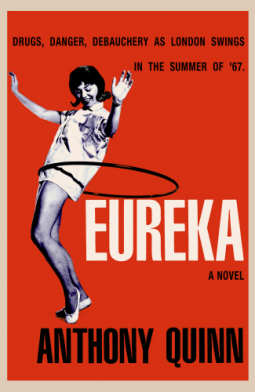
Eureka by Anthony Quinn

Acid trips and revelations: Eureka by Anthony Quinn

image

Eureka investigates an elusiveness about art whilst also being a Sixties caper. It follows the making of a new film by German director Reiner Werther Kloss: a very loose adaptation of a Henry James story being written by man-about-town screenwriter Nat Fane, a man who likes an exciting life more than getting work done. The film features fledgling actress Billie Cantrip, whose introduction to the world of cinema is not quite as she expected, with mystery, acid trips, fire, and many, many secrets featuring as the film ‘Eureka’ is slowly made.  The bustle of art, music, and gangsters in London in 1967 forms the backdrop for the book, which somehow balances the fun and danger of the period with meditations about obsession, artistic creation, and the hunt for real meaning.

Quinn gives all of the main characters extensive backgrounds and moves between focuses on them to weave together a long story, though the narrative doesn’t take place over more than a summer. Intercut between the chapters are snippets of the screenplay for the film that Fane is writing within the narrative, revealing the secrets of the film as the tension in the story rises. This technique gives good freedom for Quinn to counterpoint ideas about art and love in one story with another, and also to break up one narrative with another. This means that the book doesn’t feel as long as it might, and it stays gripping throughout with enjoyable characters and some surprisingly intriguing strands of plot.

As is discovered in the film being made, art should not give all the answers, and Quinn does not, giving his ending enough ambiguity to follow through with this message about the questioning of meaning. Eureka is a literary caper that delves into obsession with art and refuses to give definite answers to many of its major questions.