Christopher Wild by Kathe Koja

Kit Marlowe, three times over: Christopher Wild by Kathe Koja
image

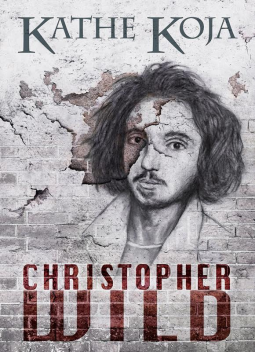
Christopher Wild is an imaginative historical novel, a menacing dystopia, and a grimy city tale in one. It tells a raucous life, a claustrophobic life, a poet’s life, three times over: the trajectory of Elizabethan poet Christopher Marlowe in his historical setting and beyond. The first third is Marlowe as he faces danger from the Service for his role as an intelligencer, his famous plays, and his infamous pronouncements about religion and beyond. The second part is a twentieth-century tale of a gritty poet’s life, tied up in gay bars and covert investigation. The final section is a near-future dystopia of intense surveillance, where the poet known as X04 is fighting for his freedom.

Koja’s book puts an unusual spin on a historical figure who has been the focus of plenty of written works previously, from conspiracy theory novels claiming that Marlowe wrote Shakespeare’s works  to Burgess’ delightfully playful A Dead Man in Deptford. The first section reads like another in this line, the fan fiction about the outrageous life of an apparent gay atheist spy turned poet and playwright from the late sixteenth-century. The fast-paced prose hurtles forward and the references are piled in, meaning that it can feel like a whistle-stop tour of every mention that needs to be made about Marlowe’s life. For fans of him and novels about him, this feels a bit too obvious, but the references are necessary for less knowledgable readers to be able to appreciate the later two parts.

The remaining two thirds of the novel tell two other stories, other outspoken Christophers who also write poetry, fight the authorities, and sleep with a complicated tangle of men. Koja takes advantage of the looseness of Elizabethan spelling to create new versions and echoes of characters and scenarios in a way that will probably delight some and annoy others. Every version reads Ovid and Lucan (the real Marlowe translated works by both of them), smokes tobacco (as per the infamous ‘all who love not tobacco and boys are fools’ line from Richard Baines’ list of accusations), and writes poetry. The prose style that captures a tumultuous Elizabethan London doesn’t slow down, and whilst it is slightly less effective in the later sections, it allows for a poetic style and an overlaying of words that matches the way the narrative and characters are overtly replicated.

This kind of transformative work is nothing new (and indeed there are plenty of examples in literature and on the internet of people doing similar not only with Marlowe, but with a whole range of historical figures), but Koja’s combination of the settings does feel fresh, particularly the final scenario in which the dark web and digital surveillance give a new meaning to the spy-intelligence-based drama of Marlowe’s probable life. Marlowe fans are likely to enjoy the ride, even if some of the ideas (like that he was forced into writing a new play about the secret service that led to his death) are somewhat out there. As novels, TV shows, and films about Shakespeare continue to proliferate (and often reduce Marlowe to a bit part), it is always good to see more attempts to present elements of Marlowe’s life in new fictional ways.

[And in case you missed it, here’s the drinking game I invented whilst reading this book.]
Fiction about Christopher Marlowe: the drinking game

  • Drink every time they get in an unsubtle use of the ‘tobacco and boys’ comment.
  • In fact, drink whenever a line is clearly using the Baines note as its source.
  • Drink every time he is referred to or refers to himself as one of his characters. Drink again if he quotes his own lines (or paraphrases for no apparent reason).
  • Drink every time ‘Ganymede’ is mentioned (this rule stands for his actual works too).
  • Drink every time one of the Toms is mentioned—Watson, Walsingham, Kyd, Nashe, etc—and finish your drink if this is turned into some kind of tom cat/Kit pun.
  • Drink whenever Shakespeare comes up in some overly casual way. Finish your drink if it is to call him a countryside yokel or an upstart.
  • On the flip side, if the thing is about Shakespeare and Marlowe is a side character, drink whenever Marlowe is in a scene or is implied to be a friendly rival to spur Will on and then die to get out of his way. Consume everything within reach if Kit is solely there to make flirtatious comments and talk about Hell.

Spoonbenders by Daryl Gregory

Tricks of the mind: Spoonbenders by Daryl Gregory

image

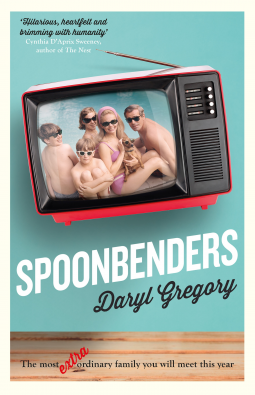
Spoonbenders is a quirky and amusing novel about a dysfunctional family of psychics and con artists. The Telemachus family—Teddy and Maureen and their three children—were a national sensation until the day they went on television and were less than magical. Twenty years after their fall from grace, grandson Matty discovers that he has some psychic powers like his family, and finds himself caught up in the middle on the ongoing family drama as they fight for money, power, and love.

The novel is told from the perspective of the main members of the family, jumping back and forth to show their different abilities and priorities. This gives it the classic feel of an intergenerational novel, with family secrets and troubles being hidden and revealed. The hijinks and troubles with the government, with the local mob, and with each other are amusing, but also carry the level of threat of a gangster story or similar to keep narrative tension. The writing is straightforward and Gregory carefully withholds small details and reveals them with dramatic or casual effect. Unsurprisingly, the characters are larger than life, especially charismatic trickster Teddy and outsider son Buddy, and their complex family relationships give the novel a fun humanity akin to any family drama.

Spoonbenders feels like a Wes Anderson film written down. It is imaginative and enjoyable, a great light read with some decent stakes and a combination of real powers and tricks.

Good As You – From Prejudice to Pride by Paul Flynn

Good As You – From Prejudice to Pride: 30 Years of Gay Britain by Paul Flynn

image

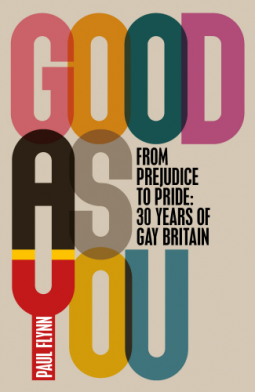
Good As You is a powerful, sometimes funny, and emotional account of British gay culture from the hits of the 80s and the identification of HIV to the legalisation of same sex marriage. Flynn organises this into thematic sections—music, television shows, football, reality stars, politics—with personal anecdotes to introduce each part. There are interviews with various important figures, well-known and less so, and a wealth of detail, both factual and anecdotal, which makes the book a vivid account of the good and bad of gay men and popular culture across the last thirty years.

The format means that the book could be easily dipped in and out of, and it is a light and sometimes humourous read. The different chapters will have varying appeal depending on the reader—for instance, my personal interest leans more towards music and politics—but overall every section is interesting, highlighting things like the ongoing lack of acceptance in football and the connection of reality TV and gay culture in the 2000s. Of course, the spectres of AIDS, homophobia, and mental health loom large, and Flynn on the most part does not avoid them to make a nicer portrait of an upward struggle.

The book touches on most aspects of British culture, showing how ‘Gay Britain’ has evolved and changed over the past thirty years. Due to space constraints and readability, Flynn focuses on specific examples of important moments and figures (which may leave some people disappointed that their greatest influences aren’t included), creating a book that feels a bit like a documentary series, engaging and varied. Good As You is a book that needs to exist, part-personal memoir and mostly a look at the personal and larger effects of British gay culture until the present day.

The Party by Elizabeth Day

Privilege, obsessions, and the dark side of the high life: The Party by Elizabeth Day

image

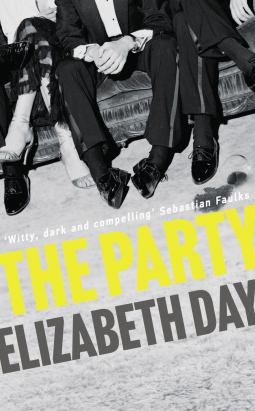
The Party is a dark and clever novel about privilege, obsession, and the immovable establishment in British society. Martin Gilmour went to school and university with the rich Ben Fitzmaurice and became an accepted part of his best friend’s family, but a secret in their past and their precarious relationship in the present threatens to blow apart this friendship forever and reveal that Martin was never really a part of the world he thought he had ascended to. Day’s novel exposes hypocrisy and lies in the upper classes, but also the frailty and delusion of human relationships, as Martin and his wife Lucy recount events in the past and present.

The narrative style of The Party is gripping, jumping between time in a flashback style whilst Day carefully controls how much information is given. The plot centres around a party that Ben holds for his 40th birthday and how this causes Martin to look back at the past and consider their secrets. It is a classic structure that allows a slow reveal of the past, tense as it becomes clear that this is not a simple case of boyhood friendship continued into adulthood. Martin is painted as an outsider, someone who learnt how to fit in through his relationship with Ben, leaving him reliant on his best friend, but it is clear to outsiders that this is not as simple as Martin might claim. He is an unreliable narrator and through this Day shows his obsession and how this could teeter on the edge of revenge. The other characters are less notably presented, often because Martin does not describe them objectively, but this gives the reader a sense that a lot is being covered up or rewritten.

The Party is a timely novel, poking fun at public school and Oxbridge educated, everything handed to them on a plate politicians as well as the institutions which allows those rich enough to get away with anyway. It is also a very enjoyable read for anybody who enjoys novels about the dark side of privilege and characters who get themselves into that world, but at a price.

Quick book picks for July

Need a holiday read? Something to settle down with outside when the sun actually shines? Or an excuse to stay in and protect yourself from the rays? Here are some of my favourite books being published in July (click on the titles for full reviews). Expect tense friendships, exposure of class differences, and eccentric tales of unusual characters.

  • How To Stop Time by Matt Haig – Highly anticipated new book by Matt Haig about the perils of immortality when you’re an anxious overthinker.
  • Watling Street by John Higgs – History, anecdotes, politics, and society are all covered in this book about the famous Roman road running across England and Wales. Endearing popular history.
  • Spoonbenders by Daryl Gregory – Like a Wes Anderson film in book form, this is the story of a family of psychics and con artists who want to restore their good name. An enchanting summer read.
  • The Party by Elizabeth Day – A gripping novel about the dark sides of privilege, exposing career politicians and the licences of the rich whilst telling a story of a lifelong yet unequal friendship and its secrets.
  • The Bedlam Stacks by Natasha Pulley – A historical novel about a journey into Peru in the nineteenth-century with an unlikely friendship at its core and a look at understanding others’ beliefs.
  • The Destroyers by Christopher Bollen – When old and privileged childhood friends end up together on a Greek island, their lives and relationships start to unravel. A tense and ominous literary thriller.
  • Hings by Chris McQueer – Provocative, hilarious, and darkly surreal short stories focused on working class Scotland, everyday life, and the mundane mixed with the downright weird. Far too enjoyable.

Hings by Chris McQueer

Drink, drugs, and the uncanny: Hings by Chris McQueer

image

Hings is an adrenaline-paced collection of short stories with surreal twists and riffs on the everyday using puns, weird ideas, and ridiculous scenarios. Drones taking over a postman’s life, everyone’s knees on backwards, the korma police, and a shed with a banging techno night are just a few of the things that crop up in McQueer’s laugh-out-loud short stories. Lengths rang from a few short, sharp pages to a longer tale of a bowls rivalry told in little chunks, making Hings perfect to pick up for a laugh or two, or settle down for a binge on the dark and ridiculous fueled by drink, drugs, and the uncanny.

There are laughs from the first page and the book immediately grabs you in with a hilarious and disgusting story of Sammy deciding to try whelks for the first time. It is packed full of Scottishness, working class life, deadpan comments, and jokes about Harambe and Buzzfeed’s Scottish content. McQueer’s characters are mostly looking for ordinary things—a good time out, money, pals, get through another day at work—but the fucking weird turns up too, making Hings a witty take on everyday life if it got a bit stranger.

The comparisons with Irvine Welsh and Limmy are obvious when you read it, but McQueer is really a master of the hilarious short story, packing in twists and turns in very short spaces and making it hard not to laugh out loud (and cringe occasionally). Hings is one for anyone who likes provocative and fresh short fiction and Scottish humour, or wants to prove they’ve read more than just those Buzzfeed Scottish tweet articles.

[Note: Hings can be preordered here. Cheers 404 Ink for the proof copy!]

The Book of Harlan by Bernice L. McFadden

Sharp historical fiction: The Book of Harlan by Bernice L. McFadden

image

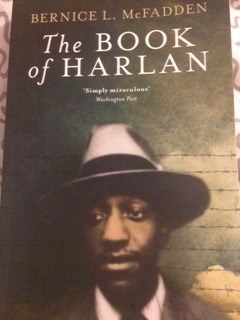
The Book of Harlan is a detailed and sweeping historical novel that follows the story of Harlan Elliot from his parents’ courtship in Macon, Georgia to the irrevocable effects that his time in the Buchenwald concentration camp had on the rest of his life. He grows up and becomes a musician in Harlem, ending up invited with his best friend Lizard to play in Paris with their band. However, they are still in Paris when the Nazi occupation begins, and so Harlan’s story turns from rising musician to a fight for survival, and the horrifying effects even once the war is over.

McFadden uses a combination of historical fact and research, the stories of her ancestors, and imagined characters and emotion to create the vivid historical narrative spanning decades. Though Harlan is the main focus, there is a large cast of characters, and they fade in and out as they would from Harlan’s life, giving a real sense of the way people come and go, and how lives can be close or far apart. The complex depiction of Harlan’s parents and their roles in his life is a notable element, showing how familial love can be both strong and complicated. The novel is written in short, sharp chapters, allowing McFadden to jump time and give devastating moments in concise lines. Overall, this makes for a highly readable historical narrative, which is detailed but also fast paced, and captures a sense of the music that is so important especially in the first half of the novel.

This is a refreshing historical novel, written in a distinctive style and with a focus on race both in twentieth-century America and in the context of the Holocaust. McFadden shows that there are still new historical narratives to be written about a period that has been much fictionalised, ones in which the highs and the horrors are both shown, and where lesser-known history can sit alongside that which must be remembered.

Live From Cairo by Ian Bassingthwaighte

Live From Cairo by Ian Bassingthwaighte

image

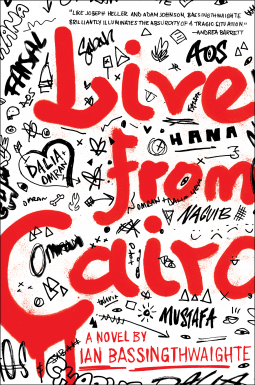
Live From Cairo is a gripping novel about Egypt after the revolution in 2011, told through the human consequences of one woman trying to escape Egypt on her path from Iraq to America to join her husband. The novel is about the way in which the characters – Dalia, her husband Omran, and those caught up in their story – hope and concoct a plan to try and get Dalia out of Cairo.

Despite the political realities of the book and the frequent depictions of the protesters and the army in Egypt, the novel is really focused not just upon Cairo but upon the whole situation in the Middle East and Africa and the way in which it affects individuals as people, with hope and love and friendship. Hana, the Iraqi-American UN worker tasked with dealing with Dalia’s case, has her own family trauma from previous conflict in Iraq, a reminder that the more recent conflicts are nothing new. The American lawyer fighting for Dalia, Charlie, and his Egyptian friend and colleague Aos complete the main cast of characters, all individuals from different places and backgrounds drawn together in Cairo.

The book’s style is light and straightforward; it gives a lot more weight to positive emotion and hope than despair or the harsh stories of both main and smaller characters. Live From Cairo is not a deep look at political unrest or a humanitarian crisis, but it a book about people and an enjoyable novel, all the whilst highlighting an issue that is just as prescient today as it was in 2011.

The Hours Before Dawn by Celia Fremlin

Forgotten psychological mystery from the 1950s: The Hours Before Dawn by Celia Fremlin

image

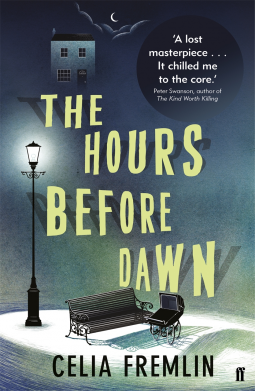
The Hours Before Dawn is a gripping psychological mystery originally published in 1958. This new edition of the book termed a “lost classic” is a fantastic chance to read a simple yet tense story about a woman who just wishes her baby would stop crying in the night so she could sleep. Louise is exhausted and this does not help her growing suspicions about their new lodger—suspicions that her husband does not share—or her ability to perform the role of a perfect Fifties housewife.

The mystery element of the novel follows the trope of a woman battling her own issues (in this case sleep deprivation and the pressures of being a woman, wife, and mother) whilst trying to prove that she is not becoming paranoid as a result of them. Though it was written fifty years ago, the book has a timeless kind of feel, without many time-specific details and with a general sense of the universality of a woman not being believed and struggling to deal with societal and familial pressures. In some ways, however, the novel says a lot about a woman’s position in the 1950s in particular, with comments about how different mothers view advice on raising their children for example, but it also shows that many elements do not change. Louise’s struggle to keep her house and children in order to stop the neighbours asking questions could have been written in the modern day.

This new edition has a preface talking about the reissue and a useful biographical note about Celia Fremlin that give context to the book. However, it does not need context, as it is a sharp-witted and timeless psychological story about crime, paranoia, and sleeplessness, which deserves to be discovered by new generations of readers.