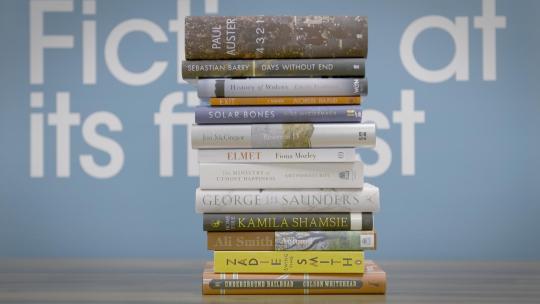
The longlist so far…

image

This week the Man Booker Prize longlist was published, ahead of the shortlist announcement in September and the actual winner being revealed in October. The prize, awarded to literary fiction written in English, tends to make a big name of its winner, at least for a while, and this year’s longlist is full of books you might have seen on a bookshop table, looking shiny and new (or brown and new in the case of Ali Smith’s Autumn).

Whilst you can read the longlist here, I’m going to write some mini reviews of the five books from the list I’ve already read, with links to longer reviews where they exist. Expect a few reviews of others in the coming weeks (any help sourcing copies is appreciated!).

  • Days Without End by Sebastian Barry – A moving story of love, family, and living outside of society during the American Civil War, which can be horrific at times, but also shows how two men loved one another despite these conditions. Searing descriptive writing and worth trying even if the setting doesn’t sound appealing (as it didn’t to me).
  • Solar Bones by Mike McCormack – The single sentence novel that is actually split up using line breaks and feels poetic in its execution, as well as being a kind of microcosm of life held within this sentence. Far more readable that that description may sound. (full review)
  • The Ministry of Utmost Happiness by Arundhati Roy – Roy’s highly anticipated book weaves together the stories of different characters across the Indian subcontinent, such as the life of a transgender woman who finds community in different ways and how fighting and spying can come together through one woman who is loved by many. (full review)
  • Autumn by Ali Smith – I hate to call this her ‘Brexit’ novel, but in some ways it is, a book about divisions and modern British society in the mundane, which is also about finding your place and trying to follow other people’s stories, written in her characteristically witty style. And yes, she is meant to be writing more for the other seasons.
  • Swing Time by Zadie Smith – The lives of two girls who dream of dancing, though only one of them can dance. The characters form the core of the novel, which feels distinctly Zadie Smith (though I still prefer N-W). (full review)

Well-adapted

Book adaptations are not always a disappointment. Whilst plenty of fans complain about the misrepresentation or loss of their favourite character or the changing of major plot points or important themes, there are also the films and TV shows that do books justice, transforming them into a different format whilst keeping essential parts that make them good adaptations. Maybe they capture an notable narrator in some way, make changes or cut out unnecessary material that actually make it a better experience, or just faithfully capture a book in a new way. However these adaptations work, they form an extra way to enjoy your favourite books, or even make a book even better.

There are plenty of books that don’t work in certain adapted formats. The Harry Potter films have to cut out so much that without book knowledge they can be at times confusing or incomprehensible. I couldn’t make it further than one episode of the Wolf Hall TV series before I got before, despite enjoying both books. The Baz Luhrmann film of The Great Gatsby is fun, but it can’t quite match up to the book.

On the other hand, both Trainspotting and Filth show that adapting Irvine Welsh’s books can make very different yet still fantastic and dark films. Plenty of classic and hugely popular films and TV shows are based on books, though sometimes loosely. I’ve picked out a few where I think the adaptation has been particularly notable to me, and would be interested to know which book adaptations are most important to other people.

  • American Psycho – Bret Easton Ellis’ novel is an onslaught of brand names, restaurant reservations, and graphic violence and sex. The film version pares this down into an unnerving vision of a psychopathic killer hidden in yuppie culture, talking over the action and dancing around the room to Huey Lewis and the News.
  • The Shining – Even though I was a fan of Stephen King, I didn’t actually read the book until after I’d seen Kubrick’s film. The psychological tension of following Danny around the Overlook Hotel can’t quite be matched by the novel, which differs in some major ways.
  • A Single Man – Tom Ford’s film of Christopher Isherwood’s novel somehow takes the breathtaking prose style and uses a visual beauty to get across a different, but somehow recognisably similar too, take on how the story is told. The ending differs too, but it is a case where both the book and the film feel valid in their own right.
  • Fight Club – One of the most famous cases of the adaptation surpassing the fame of the book, Fight Club has contributed to the cultural zeitgeist in a way that angers its author Chuck Palahniuk and allowed plenty of people to misunderstand and misrepresent its ideas of toxic masculinity and violence. Regardless, the film is incredibly good, with a great soundtrack and cinematography that gets across its twist and the bizarre perspective of its messed-up protagonist.

Quick book picks for July

Need a holiday read? Something to settle down with outside when the sun actually shines? Or an excuse to stay in and protect yourself from the rays? Here are some of my favourite books being published in July (click on the titles for full reviews). Expect tense friendships, exposure of class differences, and eccentric tales of unusual characters.

  • How To Stop Time by Matt Haig – Highly anticipated new book by Matt Haig about the perils of immortality when you’re an anxious overthinker.
  • Watling Street by John Higgs – History, anecdotes, politics, and society are all covered in this book about the famous Roman road running across England and Wales. Endearing popular history.
  • Spoonbenders by Daryl Gregory – Like a Wes Anderson film in book form, this is the story of a family of psychics and con artists who want to restore their good name. An enchanting summer read.
  • The Party by Elizabeth Day – A gripping novel about the dark sides of privilege, exposing career politicians and the licences of the rich whilst telling a story of a lifelong yet unequal friendship and its secrets.
  • The Bedlam Stacks by Natasha Pulley – A historical novel about a journey into Peru in the nineteenth-century with an unlikely friendship at its core and a look at understanding others’ beliefs.
  • The Destroyers by Christopher Bollen – When old and privileged childhood friends end up together on a Greek island, their lives and relationships start to unravel. A tense and ominous literary thriller.
  • Hings by Chris McQueer – Provocative, hilarious, and darkly surreal short stories focused on working class Scotland, everyday life, and the mundane mixed with the downright weird. Far too enjoyable.

Crime in all shapes and sizes

Working in a library, I see an awful lot of crime fiction. It is very popular in its various guises, from Agatha Christie to the action thriller kind where any investigation is mired in violence, but has never been something I read much of, excepting the odd mystery narrative. However, it doesn’t take much thinking for me to realise I read a lot of books with crime in them, even if they are not specifically crime fiction in some recognisable genre way. I’ve gathered up a few of my favourites for other people who either like stories with high stakes or who read crime and would like some other recommendations of something to read.

  • A Brief History of Seven Killings by Marlon James – This is how to turn a crime story into something else, something bigger. James’ Man Booker Prize winning novel focuses on the attempted assassination of Bob Marley in the 1970s and how the events affect a range of characters mixed up in political conspiracy, rivalry, drugs, and music.
  • American Psycho by Bret Easton Ellis – Quite famously about crime, but despite its infamy, it is still worth reading as a masterful and terrifying satire of 90s yuppie culture that will change the way you think about Huey Lewis and the News. Plus the way it interlinks with Easton Ellis’ other works (and how they link to Tartt’s The Secret History) is very satisfying as a reader who likes easter egg bonus content.
  • The Alchemist by Ben Jonson – An out-there choice, I know, but Jonson’s play about tricksters conning everyone in ridiculous ways is in some ways a great story of opportunity and comeuppance akin to modern gangster novels.
  • Skagboys by Irvine Welsh – I know it seems ‘edgy’ to pick the prequel to Trainspotting, but I want to emphasise how worth reading Skagboys is, both a dark and funny look at how the characters became the unforgettable personas from Trainspotting and a comment on the AIDS crisis in Scotland in the 80s. All three books about the characters are full of plenty of crime that isn’t just the prolific drug dealing and possession.
  • Loot by Joe Orton – Orton’s black comedy about two thieves trying to hide their loot around the dead body of one of their mothers is a classic example of how crime can be hilarious and also deeply twisted.
  • Caleb Williams by William Godwin – I needed at least one classic novel and Godwin’s story of revelation and persecution fits my criteria nicely, though the likelihood of convincing anyone to read it might be low. Written in the 1790s, it is about a man who finds out his employer’s secret and ends up on the run from the authorities. One to read if you like classic injustice, though the ending may surprise.

Quick book picks for June

Summer is finally here and, more importantly, a whole load of fantastic books are coming out this month. I was spoilt for choice as a number of these are some of the best of 2017 thus far. As ever, I’ve included short descriptions and links to longer reviews in the titles.

  • All The Good Things by Clare Fisher – One of my books of the year so far, this story of a young woman in prison who is trying to remember the good things that have happened in her life alongside the bad is a powerful modern tale of the system failing somebody and a moving assertion that good things can be found anywhere.
  • Conversations With Friends by Sally Rooney – A biting and clever novel about a student in Dublin who performs poetry with her best friend and ex-girlfriend, and then the two meet a married couple and get entwined in their life. Witty look at being a twentysomething in great prose.
  • Phone by Will Self – The anarchic, not-for-everyone new book by Will Self, which follows the spy life and long-running affair with a high-ranking soldier of Jonathan De’Ath, aka The Butcher. It mocks espionage, plays around with language and acronyms, and is very darkly satiric.
  • Juniper Lemon’s Happiness Index by Julie Israel – An emotional YA novel that focuses on grief, positivity, and friendship, whilst being uplifting yet not cloying.
  • A History of Running Away by Paula McGrath – The novel tells the simultaneous stories of a young girl in 80s Ireland who wants to be a boxer, a gynaecologist in 2012 dealing with work pressures and her ill mother, and a girl in Maryland running away after the death of her mother. A fantastic read that depicts finding home and knowing who you are.
  • No Good Deed by John Niven (review to come) – Another darkly comic story, this time about a successful writer who helps out an old friend who is down on his luck—and then finds out the limits of his good deeds. It shows the ups and downs of friendship whilst mocking the upper-middle-classes and their views and lifestyles.

All the men and women merely players: books about theatres

I had a request on Twitter for books about theatres, and seeing as that is quite a wide topic, I have split some options into fiction featuring theatres in an interesting way and non-fiction talking about theatres (mostly Shakespeare, though nothing I actually read for my Shakespeare MA funnily enough).

Fiction

  • Miss Treadway and the Field of Stars by Miranda Emmerson – This isn’t just about theatres, but it is a novel with its heart in the 1960s London theatre scene. It focuses on an actress who goes missing and how her dresser attempts to track down her whereabouts, plus has a big focus on social injustice of the time.
  • Tipping the Velvet by Sarah Waters – Waters’ novel isn’t famed just for being about the theatre, but its representation of Victorian melodrama, stage success, and gender on stage are fantastic, and it’s a very enjoyable read.
  • Evelina by Fanny Burney – Theatres (and pleasure gardens) play an important part in this fun eighteenth-century novel about an innocent girl who ends up finding out a lot about life, good and bad. There are a lot of extended descriptions of her going to the theatre and everybody’s reactions and social etiquette.

Non-fiction

  • The Genius of Jane Austen by Paula Byrne – This is a book about Jane Austen’s interest in the theatre which gives a lot of detail about the late eighteenth and early nineteenth century stage and also has a fantastic final chapter about less traditional Hollywood adaptations of Austen.
  • Hamlet: Globe to Globe by Dominic Dromgoole – This is the former artistic director of the Globe theatre’s account of their taking Hamlet to (almost) every country in the world, which gives an insight into the endeavour whilst also admitting that theatre both can and can’t change the world.
  • Shakespeare And Co by Stanley Wells – A very readable account of the other playwrights around at the same time as Shakespeare, which gives a good idea of the early modern theatre and admits that it was a collaborative affair.
  • The English Shakespeare Company by Michael Bogdanov and Michael Pennington – Apologies for all the Shakespeare, but I really love this book, which is written by the creators of the English Shakespeare Company about their tour of the history plays in the 1980s, with funding struggles, life issues, and attempts to make the history plays subversive and relevant.

Eurovision Reading: books set in European cities

As that time of year is here again, I’ve put together some reading go with the ultimate musical event. Here’s a selection of books that are set in a major European city (or multiple ones) that I think provide a memorable snapshot of their setting in some way. They’re all either in English or read in an English translation—I welcome other people’s additions regardless of language.

  • The Tin Drum by Günter Grass (Gdańsk, formerly Danzig) – A combination of politics, magical realism, and a distinctive and unreliable narrator, The Tin Drum isn’t a story about a city, but its setting is important and very memorable when I think back on the novel.
  • Giovanni’s Room by James Baldwin (Paris) – Baldwin’s hugely famous novel about a man having an affair with a guy called Giovanni has a Parisian backdrop for the highs and lows of their time together and as the world outside the room in which they spend so much time together.
  • N-W by Zadie Smith (London) – The London conjured up by Smith in this novel is so real, a snapshot of particularly the north-west of the city as shown through four intertwined characters whose experienced are shaped by class, race, and opportunity.
  • ABBA ABBA by Anthony Burgess (Rome) – Perhaps an odd suggestion for a Rome novel (unlike Angels and Demons), but Burgess’ novel about Keats’ last days—part of which is a load of dirty sonnets—is both distinctive and does give a real feel of the city. Read alongside canto IV of Byron’s Childe Harold’s Pilgrimage for the full Romantics in Rome effect.
  • The Unbearable Lightness of Being by Milan Kundera (Prague) – Kundera’s novel about intertwined characters and their loves during the Prague Spring is both hugely quotable and moving and an interesting look at a political situation and a city.
  • A Guide To Berlin by Gail Jones (Berlin) – A novel about a group of strangers—all travellers who love Nabokov in some way—who meet weekly in Berlin to share stories and talk about the city, until a shocking event occurs that changes their meetings.
  • Nightwood by Djuna Barnes (Paris, Berlin, Vienna) – Get in many cities at once with Barnes’ short and punchy novel about Europe between the wars and how expression of sexuality, religion, and class was suddenly very different.

Quick book picks for May

A new month means a whole new bunch of books coming out (probably more books than sun coming out, at least in the UK). To help you choose what to read, here are some of my favourites coming out this month, with quick summaries and links to reviews.

  • Little Gold by Allie Rogers – A moving and life-affirming tale of growing up different in Brighton in the 1980s.
  • House of Names by Colm Toíbín – A retelling of the House of Agamemnon in modern prose, with tense character relationships and intense revenge.
  • Girlhood by Cat Clarke – A fantastically tense YA novel about friendship and grief in a Scottish boarding school, with a gripping and funny narrative.
  • New Boy by Tracy Chevalier – The next in the Hogarth Shakespeare series is an unforgettable retelling of Othello in a single day in a Washington schoolyard.
  • Peculiar Ground by Lucy Hughes-Hallet – A time-spanning novel about changes and connections, set mostly in the grounds of an old house after the Restoration and during the Cold War.
  • The Nothing by Hanif Kureishi – A darkly comic and characteristic new novella from Hanif Kureishi, trapped in the head of an increasingly bed-bound aging filmmaker.
  • Man Alive by Thomas Page McBee – A powerful memoir of a trans man dealing with ideas of masculinity in the wake of violence.
  • I’ll Eat When I’m Dead by Barbara Bourland – The female-led modern version of 80s and 90s alternative American satirical fiction like American Psycho, exposing darkness in an industry full of drugs, sex, and battles for the top (review coming soon).
  • The Finding of Martha Lost by Caroline Wallace – An enchanting story about a sixteen-year-old girl who lives in Liverpool Lime Street station and has never known where she truly comes from.

Five Female-Character-Heavy Reads

When I asked for recommendation requests, a friend wanted books featuring a ‘pack of female characters doing stuff’. No problem, I thought. And then I looked through my Goodreads ‘read’ shelf. It turns out there are a lot of books I’ve read featuring one or two female characters doing things—together or separately—but a real lack of groups of them doing interesting things.

Leaving out Little Women and any of the teen fiction books I actually read when I was young, I’ve put together a list of books that are either general fiction or YA that fit the category. And have resolved to find more for the second version of this list. Links to longer reviews (if I’ve written them) from individual book titles.

  • Girlhood by Cat Clarke – Not out yet, but Girlhood has to go on my list because I read it recently and loved it. It centres around one female character and her group of friends at boarding school in Scotland, and what happens when a mysterious new girl appears and seems to have so much in common with one of them, down to the same tragedy. Clarke creates a tense narrative alongside an honest and and enjoyable version of teenage troubles like going to university, sexuality, and coping with grief.
  • The Stolen Child by Lisa Carey – A small community in an Irish island, mostly made up of women, deal with loss, a new stranger, and calls to leave their home for the safety of the mainland. A different interpretation of the request, but a book with a real range of female characters working together and apart.
  • Another Brooklyn by Jacqueline Woodson – A novel about the friendship between four girls living in Brooklyn in the 1970s and how they grew up, grew apart, and saw each other differently. The book is in a photographic style giving snapshots of memories and really getting across how friendship can be tied to time and place.
  • The Bomb Girls’ Secrets by Daisy Styles – I’ve included this one because it best fits the idea of female characters together doing things, in that it is a novel about young women coming together for the war effort, gradually getting closer and also forming a band. A light period read ideal for anyone who’d prefer something more historical than YA in the group of female characters category.
  • If I Was Your Girl by Meredith Russo – Russo’s YA novel about a trans girl starting a new school isn’t just about a group of female characters, but the friendship between Amanda and her new group of friends—each with their own secrets and problems—forms a crucial part of the book.

Shakespeare Continually Retold

I love a modern retelling of Shakespeare. They can be insightful, thought-provoking, or just damn fun. For 23rd April—Shakespeare’s deathday/possible birthday and World Book Night in the UK—I’ve gathered together my thoughts on the current (and upcoming!) Hogarth Shakespeare series of modern novel retellings of his plays.

  • The Gap of Time by Jeanette Winterson – A transatlantic, slightly alternate universe version of our modern world in which The Winter’s Tale unfolds as a story still full of jealousy, grief, and discovery. The complex relationship between Leo, his wife MiMi, and his best friend/ex-lover Xeno is a highlight, turning a strange plot device in Shakespeare into an interesting look at three characters falling apart. The book that really sparked my interest in the series (read my full review here).
  • Shylock Is My Name by Howard Jacobson – Jacobson’s take on The Merchant of Venice is a little different to the rest of the series in that instead of updating Shylock fully, he parallels the sixteenth century character with a modern version, the art dealer and father Simon Strulovitch. The backdrop is rich side of Manchester and the updated plot line is quite impressive, but the merging Shylock’s world with Strulovitch’s and the writing style of the novel make for a dense read.
  • Vinegar Girl by Anne Tyler – In my original review, I said that this book wasn’t necessary because 10 Things I Hate About You exists. I stand by this statement, though more because I found the message of Vinegar Girl confused rather than ambiguous and its ending downheartening without illuminating on Shakespeare’s ending than because I think the enjoyable teen film is a work of genius. You might enjoy it. I didn’t.
  • Hag-Seed by Margaret Atwood – There is something endearing about the way that Atwood takes Prospero’s slightly flimsy plot for making his enemies see their bad deeds and turns it into an equally flimsy plot in which Felix tries to show the injustice done to him through a performance done by the inmates he has been teaching The Tempest to. The in-jokes about the existence of Shakespeare’s plays in these modern worlds really reaches its peak, with Shakespeare as a double meta-narrative. Read more in my review here.
  • New Boy by Tracy Chevalier – New Boy isn’t out until May, but I highly recommend you grab it when it is. Othello is retold in a tense and claustrophobic day in a 1970s Washington schoolyard, as new boy Osei finds himself out of place in the entirely white school. The strange timeline and irrational jealousies of Othello find themselves a good home in this novel, where intensity is heightened because this schoolyard is the world for most of these students. I review it in more detail here.