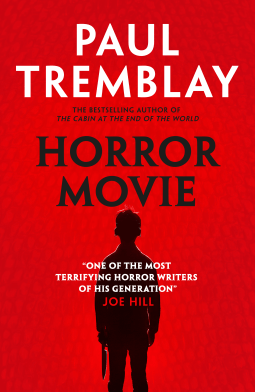
Horror Movie by Paul Tremblay

Horror Movie is a novel about a cursed film production, as the only remaining major cast or crew member gets involved with a big budget reboot. In 1993, a group of filmmakers made Horror Movie, but what happened on set meant that the film was never completed, and only three scenes (and the screenplay) were leaked online. In the present day, the only surviving cast member, the guy playing the infamous masked ‘Thin Kid’, is now a famous figure, as fans try and work out what really happened, and he’s involved in the reboot of the film, whilst also now narrating this story he’s telling about the present and the past of making both versions of the film.

Lots of horror these days plays with ideas of internet obsession and fandom, and in this case, Paul Tremblay takes the lost media and cursed production ideas to create a novel that is part screenplay, part unreliable narrator tells all. Despite being about a film that is pitched as a slasher, this isn’t a novel about jump scares and desperate running from the bad guy. Instead, you get the script, with its weird horror movie moments, and the narration, which is more about setting up ideas of what horror actually happened, and leaving you question it all even after the book ends. People looking for horror that is scary might be disappointed, as this one is quite a slow burn, with some vague body horror elements, but really exploring the horror of what you do and don’t see, and do and don’t believe.

I liked the whole mask thing, which reminded me of the Goosebumps book The Haunted Mask which I found very scary as a child, and the messy way that the unreliable narration left you unsure what the characters actually did or were even like. The purposeful distance through this, with the narrator having been purposefully distanced during original filming, means that you don’t really get much of any character, not even the narrator really, and the most coherent narrative is the script you’re reading, and even that narrative is questioned in the novel in various ways, through different shooting ideas or queries about if that version of the script is the original one. The book forces you to be the kind of voyeur that the narrator hates, the internet fan trying to piece together what happened, and also the voyeur that the script creates through the three other teens who aren’t the Thin Kid.

I don’t know how much Horror Movie will stand out from other examples of cursed film production fiction, but its focus on what we get to see and what perspective the viewer/reader gets makes it a very interesting book, if not a scary one. I found it fun to read and easy to get through in a single sitting, and I like the mythology around it, with the mask and the crocodile poem. I think the endings of both timelines leave a lot of interesting ambiguities, but I also think there’s other things that could’ve been delved into further (for example, one thread of the book is the unsafe set practices and ways in which the narrator became the character, and the dynamic of having two female characters in charge of this whilst the narrator is male and asked to diet, wear just underwear, etc is something that isn’t really explored, despite being a flip of a lot of traditional Hollywood dangerous/bad set myths).
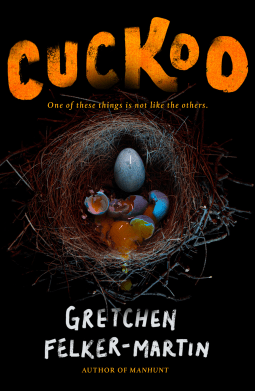
Cuckoo by Gretchen Felker-Martin

Cuckoo is a horror novel about a conversion camp that aims to make queer teens a whole new person, and a group of kids who fight their way out to stop it. In 1995, a group of queer teenagers forced by their parents to attend Camp Resolution realise that it is more than just abusive staff and religion: the camp is far darker than that, stealing their very selves. Despite this, they band together, find friends and lovers, and hatch a plan to escape, but even getting away isn’t enough, and the survivors, now adults, have to try and stop it at the source.

Anyone who has read Felker-Martin’s Manhunt is surely waiting with baited breath for this book, and Cuckoo didn’t disappoint, as a book very different to Manhunt and yet still exploring what happens when the worst horror happens to queer people. Cuckoo has a big cast of protagonists and I was initially wary (after the prologue that serves as your horror ‘here’s what is going on’ opener) that it would be too hard to tell the characters apart. However, by midway through, I wasn’t worried, and had a good handle on the various characters, who all have different lives, flaws, and experiences. One of the things I enjoyed about the book wasn’t the horror, but was the fact that it takes a bunch of different queer teens and imagines not only them under pressure, but then how they react as adults.

Notably, the book doesn’t end with the 1995 narrative, but moves forward in time to the characters as adults (it’s hard not to compare this to It), and I was excited when I realised it had done this, as it is so rare to get a good deconstruction of the aftereffects of extreme horror on the characters. This later part has to be a lot faster in pace and by the end quite action-centric, but you still get the chance to see that these characters are still broken, have grown up into adults not only dealing with the trauma of Camp Resolution, but also normal things, like relationships and grief and money and the difficulties of being queer in the world. A lot of stories about queer people only show one point in their lives, and a lot of horror stories don’t deal with the aftermath, so combining these elements offers a different picture of survival.

In terms of the horror, there’s unsurprisingly from the title body snatchers-style fear, alongside abuse and trying to survive in a desert, and a decent amount of body horror from the cosmic evil threat. I liked that the body snatcher stuff didn’t focus too much on the protagonists not knowing who had ‘turned’ or not at the camp, as I find that kind of horror quite frustrating, but instead it was more about the wider implications in the world, particularly at the end (the ending has similarities to Alison Rumfitt’s Tell Me I’m Worthless, playing with the horror’s impact on a happy future). Felker-Martin makes the audience very aware of the horror tropes she is playing in, with plenty of overt and subtler references, and this is far more gory horror than scary, as a lot of queer horror seems to focus on at the moment.

Overall, the book plays with ideas of replacement and parents’ anxieties around queer kids, particularly around the idea that having a queer child makes parents act like their child has been replaced because they aren’t “normal”, and what that might mean if they really were completely different. As conversion therapy horror, it really digs into the idea of what changing means and if it would even be the same person, making it actually quite a good exploration of the philosophical issues (never mind all the myriad other issues) with conversion therapy as a concept. I liked Cuckoo more than Manhunt, and some of that might be because I find its take on the subgenre it is in even more interesting (and also I liked the characters and their dynamics).

As with Manhunt and a lot of other queer horror out there at the moment, there’s going to be people aren’t going to ‘get’ it, either because they don’t like the amount of body horror and sex or because they don’t like having a load of messy, flawed characters who don’t do the right thing all the time or even necessarily learn from things. For me, I really liked how it explored the horrors of conversion therapy and abusive families, but also toxic relationships to yourself and with others. The characters didn’t all get neat resolutions or development, but how could they be expected to in a world in which this can happen to them?  If the idea of the cuckoo and body replacement tells us anything, it is that anyone can really be anything underneath.

This Skin Was Once Mine and Other Disturbances by Eric LaRocca

This Skin Was Once Mine and Other Disturbances is a collection of four stories from horror writer Eric LaRocca, all delving into the weird and dark sides of people’s nature. The opening letter to the reader warns of claustrophobic stories and asks the reader if they want to read such upsetting stories, a framing that plays with expectations as much as it warns people. As I’ve found with other LaRocca story collections, some of them felt unsettling and dark, with clever endings, and others didn’t work as well for me.

My favourite was probably the titular story, ‘This Skin Was Once Mine’, which is also the longest in the book. It combines what happens when you learn the truth about an idolised family member after their death with a load of snakes and a weird caretaker-type figure, and the length of the story meant that it was vividly drawn with a decent amount of depth to the main character. The ending is predictably fitting and overall the story looks at the ways in which families perpetuate violence.

I also enjoyed ‘All the Parts of You That Won’t Easily Burn’ because it starts as one kind of story and ends as another, a weird journey into self-mutilation that just gets more horrifying. That story probably justifies the warning at the start, as I’m sure it’ll make a lot of people flinch (and it reminds me of the vibe of something like Alison Rumfitt’s Brainwyrms).

The other two stories, ‘Seedling’ and ‘Prickle’, were short and felt a bit too similar to other LaRocca stories to me (‘Seedling’ comes immediately after ‘This Skin Was Once Mine’ and is also about someone returning to their family home after the death of a parent). ‘Seedling’ wasn’t for me, as I didn’t feel like it went anywhere, and whilst I liked the premise of ‘Prickle’ (two old men playing a cruel game in a park), again it didn’t particularly go anywhere interesting or resolve a few of the details in it.

The two meatiest stories in this collection were exactly what I was looking for from it, with well-fleshed out protagonists in weird, dark situations. The other two were perhaps less distinctive short stories, but I suppose it’s probably a good idea to not have four very intense stories in the book for some readers…

The Reformatory by Tananarive Due

The Reformatory is a tense historical horror novel about a boy sent to a reform school in 1950s Florida. Robert Stephens Jr is twelve and living with his older sister Gloria when a momentary fight with a rich White boy results in a judge sending him to The Gracetown School For Boys, a segregated reform school that is haunted by the many boys who have died there. Robert can see these ghosts, and he must use that power to survive, even when the ghosts have their own motivations and the school governor wants to stop these spirits who could reveal his horrifying actions.

This is very much a horror novel when a lot of the horror is the horrifying reality of reform schools and the system that sends children there, making it charged with a sense of fear that isn’t just due to ghosts. The supernatural element is then woven into that in a very effective way, a reminder that there are lingering traces of terrible things happening, and that ghosts might most haunt those who deserve it. There’s a lot of historical and political stuff particularly in the earlier two thirds of the novel, which cuts a lot between focusing on Robert and on his sister Gloria trying to fight for justice for him. The narrative holds back on Robert’s story for a while, giving small amounts whilst showing Gloria’s attempts to free him, and then as it draws towards its conclusion, you see a lot more of the horrors of the reform school close up.

Long and intense at times, The Reformatory keeps you on the edge of your seat whilst combining events based on real historical ones (there’s an afterword going into this) with a supernatural edge.

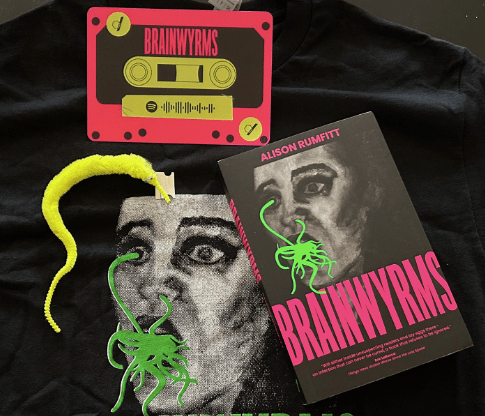
Brainwyrms by Alison Rumfitt

Like many others, I’ve been waiting for Brainwyrms for a long time, as I love Rumfitt’s first novel, Tell Me I’m Worthless. It’s horror once again, but very different horror that explores similar ideas of political extremism, transphobia, and where ever creeping fascism ends up. Instead of a haunted house, we have parasites, but this isn’t a simple body horror story of being taken over by an alien creature. Instead, this is extreme horror about trauma, fetishes, and disgusting moments that mean I’ve seen other reviews question how it even got published. And it does it all very well.

Rumfitt’s conversational yet experimental writing style works well here, infecting the narrative with different voices at times, and having an expected twist of genre for a moment when it becomes what feels like a Sarah Kane play for a moment. The book in general is always going to be divisive, not just for all the disgusting bits and the obvious political nature of the horror, but because the style blends modern internet conventions, experimental poetics, and just a lot of sex and gore descriptions. For me, it definitely works, but you have to recommend it to the right people. I really liked the tone of Rumfitt’s introduction, written as a future fictionalised version of herself that reminded me of Bret Easton Ellis, as it really sets up the book well (I also enjoyed the interjection to the reader midway through to take a break and return, which I did just because it felt like part of an interactive experience).

Similarly to Eliza Clark’s recent novel Penance, Brainwyrms explores different facets of the current and past internet, which may mean that it doesn’t age well, but I don’t think it’s a bad thing to have books, especially political horror, that are very rooted in the time and place they were written, and I’m not bored yet of people exploring the internet in interesting ways. For example, Frankie’s job a a content moderator and Vanya’s adolescent use of kink forums bring different dimensions to the messy world of the internet and how it impacts the stuff going on in the book. You can’t say anything simple about the internet, after all. I liked the balance in this book between the level of stuff about the internet and TERFs etc and the actual characters and narrative, with the spectre of the former hovering over the characters and descriptions through more metaphor and theming rather than always front and centre in the plot.

As with Tell Me I’m Worthless, this is a bold, uncompromising book that delves deep into British transphobia through a queer horror lens, not shying away from satire and ridiculousness even as awful things are happening. It’s more intense horror that Rumfitt’s first book, reminding me of when I first read Poppy Z. Brite and saw what you can really do with extreme horror to be interesting and witty and cool, not just “edgy”. Everything in this book feels like it is covered in a layer of dirt, and that is very effective (though I regret to say that the book didn’t actually make me feel sick, like a lot of people say). Definitely not a book for everyone, but trans horror continues to be one of the best genres.

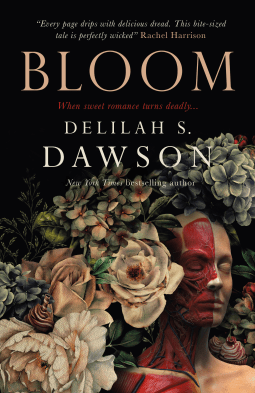
Bloom by Delilah S. Dawson

Bloom is a short horror novel that takes a cottagecore style romance between two women and plays out a slow burn tale of obsession and consumption. Rosemary—Ro—has moved to a new town to work at the local college, but feels lost until she goes to the local farmer’s market and meets Ash, who sells beautiful cupcakes, candles, and plants. Ro is transfixed, and keeps returning to the market, building up a relationship with the mysterious Ash, who makes everything from scratch and is very guarded about her life. As Ash offers Ro delicious food and passion, it starts to seem like everything isn’t so rosy.

This is a very slow burn horror book, which does have a decent amount of clues about where it is going to go, but which spends most of the book focused on Ro and Ash’s relationship and the way that Ro falls headfirst in love with Ash, before a quick ending that provides the payoff for all the clues. The blurb is the main way you’ll know from the start of the book that it is anything other than a cosy romance between a woman realising she is into women and a mysterious accomplished stranger, and generally it is the sort of book for people who like very aesthetic horror, rather than scares throughout the book. There’s a lot of hints of Christina Rossetti’s poem Goblin Market in it, which gives quite a good sense of what the vibe is. There’s a lot of luscious detail in the description, particularly around food and sensations, which is very effective once you know what the twist is.

Ro as a character (and whose perspective the third person narration follows) becomes secondary to her obsession with Ash, though there are hints of character development as she reflects on realising she is attracted to women. Her actual background, with a kind of magical whirlwind academic job and a book published with an advance, feels more unreal at times than the actual horror story, especially as it seems like she has to do very little work at her job, and it would’ve been interesting to see more of her life unravel as a result of her obsession. I like the use of Ash as a seemingly put together and perfect cottagecore character who turns out to be much darker (maybe particularly as someone for whom the aesthetic doesn’t appeal), but the narrative’s use of both characters could perhaps have been a bit more subversive and interesting, rather than playing out a predictable tale of Ro’s naivety and Ash’s controlling nature.

Bloom is a fun, slow burn horror novel that feels very much of the moment, playing with popular aesthetics and feeling similar to other current horror. Personally, I would’ve liked the narrative to be more subverted or complex, or to have another layer to it, but I think people will like the romance turned horror scenario and the descriptive prose.

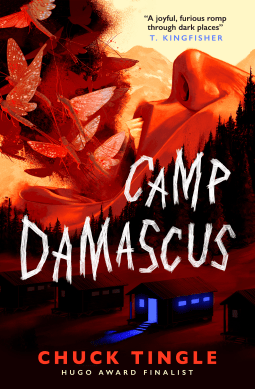
Camp Damascus by Chuck Tingle

Camp Damascus is a horror novel about a conversion camp and the dark secret embedded in a town. Rose is twenty but is treated like she’s much younger by her god-fearing parents, who try to force her to hide her autism and want to control her life. When Rose starts coughing up flies and seeing a strange woman in a red polo shirt that her parents don’t acknowledge, she starts to wonder what is going on, but her parents act like it is nothing. But Rose has questions, and those questions start to bring her back to the idea of Camp Damascus, the 100% success rate gay conversion therapy camp that makes their town famous.

I’d heard of Chuck Tingle as the internet-famous author of novelty erotica, but from the summary of this novel I had to give it a go, despite not knowing what Tingle’s horror would be like. Told from Rose’s perspective, Camp Damascus tells a gripping and strangely real-feeling (despite the demonic twists and turns) story of a conversion camp that makes you forget you ever went, and a woman forced to be someone she isn’t. The plot is straightforward, following a pretty predictable trajectory that goes in a satisfying way, though upon reflection I might’ve expected there to be more around Rose’s parents, who leave the narrative and never come back.

Rose is an interesting protagonist, a neurodiverse character who has to fight against the older adults in her life trying to quash anything she does that doesn’t seem neurotypical and someone who has always been told what to believe (or as far as she remembers) trying to work out what she does think as she realises this. As the book is quite plot-focuesd, you don’t get to see a huge amount of her relationships with other people, but later on in the narrative there is a focus on chosen family and the idea of both queer and neurodiverse people finding who they can be themselves around. The other major characters don’t get much backstory, partly due to the fact it is from Rose’s point of view and because the book is quite concise and doesn’t delve into character emotions that much.

I love queer horror and the demonic concept of this one combined with the horror of a conversion camp you can’t remember makes it a memorable read. There’s a few gruesome moments, but generally it’s pretty accessible for people who aren’t necessarily big horror fans, and I also think it would work well adapted into a film, as it is plot-focused and has some memorable set pieces. Some of the implications and nastier concepts weren’t really explored as much as I’d like (particularly one character who dies early on brings in some terrifying implications that don’t really get discussed in the narrative much), but I did like how quick and compelling it was to read.

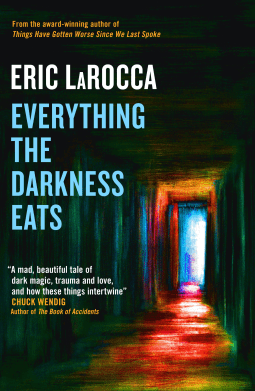
Everything The Darkness Eats by Eric LaRocca

Everything the Darkness Eats is a horror novel by novella and short story writer Eric LaRocca, about strange disappearances in the small town of Henley’s Edge. People keep disappearing in Henley’s Edge, but the police have no idea what is going on. Ghost, a widower, is drawn in by the strange Mr Crowley, and Malik, a policeman dealing with the homophobic reactions of the town to him and his husband’s moving there, finds himself up against an unknown enemy. Something is wrong in Henley’s Edge.

I really like LaRocca’s other work that I’ve read, particularly the novella Things Have Gotten Worse Since We Last Spoke, and I was excited to read this novel. It is quite different to the other stories I’ve read by LaRocca, with a low burn, almost Stephen King-esque start that cuts between a few points of view and sets up the town, but the slow pace suddenly changes at the end to something faster and more grim and dark. The novel is pretty short, as you might expect from a novella writer, and I appreciate that it is focused, building in mystery without going overboard with endless description or new characters you lose track of.

There are really two stories within the novel: the one with the strange older man, Mr Crowley, and Ghost and a mysterious darkness, and then one in which a gay couple deal with homophobia from their neighbours, with horrific consequences. They both feel quite separate, even when they do come together, and the ending which brings them together happens very quickly, so they can feel a bit disjointed, despite being interesting things to explore in horror separately. A lot of the book is more lingering, without much horror but with more of a mystery of what is going on, and then there’s a darker ending where some really horrible stuff happens, which is a pretty classic horror set up, though some people might want more of the nasty stuff earlier on.

Everything the Darkness Eats felt like a solid horror novel for me, but it didn’t capture the unnerving power of You’ve Lost A Lot of Blood or Things Have Gotten Worse Since We Last Spoke for me, so was maybe a bit of a let down in that way, as I was expecting something that really stood out. This book explored some classic horror elements and also insidious hatred within a community and I like the use of small town horror to tell a queer horror story. It’s a good book, but maybe I was expecting the distinctive use of storytelling and cursed vibes of LaRocca’s novellas, and I didn’t feel this novel quite had enough of these elements.

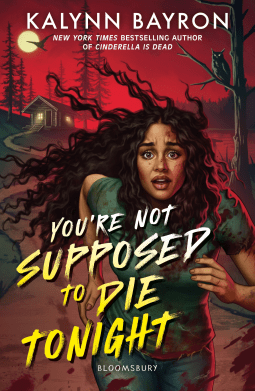
You’re Not Supposed To Die Tonight by Kalynn Bayron

You’re Not Supposed To Die Tonight is a horror novel about teenagers working at an immersive horror summer camp experience who suddenly get more scares than they bargained for. Charity is playing the final girl at Camp Mirror Lake, filming location of a famous slasher film and now a full contact horror experience during the summer. As the season draws to a close, other employees start disappearing and Charity thinks she’s seeing figures around camp, but surely it’s just the spooky atmosphere, or so she thinks until it turns out Camp Mirror Lake has more of a history than she realised, and it’s up to her, her girlfriend Bezi, and anyone else left to try and stay alive.

Though this was badged as young adult horror, it’s definitely a crossover book, as despite having a teenage protagonist it doesn’t really feel like young adult fiction, more just like general horror. The plot starts off seeming like it is going a standard slasher route, but it actually goes off in a different direction partway through, whilst still playing around with having characters who are meant to understand horror tropes because they reenact them all the time. The narrative is pretty fun and, most notably for me, I did find the early parts of the book quite scary, with a real sense of them being out in the woods alone with something unknown going on. 

It’s a pretty fast-paced book and is fairly short too, meaning that it is mostly tension and doesn’t get boring. There’s some elements that could’ve had more explanation, but it comes together pretty well, and the ending is fitting, making it a good horror read especially for fans of slashers that don’t do a straight slasher or fiction that plays with the summer camp goes bad vibe.

Girls of Little Hope by Dale Halvorsen and Sam Beckbessinger

Girls of Little Hope is a horror novel about three teenage friends in small town America who find more than they bargained when they explored a hidden nearby cave. It is the 90s and Donna, Rae, and Kat are fed up of their hometown of Little Hope, California. When they explore a mysterious cave as part of a bid to have something cool to write about in the zine they’re selling at school, however, only two of them come back: Donna can’t remember anything and Rae wants to hide whatever it was that happened. What happened to them might make all the difference for Little Hope.

The book is told by following Donna, Rae, and Kat’s mother Marybeth, as well as excerpts from Kat’s diary and some “found” documents, but the layers of perspective don’t make it confusing. The early part of the book is slower and you can’t really tell where on earth it is going to go, but once it hits around the halfway mark, the real horror elements become much more apparent. There’s a focus on the characters in the book: particularly the three main teenage girls, but also their relationships with their families and the ways in which they need each other and their differences. 

There are some real issues delved into (it is worth being aware before reading that the book feature/talk about self harm quite a bit), particularly with Rae who has a strict Christian family and cannot rebel or know herself in the same ways that Donna and Kat do. Because it’s a horror book, a lot of these elements don’t really get to go anywhere by the end (with the except of Kat’s story) because character has to turn to the plot, which is particularly a shame in the case of Rae who by the end really needs a bit more space for all of the stuff that has happened to her to be addressed.

Throughout the book, teenage friendships are shown as vital, and this all comes together with the conclusion, which is a neat way of making a horror story about friendships end by reiterating this. As the pun in the title suggests, the three main characters are the weird girls, who’ve come together and bonded through this, and a horror story is a fun way to explore this, seeing as lot of weird teenagers really get into horror books and films as well. Girls of Little Hope is a fun horror book set in the 90s that’s perfect if you used to read 90s Point Horror books as a teenager and want something that feels a bit like that but with a much more complex and interesting plot.