Dragon’s Green by Scarlett Thomas

Magical bookishness: Dragon’s Green by Scarlett Thomas
image

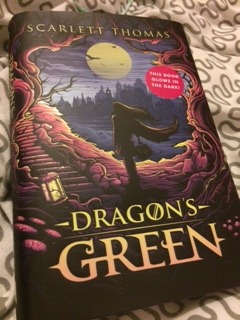
Dragon’s Green is a charming new children’s novel about magic, books, and friendship. Since the ‘worldquake’, magic has been seeping into the world and technology no longer cooperating. After Effie Truelove’s grandfather is attacked and his precious magical library becomes threatened, she discovers her own connection to this magic, and so do her new school friends from the Tusitala School for the Gifted, Troubled, and Strange.

The narrative of the novel follows Effie and her new friends discovering their powers and some of the rules of the magic that exists in their world and in the mysterious Otherworld and using these to battle to save her grandfather’s library. The emphasis amongst the characters is very much about their burgeoning friendships and it is clear that the series will continue to explore how their magic and friendship are tied together.

Effie is a great narrator, inquisitive and brave, and having a female hero figure is one of the great selling points of Thomas’ novel. Another is the use of books and magical power, which comes not only from what can be learnt from them, but also from different kinds of magic, as Effie finds out. This bookish element of Dragon’s Green is part of what makes it an enjoyable read for grown up children too, with references to classic literature peppered around (my personal favourite was the Rossetti-esque goblins selling fruit). Thomas’ method of explaining the magical interference with technology, down to children using old phones just as calculators and torches, was another endearing element, a kind of retro tech comeback that gave the parts set in the ‘real world’ a kind of magical realism feel.

Comparisons to Harry Potter are obvious, with a fated main character discovering magic with new school friends, but Dragon’s Green is quite different, with travelling between worlds and magical objects – called ‘boons’ – revealing magical specialities in people. It feels like a children’s fantasy novel infused with a love of reading, and the gang of main characters are a group that will capture the imagination and make children (and adults) hope for the next book to come soon.

White Tears by Hari Kunzru

Claustrophobic musical horror: White Tears by Hari Kunzru

image

White Tears is a literary horror story about music, race, and the hidden stories in America’s history. It starts off showing two music-obsessed friends, Seth and Carter, with Carter’s trust fund allowing them to delve into musical history and attempt to buy long forgotten records. This obsession with the past becomes something darker, something which defies conventional senses of past, present, and reality, until they are caught in a world without the freedom they are used to.

Kunzu’s novel begins slowly and initially feels like a story of rich and poor, a rich obsessive and his poorer friend, but abruptly turns into something much more interesting, the search for the origins of an elusive and unexpected track that seems to be haunting them. This track and other music and sounds are carefully written into the novel until it feels as if they are playing in the background as the characters are drawn deeper into a lost musical world that is deeply embedded in America’s past. It is not until later in the novel that it becomes apparent how Kunzru’s style and narrative have been setting up a chillingly inevitable dark world for the characters.

The combination of specific music recording terminology and a narrative that gradually erodes the difference of time means that the book may not appeal to everybody, but its transformation from a stereotypical New York opening to a ghost story about race and forgotten history is something to be experienced.

Miss Boston and Miss Hargreaves

Miss Boston and Miss Hargreaves by Rachel Malik

image

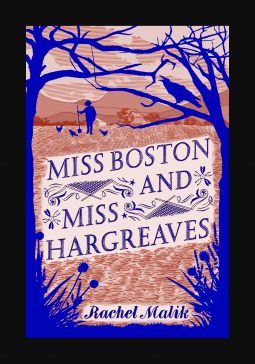
Miss Boston and Miss Hargreaves is a heartwarming and intriguing historical novel about the relationship between the eponymous women and how an unexpected houseguest made for a drastic situation for them both. When Elsie Boston gets Rene Hargreaves as her Land Girl during the Second World War to help run her family’s farm, now entirely left under her control, she doesn’t foresee that from then on, they will share their lives together. Inspired by true details about the author’s grandmother, the novel is a character focused story of life, hardship, and a sudden crime.

After a mysterious prologue, the book starts off like a wartime home front historical novel, showing how Elsie and Rene meet and work together, but when Elsie loses her farm and they are forced to move around as farmworkers, it turns into something else, a saga of their lives together and how they end up with an uncongenial visitor and the weight of the law and the press against them. The core of the novel is the two characters, with Malik slowing building up detail about them. Rene’s past and her escape from her husband and children is classic historical novel material, but it is also at how the war could change lives in ways that would be irrevocably different when it was over. It is not a war novel however, but one more focused upon a longer span of time and on how the characters lived their lives and didn’t quite adapt to the modern world. The writing style is straightforward and detailed, building at a slow pace that really unfurls a vivid world, a world in which most other people are excluded.

This is a slowly revealed and moving novel full of small details, with an appeal that stretches beyond its historical setting to anyone who enjoys reading about characters and carefully drawn relationships. Heartwarming and at times tense, this is the kind of novel to curl up with and escape the modern world.

New Boy by Tracy Chevalier

Othello retold through schoolyard drama: New Boy by Tracy Chevalier

image

New Boy is the latest book in the Hogarth Shakespeare series, a modern retelling of Othello with the action transported to a schoolyard in 1970s Washington. Osei is the new boy and the only black kid in a suburban school. He meets Dee, Ian, Mimi, Casper, and Blanca and the stage is set for a first day unlike others. These sixth graders are the big fish in a small pond and their dramas are fast-paced, with relationships and arguments made and broken between lessons. Chevalier uses this setting to make her novel a tense exposition of jealousy, anger, and race, showing how Othello’s themes do not only defy time, but also age.

The book is structured around a single day, with the weird sense of time matching Shakespeare’s strange timeline in Othello and making the novel seem like a play, with far more limited movement of place than in the original text. The characters are bound by the edges of the school grounds, making a claustrophobic setting that cannot contain Osei’s eventual anger or Ian’s manipulation. The presence of the teachers on the edges is similar to the officials and outsiders in Othello who appear but are never able to halt the action. In the case of New Boy, the teachers’ implied and overt racism and uncertainty about how to deal with Osei’s presence actively encourage the pupils in some ways, like Brabantio’s initial opinions of Othello in the play.

Shakespeare’s characters are mapped pretty straightforwardly onto their playground equivalents, though Chevalier is able through the form to give them greater internal lives and backstories, particularly the girls. Dee’s desire for something exciting explains her sudden interest in more worldly Osei, who has lived around the world and whose older sister has given him an awareness of Black Power and other political movements. Ian’s quest for power over fellow students and his desire for self-control are clear, manifesting themselves in his manipulative actions when interfering with schoolyard activities and his anger at his own failings. The stand out character is Mimi, an uncertain girl prone to headaches who, uncomfortable with Ian’s attention, helps him out and later regrets it. She is Shakespeare’s Emilia given more of a chance to have thoughts and emotions about Ian’s actions and about her friend Dee.

The narrative too is obviously that of Othello, with details changed yet the stakes still feeling high. From the vivid picture of childhood jealousies and fears that Chevalier paints, it is easy to be drawn into the world and feel that the reputations and relationships at stake are real to the characters, not just childish preoccupations but how they see their place in the world. Some scenes are clear updates of Shakespearean ones, for example when Mimi re-plaits Dee’s hair whilst they sing along to ‘Killing Me Softly’ and talking about how confusing boys are. This scene is Shakespeare’s made into a 1970s image of two white girls singing along to a song sung by a black woman, not fully aware with how this intersects with exactly what is going on that day.

As part of the Hogarth Shakespeare series, New Boy is fairly typical – updating character names, mentioning Shakespeare and his plays in a casual way, changing plot points but giving them the same tension in the narrative as the original – but it is the way in which Chevalier creates a claustrophobic world of childhood jealousy and mistrust set within the larger adult world that makes the novel stand out. It isn’t news that the racism, jealousy, and power struggles in Othello have not lost their relevance four hundred years later, but in New Boy it is glaringly obvious that such issues can be incited to escalation in all kinds of environments. The tragedy of Othello becomes both the tragedy of one dramatic schoolyard in 1970s Washington and the tragedy of how Othello just cannot seem to lose its societal comparisons.

Timing is (sometimes) everything

Sometimes, in reading as in life, timing is everything. When you read a book can have a huge effect on how you experience it. You can read a book at the exact right time, maybe the right age or the right point in your life or the right time of year or day, and it just feels right, it makes sense. Other books are read at the wrong time: too early, too late, when the subject matter feels too close to home or too remote.

For example, when I first read The Secret History by Donna Tartt, about privileged Classics students whose actions get out of hand, I was in my second year at Oxford, spending the Easter holidays trying to read a lot of Romantic poetry and long eighteenth century novels. I read it as a treat whilst I was reading Clarissa by Samuel Richardson (a 1500 page long epistolary novel) and it was exactly what I needed. Not only was the style a far cry from eighteenth century prose, but the world of Henry Winters et al was pretty recognisable. Their tea drinking and meal eating with their professor Julian wasn’t all that different from classes with my tutors. It was easily believable that a group of students could do terrible things inspired by their reading because that was the kind of rumour you heard around Oxford. The Secret History made sense.

I first read Mary Shelley’s Frankenstein too early, expecting something more horror-based like the image of the monster in popular culture. Its brooding, gothic Romanticism and meditations on the spark of life went right over my head. Thankfully, I had to read it during my degree and, armed with context and different expectations, I rediscovered it as a fantastic novel. On the other hand, I read Under The Dome by Stephen King too late, after my phase of reading his books was over, and I had no interest in the long story about characters I didn’t care about. The same is probably true of The Hunger Games, which I spent all three books being annoyed that because it was a first person narrator I knew she wouldn’t die, ruining the stakes somewhat.

These are all novels, but I think that poetry is also very caught up with timing. The first poem I loved was Simon Armitage’s ‘Kid’, which I studied at GCSE and became obsessed with how it used Batman and poetic sound to suggest growing up. It helped that this was around the release of The Dark Knight too. Later it was Eliot’s ‘The Love Song of J. Alfred Prufrock’; again, I loved how it sounded, but also the way it was caught between comprehensibility and confusion (I was seventeen, which may explain that).

I still always thought I wasn’t ‘good’ at poetry until it turned out the answer was that I needed narrative poetry. I get along very well with Milton and Byron. I didn’t read Byron until I was halfway through my degree so instead of being put off by the length of Childe Harold’s Pilgrimage (took me until the summer to get to Don Juan, which I read partly in Rome because I’m very pretentious), I discovered his dramatic way of summing up a concept in a single line and constant flirting with whether he is his narrator, his hero, both, or neither. Earlier and I might not have enjoyed it.

There’s plenty of other examples. What I’m trying to show is that sometimes it isn’t as simple as reading a great book or a terrible book, but reading those books at a time that makes them work or not work as the case may be. Reading is personal, not only in your response, but in the factors that affect that response. I should add as a final note that sometimes it makes very little difference – I read Ulysses whilst revising for my AS exams aged seventeen and I have no strong feelings about it either way.

The Nothing

The Nothing by Hanif Kureishi

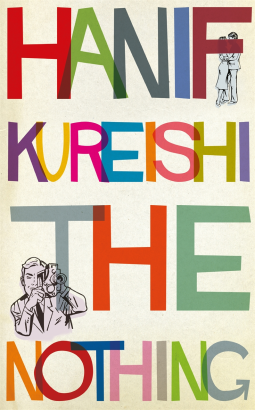
The Nothing is Hanif Kureishi’s new novella, a characteristic piece of stream of consciousness fiction about an ill old filmmaker, Waldo, his younger wife, Zee, and the younger man and almost friend Eddie who he believes Zee is having an affair with. Written in Kureishi’s distinctive style, it is a bitesize tale of old age and helplessness combined with lust and revenge.

Waldo is a classic bitter Kureishi character with a left wing past, blunt and sex obsessed, certain that he is being taken advantage of. Through the stream of consciousness style and supplemented by Waldo’s attempts to record Zee and Eddie’s conversations, the novella is an exercise in being trapped in your own head. 

Its narrative focuses on Waldo’s attempts to get revenge on Eddie despite being confined to his flat and much of the material is very darkly comic, not necessarily to everybody’s taste. However, The Nothing feels like a microcosm of Kureishi’s work and will no doubt delight his fans.

The Stolen Child by Lisa Carey

The Stolen Child by Lisa Carey

image

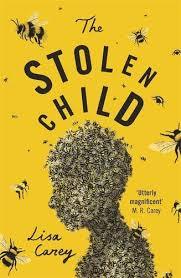
The Stolen Child is a heartbreaking and mysterious novel set on a remote island off the west coat of Ireland. It is about two very different sisters, Emer and Rose, who are part of the dwindling community on the island, and how their lives are affected when an American stranger, Brigid, comes to live amongst them. The narrative is difficult to adequately summarise, a epic set over just a year between 1959 and 1960, but it broadly follows what happens to make the community finally make the move to the mainland. The novel is focused primarily upon the characters, particularly Emer and her relationship with Brigid, and the world, religious, magical, and remote, in which they live.

There is a captivating element of the novel, with Carey positioning it and its events in a world where sidhe magic and religious miracles seem equally plausible, where blame, regret, and love are all complicated by the island setting, by magic, and by the belief in powers greater than humans. At the same time, The Stolen Child focuses a lot on the human and physical, on childbirth and desire, on physical isolation and the power of nature, but also on physical powers enhanced by unknown forces. This gives it a unique quality, a novel which both addresses very real emotions and difficulties whilst creating a world with rules perhaps beyond our own. The prose bolsters this world through detailed description and a straightforward yet somehow mystical tone and the use of Yeats quotes (and title) adds to the poetic feel of the novel.

The Stolen Child is the kind of novel that brings a whole minuscule universe into existence and then sets the reader within it. One for anyone who likes novels full of emotion, an undercurrent of belief, and characters caught in a savage and remote world.

Invited into their circle: the Oxbridge Secret History

Today I’m going to talk about a category of books I love: privileged, genius, and/or eccentric students make questionable choices, mostly in books that are compared to The Secret History (Donna Tartt’s infamous epitome of this genre). To do so, I’m going to be discussing two books I bought and read recently, both set in Oxbridge, both featuring incredibly rich students and more ‘normal’ protagonists, both compared to both Brideshead Revisited and The Secret History on their covers.

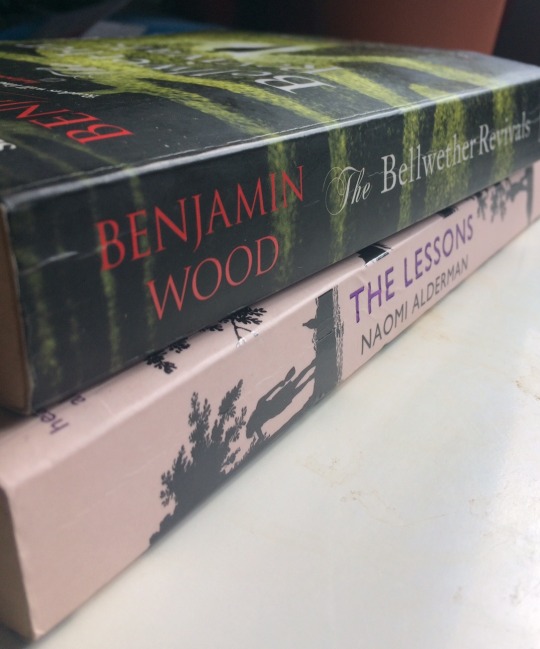
I’m starting with The Lessons by Naomi Alderman because the second of my choices references this book on its cover so I felt that must be the natural progression. The narrator is James, a Physics student who falls behind almost as soon as he gets to Oxford and is feeling the weight of his parents’ and older sister’s expectations for him. Soon he is drawn into the world of the charismatic Mark Winters and becomes part of a group of friends living in Mark’s strange Oxford house. As the years pass, it turns out that they were not at all prepared for life and that their wild lifestyle in Oxford is not so suited to the outside world.

It is easy to compare James with Richard Papen from The Secret History: narrators apprehensive yet drawn into a seductive world of an enigmatic friendship group, unreliable in their description of characters, and far too entwined to narrate with any sense of objectivity. What differs is that James becomes far less of an onlooker and instead part of the narrative of desire and betrayal that runs through the novel. The other main characters are vividly drawn and run from recognisable stereotypes, but it is Mark who is the standout character, as is to be expected. His issues and unstable nature mixed with large generosity with the money he barely understands the value of make him exactly the kind of enthralling figure who captivates even when they are making terrible decisions.

In terms of plot, The Lessons is not hugely similar to TSH, but feels more a child of Brideshead, albeit without any wars. Much of its thrill comes from wondering what the characters will do next and watching as secrets are revealed and life fails to turn out how they expected it to. If you like the genre, it is a hugely enjoyable read, with the relationship between James and Mark forming a dark and complicated core.

The second book, The Bellwether Revivals by Benjamin Wood, is set in Cambridge and features a protagonist not actually at the university, a shock for the category. Instead Oscar is a care assistant who stumbles across the Bellwether siblings Iris and Eden by accident when he is lured into King’s College chapel by the music playing. What unfurls is a narrative dominated by Eden, a musical genius who attempts to conduct experiments on his group of friends and refuses to accept any boundaries that the world might place on him.

Oscar’s outsider view of the group lessens as he begins a relationship with Iris and he becomes a classic figure drawn into events he can barely comprehend. A lot is left unsaid in the book, creating lingering mystery and allowing the gaps to be filled in by the reader. Like The Lessons, the student backdrop is accurately painted, though their student lives are less important than in either The Lessons or The Secret History. More significant is Eden’s spellbinding power and the attempts of Oscar and Iris to work out if he really has something special about him. As in Alderman’s novel, The Bellwether Revivals opens with a mysterious scene from near the end of the narrative, begging the question of how things will go so wrong. In both cases this adds to the sense that a life of privilege and genius cannot turn out rosy and safe.

In my opinion, The Bellwether Revivals is more worthy of the Donna Tartt comparison, due to its plot and use of academic experiments and historical ideas, though The Lessons has a better cast of captivating characters who draw the reader into their circle (and I personally enjoyed more, possibly because the Oxford accuracy drew me in). Both books are worth reading for anybody who likes this kind of out of control academic setting and closely entwined messed up friendship group. Just don’t let them give you any ideas…

How To Be Human by Paula Cocozza

Befriending the wild: How To Be Human by Paula Cocozza

image

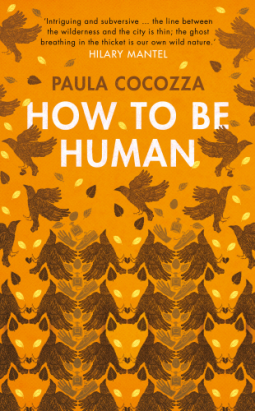
How To Be Human is a gripping and unusual novel about wildness, loneliness, and obsession. When a fox appears in Mary’s garden she tries to make him leave, but soon she realises they have a burgeoning connection that nobody around her will understand. As she battles against other forces – the neighbours with young children who want the fox problem dealt with and her ex-boyfriend who seems to be lurking around – Mary sees the fox as the constant in her life, but her preoccupation with the fox threatens to drown out everything else.

A plot summary does not do the novel justice. Cocozza’s writing gives the book a tight focus and draws the reader into Mary’s world, painted deftly as a place where she feels uncomfortable until she has the fox to keep her focus. It is a story of a woman befriending a fox, but it is also the story of modern day loneliness, of isolation in a city filled with etiquette and the wildness that Mary finds escape with. The writing is detailed and the action meditated, making the novel a careful exploration of how the fox changes the main character.

On the one hand, How To Be Human is a classic kind of book about a character’s mental state as they become obsessed. On the other hand, it is original and fascinating, highlighting the line between city and wilderness and how sometimes those can become blurred.

If A Book Is Compared To X On Its Book Jacket, It Is Probably…

  • Brideshead Revisited – Lots of posh Oxford, maybe gay. Or, about Catholicism and nostalgia and messed up families and not as much gay as expected.
  • John Le Carré – Spies. SPIES. Should be Cold War but won’t necessarily be.
  • The Secret History – Where too close group do something Bad. Narrator may have inferiority complex.
  • Sarah Waters – Victorian and either contains lesbians or wants people to pick it up thinking that it does.
  • We Need To Talk About Kevin – Dealing with troubled motherhood.
  • Stephen King – Any kind of horror. Vaguely horror. Once met horror in a supermarket.
  • Trainspotting – Trying to be Trainspotting and probably failing.
  • Jane Austen – If you’re incredibly lucky not lacking completely in satirical edge.
  • Brick Lane / anything by Zadie Smith – Set in London amongst a community of people who are not white and/or Christian.
  • Hemingway – Something you should run away from.