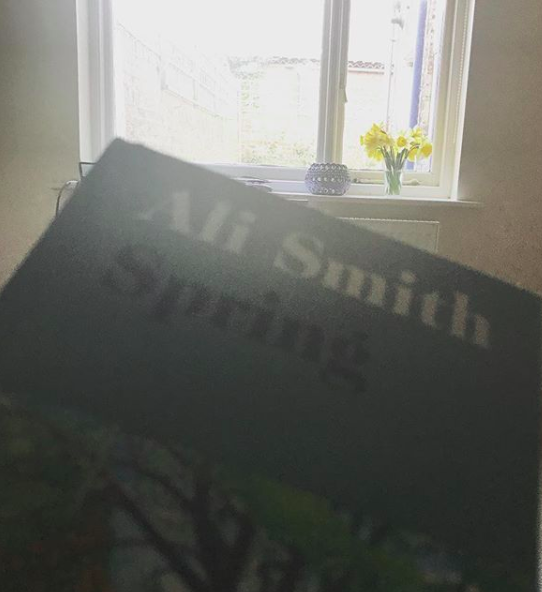
Spring is the third novel in Ali Smith’s Seasonal Quartet, and it is the story of migration, place, and grief. Once again, Smith blends contemporary politics, intertwined stories, and cultural references into a novel that feels fresh and imaginative, but also biting and clever. There is a focus on immigration—with a lot of clever punning and also harsh realities of detention centres—and also on the divisions in Britain, as seen across the other novels as well. There’s also quite a theme of afterlives, not quite the rebirth of spring but of the ways people live on and even speak after death.
Possibly the most engrossing of the quartet so far, Spring feels very typically Ali Smith whilst also capturing something about spring and something about contemporary British, migration, and otherness.
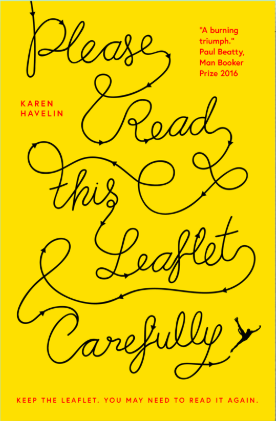
Please Read This Leaflet Carefully is a novel about chronic illness told in reverse, a powerful look at different versions of a self and how illness can be told. Laura has dealt with a catalogue of health issues including severe allergies and was diagnosed with endometriosis in her twenties. The novel opens with her as a young mother in New York City, battling for the energy to keep her life in balance and look after her daughter. The narrative then travels backwards, charting the changes in her health and her life as she grows up and moves abroad, heading towards her growing up in Norway constantly in and out of hospital and doctor’s appointments.
The novel is a moving one, with detailed descriptions of the way pain affects her life when it is happening and also when it isn’t as severe. Laura is plagued by the memories and remembered sensations of her hospital trips and operations throughout her life, and the structure of the novel allows for these hauntings to come before the events themselves. There is a kind of backwards inevitability, knowing that Laura does become someone she might not have thought she ever could but also that she will continue to be ill and continue to face the realities of medical care. Also notable is the way the novel also focuses on other areas of her life—relationships and divorce, sexuality, career and education—but weaves in the ways in which these are all affected and complicated by chronic illness.
Havelin has written a novel with a powerful depiction of chronic illness, using a distinctive structure to tell this story. Memorable and detailed, it will make people regardless of their own medical conditions and history think about their relationship with their body and its limitations.
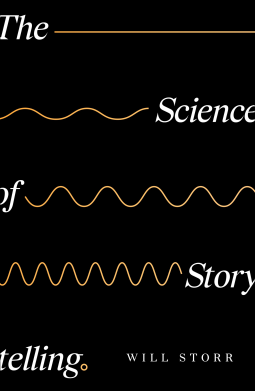
The Science of Storytelling is a fascinating look at stories, our relationship with them, and how this can be used to tell better stories. Aimed at both storytellers and those interested in how humans tell stories, Storr combines examples from literature and screen stories with psychological research and experiments to make points about the importance of character, change, and other aspects of gripping stories. Myths and archetypes come up, but so do Mr Men and famous lines from Hollywood films. It doesn’t necessarily change the world in what it says, but it tries to compare how people have created famous stories with how humans use stories to justify their actions and to make sense of their own self.
Accessible and interesting, this book can help bring inspiration to those who are trying to tell stories in some format or another, or allow people to think more about how people tell stories about themselves and their lives to make sense of the world.
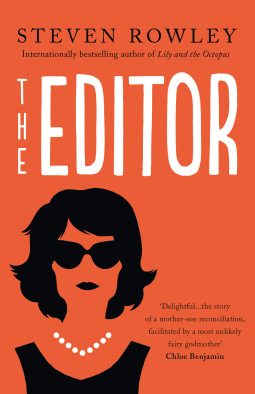
The Editor is a bittersweet novel about a writer working through his relationship with his mother whilst completing his first book with a very famous editor. James is a struggling writer who lives in NYC with his boyfriend. When he gets a call that an editor wants his novel, he doesn’t expect it to be Jackie Kennedy—Mrs Onassis—or that this will spark off not only a chance to work on his autobiography novel about his family, but face up to his mother and discover a long-kept secret.
Written in a similar charming style to Rowley’s Lily and the Octopus (and with a similarly hapless narrator), this is an engrossing and funny novel that doesn’t feel as self-indulgent as some books about writers can. Instead, it focuses on how sometimes you need an outsider to push you towards familial reconciliation, and how an unexpected connection with someone so famous could affect you on a personal level. James is a likeable yet flawed narrator, sometimes self-obsessed and always unable to take compliments, and Rowley’s fictionalised version of Jackie Kennedy Onassis near the end of her life is an interesting portrait (particularly as someone who knew nothing about her real publishing career).
The Editor is a charming book that shows how famous figures can be inserted into a fictional narrative in a stylish and purposeful way. Fans of Rowley’s first novel will enjoy it, as well as anyone interested in funny yet emotional looks at mother-child relationships.
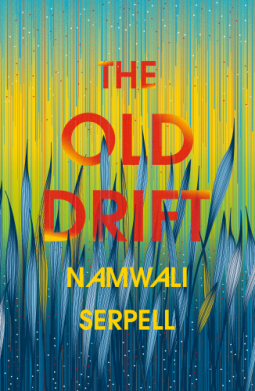
The Old Drift is an epic novel spanning genres and generations that tells the story of three families in Zambia and how their lives interact along with politics, science, and colonialism. It begins in 1904 and moves across the twentieth century and into the future, with a mysterious swarm chorus that floods into the gap between each part.
At first, the novel seems to be the kind of book that entwines the narratives of characters across generations, showing human error, life, and passion. However, it becomes apparent that The Old Drift is more epic than this as it darts through fairy tale, science fiction, and political narrative, all tied by the personal ups and downs of the characters and the Zambian setting. The book is long but keeps changing, revealing connections between characters and hidden gaps as well as these genre shifts. The characters it brings together at the end—Joseph, Jacob, and Naila—are shown to have come from the complicated lives of their parents and grandparents, which gives their technological narrative (which could easily be a novel on its own) a richer history.
The Old Drift is an exciting, epic novel that plays around with genre and character, but keeping a central core of human life and the passing of time. It is one to watch out for.
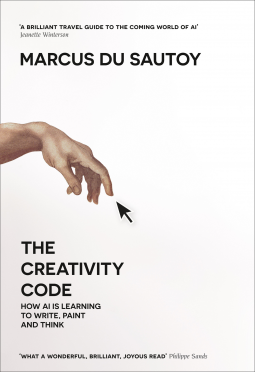
The Creativity Code is a look at artificial intelligence, how it works, and what it might be able to do. Starting with what Ada Lovelace said about computing machines and creativity, Marcus du Sautoy goes through the achievements of AI so far, the mathematics that underpins machine learning, and explores the meaning of ‘creativity’, in order to look at whether computers will ever be able to be truly ‘creative’.
What unfolds is a book that crosses disciplines, touching upon computer science and programming, mathematical proofs and the storytelling nature of them, how art works and how it relates to chaos theory, and whether music can be computed, amongst other things. Written in a way that is open and accessible, The Creativity Code is not bogged down in technical jargon and only describes actual algorithms or other mathematical concepts where necessary. Instead, it focuses on crosses boundaries (describing a theorem like an adventure narrative, for example) and on looking at what AI can do and whether this is creative. Some of the most interesting parts are larger questions about where coders and computers have the control, knowledge, or creativity, and the kind of opposition to AI in areas such as art, music, and mathematics.
Deeply engrossing and informative, The Creativity Code takes a complex topic (AI and machine learning) and gives an interdisciplinary look at its past and future. Despite what the title and blurb imply, it isn’t only about whether AI can be ‘creative’, but also about what creativity is, how disciplines are creative, what AI can currently do, and what this means for the future and for how AI can be developed further. Anyone interested in crossover between arts and sciences should give it a read, as well as those who care about the creative side of science or how automation is going beyond simple instructions. It is an accessible book on machine learning, but also a thoughtful look at the meaning of creativity, and this makes it quite remarkable.
A Thousand Ships is the Trojan War retold from the perspectives of a plethora of women, Trojan, Greek, and gods. It starts with Troy burning, and stretches out in a non-linear fashion to tell the story of the war, how it came to be, and what happened afterwards. Famous stories—Penelope and Odysseus, the Trojan women, Helen, Aphrodite and the golden apple—are told from different perspectives, and other characters given a fuller narrative (as Haynes outlines in the afterword). By the end, the story of the war has been told, but not as it usually is.
Female retellings of material from the Iliad and Odyssey have been prevalent recently, perhaps most notably Madeleine Miller’s Circe and Pat Barker’s The Silence of the Girls. Where A Thousand Ships differs is in its style and scope: this is a book that gives a huge range of female perspectives, and uses carefully chosen moving perspectives to weave the story together. For example, Cassandra is used to tell others’ stories, but her own death is from Clytemnestra’s view, and Penelope tells Odyssey’s story in the form of futile letters to her husband. Calliope, muse of epic poetry, is used to provide a sharp take on male-focused epic and the tendency to ignore the fights of the women. This multi-faceted approach is what has felt lacking from other retellings, and it also makes the book a surprisingly good way of get an overview not only of the content of the Iliad, but a host of other classical texts and stories that rely on the Trojan War in some way.
Another crucial aspect is its depiction of war itself, and the horrors of it. This is a book full of death, as the story requires, and there is sometimes a surprising amount of nuance, such as where Trojan characters accept that if the tables were turned, the Greeks would have been slaughtered and forced into slavery just the same. Calliope’s sections bring some overall commentary on war and also about writing one, even if it is mythical.
As A Thousand Ships unfolds, it becomes a compulsive read, waiting to see which characters get their story told and how the Trojan War will be woven together through these perspectives. Naturally, there’s plenty that has to be left out, glossed over, or changed, but this isn’t an academic exercise, but rather a complex novel that should sit along other modern retellings of these classical stories as a reminder there’s new ways to bring out these narratives.
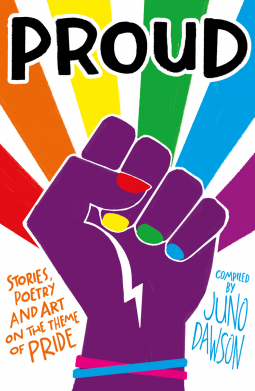
Proud is an anthology of YA stories and poetry with accompanying art written by LGBTQ authors on the theme of ‘pride’. These cover a range of experiences, giving different insights into teenage life including learning to drive, coming out, escaping bad situations, dealing with anxiety, and finding ways to fight. People think about their opinions on marriage, find community in choirs and football teams, and get upstaged by some penguins.
The stories are often moving, funny, and powerful, taking some of the best elements of young adult fiction—the characters, voices, and relatability—and distilling them into short tales. The authors are a mixture of established YA writers and some lesser known ones, and the anthology provides a great way of finding new authors to read. Each story makes a great bitesize, affirming read, but it is difficult not to read it all at once. This is another YA anthology from Stripes Publishing that brings together thought-provoking fiction that shows the diversity of YA writing and will hopefully provide a lot of people with stories that reflect them and the people they know.
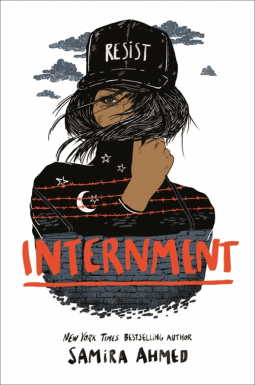
Internment is a powerful young adult novel set in near-future America, in which a seventeen-year-old girl has to try and fight for revolution. Layla and her parents have been sent to the first internment camp for Muslim Americans, ripped away from their home and lives. There, Layla finds friends and allies as she fights to get contact with her boyfriend on the outside to share what is happening and to rebel against the camp’s Director and guards.
The real terror of Internment is how close it is to the present-day United States, with the narrative making it clear how few additional nudges are needed. In addition, there is a deep-running theme about complicity and about how not standing up to something can be the same as letting it happen. This is not only how non-Muslim people either allowed or actively voted for the laws and internment camp seen in the novel, but also how people can turn on those who rebel. Having the novel from Layla’s perspective shows the personal side to the horror of the camp—how they are imprisoned, watched, and controlled—and also her anger and how difficult it is to find ways to channel that anger into protests that will actually make a difference.
Internment is a novel that will make readers think, teenagers and adults alike. It is intense, but hopeful, and it shows how important solidarity and rebellion are. It seems like YA fiction is really a powerful voice in showing present realities and possible futures, particularly with regards to racism and Islamophobia.
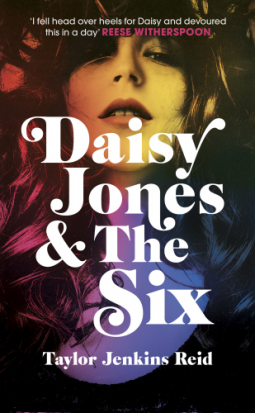
Daisy Jones and The Six is the story of the rise and fall of a fictional 70s rock band, told in the style of an oral history music biography. Daisy Jones is a lost girl and a talented singer. The Six are a band fronted by newly sober Billy Dunne, who have found their sound but still need extra spark. When they’re brought together, they blaze bright, first with a track on which Daisy does guest vocals and then, when that song becomes a hit, a full album. During the course of this, however, it becomes apparent that the band are not going to keep it together and their many tensions are going to come to a head.
This is a music novel. From the oral history style to the lyrics in the back, it is clear that 70s music is infused throughout. In some ways, this makes the novel a little strange: at first, it can feel so much like a biography that it’s easy to forget the band are fictional. As the differences in the characters’ accounts of events and emotions become more clear, however, it becomes very obvious that this is a constructed narrative that is purposefully looking at how differently the characters viewed things. In particular, misunderstandings between Daisy and Billy whilst they are writing the album and beyond show how the oral history style really allows characters to clash overtly. As in the fictional band, often the other characters recede into the background in comparison to the two of them, which is also crucial to the way their comparable addictions are shown (indeed, for a book marketed as a fun 70s music romp, there is a lot about addiction in it, as might be expected, handled seriously).
Daisy Jones and The Six makes you wish the songs were real so you could hear the emotions described in the narrative. It is also surprisingly moving by the end, despite spending a lot of time doing quite typically rock biography things like describing details about the band getting together from everyone’s perspective. It is a hard book to categorise, but one for anyone interested in a book with a vivid sense of music and character.


 Fiendfully Reading
You must be logged in to post a comment.