Bad Fruit by Ella King

Bad Fruit is a dark thriller about a family hiding what is rotten within, set in the leafy streets of Greenwich. Lily is seventeen, almost off to Oxford, but she’s also her mother’s perfect doll, made up to look just right and wearing just what her mother wants. Lily brings her mother spoilt orange juice and cooks recipes from her mother’s childhood that her father wouldn’t make, but it’s so quick for her mother to change from love to hate, and maybe Lily can’t remember exactly what happened with her and her family when she was younger. As memories come back, Lily starts to realise that being the perfect daughter isn’t going to work, so she’s going to have to become something else.

With Lily and her mama so vividly painted from the start, Bad Fruit quickly grips you, unfolding a complex family dynamic and a girl starting to question what she thought she knew. You know something is up, but King withholds details, slowly revealing the narrative in a classic literary thriller way. What I found particularly compelling, however, was the complex morality and characterisation, particular of Lily’s siblings, whose childhoods and interactions with the family are similar and yet very different to Lily. The first person narration means that you’re never quite sure what her siblings might be hiding from her, or whether her picture and judgement of them is clouded, and the same goes for her parents, particularly her father. Even by the end of the book, the family dynamic is still not quite unravelled, showing how sometimes there aren’t easy answers.

Layered and hard to put down, Bad Fruit explores trauma and family through a thriller lens that asks who might snap first. I enjoyed the Greenwich setting and the complexity of race and culture in the book, and found the perspective of Lily a very interesting one, especially in terms of how her childhood has impacted things like her ability to know what she likes or make choices.

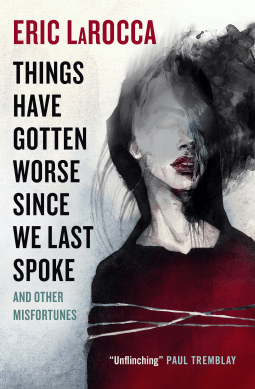
Things Have Gotten Worse Since We Last Spoke and Other Misfortunes by Eric LaRocca

Things Have Gotten Worse Since We Last Spoke and Other Misfortunes is a collection of three horror novellas including the virally famous titular story. In the first story, set on the internet in the early 2000s, two women are caught in a strange interplay despite never meeting. In the second, a couple end up on a remote island after the death of their son, where they are plagued by a strange young man, and in the final, shorter story, a man ends up in a confrontation with his reclusive neighbour.

I’ve been wanting to read ‘Things Have Gotten Worse Since We Last Spoke’ for a long time as a horror fan who loves fiction set over the internet and thinking about the internet of the past, and it didn’t disappoint. The format of telling the story through posts, emails, and instant messages, with a few mysterious redacted comments, worked well to show the actual relationship between the two women and leave you guessing what each of them actually wanted. The horror in the story is more underlying and uncertain (though there is a couple of gory bits too), and I liked how it had the vibe of an internet urban legend.

The two “other misfortunes”, aka the two shorter stories that follow, are quite different, though in the afterward LaRocca does explain the logic behind bringing them together in their representations of humans needing connections. The middle story has slightly The Shining vibes in terms of setup, and had an interesting engagement with religion and belief (and felt like you could adapt it into a film quite well). The final story is shortest and is quite straightforward, though with some intriguing undercurrents like the protagonist’s never seen racist husband he doesn’t think he’ll stay with. Overall, I enjoyed these less than the title story, though I think a lot of that is because I’m just particularly interested in the internet angle of that one.

This is well worth reading given the hype around the title story, particularly if you’re interested in how people connect over the internet and some of the horror potential for that, and I do like the novella format for horror that isn’t a full length thing. Also, it is just a great title.

Diary of a Void by Emi Yagi

Diary of a Void is a novel about a woman who fakes being pregnant to improve her work experience. Shibata is the only woman in her office, so is expected to do things like keep the place tidy and make the coffee in addition to her regular duties. When she claims to be pregnant to get out of clearing away the coffee cups and cigarette ends, she is suddenly treated better, able to leave work earlier than before and use this time to make food, watch films, and take baths. A pregnancy aerobics class gives her a new set of friends, and it seems like this all suits her, but of course, it can only last for nine months.

Told from Shibata’s first person perspective, the novel combines a look at Japanese workplace culture and the expectations for women in society with an undercurrent of absurdity. The humour is also quite sad, showing a lonely character who delights in being treated a little better and feeling like she has more worth and a place to fit in, all because she is seen to be pregnant. It is well-structured, with the pregnancy app she is using a nice touch as she can use what is apparently the ‘normal’ experience as her own.

The ending goes slightly surreal, though not particularly weird, and focuses more on the humorous tone than any medical responses to faking a pregnancy. It’s a fun book that still cuts at some real issues.

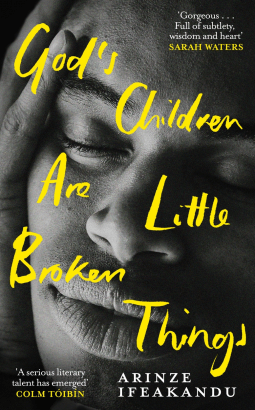
God’s Children Are Little Broken Things by Arinze Ifeakandu

God’s Children Are Little Broken Things is a collection of short stories about queer men in Nigeria, telling stories of love and family, heartbreak and loss, and finding and leaving home. Many of the characters are young, navigating their place in contemporary life in Nigeria and dealing with messy love lives and complicated situations.

The stories are tender, exposing powerful emotions and everyday sadness across a variety of characters and situations, from navigating fame when gay to finding your relationship with your dead father’s longterm partner. I enjoyed how vivid the characters and settings were, as often with short stories I don’t feel like I know enough of what is going on and who is who, but throughout this collection I found myself deeply invested in the stories and like I was getting complete stories. The ordering worked well too, particularly the final story which I felt was a good ending to the collection and left it with a sense of hope.

Often heartbreaking but also sweet and intimate, this is a collection of stories to spend time with, enjoying moments of love stories and sadness, and complicated gay life.

Shredded: A Sports and Fitness Body Horror Anthology ed. by Eric Raglin

Shredded is an anthology of body horror stories that are centred around sports and fitness. The stories are a diverse set that cover a lot of different sports and fitness activities (including wrestling, american football, going to the gym, swimming, hockey, yoga, and gymnastics) and a range of ways in which the body horror plays out, helps and hinders. This really stands out, as you never know what kind of story you’re going to get next.

I really enjoyed what body horror has to say about sports and fitness, and vice versa. In particular, ideas around having the ideal body for your activity and the lengths people will go to, as well as more monstrous and uncontrollable elements of bodies pushed to their limit. I found both the stories featuring trans men particularly interesting, with one playing off ideas around T but also bear culture amongst gay men, and the other a water-based body horror that at the same time showed quite a sweet instance of a trans guy finding a place in a swimming team. Body horror has plenty to say about different kinds of bodies, but also about who finds a place within sports and fitness, which is something a lot of the stories address in some way or another.

Overall, this is an impressive anthology that will make you wince and laugh, and has a lot to say about the relationships between bodies and physical activity at the same time. Sports and fitness is not a topic I would usually look for fiction about and Shredded was a chance to see that the horror side of the topic isn’t confined to the jock getting killed near the start of a horror story.

Disorientation by Elaine Hsieh Chou

Disorientation is a satirical campus novel that explores the academic world of authenticity, race, and power, as a student uncovers a secret about a canonical poet. Ingrid Yang is close to the end of her PhD on the Chinese American poet Xiao-Wen Chou, but she’s finding it hard to be inspired to write anything, especially as she doesn’t really care about her topic. A discovery in the poet’s archive leads her down the path of a mystery that might give her something interesting to write about, but it goes deeper than that, and Ingrid is forced, with the help of her best friend Eunice, to confront herself, her white boyfriend, and people across campus, as the place becomes a battleground for Ingrid’s discovery.

This is a classic biting campus novel that takes a fresh perspective, looking not only at who gets to call authenticity in literature and academia, but at one woman’s grappling with her own relationship to her identity and relationships to others. Ingrid is thrown from her safe existence with her mundane boyfriend to a life filled with harder morality and questions, and the book takes the reader through her journey in a satisfying way, with more of a character-focus than some satirical books can have. A lot of big topics are covered, most notably race, tokenism, and fetishisation of cultures, but also ideas of what free speech in universities means and even kinds of radicalisation, in both alt-right and incel communities. The conceit of the book might be satirical, but a lot of what is shows is very real.

I found this a funny and sharp novel, written in an engaging way, that shows the complexity and, yes, the disorientating experience of a character learning more about white institutions and what they uphold and protect, whilst she also tries to navigate what this means for her own work and love life.

Stargazer by Laurie Petrou

Stargazer is a novel about obsession, envy, and friendship, as two girls are drawn closely together only to find that things might not be so perfect between them. Diana has always lived next door to famous fashion designer Marianne Taylor and her family, including her daughter Aurelle, but Diana has stayed away, hiding from her bully older brother. When finally Diana and Aurelle get to know each other, they quickly become close friends, and in the summer of 1995, they set off to the same college, a small place for art and athletics in the woods. There, they’re known by their bond and for their liking for drug-fuelled adventures, but as Diana’s artistic prowess becomes well-known, a wedge starts to be driven between them.

This is a classic set-up for a book, with a close friendship between two girls finding themselves, built not only on each other’s company but also on envy and a desire for something else. Early on, it is clear that Diana and Aurelle want elements of each other’s life, and the book explores the issues of this being the basis for a friendship, with an underlying toxic resentment that the characters don’t discuss. The book doesn’t have a huge amount of plot and the pace for much of the book is quite slow. I spent quite a lot of the book trying to guess when something actually dramatic was going to happen, picking up clues from the vibe and genre that it was likely to, but I did like the ending, which is quite quick in comparison to the rest of the book but leaves you with a sense that the unnerving underlying elements have come out.

The comparison between The Secret History in the blurb will draw people in (it’s why I wanted to read it), and at the end of the book that author gives thanks to Tartt’s book, making it clear this one was very much inspired by it. In fact, Stargazer felt to me like The Secret History crossed with The Talented Mr Ripley, particularly as the two protagonists used each other’s name occasionally (and with other elements that it would be spoilers to go into). A key difference between these other books, especially The Secret History, and Stargazer is that the latter is told using third person narration to see both of their perspectives (and, infrequently, a couple of other characters’ perspectives) so you don’t get as much of an unreliable narrator-created sense of the situation. Stargazer also focuses a lot more on the backstory and build-up to more dramatic events, rather than the aftermath.

The world of the book is dreamlike, echoing the amount of drugs that the characters take, and highly privileged, with another notable element of the book as opposed to others in the same kind of sub-genre being that both protagonists are rich and, despite what they respectively might think, belong in the same world. This means it tells a different kind of story to one about envy or obsession from a place of lesser power or position: rather, Stargazer explores not seeing what you’ve got and building versions of reality that suit what you see. It also looks at ideas of art and what can or should be used in art, which is an interesting thread, though feels less important in the book than the interpersonal relationships.

Stargazer is an enjoyable read that uses a “dark academia” type vibe to explore, as quite a look of books have recently, the darker sides of female friendship and how such bonds can be toxic. It does feel quite predictable, a homage to The Secret History that doesn’t have similar narration or plot twists (but does have a 90s setting), and there’s more it could’ve explored, but fans of the atmosphere will probably like it.

Children of Paradise by Camilla Grudova

Children of Paradise is a novel about the strange world of an ageing cinema and the people who work there. The protagonist moves to a new city and applies for a job at the Paradise, an old cinema, where she has to deal with popcorn spills, horrible toilets, and getting used to the weird coworkers who won’t talk to her. When she’s finally invited to socialise with and get to know the other employees, she discovers the secrets of the run-down cinema, from what they do with lost property to rumours of a secret second screen. But it isn’t just the haunting corridors that loom, but also the thread of corporate takeover.

This book draws you into a surreal world, full of eerie moments and the realities of customer service drudgery. Told in the first person, it has an atmosphere that is mostly realistic, but with lingering moments of unreality, and you never quite know if the Paradise holds more secrets than it seems. The sense of place in the cinema is very visceral, not only the faded glamour but the rituals, the employee drug taking and the rats and the gone-off snacks, and it paints quite a picture of the horrors both of run-down decadence and soulless corporate takeover that still doesn’t actually make the place any less in disrepair.

Displaying both eerie location-based horror and customer service hell, Children of Paradise is an atmospheric novel suffused with film history that shows how the past and present might coexist or clash, all in the space of a single cinema. It’s gripping and perfect for anyone who likes unnerving stories in which a place is one of the characters.

A Certain Hunger by Chelsea G. Summers

A Certain Hunger is the story of a food critic with a taste for murdering her lovers who has decided to tell her story. Dorothy Daniels has tasted it all, but from her prison cell in a maximum security prison, she can’t do much but imagine the delectable food she used to eat. Her confession isn’t just a story of the men she killed, but of the food she ate and her wealth of opinions, as you don’t just stop being a critic.

Hilariously gory and wild, this book has a distinctive tone, building up Dorothy’s ridiculous critic voice as she tells her story, weaving through lovers, meals, and deaths towards the point at which it all caught up with her. The style is full of overwrought, satirical detail, particularly about food, which, despite the killing, is probably the thing that makes it most worthy of the comparisons with American Psycho: this book, too, combines the voice of a killer with that of a snob with highly precise opinions. The food elements are intertwined with the killing—to say too much more would give spoilers—and the book is all purposefully overdone in a fun way, with a great subplot of the changes in food writing impacting Dorothy’s career.

By the end, it becomes subtly more apparent why the confession is being told, though the book follows the predictable narrative of getting caught and being sent to prison with only a slight twist right at the end that isn’t really a twist. The book is, in some ways, more of a vibe, as the actual story is almost secondary to the atmosphere and narrative voice, as a woman who knows what she wants (good food, good sex, not to answer to anyone else) indulges her tastes.

If you like self-satisfied murderer narrators, campy gore, and/or food writing, this novel brings a lot to the table, and is a fun, satirical look at a privileged and pretentious world that still seems to love the food it describes.

Tomorrow and Tomorrow and Tomorrow by Gabrielle Zevin

Tomorrow, and Tomorrow, and Tomorrow is a novel about video games, and friendship, and ultimately about kinds of love and what it takes to create things. Sam and Sadie meet in a hospital in 1987 and bond over Super Mario, but then their friendship falls apart. Years later, both at college, they run into each other in a train station. Immediately they know they must be friends again, and they start working to make a game together, along with Sam’s roommate Marx. Together, they create a game and find success, but as they attempt to build upon this and make more, it is clear that the real world isn’t as perfectly designed as a game one.

This is an intriguing book, especially for anyone who likes gaming. From the opening, it is clear that the world of video games is very much intertwined with it, as well as being the narrative as the protagonists work to make games, and it’s fun to have those references within it, as it has a real sense of gaming history. There’s a lot of description of making games and what they put into the games, and some interesting exploration of things like gender and sexuality within the gaming world, and ideas of cultural appropriation in games. A section later in the book is written as a game (for a reason that becomes clear) and that felt like something a bit different and fresh, though at first it might feel like a sudden departure from the narrative.

Other than games, the book is particularly centred around friendship and love, and different kinds of relationships. In particular, there’s Sam and Sadie’s dynamic, which the book examines a lot and even looks into some of their moments of miscommunication, showing how things aren’t as simple when they aren’t scripted in a game. The focus on the love within friendship is very important, and especially when it can also be tempestuous and blurred between business partners and friends. Marx is also a great character, bringing out how there’s often other people’s work behind big creative partnerships, but also showing a quietly purposeful kind of friendship between him and Sam.

Tomorrow, and Tomorrow, and Tomorrow (on a side note, I really enjoyed when the title was explained, both for the reference and why it is relevant) is a surprising book, a novel that focuses on video games and creating art, but also on friendship above all else, and the work that goes into friendships as well as creating video games. The narrative voice is distinctive, filled with detail and prescient comments, and might not be for everyone, but the content and worlds the book explores feel fresh, a different take on nostalgia and building on the past.