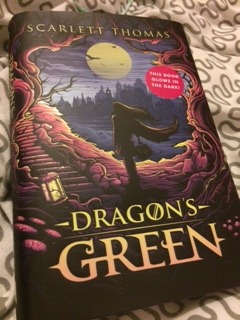
Dragon’s Green by Scarlett Thomas

Magical bookishness: Dragon’s Green by Scarlett Thomas
image

Dragon’s Green is a charming new children’s novel about magic, books, and friendship. Since the ‘worldquake’, magic has been seeping into the world and technology no longer cooperating. After Effie Truelove’s grandfather is attacked and his precious magical library becomes threatened, she discovers her own connection to this magic, and so do her new school friends from the Tusitala School for the Gifted, Troubled, and Strange.

The narrative of the novel follows Effie and her new friends discovering their powers and some of the rules of the magic that exists in their world and in the mysterious Otherworld and using these to battle to save her grandfather’s library. The emphasis amongst the characters is very much about their burgeoning friendships and it is clear that the series will continue to explore how their magic and friendship are tied together.

Effie is a great narrator, inquisitive and brave, and having a female hero figure is one of the great selling points of Thomas’ novel. Another is the use of books and magical power, which comes not only from what can be learnt from them, but also from different kinds of magic, as Effie finds out. This bookish element of Dragon’s Green is part of what makes it an enjoyable read for grown up children too, with references to classic literature peppered around (my personal favourite was the Rossetti-esque goblins selling fruit). Thomas’ method of explaining the magical interference with technology, down to children using old phones just as calculators and torches, was another endearing element, a kind of retro tech comeback that gave the parts set in the ‘real world’ a kind of magical realism feel.

Comparisons to Harry Potter are obvious, with a fated main character discovering magic with new school friends, but Dragon’s Green is quite different, with travelling between worlds and magical objects – called ‘boons’ – revealing magical specialities in people. It feels like a children’s fantasy novel infused with a love of reading, and the gang of main characters are a group that will capture the imagination and make children (and adults) hope for the next book to come soon.

White Tears by Hari Kunzru

Claustrophobic musical horror: White Tears by Hari Kunzru

image

White Tears is a literary horror story about music, race, and the hidden stories in America’s history. It starts off showing two music-obsessed friends, Seth and Carter, with Carter’s trust fund allowing them to delve into musical history and attempt to buy long forgotten records. This obsession with the past becomes something darker, something which defies conventional senses of past, present, and reality, until they are caught in a world without the freedom they are used to.

Kunzu’s novel begins slowly and initially feels like a story of rich and poor, a rich obsessive and his poorer friend, but abruptly turns into something much more interesting, the search for the origins of an elusive and unexpected track that seems to be haunting them. This track and other music and sounds are carefully written into the novel until it feels as if they are playing in the background as the characters are drawn deeper into a lost musical world that is deeply embedded in America’s past. It is not until later in the novel that it becomes apparent how Kunzru’s style and narrative have been setting up a chillingly inevitable dark world for the characters.

The combination of specific music recording terminology and a narrative that gradually erodes the difference of time means that the book may not appeal to everybody, but its transformation from a stereotypical New York opening to a ghost story about race and forgotten history is something to be experienced.

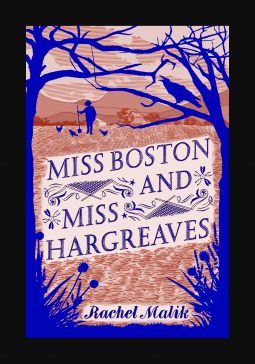
Miss Boston and Miss Hargreaves

Miss Boston and Miss Hargreaves by Rachel Malik

image

Miss Boston and Miss Hargreaves is a heartwarming and intriguing historical novel about the relationship between the eponymous women and how an unexpected houseguest made for a drastic situation for them both. When Elsie Boston gets Rene Hargreaves as her Land Girl during the Second World War to help run her family’s farm, now entirely left under her control, she doesn’t foresee that from then on, they will share their lives together. Inspired by true details about the author’s grandmother, the novel is a character focused story of life, hardship, and a sudden crime.

After a mysterious prologue, the book starts off like a wartime home front historical novel, showing how Elsie and Rene meet and work together, but when Elsie loses her farm and they are forced to move around as farmworkers, it turns into something else, a saga of their lives together and how they end up with an uncongenial visitor and the weight of the law and the press against them. The core of the novel is the two characters, with Malik slowing building up detail about them. Rene’s past and her escape from her husband and children is classic historical novel material, but it is also at how the war could change lives in ways that would be irrevocably different when it was over. It is not a war novel however, but one more focused upon a longer span of time and on how the characters lived their lives and didn’t quite adapt to the modern world. The writing style is straightforward and detailed, building at a slow pace that really unfurls a vivid world, a world in which most other people are excluded.

This is a slowly revealed and moving novel full of small details, with an appeal that stretches beyond its historical setting to anyone who enjoys reading about characters and carefully drawn relationships. Heartwarming and at times tense, this is the kind of novel to curl up with and escape the modern world.

New Boy by Tracy Chevalier

Othello retold through schoolyard drama: New Boy by Tracy Chevalier

image

New Boy is the latest book in the Hogarth Shakespeare series, a modern retelling of Othello with the action transported to a schoolyard in 1970s Washington. Osei is the new boy and the only black kid in a suburban school. He meets Dee, Ian, Mimi, Casper, and Blanca and the stage is set for a first day unlike others. These sixth graders are the big fish in a small pond and their dramas are fast-paced, with relationships and arguments made and broken between lessons. Chevalier uses this setting to make her novel a tense exposition of jealousy, anger, and race, showing how Othello’s themes do not only defy time, but also age.

The book is structured around a single day, with the weird sense of time matching Shakespeare’s strange timeline in Othello and making the novel seem like a play, with far more limited movement of place than in the original text. The characters are bound by the edges of the school grounds, making a claustrophobic setting that cannot contain Osei’s eventual anger or Ian’s manipulation. The presence of the teachers on the edges is similar to the officials and outsiders in Othello who appear but are never able to halt the action. In the case of New Boy, the teachers’ implied and overt racism and uncertainty about how to deal with Osei’s presence actively encourage the pupils in some ways, like Brabantio’s initial opinions of Othello in the play.

Shakespeare’s characters are mapped pretty straightforwardly onto their playground equivalents, though Chevalier is able through the form to give them greater internal lives and backstories, particularly the girls. Dee’s desire for something exciting explains her sudden interest in more worldly Osei, who has lived around the world and whose older sister has given him an awareness of Black Power and other political movements. Ian’s quest for power over fellow students and his desire for self-control are clear, manifesting themselves in his manipulative actions when interfering with schoolyard activities and his anger at his own failings. The stand out character is Mimi, an uncertain girl prone to headaches who, uncomfortable with Ian’s attention, helps him out and later regrets it. She is Shakespeare’s Emilia given more of a chance to have thoughts and emotions about Ian’s actions and about her friend Dee.

The narrative too is obviously that of Othello, with details changed yet the stakes still feeling high. From the vivid picture of childhood jealousies and fears that Chevalier paints, it is easy to be drawn into the world and feel that the reputations and relationships at stake are real to the characters, not just childish preoccupations but how they see their place in the world. Some scenes are clear updates of Shakespearean ones, for example when Mimi re-plaits Dee’s hair whilst they sing along to ‘Killing Me Softly’ and talking about how confusing boys are. This scene is Shakespeare’s made into a 1970s image of two white girls singing along to a song sung by a black woman, not fully aware with how this intersects with exactly what is going on that day.

As part of the Hogarth Shakespeare series, New Boy is fairly typical – updating character names, mentioning Shakespeare and his plays in a casual way, changing plot points but giving them the same tension in the narrative as the original – but it is the way in which Chevalier creates a claustrophobic world of childhood jealousy and mistrust set within the larger adult world that makes the novel stand out. It isn’t news that the racism, jealousy, and power struggles in Othello have not lost their relevance four hundred years later, but in New Boy it is glaringly obvious that such issues can be incited to escalation in all kinds of environments. The tragedy of Othello becomes both the tragedy of one dramatic schoolyard in 1970s Washington and the tragedy of how Othello just cannot seem to lose its societal comparisons.

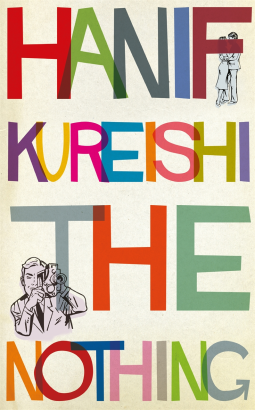
The Nothing

The Nothing by Hanif Kureishi

The Nothing is Hanif Kureishi’s new novella, a characteristic piece of stream of consciousness fiction about an ill old filmmaker, Waldo, his younger wife, Zee, and the younger man and almost friend Eddie who he believes Zee is having an affair with. Written in Kureishi’s distinctive style, it is a bitesize tale of old age and helplessness combined with lust and revenge.

Waldo is a classic bitter Kureishi character with a left wing past, blunt and sex obsessed, certain that he is being taken advantage of. Through the stream of consciousness style and supplemented by Waldo’s attempts to record Zee and Eddie’s conversations, the novella is an exercise in being trapped in your own head. 

Its narrative focuses on Waldo’s attempts to get revenge on Eddie despite being confined to his flat and much of the material is very darkly comic, not necessarily to everybody’s taste. However, The Nothing feels like a microcosm of Kureishi’s work and will no doubt delight his fans.

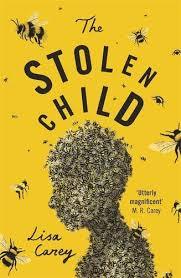
The Stolen Child by Lisa Carey

The Stolen Child by Lisa Carey

image

The Stolen Child is a heartbreaking and mysterious novel set on a remote island off the west coat of Ireland. It is about two very different sisters, Emer and Rose, who are part of the dwindling community on the island, and how their lives are affected when an American stranger, Brigid, comes to live amongst them. The narrative is difficult to adequately summarise, a epic set over just a year between 1959 and 1960, but it broadly follows what happens to make the community finally make the move to the mainland. The novel is focused primarily upon the characters, particularly Emer and her relationship with Brigid, and the world, religious, magical, and remote, in which they live.

There is a captivating element of the novel, with Carey positioning it and its events in a world where sidhe magic and religious miracles seem equally plausible, where blame, regret, and love are all complicated by the island setting, by magic, and by the belief in powers greater than humans. At the same time, The Stolen Child focuses a lot on the human and physical, on childbirth and desire, on physical isolation and the power of nature, but also on physical powers enhanced by unknown forces. This gives it a unique quality, a novel which both addresses very real emotions and difficulties whilst creating a world with rules perhaps beyond our own. The prose bolsters this world through detailed description and a straightforward yet somehow mystical tone and the use of Yeats quotes (and title) adds to the poetic feel of the novel.

The Stolen Child is the kind of novel that brings a whole minuscule universe into existence and then sets the reader within it. One for anyone who likes novels full of emotion, an undercurrent of belief, and characters caught in a savage and remote world.

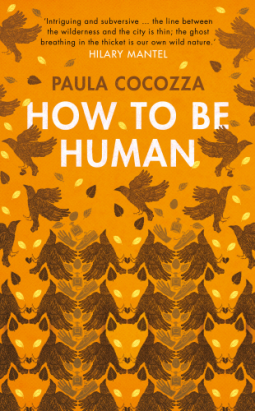
How To Be Human by Paula Cocozza

Befriending the wild: How To Be Human by Paula Cocozza

image

How To Be Human is a gripping and unusual novel about wildness, loneliness, and obsession. When a fox appears in Mary’s garden she tries to make him leave, but soon she realises they have a burgeoning connection that nobody around her will understand. As she battles against other forces – the neighbours with young children who want the fox problem dealt with and her ex-boyfriend who seems to be lurking around – Mary sees the fox as the constant in her life, but her preoccupation with the fox threatens to drown out everything else.

A plot summary does not do the novel justice. Cocozza’s writing gives the book a tight focus and draws the reader into Mary’s world, painted deftly as a place where she feels uncomfortable until she has the fox to keep her focus. It is a story of a woman befriending a fox, but it is also the story of modern day loneliness, of isolation in a city filled with etiquette and the wildness that Mary finds escape with. The writing is detailed and the action meditated, making the novel a careful exploration of how the fox changes the main character.

On the one hand, How To Be Human is a classic kind of book about a character’s mental state as they become obsessed. On the other hand, it is original and fascinating, highlighting the line between city and wilderness and how sometimes those can become blurred.

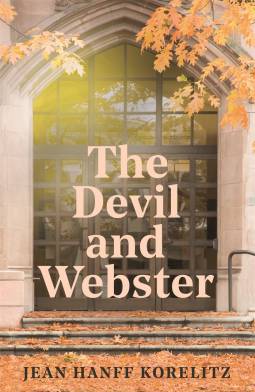
The Devil and Webster by Jean Hanff Korelitz

The Devil and Webster by Jean Hanff Korelitz

image

The Devil and Webster is a slow burn campus novel from the perspective of a feminist scholar college president who discovers that ideals and protest are not as clear cut as she once thought. Webster College is an elite liberal arts college in New England and from its less inclusive past has transformed into a centre of free thought, inclusiveness, and protest. Its president Naomi Roth has a protesting past and when another protest sparks up on campus, she sees no reason to discourage it. However, the events that unfold question her beliefs and show that corruption can spring up anywhere and protest can be a grey area.

The novel is full of detail and is quite slow paced, but this culminates in a twist that shows how one situation can very suddenly turn into another one. Naomi’s current life is vividly painted, from her troubled relationship with her daughter Hannah – a student at Webster – to her worries about her closest friend Francine, Webster’s dean of admissions. Combined with this is an image of protest in the modern day, with social media able to spread information and misinformation in the blink of an eye. The conflict in the novel unfolds gradually and though it took a while to be sure that it was going somewhere, the ending and the way in which Naomi is caught in a seemingly futile position despite her best intentions do make it worthwhile.

From reading the acknowledgements at the end, I found out that Naomi Roth had featured in an early novel by Korelitz, but The Devil and Webster worked well as a standalone book and any mystery about Naomi’s past felt like part of the narrative. Though its pace may not appeal to everybody, it is an incisive and sometimes satirical novel about intentions, corruption, and higher education.

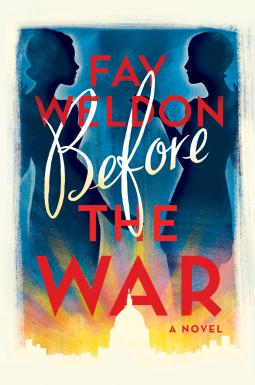
Before the War by Fay Weldon

The act of writing historical irony: Before The War by Fay Weldon

image

Before The War is a historical novel set in the early twentieth century with an ironic tone and a self conscious narrator. It tells the story of Vivien Ripple, the daughter of a publisher, Sherwyn Sexton, a writer and an editor at Ripple & Co, and the events that occur after Vivien makes the unlikely suggestion that they get married. Europe tries to recover from one war and hurtles headlong into another whilst the characters find themselves entangled more messily than they imagined and the world they live in shown to be ridiculous.

Weldon writes in a humorous and metafictional style, with a narrator who skirts between exposing the act of making up details on the spot and claiming that the events are true. The narrative of the novel is farcical and not particularly original, reading like something from Waugh or Burgess perhaps, but the narratorial style provides a driving force, exposing the act of looking back at fake history from the twenty first century through direct comments to the reader and references to modern things such as Gone Girl mixed into asides. The use of hindsight and historical irony makes this a novel more about the act of writing a novel set between the world wars than one focused on a narrative in the period.

Before The War is not quite the historical novel it seems to be, but this makes it suited to readers looking for irony, self consciousness, and something akin to Evelyn Waugh writing his novels from the vantage point of the twenty first century.

The Roanoke Girls by Amy Engel

A dark tangle of thorns: The Roanoke Girls by Amy Engel

image

The Roanoke Girls is a dark literary thriller about one family and their mysterious secrets. Lane Roanoke goes to live with her grandparents and wild cousin after her mother’s death, trading New York for the family home Roanoke in rural Kansas. There, she becomes drawn into the family’s history and the life that her mother escaped before Lane was born. It soon becomes apparent that Lane left after that summer, but when a sudden event brings her back to Roanoke, there is a lot to be faced about that summer.

Engel’s novel is tense and carefully constructed, with a classic thriller structure of telling past and present narratives concurrently. The writing style is simple yet atmospheric, drawing a vivid picture of the large and oppressive house and the nearby small town where Lane and her cousin Allegra search out amusement. Lane’s grappling with her own nature, her ability to love and hate, and her attempts to escape Roanoke and being one of the Roanoke girls make her a complexly figured and compelling character. Engel doesn’t feed the reader details, but leaves plenty of the past broadly painted and lets the horror simmer in the background, particularly in relation to the other girls in the family.

Though the plot is broadly a thriller or mystery type narrative, The Roanoke Girls is more than that, a haunting book about dark secrets and about the strange kinds of bonds that tie people together, whether good or bad. The epigraph is a quote from Lolita and The Roanoke Girls shares the darkly oppressive and shocking atmosphere of Nabokov’s novel, but with a lighter prose style and a mystery narrative. It is perfect for thriller fans, but also people who prefer something a little more complex, exposing a dark yet compelling side to human nature.

(Thanks to Hodder and Goodreads for the proof copy I won, which is also a gorgeous looking book.)