The Future Won’t Be Long by Jarett Kobek

90s New York novel written with hindsight: The Future Won’t Be Long by Jarett Kobek
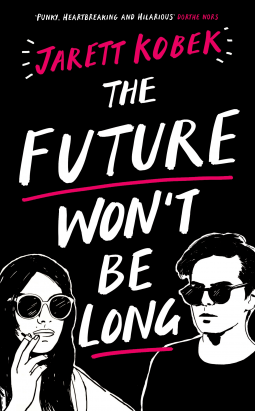
The Future Won’t Be Long is a self-aware version of 80s and 90s New York novels that follows two friends over ten years of saving each other and striving for something resembling success in a disillusioned America. Baby is a gay guy fresh in New York from Wisconsin, where he meets Adeline, a rich kid art student with space for him to crash. They end up best friends and navigate a world filled with friends, disappointment, drugs, art, and East Village gentrification as America moves from the late eighties into the nineties.

The novel is fuelled by references to Warhol, Wojnarowicz, and Basquiat, Bret Easton Ellis, The Great Gatsby and Marvel vs DC. Though clearly similar to books by Easton Ellis and Jay McInerney, by including them as minor characters and taking a modern perspective on the period (the narratorial voice, which alternates between Baby and Adeline, makes mention of 9/11) Kobek makes The Future Won’t Be Long feel like a novel of that period and a comment upon them. The characters engage with politics on race, gender, and sexuality, using the twenty years distance between the end of the novel and the modern day to give space for reflection. The main characters are flawed and their friendship serves as a reminder that books can be centred around a friendship and its ups and downs whilst engaging with the culture surrounding them.

At times it does feel a little too clearly another New York epic about art, drugs, and friendship, but it makes a good companion to other books of the year like Olivia Laing’s The Lonely City (for the art and AIDS background) and has an enjoyable self-awareness about the popularity of the straight white American male author even in the alternative culture of the 90s. The narrative style is fast-paced and fairly jumpy, likely to appeal to people who like books by the authors referenced within the narrative like Easton Ellis. Sometimes almost metafictional, Kobek combines 80s and 90s gay New York life, the literary world of that time, comic books as art (including being female in that world), and general American life and disillusionment to create an enjoyable and interesting novel about a period there seemed to be too many books about already.
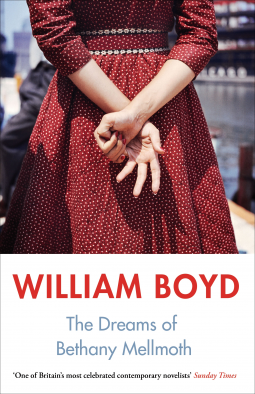
The Dreams of Bethany Mellmoth by William Boyd

The Dreams of Bethany Mellmoth is a collection of stories by William Boyd, mostly about chance encounters, affairs, and the charting of lives. The book starts with some shorter stories, then the central story follows the titular Bethany Mellmoth—a young aspiring actress who dreams of better and deals with her separated parents—and then the final story is about a small time actor who finds himself in a mysterious thriller-type situation, not unlike the genre of film he tends to be cast in. At least one of the earlier stories connects to Bethany’s and overall it feels like a carefully curated story collection with her longer story at the heart.

The style of many of the stories—including Bethany Mellmoth and earlier shorter ones—is a snippet type one, with the given story feeling like either a moment of something larger or the telling of a story in small, fast pieces. This allows Boyd to depict characters’ lives in small spaces and it is mostly effective, creating readable short stories about interesting characters. Those hoping for more of an interconnected book, perhaps closer to a novel, when reading the summary may be disappointed, but there are connections and plenty of similar themes. Most of the stories are set in and around London and even when they don’t, it does feel like the characters could run into one another at any point.

Boyd’s collection of stories is an interesting read about flawed people and decisive moments in their lives and relationships, with some conceits used to create the kernel of a story (for example a man listing all the things he has stolen throughout his life, or another vowing off adultery except for kissing) and others just showing elements of a certain character’s life. These are enjoyable literary short stories of varying length that can be consumed at once or dipped in and out of.

The Sparsholt Affair by Alan Hollinghurst

One man, a web that spans across the decades: The Sparsholt Affair by Alan Hollinghurst

The Sparsholt Affair is a time-spanning, character-focused novel typical of Hollinghurst full of charm and understated secrets. It moves through time from Oxford during the Second World War to end up in the modern day London of dating apps and finding scandal via internet searches. David Sparsholt is an athletic newcomer to Oxford, a place caught in a strange position during the war, one of blackouts and spies and secrets. He only spends one term there, but it is long enough to form connections that will resonate across the decades, mixed up in a world of attraction and art.

The narrative structure is similar to The Stranger’s Child, moving through time to make moments turn from present action to past hearsay and rumour. Despite the initial Oxford setting, this is less of a rarified upper class country set than that earlier novel, more focused around artists, pictures, and a changing world for gay men. The first section, in which a group of friends are drawn into an obsession with a new arrival, is particularly engaging, and sets up a solid basis for the later unfurling events. The characters are varied and charming and as with the best of Hollinghurst’s previous novels are the reason the book is hard to put down (along with the understated secrets and ambiguity of the time jumps).

Hollinghurst fans will likely be delighted with this new novel, which blends the best elements of his writing and manages to bring in more modern elements like dating apps too. For those who know his work less well, this novel is an exercise in using a twentieth century period setting to both show changing societal attitudes and give characters various ups and downs across their lives.

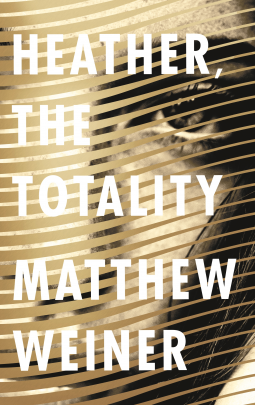
Heather, The Totality by Matthew Weiner

Portrait of a girl: Heather, The Totality by Matthew Weiner

Heather, The Totality is an absorbing portrait of a girl, the way her parents revolve around her, and what happens when someone else is pulled into her orbit. Mark and Karen Breakstone have a fairly ordinary life of luxury which is fully cemented when their daughter Heather arrives into their lives. As she grows up, their respective relationships with her change, but they both continue to keep her as the central figure in their family. Meanwhile, a man who lives far away from their privilege will soon also be brought into contact with Heather, and again she will become a central focus.

Weiner, known best for the TV series Mad Men, writes in a distinctively blunt and detailed prose style as the narrative starts by setting up how the Breakstones come to be and then showing how their family unit moves and evolves. In between this, he cuts to snippets of the story of Bobby, a troubled young guy who escapes his drug addict mother and time in prison to work on a construction crew. The result is a surprisingly absorbing book that details the tiny elements of human life and how different people can become focused on one person. Heather as a character reflects the way parents see their own children in specific and personal ways, meaning that it takes until her perspective is explored to see how her parents’ may or may not be unfounded. Weiner uses these various perspectives and the minutiae of life to show a privileged life in its anxieties and successes, and what happens when an outsider lurks on the edge.

The plot is mostly understated, brewing arguments and thoughts, and its pacing is likely to feel familiar to those who’ve seen Mad Men, especially in the progression of Sally Draper in that series. There is lingering menace, but mostly it is a short and sharp novel about the small details of life and intricacies of family units. It is one for drama fans, not full of action but an intriguing portrait of a family that could be read in a single sitting.

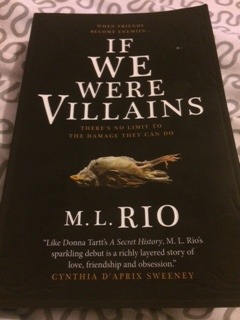
If We Were Villains by M. L. Rio

Fucked up friends, murder most foul: If We Were Villains by M. L. Rio

If We Were Villains is a tense and electrifying novel about a group of actor friends whose lives turn towards the Shakespearean tragedies that they have all immersed themselves in. The narrator, Oliver Marks, has just been released from prison after ten years, and finds himself telling the detective who put him there the real story of what happened. The story that unfolds is one of a rarified environment at an elite conservatory, where seven friends and classmates pour their souls into performing Shakespeare. When one of them is found dead, suddenly the line between life and fictional tragedy seems dissolved, and it isn’t quite clear who is blameless of what.

The comparisons with The Secret History are almost too obvious to be stated: intense group of friends immersed in one subject, death, a narrator remembering the past and flitting with unreliability. What is notably different is the narrative arc and pacing, which in Tartt’s novel is centred around covering up what has been done as they all fall apart from doing it, whereas in If We Were Villains, the questions are about what really happened on that night and whether the cracks were already there beforehand. Consequently, it has a more thriller-like pace at times, and it is hard once you’re near the end to not want to race on and take the final blows. The division into five acts allows for the framing device of Oliver telling his story, though that in itself is also a space for revelation, and the ending packs a punch.

The gripping and at times excruciating heart of the novel is the relationship between Oliver and James, which starts off as a clearly interesting friendship and doesn’t disappoint those who stay intrigued by it. Due to the structure of the novel, the reader is plunged into the world of the seven actors once they’ve known each other over three years, meaning that instead of seeing how they became friends as in some novels of this kind, the narrative throws you into their varied dynamics and shows how it starts to fall apart. As with other books about intense groups of friends at elite learning establishments (not just TSH, but Naomi Alderman’s The Lessons too, and The Bellwether Revivals to some extent), it is hard to leave the group behind after the final page as they are such an intoxicating and messed up bunch.

Admittedly, If We Were Villains was always going to be in my interests. Not only did I study Shakespeare, but the author did the same Shakespeare MA at the same time as me, so I’ve also seen the kind of people who could get like this, and the ‘messed up pretentious student friendship group go too far’ genre is one of my absolute favourites (see this post for more). Anyone with an interest in either (or both) of those areas is likely to enjoy this novel which weaves Shakespearean quotations into dialogue in a way that will be worryingly recognisable to some, and seem completely weird to everyone else. A solid addition to my favourite sub-sub-genre of literary fiction.

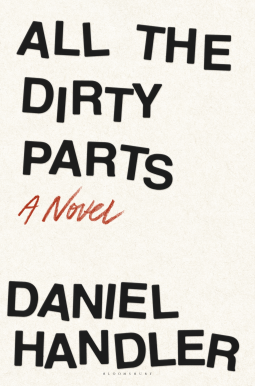
All The Dirty Parts by Daniel Handler

A Series of Inappropriate Events: All The Dirty Parts by Daniel Handler

All The Dirty Parts is a short, sharp novel about teenage desire from Daniel Handler, aka Lemony Snicket. It charts the inner thoughts—mostly dirty, as the title promises—of a high school boy who is gaining a reputation, or so people warn him. Cole is obsessed with sex and has slept with a number of girls, and described them all to his best friend Alec, but when things with this best friend move in a new direction and then new girl Grisaille takes over his focus, Cole finds out things aren’t as simple as he’d made them out to be.

Handler writes in a distinctive style, giving Cole a clear voice, and the whole novel is written in tiny snippets, like thoughts jumping back and forth. He takes the conversational narration of Holden Caulfield, the frank and explicit content of Bret Easton Ellis, and his own serious handling of young people’s thoughts and realities that will be recognisable to fans of A Series of Unfortunate Events, and creates a brash novel with a main character who seems all too typical. Everything is sketched lightly and the novel’s pace is quick, making it easy to consume in one sitting, and the ending leaves the kind of ambiguity found in teenage life, unsure what will happen next.

All The Dirty Parts is not for everyone. It is blunt, it talks extensively about teenagers having and thinking about sex, and it does with a narrator who is no simple hero. Some readers will find it uncomfortable; others will find Cole too unlikeable, or too honest a teenage boy. However, what Handler recognises is that teenagers will always consume media like this—maybe by discovering cult adult novels with famously explicit content, or through film and TV, or fanfiction, or otherwise. By writing a novel that appeals to both a sense of relatable content and a desire for that which feels shocking or exciting, he is depicting teenagers in a way that could be insightful to both them and adults, whilst also being entertaining.

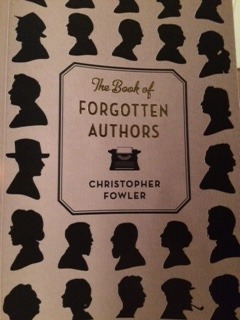
The Book of Forgotten Authors

Find your new favourite author you’ve never heard of: The Book of Forgotten Authors by Christopher Fowler

The Book of Forgotten Authors is a charming journey through ninety-nine authors who are mostly under-read today though more popular in their time, with sporadic short essays in between the summaries of the authors and their major works and charms. The writers are mostly from the late nineteenth and early half of the twentieth century, though there are some older and slightly more recent ones too, and they span from forgotten women writing mystery and ghost stories to questionable taste comedy that perhaps ought to stay out of print. It is a book that can be read cover to cover or dipped in and out of for a taste of various authors.

Fowler does well to keep the book engaging, with each author’s chapter not spanning more than a few pages and the short essays only a few more. This quick pace makes it easy to enjoy, and it is exciting to come across an author you’ve heard of, never mind ones you’ve read (as a Byron and Shelley fan, it was exciting to find Thomas Love Peacock in there). On the other hand, it is a great way to discover new books to read, especially for fans of crime and mystery.

A few entries are a little uncomfortable as Fowler describes how the writers’ works are clearly problematic or very much a product of their time, but there’s others that are described as seeming ahead of the curve, precursors to more popular later works. He highlights how many of the stories written by the ninety nine authors have been made into more famous films and TV adaptations, another way in which the book can spark off recollections as well as new discoveries, and there are comparisons to popular authors and modern pop culture to help the reader imagine where these ‘forgotten’ authors might fit in.

The Book of Forgotten Authors is a clearly a labour of love and it is a great read for book lovers, particularly as a gift for someone looking for new reading inspiration or interested in lesser known writers. It’s a bit hard to read without pausing to search online for some of the books or trying to work out where you recognise a writer’s name from, but its short sections make it easy to pick up and put down as necessary.

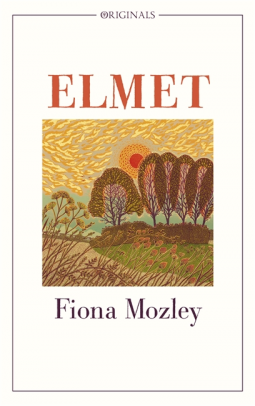
Elmet by Fiona Mozley

Violence and freedom in the Yorkshire countryside: Elmet by Fiona Mozley

Elmet is an unusual and captivating novel about family and place and the boundaries of society. Daniel is trying to get north, having left the home in the woods he lived in with his Daddy and sister Cathy. Once, Daniel and Cathy went to school and lived with their Granny, but then they left for the woods, free to be their own people. Their sanctuary has turned hostile, with the house built for them by their Daddy’s own hands under threat from local landowners.

Mozley’s novel is embedded in the Yorkshire countryside, a place that is Daniel and his family’s home, sustenance, and friend. The descriptions of it are raw and breathing, presenting the land as something not romanticised or boring, but a place of hard life and toughly-fought reward. The majority of the characters are poor and often transient or avoiding the system, and the landscape is shown as a place that can offer if not neutral then less established ground. Though it is a novel about family and countryside, it is also highly political in a way and steeped in class issues, with unscrupulous landowners ripping off ordinary people, and it shows one family’s attempt to live outside the usual political and social system.

Elmet is a raw and exciting book that should be read even by those who don’t think they like novels set in the countryside. It is also an important reminder that books set in the England beyond London need to be written, ones that show rural issues whilst telling stories of varied characters and lives.

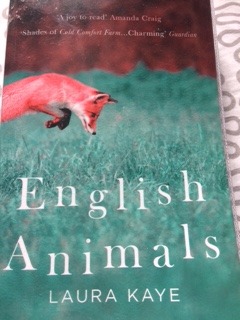
English Animals by Laura Kaye

English Animals by Laura Kaye

English Animals is a witty and emotionally gripping novel about love and belonging in modern England. Mirka moved away from her unsupportive family in Slovakia to England and is about to start a job at a country house with what she thinks will be a quintessential countryside couple, Richard and Sophie. She finds herself suddenly drawn into Richard’s taxidermy business and falling for Sophie as she settles into life at Fairmont Hall and soon the situation is far more complicated than her vision of the English countryside.

Mirka’s narration gives the novel an endearing centre, with her wry observations and longing emotion showing how complicated her relationship to the country is. England is a place of hope and potential belonging for her, a place she imagines settling down with a wife and maybe children. But from aggressive comments about her or other Eastern European people from those around her to Sophie’s stuck up and scary father viewing her as their lowly cleaner, she faces tension around the England she wants to live in. Mirka is a charming central character and the bittersweet ending feels fitting to the book as a whole, with quirks like her newfound taxidermy skills adding a distinctive and often satirical flair. Her relationship with Sophie, and indeed with Richard, is touching, and it is these characters and the messy web they create that makes the book hard to put down.

English Animals is an important novel about contemporary life that shows the perspective of someone who just wants to come and work in Britain and hopes to find a more tolerant society in her new home, but ends up with various kinds of prejudice as well as happiness and opportunity. It combines wit and satire with a story about love and hope, and ends with a fairly ambivalent message about modern life and England.

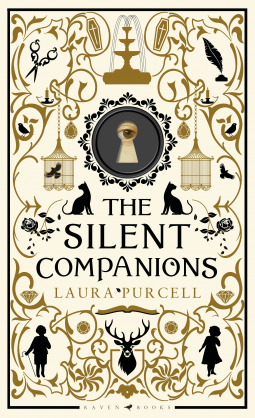
The Silent Companions by Laura Purcell

Creepy historical gothic: The Silent Companions by Laura Purcell

The Silent Companions is a tense gothic novel set in the nineteenth-century, centred around a dilapidated old house and the newly widowed woman who goes to live there. Elsie’s short marriage is quickly ended by her husband’s death at the country seat he was trying to make hospitable for her, but when she moves there herself to see through her pregnancy, there is more for her to worry about than the hostile neighbours and inexperienced servants. Between her and her husband’s strange, awkward cousin Sarah, they discover the diaries of a woman who lived in the house in the seventeenth-century—a diary full of death and despair—and a strange wooden figure, a silent companion. This companion is not the only one, however, and they might be silent, but their influence scares Elsie to an ever-increasing extent.

The novel is written with different threads of narrative, with Elsie trying to recall her story in an asylum, her third person narration of the events she lived, and excerpts from the earlier diary. Through this, Purcell weaves mystery and darkness, leaving the reader wanting more with each narrative jump. There are plenty of classic gothic tropes to enjoy, with spirits, mysterious doors, noises at night, and unsettling family secrets on all sides. At times the story is genuinely unsettling, both in terms of fear and in the claustrophobic atmosphere.

The presentation of Elsie—a heroine with a tormented past and a present in which men seem to be threatening her freedom—is clever, combining sympathy with an uncertainty for what she could be potentially forgetting or misremembering. The position of women in Victorian society, particularly in relation to class, is near the forefront of the novel though not explicitly discussed, and the gothic heroine is one contained by men against her will. At the same time, the novel is populated by other women who are trapped in a position or have done bad things without realising the consequences, reflecting her plight.

The Silent Companions fits very well into the gothic genre and provides a suitably eerie and unnerving read. In atmosphere, it has similarities to Waters’ Fingersmith as well as older gothic novels, and its use of an additional seventeenth-century narrative both fulfils the trope of an older, inset narrative and gives a different aspect to the novel, showing how women could be seen as witches or as insane and hysterical depending on the century. Purcell’s novel shows that the historical gothic novel is a genre that will continue to live and continue to question female autonomy whilst providing chilling reads.