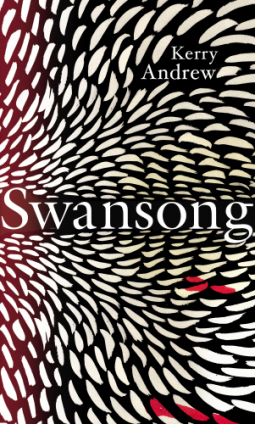
Swansong by Kerry Andrew

Haunting ballad reinvention: Swansong by Kerry Andrew

image

Swansong is a haunting mix of modern life and ballad mythology in a novel about guilt, the past, and transformation. Polly is in the Scottish Highlands to escape everything that went wrong in London—her degree, her flat, her friends, and an incident after a night out she’s fleeing from. There’s not much to do except drink, drugs, and seducing the local bartender. However, Polly keeps seeing strange white shapes across the water and soon she’s intrigued by the mysterious loner who lives in the woods. She’s keeping her secret whilst trying to work out his.

Part of the novel is based on a folk ballad story and even without knowing this until the end, the book has a feeling of being steeped in tradition, whilst also being about a girl firmly in the modern day. Andrew combines descriptions of the landscape and Polly’s strange visions with imagery rooted in contemporary references to create a writing style that updates old tradition and stories of metamorphosis into another iteration, a modern one.

Swansong is a book about a young woman escaping messed up city life and mental health issues by ending up somewhere more remote, similar to other recent novels like Sara Baume’s A Line Made By Walking. This sub-genre feels like a reaction to modern life for young people and at its best—like in Swansong—feels like it combines literary and other traditions with contemporary issues in interesting ways. The folk music side to the novel is quite understated in the actual reading experience, becoming most apparent in the following author’s note, but the not quite natural goings on hint towards something mythological.

This is an eerie and strangely tense novel that shows how the transformation of old material and styles can produce stories both modern and traditional at once.

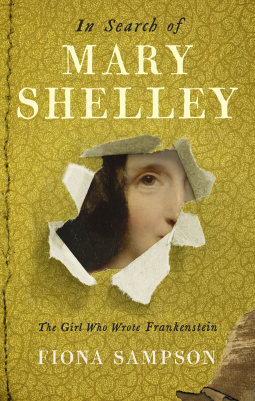
In Search of Mary Shelley by Fiona Sampson

In Search of Mary Shelley: The Girl Who Wrote Frankenstein by Fiona Sampson

In Search of Mary Shelley is a new biography of the author in time for the 200th anniversary of the publication of Frankenstein. It aims to look for the person behind the famous novel and her famous poet husband and writer parents (the latter being Mary Wollstonecraft and William Godwin, for those who don’t know much about her life). Of course, other biographies do that too, but Sampson’s is a concise and approachable book that suits a wide audience and those wanting to dip into the writer’s life for her most well-known creation’s anniversary.

The introduction talks about the difference between the prevalent cultural image of Frankenstein—a science fiction horror story with a futuristic vibe and a huge green monster—and the reality of the novel and its connections to the past, to Romanticism, and to thinking of Mary Shelley’s time. It also counterpoints her reputation as the wife of Percy Bysshe Shelley that lasted for a long time, pointing out the time it took for more critical discussion of her. Beyond this opening, it is a fairly straightforward account of Mary Shelley’s life, though each chapter tends to start with a time jump and then backtrack to fill in the detail, possibly to keep more casual readers engaged. It is punchy and balances not being bogged down with explaining who all the key figures are, whilst using a fairly informal tone to keep it readable.

As with all Mary Shelley biographies, the author has to make some implicit value judgements about key figures, particularly Percy, though it is unlikely even his fans will argue with some of his faults given by Sampson. She paints Mary as a varied and interesting woman and, though self-consciously speeds up after Percy’s death, doesn’t discount all the years of writing after Percy’s death. The main downside to the biography is also its selling point to some readers: it covers all the major events and characters, but is not hugely detailed. It doesn’t, for example, quote letters and journals as much as other literary biographies; this makes it far more accessible to a casual reader, but lacks some of the colour and interesting snippets that can be found in other books. This can be made up for, however, by supplementing with existing books such as Charlotte Gordon’s Romantic Outlaws (on both Shelley and her mother Mary Wollstonecraft and, as such, a very large book) or Daisy Hay’s short and also readable Young Romantics.

Sampson’s biography of Mary Shelley is perfect for those who know far more about Frankenstein (or think they do!) than its author, or perhaps for people who want to know more about the female writers who are so often misrepresented even in the modern day in simplistic or even offensive ways. It is a chance for people to look past the image of an eighteen-year-old magically conjuring a sci-fi novel out of nowhere and then solely being a poet’s wife, and see past these myths and misrepresentations to understand the intellectual, political, and social world in which Mary Shelley and Frankenstein came from.

My Favourite 2017 Books (In Order of When I Read Them)

Ended up as a top nineteen.

  • Stay With Me by Ayobami Adebayo – A book about hope and a couple in Nigeria who dream of having children, told from both their perspectives (full review).
  • The Lonely City by Olivia Laing – A multi-layered non-fiction book about art, LGBT history, and loneliness in New York City (full review).
  • All The Good Things by Claire Fisher – A moving and relevant novel about Beth, a young woman in prison, who is trying to document the good things in her life whilst remembering how she got where she is (full review).
  • A Line Made By Walking by Sara Baume – In the new genre ‘millenials, mental health, and escaping to the country’ sits this novel (full review).
  • The Roanoke Girls by Amy Engel – A twisted story of a family with dark secrets that has hints of (and an epigraph from) Lolita (full review).
  • New Boy by Tracy Chevalier – From the Hogarth modern Shakespeare retellings series comes Othello in a single day in a Washington schoolyard, a version that gives new light to the original (full review).
  • Girlhood by Cat Clarke – The setting is a boarding school in the Scottish countryside, where everything feels more intense to the girls who live and study there, and a newcomer puts everyone on edge (full review).
  • My Absolute Darling by Gabriel Tallent – The unnerving and intense story of Turtle, her apocalypse-obsessed father, and her fight for survival (full review).
  • Eleanor Oliphant Is Completely Fine by Gail Honeyman – A novel about trauma and ways of seeing the world that follows Eleanor as she tries to navigate her life according to the strict rules she has set herself (full review).
  • Conversations With Friends by Sally Rooney – Frances and Bobbi are performance poets and exes who are drawn into the complicated moneyed world of an older journalist and her husband in this fresh and distinctive novel (full review).
  • Good As You: From Prejudice To Pride by Paul Flynn – An account of British gay culture from the 1980s until the present day and some of the milestones in music and TV that showed change and progress (full review).
  • The Gender Games by Juno Dawson – A funny, clever, and often informative book that is part memoir and part guide to navigating gender (full review).
  • Hings by Chris McQueer – Weird and hilarious Scottish short stories feat. drink, drugs, and knees on backwards (full review).
  • A Change Is Gonna Come by various – An anthology of diverse YA fiction written by both established and new voices (my fave is a great story about living with OCD) (full review).
  • English Animals by Laura Kaye – A touching and wry novel about a Slovakian woman who goes to work in a rural English country house, gets into taxidermy, and falls in love with the wife (full review).
  • If We Were Villains by M. L. Rio – Short description: the Shakespearean Secret History (featuring a group of obsessed actors, death, and a fair amount of quotation) (full review).
  • The Sparsholt Affair by Alan Hollinghurst – Hollinghurst’s new book is an expected delight, the story of complicated relationships spanning from Oxford during the war to the 21st century (full review).
  • The Gentleman’s Guide To Vice and Virtue by Mackenzi Lee – My new ‘enthuse about this to everyone’ book, this is the story of a debauched young 18th century aristocrat who goes on a grand tour with his best friend Percy (who he is in love with) and his secretly rebellious sister and they get into a bunch of scrapes (full review).
  • The Hate U Give by Angie Thomas – A vital YA novel about a black girl torn between her posh school and the area in which she grew up.

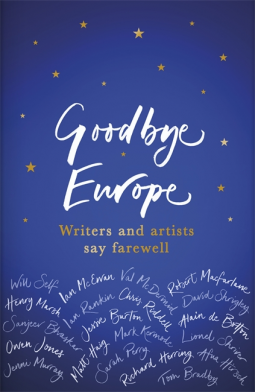
Goodbye Europe: Writers and artists say farewell

Goodbye Europe is a collection of pieces by various artists and writers of various backgrounds and focuses that looks at Britain’s connection to Europe and people’s feelings about being European post-Brexit. Perhaps inevitably, it is predominantly pro-Europe and pro-Remain, featuring a variety of personal recollections of times in Europe, thoughts on Brexit and national mentality, and the odd bit of fiction or humour.

Even for Remain-supporting readers, it is quite a strange experience to read it. Most people are sick of hearing about Brexit by now, or have been trying not to think about it any more than necessary for their own mental wellbeing. Many of the pieces are undeniably good, but there is something jarring—especially as a twentysomething reader—to hear how great it was to visit Europe in the 1970s and 80, or have the chance to live there. Perhaps it is a book for older people who can look back with a plethora of memories of Europe, rather than a desperate wish for those days not to be over.

One of the best piece is one by a fifteen-year-old who won a prize to be included in the collection, because it strikes a chord with how many young people felt about their future and their hopes and dreams after the referendum, especially those too young to vote. The humorous inclusions are good, too: like watching Have I Got News For You, repetitive news is good to find jokes in. Jacob Rees-Mogg seems to be in there to provide “balance” or as a kind of publicity stunt, particularly as it seems unlikely many people who strongly believe in leaving the EU would buy or read a collection of essays which are almost entirely pro-Europe.

The collection doesn’t feel like it has much hope for the future, though a few of the contributors have a stab at suggestions. The real audience for this book has got to be people with decades of memories of feeling European and visiting Europe, who want to enjoy thinkpieces and reminiscences that often look back to these times. It is fond, but for younger readers, it is like being told how great things were before you were born, or old enough to appreciate them.

Winter by Ali Smith

Winter is the next in Ali Smith’s seasonal novels that began with Autumn last year. As with the previous one, this is a novel both about a season and characters in that season, and a novel about modern Britain and strange contradictions and times in the country. When four people gather for Christmas in a large old house in Cornwall, they bring together their own personal truths, but these don’t all match up. Two warring sisters, a son being falsified on the internet, and a stranger he wants to masquerade as someone important find themselves together in winter, for better or for worse.

From the opening pages, Smith intermingles the idea of winter—a tough, cold, stark time—with the modern world and a post-truth era in which people can believe totally opposite things as the objective truth. She asks, in a world where everything—art, love, romance, god, every media form and method of communication—is proclaimed dead on a regular basis, what happens in winter when nature reflects this deadness? Like with Autumn, the story itself feels almost incidental, some people who happen to be written together, their lives connected by art and nature and relationship.

The strange position of Lux, a girl paid to pretend to be someone’s girlfriend whilst visiting his mother, is a highlight, the kind of transitory character that Smith writes well and who feels well into her transformative writing style. The expected punning and witty style is there, but also feels a little more sparse, maybe wintry.

The novel features many classic elements of Smith’s writing, a fitting follow up to Autumn, but also gets across the post-truth, Trump and Twitter age surprisingly well, mingling the failings of human memory and the certainty of disagreeing siblings into a new form of fake news. This is the perfect book to read over the holiday season this year to reflect on the season and the year in delightful style.

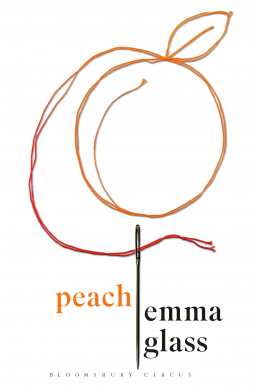
Peach by Emma Glass

Dark, poetic prose: Peach by Emma Glass

Peach is a visceral book about a girl who has been assaulted, written in an unforgettably immediate style. Peach comes home bloody and plagued by the smell of meat, but her parents are too preoccupied with their new baby to ask the right questions. She goes to college to see her boyfriend Green, but still nothing is right. Her body is wrong. Glass uses a distinctive style written in sharp immediacy to show Peach’s thoughts and actions after she is attacked.

This short novel is an exercise in darkly poetic prose that takes a difficult subject and inhabits the trauma of the experience. At times it is so visceral that it is painful to read and its depiction of the aftermath of sexual assault and the mental processes of the main character mean that any reader needs to be aware of this content before reading, but it is also carefully done, with a skilful use of minimal words and descriptions of physical sensations and sounds. It has similarities to books like Eimear McBride’s The Lesser Bohemians, but far more condensed, focused on detail and spanning a short space of time. Every word feels like an attack or relief in this impressively written book that depicts a terrible subject in an emotive and haunting way.

Hings: The B-Sides by Chris McQueer

Hings: the B-Sides is a further eight witty and surreal stories from Chris McQueer that weren’t included in his collection published earlier this year, Hings (which I reviewed here). There’s the ‘too hot for TV/the original collection’ like the weird ‘Road Closed’ and the disgusting yet strangely relatable ‘Bursting’. Both ‘Love Is Love’ and ‘News’ feel like comedy Scottish snippets of Black Mirror ideas, with the former definitely a comedy smart home advert. For fans of the A-side, there’s another little bit of Sammy, and there’s two little tales with clever twists that feel very much in keeping with the strange twists in Hings itself, ‘Crisp Packets’ and ‘Flowers’.

This is a welcome bunch of up to date and clever short stories, something for fans of Hings and for lending to people to convince them to commit to reading the larger book. In a handy zine format, it’s a great antidote to just reading another pointless Buzzfeed end of year listicle.

Her Body & Other Parties by Carmen Maria Machado

Her Body And Other Parties is a book of incisive short stories that combine bodies, sex and relationships, horror, science fiction, and pressing issues in imaginative ways. The main characters are mostly women, living in uncanny worlds that can be apocalyptic, magical, and/or unnervingly almost real. In one, the truth about a dress shop and the women slowly going incorporeal drives an employee away from the store. In another, the ribbon around a woman’s neck becomes a mysterious focus in a story that highlights the act of telling stories and of the sounds of telling them aloud. Others play with structure—an inventory of sex that depicts a virus epidemic across the globe, a story told using Law & Order: SVU episode titles—or with common issues like dieting and motherhood, in ways that rethink how these things can be considered.

To describe the stories doesn’t quite do justice to the freshness and imagination of the collection, not only in the ideas and the blending of magical realism, sci-fi, horror, and the reality of life, but in the way they are written. The writing style is distinctive, creating atmosphere and digging deep into the female protagonists. These women have varied relationships with their bodies, different dynamics with their male and/or female lovers, assorted pasts and futures, but what unites them all is the way their stories are both real and surreal.

Some of the stories will likely have a greater effective on different people—as someone who actually thought the acronym was SUV, the Law & Order structured one passed me by quite massively—but this is an important collection. The stories do exciting things with ideas and writing, and the use of the uncanny and the monstrous to highlight issues particularly around women’s bodies and sexualities is creative and thought provoking.

The Gentleman’s Guide to Vice and Virtue by Mackenzi Lee

The eighteenth century, redux: The Gentleman’s Guide to Vice and Virtue by Mackenzi Lee

If someone had asked me ‘would you like a book about a rebellious eighteen-year-old bisexual aristocrat in the eighteen century?’ I would have obviously said yes. Add in the fact that it’s about going on a Grand Tour, full of adventure novel tropes, and is completely ridiculous in the way fun modern historical fiction should be and well. That’s The Gentleman’s Guide to Vice and Virtue.

The book is aimed at older young adult readers, though I think it’s real target audience is anyone who enjoys trash eighteenth century (and/or is a fan of Byron). It follows Henry “Monty” Montague, who has been kicked out of Eton and faces his tyrannical father’s disapproval for his lifestyle of drinking, gambling, and sleeping with various women and men. He has been allowed to go on the stereotypical Grand Tour of Europe alongside his best friend Percy, his little sister Felicity, and a boring guardian, as a final yearlong break before he must start learning how to take over the family estate. However, when one bad decision too far on Monty’s part puts them in trouble, soon the cultured Grand Tour turns into an adventure across Europe full of highwaymen, pirates, and alchemy (plus Monty’s inconvenient massive thing for his best friend).

I may be part of its specific audience, but this is how historical fiction should be done. Based in historical fact and with a few actual figures thrown in, but for the most part using the spirit of the period to do something adventurous (literally) and enjoyable. The tropes are used purposefully (and anyone whose read eighteenth century stuff like Sterne’s A Sentimental Journey will know things written at the time were full of ridiculous tropes too) and add to the charm of the fast-paced and witty plot. The true highlight is the characters: the scandalous Monty who needs to learn to think about other people whilst escaping his father, his younger sister Felicity who has better plans for her life than the finishing school she’s meant to be going to, and the likeable Percy, Monty’s companion in gambling and drinking who is hiding a secret or two.

This is not your accurate historical fiction. This is what happens when history is treated with sufficient irreverence and as a vehicle for adventure, romance, and general hilarity, whilst touching on a few major issues that all still have relevance now in some way. The style is modern with a hint of eighteenth century, and it works for the story. Some people will be scandalised by it (probably), but this is a fun and fresh novel that gives a happy ending to a scenario plenty would think should have no hope of one.

Anatomy of a Scandal by Sarah Vaughan

Increasingly relevant: Anatomy of a Scandal by Sarah Vaughan

Anatomy of a Scandal is a tense novel about power, privilege, and knowing the secrets from someone’s past. James is a politician on the rise, a family man with a long-standing connection to the PM. His wife Sophie has known him since they were both at Oxford and thinks she knows all the skeletons in his closet. However, when he is accused of a crime that cuts right into Sophie’s vision of her husband, she must consider whether she will continue to stand by him. And Kate, the barrister prosecuting James, has a past of her own, and is certain James is guilty, willing to put her all into getting him convicted.

Vaughan weaves together these main characters into a drama that jumps between the courtroom, the modern political world, and early 90s Oxford. It has elements of a psychological or domestic thriller, complete with questioning of the truth and intense legal proceedings, but Anatomy of a Scandal is more than that, an anatomy of individual viewpoints surrounding a scandal that covers political coverups, drinking societies and class difference at Oxford, and difficulties of rape accusations and trials. The epigraph is from Mantel’s Bring Up The Bodies and the way that Mantel combines the political and the personal whilst talking about the truth makes it a good comparison, despite the vast difference in subject matter. The novel is not solely psychological, or just a courtroom drama, but one that shows personal emotion within larger power structures.

The narrative is told from the points of view of major characters, with Vaughan withholding information or structuring it in a way that builds tension and gives the reader a sense of being caught in the middle of the secrets as they unfold. Her Oxford is very recognisable to anyone who has been and the whole novel is detailed, giving enough information to allow the reader to work out elements, but also keep guessing about what really happened or will happen. Though James and Sophie’s marriage is a real focus, it is Kate who stands out as someone caught between past and present, though at first she appears to just be a simple barrister character who will form the courtroom threat.

Anatomy of a Scandal is the kind of book that will appeal to both fans of thrillers and those who prefer something a bit more general, combining character relationships and backstory with tense prosecution. The focus on a privileged world—from the arcane rituals of both the court and Oxford to the money and power of politicians—can be fascinating and adds to questions of who should really be believed. It has plenty of gripping drama and would clearly make a great TV adaptation in the future.