What We Lost in the Swamp is a collection of poetry exploring youth, growth, being a queer teenager, nature, and jealousy, amongst other things. The poems have a straightforward style and some memorable imagery (I think “holding out own internalized / homophobia like great big onions / in our hands” was my favourite, or at least the one I remember most now), but for lots of people will have relatable moments encapsulated within. The nature imagery in a lot of the poems is more direct than a lot of poetry that uses nature as imagery and metaphor, which may or may not be your thing, and some of the poems I found didn’t quite work for me in their simplicity, but that’s often true in collections. I liked the poems about being a queer teenager at school the most, especially the opening poem ‘When I Realised I Was a Green Tree Frog in Another Life’, as these really hit home and make you consider your own experiences at school.
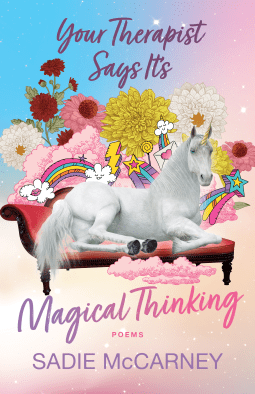
Your Therapist Says It’s Magical Thinking is a collection of poems that explores mental health and ideas of reality, moving through three sections: “Coping Strategies”, “Surrey Girls”, and “Alternate Timelines”. The first part explores a lot of the bad advice people give about mental health (the titles are all suggested coping strategies”, and the poems are written in a way that is readable and full of wit, satirising what people say about mental health whilst delving into some of the realities of their bad advice.
The second part, “Surrey Girls”, is based on historical photographs that were taken as part of the treatment of mental illness, written in the voice of different girls with multiple short poems for each. These poems really created different voices for these women and though I wouldn’t usually choose to read poems based around historical material like this, I really liked them. The third part, “Alternate Timelines”, worked less well for me, as I found it hard to engage with some of the poems, though I really loved ‘Fast Food Breakfast’, a poem about an everything bagel that truly has everything, and I appreciated the surreal nature of many of these poems.
The collection is varied, with each section feeling like a discrete part, and there’s a lot inside to think about on the treatment of mental illness and ways of seeing the world. Plus, the book has a truly hilarious cover which feels like a great representation of the title and the first section of the collection.
The Long Form is a novel about the novel and also a novel about a day in the life of a woman with a new baby, combining literary criticism with a critique on caring structures and forming connections. Helen is on maternity leave, caring for her new baby Rose, and the copy of Henry Fielding’s Tom Jones that she ordered online has just arrived. As the day progresses, she starts to read Tom Jones, and the narrative explores the story of Helen’s day, of Tom Jones, and of the novel form.
This book is a fascinating mix of a highly literary style, bringing in literary criticism and stylistic digressions, with a very human narrative of a day in the life of a new parent, covering the sorts of large and small struggles that might not typically be in such a literary-reference-heavy novel. Despite the immediate style and the constant returning to the plot of Tom Jones as well as theorists on “the novel”, The Long Form was surprisingly readable, building up a real sense of connection with Helen and Rose and the interplay between them and the texts referenced. The book ends with a list of referenced and relevant works, which is useful for people reading this without a particular background in literary criticism (the works aren’t just about the novel form either – I noticed Full Surrogacy Now in there as well).
Aside from the literary criticism and references, the book also explores how one woman and one baby exist within society, and the kinds of security or lack of security that can bring. There’s a particular focus on the roles of friendship and family, especially in terms of what is expected of someone with a new baby, and the snippets of Helen’s friendship with Rebba were one of my favourite elements of the book, arguing for the importance of their relationship in their lives and suggesting how this might clash with society’s idea of the hierarchy of human connections.
The Long Form surprised me with how much it could say and the way in which the different elements of it could be so well entwined. For some people, it might be too much of a literary experiment to be enjoyable as a novel, but as someone who did an English degree I appreciated how it managed to keep the literary criticism parts accessible within the novel itself, allowing the book to question what a novel is whilst also telling a compelling story.
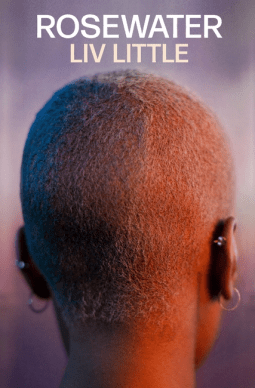
Rosewater is a debut novel about a queer Black woman living in London, a poet who works at a local gay bar but is sinking. When Elsie is evicted from her home, her best friend Juliet who she’s not spoken to in months lets her stay in her spare room. Elsie tries to find purpose in her life and reconnect with both her poetry and her loved ones, but it is hard to keep these fragile things together, especially when she realises some of the things she’s been hiding from herself.
This is a book that brings you into Elsie’s world, into precarious millennial existence in London and the difficulties of wanting to make art and have love when you are struggling. The pace starts off quite slowly and feels similar to other novels about people spiralling in their life, unable to communicate what is going on to those around, but it gets faster as the book goes on, with much more drama in the second half of the book. By the end of the book, I was very invested in the characters, and was glad that the ending brought hope. Partway through I did worry it would end up being one of those books where the narrator never really gets anywhere and nothing really happens, but thankfully that wasn’t the case.
There’s a lot woven into the book, from adjusting to change to accepting love to navigating dating, sex, and friendship. Through Juliet there’s also a look at prejudice against sex work, and in general the book looks at forms of work in the modern day and the overwhelming presence of money (or lack of it) in life. I liked the ways in which sexuality and gender were written in the book, with details that felt real but the focus always being on how Elsie needed to learn to stop sabotaging herself.
Bold and emotional, Rosewater told a great queer story of falling in love with your best friend alongside the difficulties of getting yourself on track when the world seems against you.
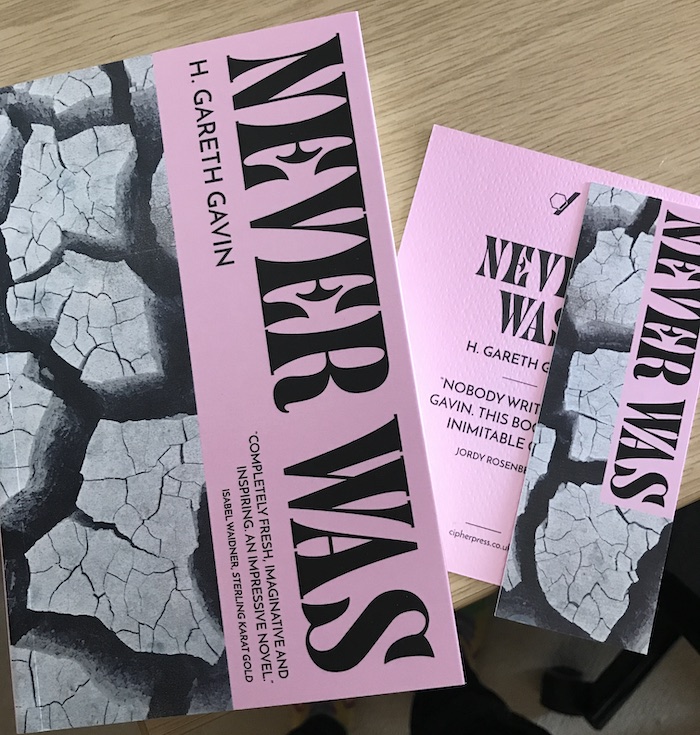
Never Was is a hallucinatory novel set in a limbo of lost dreams, exploring transmasculinity, addiction, loss, and what we do when we tell and hear our own and others’ stories. Daniel is on a clifftop by an afterparty held by the apparently famous Fin, a party full of drugs and a sense of unreality. It is unclear why they are there, but as Daniel starts telling Fin the story of a mining town in the North, a kid growing up with a salt miner father, and a Great Subsidence that changed everything, maybe the purpose of the place Daniel and Fin are in will become clear.
The page layout of this novel really stands out, experimental but always in service of communicating something, particularly through the bulk of the novel where it serves as a method of dialogue and of telling two stories at once. I loved the opening single page vignettes that lead you into the book and the sense of party hallucination you got from them. The multi-part narrative that sits within this narrative, narrated by Daniel, explores working-class life in a similar to way to Isabel Waidner’s books, using both the surreal and the gritty plus cultural touchstones like Neighbours. Lurking around the edges are recurring themes of addiction and gender, and the ways in which these sometimes have to lurk around the edges, as people try to ignore them.
The style and the storytelling really enraptured me, and also what isn’t told. Never Was feels like a puzzle that takes you along for the ride.
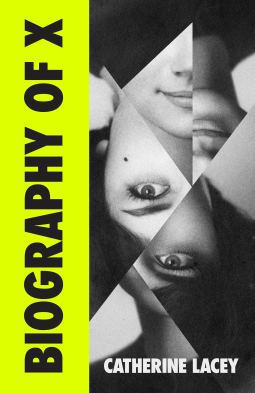
Biography of X is an epic novel, simultaneously a fictional biography and not one, an alternative history, and a story of a celebrity artist and writer with many guises, feuds, and collaborations. X is dead and her wife CM, angry at an incorrect biography of her, starts trying to unravel the mysteries and history of X, a woman who may have been born in the Southern Territory, a fascist theocracy that came out of a rift in the US and now reunified. As CM charts X’s various identities, adventures, and encounters, it is clear that X was complex, but CM may be heading towards what she doesn’t want to think about: the truth about their relationship.
This feels like a unique book, something which takes elements that feel familiar—the fake citations for interviews, the tone of both biography and not, creating an alternate American history—but combines them in a way that is ambitious and surprising. Perhaps the most notable macro element for me was the way in which the book tells an alternate history not only of America, with divided Territories and changed politics, but also of art and culture, changing art history into something female-led and adding X into male creators’ works. In many ways, this seems only incidental to the central concept of the novel, the attempt by the narrator to write something that is not a biography, but is about her dead wife and her metaphorically shapeshifting past. However, in actuality, both these elements are deeply related as the book plays out a multi-faceted look at storytelling and constructing stories, both as an everyday activity and when actually writing.
At times the sheer amount of content and detail dragged, and at other times it felt exciting, though perhaps no point more so than when I got to the references section at the end, in which Lacey acknowledges all the changes made to real life quotes and incidents to make the book. The levels of playing with storytelling were fascinating and it was that element I liked most. There’s also a lot in the book about the nature of art, and the way that CM seems to focus on presenting herself as the antithesis to art, not understanding X’s work at times and focusing on how she herself is plain and a journalist focused on apparent facts, even when people tell her there are none.
Audacious, exciting, sometimes slow and sometimes fast, with ridiculous characters and an alternative history that verges on completely satirical, Biography of X is an experience. The concept of truth is complicated so much that you reach the end unsure if it’s even true that you just read a book, and that was fascinating.
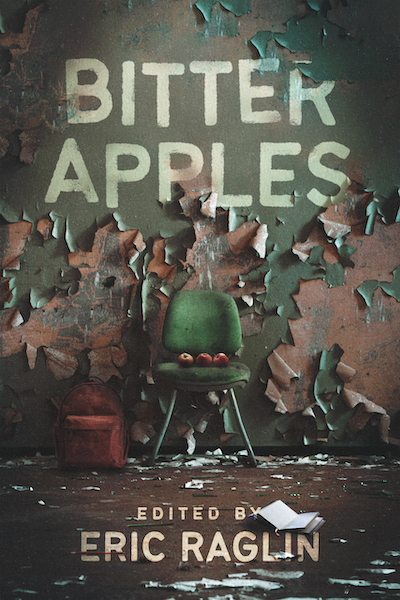
Bitter Apples is a collection of horror stories about teaching, written by teachers and exploring both realities and dark permutations of both school and university level teaching. There are seven stories in the book, each quite different and using different kinds of horror, from ghostly students to zombie apocalypse teaching, cult-like teachers’ groups to offering morbid payment in return for a better classroom. All of them, however, consider the stresses of teaching in some way, particularly around education budgets and frustrations about what you can actually do as a teacher.
My favourite story in the collection was ‘The Chalk Martyrs’ by the book’s editor, Eric Raglin (who I’ve read other stories and a collection by), as it combined a wince-inducing body horror conceit with the harsh realities of wanting better for your students, and I loved the details in the story. I also liked ‘Make Sure You Fill Out Those Evaluations’ by Aurelius Raines II, which has a fun training session format whilst creating a picture of a zombie horror dystopia in which teachers still need to try and make school a safe space for students, and the different uses of hauntings in both ‘Drip Drop’ and ‘There’s a Reason They Collect the Pencils’. A couple of the stories didn’t work so much for me as they were more low key, surreal horror that I didn’t click with, but that’s often the case with anthologies.
Combining a variety of horror with the often horrifying reality of the conditions teachers have to work in, Bitter Apples is a clever anthology that would probably make a particularly good gift for teachers or ex-teachers who like horror, and a good read for fans of horror anthologies in general.
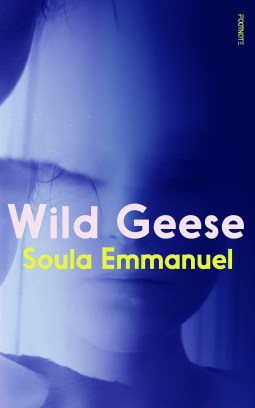
Wild Geese is a novel about a woman who spends a weekend with her ex-girlfriend and explores the messiness of life. Phoebe is trans and Irish and lives in Copenhagen, where she moves through the world largely alone, with the company of the dog she looks after, Dolly. When her ex-girlfriend Grace suddenly appears on her doorstep, visiting the city for the weekend, something is kindled between them, but it isn’t straightforward, and both of them have pasts and places to reconcile and a sense of being lost to face.
This is a beautiful novel, set over a single weekend (with timestamps) from Phoebe’s point of view, and manages to capture a lot of wistfulness, loss, and hope within the writing. It combines poetic, literary prose with modern references (Blåhaj being my favourite, but I was sat with one whilst reading) and the limited timeframe of the narrative allows for a lot of space for not only thinking about the past, but also plenty of thoughts about the present and future. I spent a fair bit of the book worried about how sadly it might end, but actually I think it was a powerful narrative with a conclusion that was satisfying and shows how things can be complicated and messy, but also help you to move forward.
As the title suggests, this is a book about two women chasing things and hoping to find them in each other as they reunite. Wild Geese is both an emotional look at a relationship and the changing nature of one, and an exploration of escaping place and gender and how these can feel intertwined.
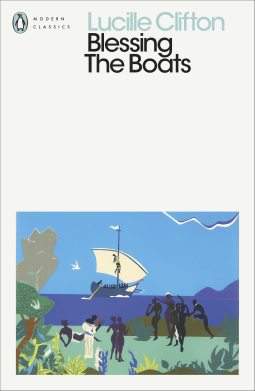
Blessing The Boats is a book of Lucille Clifton’s collected poetry spanning 1988-2000, now published under Penguin Modern Classics in the UK. The poetry within spans a huge range of subjects from injustice and race to motherhood and health, the Garden of Eden to Superman. Clifton’s style is deeply engaging, with a lot of precise and concise lines and imagery and short poems, sometimes in a sequence talking to each other.
Some of my favourite poems in the collection were the ones about Lucifer and Adam and Eve (strangely the collection had already got me thinking about writing poems about Lucifer before I reached multiple of them to read) and the poems to Clark Kent. I also really like the ‘shapeshifter poems’ which I think would sit very nicely alongside a lot of modern poetry. In general, the poems felt really timeless to me, and it is the sort of collected poems that makes you want to return to it, and also read more of Clifton’s individual collections.
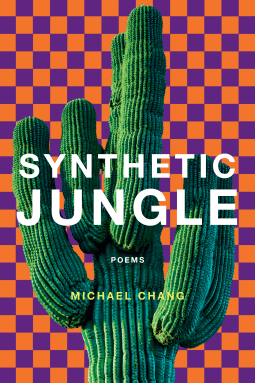
Synthetic Jungle is a poetry collection that plays around with space, words, and humour, questioning what poetic language really is and what people want in a poem whilst also looking at identity, self, and shared reference points. I enjoyed the witty, catchy lines (one of my favourite things in poetry) – “app says our order’s in the river / you’ll be the one getting wet” being one example of some that stood out to me on first reading – and the range of pop culture references, but also the metacommentary on what poetry is and who can and should read poetry. Fresh, compulsively readable, and very funny: Synthetic Jungle is great if you like poetry that doesn’t take poetry too seriously, but still says some interesting things.



 Fiendfully Reading
You must be logged in to post a comment.