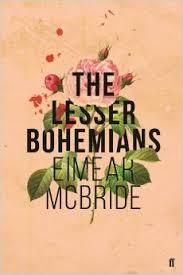
The Lesser Bohemians by Eimear McBride

Love, innocence, and drama school: The Lesser Bohemians by Eimear McBride
image

The Lesser Bohemians in an in-your-face, beautifully written novel about an eighteen-year-old Irish girl who arrives in London to start drama school. Despite her naivety, she is quickly taken in by the city, but it is when she meets an older actor and learns to shed her innocence about love and lust that she really becomes sucked into London and into the life it has offered her. It is a novel about the intensity of a love affair and overcoming the lingering past, with a 90s London backdrop and a distinctive style.

McBride writes in a poetic and stark way, a style that hurtles through the excitement, passion, and fear of  Eily’s point of view, using a kind of stilted stream-of-consciousness that takes a moment to get into, but works well once you are. It might not be readable for everyone, but it makes The Lesser Bohemians stand out as a book that gets across the intensity of her new life in North London through this unusual writing. The narrative mainly focuses on characters’ feelings and secrets than events, with the acting very much in the background, giving yet more sense of how Eily’s emotions have drowned out everything else. This is a stylish, exciting novel, a kind of harsh poem about the highs and lows of love and youth.

(Sidenote: The Lesser Bohemians was on the Bailey’s Prize longlist this year. Also check out my reviews of Hag-Seed and The Essex Serpent, both also on the longlist, and, even more importantly, Stay With Me and The Sport of Kings, both on the shortlist right now.)
The Future Is Terrifying: Some Other Dystopian Reads

The title says it all, really. It was not a surprise to me to get a request for some dystopia recommendations, considering the current climate. 1984, Brave New World, and The Handmaid’s Tale have recently been headline books once again as people turn to fiction not for comfort, but for information and for inspiration on resistance and seeing what is going on in the world. Those three are certainly the big names, but there is plenty more dystopian fiction out there to check out.

  • The Transition by Luke Kennard – A young couple seemingly failing to make their way in the world land in trouble and their way out is a new scheme that promises to help them grow up and find their feet in the adult world. Only out last month, this is a modern dystopia about a generation unable to find its feet, with hints of Black Mirror thrown in. See my longer review here.
  • The MaddAddam trilogy by Margaret Atwood – Comprising of Oryx and Crake, The Year of the Flood, and MaddAddam, Atwood’s far more recent dystopian writings (the final book only came out a few years ago) have a much more complex narrative than The Handmaid’s Tale, comprising of a weird, almost post-apocalyptic world. Much of the story is told in flashbacks, looking into biological experimentation, class divides, and the commodification of sex. For those who prefer a less tradition approach to the dystopian genre (and in my opinion more engaging than her more famous one).
  • Bend Sinister by Vladimir Nabokov & We by Yevgeny Zamyatin – For an alternative novel about a totalitarian state – or one for people who’ve done all the big names before – then either Nabokov’s Bend Sinister or Zamyatin’s We are good options, novels that both use different elements of experience with Russian oppression to form their plots and ideas. We in particular is chilling, not even published in Russian until 1988 due to Soviet censorship and forming inspiration for 1984.
  • High-Rise by J. G. Ballard – Another slightly different take on the concept, High-Rise is like Lord of the Flies for the rich consumer age, a tale of enforced building hierarchy and breaking free of respectability. A recent film adaptation starring Tom Hiddleston reminded people of the novel, which offers a kind of social dystopia that would make anyone nervous of those flats you can rent with everything you might need on site.
  • The Last Man by Mary Shelley – For my final pick, I’ve gone for a slightly more escapist option as a reminder of how dystopian fiction can date in some ways and still be both touching and sad in others. The story of a plague hitting mankind, with sweet political optimism and less sweet terrifying isolation. Maybe her heavily Romantic writing style isn’t for everyone, but her descriptions of grief are heartbreaking.

The Valentine House

The Valentine House by Emma Henderson

The Valentine House is a family saga with a French Alps backdrop – a novel full of the intrigue and ambiguity that is to be expected from its spanning generations of the same family and their time in their summer house in the mountains. The story is held together by Mathilde, a girl from a local farm who goes to work at the house in the summer of 1914, surrounded by the mountaineer Sir Anthony Valentine and his family. As her story unfolds, so does the tale of the summer of 1974 when Sir Anthony’s great-great grandson George comes to visit the house and old secrets are brought back out.

The plot line is much to be expected from this kind of novel, with scandal, arguments, and hidden secrets being revealed by showing the impact of multiple generations of a family and the location they kept returning to. The remote mountain setting allows for some interesting points about the effect of les anglais (as the novel calls them) on the locals and how these intruders are seen. It also adds to the kind of claustrophobic feel of a family all coming together and staying in one house, out of the way of most of humanity, which is reflected in the oppressive heatwave of 1974. Henderson plays around with bits of French and with language barriers in a way that highlights the differences between the English and French characters, particularly in terms of the lack of French much of the former speak. These moments add colour to the novel, adding interest beyond that of the family intrigue.

This novel is an enjoyable read, similar to others focusing on the span of generations of a family in a certain place, but with a setting that brings an interesting look at cultural exchange and language as a sideline. The twists in the narrative are quite easily worked out, but the various descriptions of the mountains leave a lasting impression. The Valentine House would make a good, fairly light holiday read of a more literary nature.

Best friends celebrated in poetry

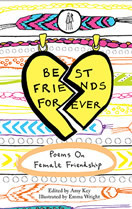
Best Friends Forever: Poems About Female Friendship edited by Amy Key

Best Friends Forever: Poems About Female Friendship is a heartwarming and often brash collection of poems that explores different female friendships, young and old, sisters and best friends. It is a refreshing breath of honesty about the small details and big feelings in friendship from The Emma Press, a UK independent publisher.

Many of the poems focus on the intensity and specific feelings of teenage friendship, such as ‘Snakebite’, Catherine Smith’s wonderful poem about feeling grown up and invincible, and ‘Agnosia’, Martha Sprackland’s poem about friendships changing when a shared hometown is left. On the other hand, Kathryn Maris’ hilarious ‘Will You Be My Friend, Kate Moss?’ is one of a few poems looking at making friends when older. The vivid retro aesthetics and female dangerousness of ‘I Want To Be In Your Gang’ by Andrea Quinlan and ‘Roller Girls’ by Camellia Stafford are a particular highlight in the collection, as are the details and ordinariness of ‘best’ by Laura Webb and ‘Stars of the County Down’ by Fran Lock.

The collection can’t help but make readers reflect on their own friendships and on the details that make them special. It is an emotional anthology, and one that contains some exciting poetry as well as a nostalgic feel. Buy it for your best friends, or keep it for yourself and make them read it over your shoulder.

(Note: I got the ebook from their website here.)

So you want to read Middle English lit?

In honour of it soon being the Harrowing of Hell – the greatest episode in Piers Plowman, maybe tied with the dreams within dreams – here is my fun and somewhat irreverent guide to the big names of Medieval English literature. They’re in a subjective order of ascending difficulty when reading in Middle English, but when in translation, it’s similar except Gawain is easier and Piers Plowman is basically just as hard. Onwards, to knights and strange religious dream poems feat. weird Biblical apocrypha.

  • Morte Darthur (/other spellings/Works) by Thomas Malory – More fun than could be expected from a huge book (if you get the bright red complete works edition) written like a five year old tried to spell more modern English. Malory’s prose Arthurian stories have everything you might want from an epic – knights, fights, magic, the chosen one being too good for this world, Gawain recognising Lancelot from how he rides a horse – and some you might not – incest, doomed love affairs, accidentally killing people and starting all-consuming feuds.
  • Various medieval drama – Medieval plays, usually short and part of a cycle that was performed around a city for a special occasion, basically encompass the Bible from creation to the apocalypse. Don’t say they didn’t think big. There are anthologies of some of the best bits and you can find them online too (try the York cycle for a starting point). There’s weird comedy with Lucifer stealing God’s chair and jokes whilst Christ is being nailed to the cross. Really.
  • Geoffrey Chaucer – The big name. I’ve not specified a work first because it depends. Obviously there’s The Canterbury Tales, which true to its name is separate tales told by fictional pilgrims. Some are very dirty (try the Miller’s Tale if that’s your interest). Or read The Wife of Bath’s Prologue because she had a fun life. If you like Greek stuff/the Trojan War/Shakespeare’s Troilus and Cressida, try Troilus and Criseyde, though it is quite long and you will get pissed off at Pandarus. Or if you like a crazy narrative involving retelling part of the Aeneid and also flying on the back of an eagle trying to explain physics to medieval people, go for my personal fave House of Fame.
  • Sir Gawain and the Green Knight by (imaginatively) the Gawain poet – SGGK is a fantastic story told in a cinematic style, but it is also quite tough Middle English so good to read in translation first. Read it for the great descriptions or for the part where Gawain keeps having to kiss the Green Knight as part of a weird deal they made.
  • Piers Plowman by William Langland – On the surface, Piers Plowman doesn’t sound like much fun. A huge medieval dream poem in alliterative verse which features complex theology and dreams within dreams that are less heist-based than Inception. Once you read it, you’ll discover it still isn’t great fun, but it is also is, because it’s incredibly weird and features Christ jousting the devil in Hell.

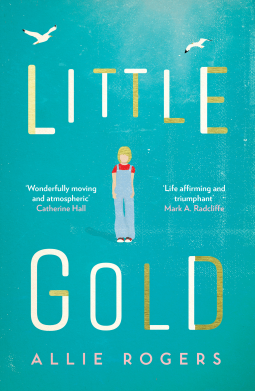
Little Gold by Allie Rogers

Growing up different in the 1980s: Little Gold by Allie Rogers

image

Little Gold is a moving and tense novel about growing up, facing difficulties, and finding the words for problems. Set in Brighton in 1982, it shows a tough summer for Little Gold – who has cast off her too girlish name and is teased by other kids for being weird. She has left middle school, her dad is gone, and her mum will barely get out of bed. Her older brother and sister are caught in their own problems, but when she becomes friends with Peggy Baxter, the old woman from down the road, she finds a place to escape to. When things get even worse, Little Gold has to find a way to tell somebody what is going on before it is too late, but she might not have words to say it.

In Little Gold, Rogers has created a fantastic character, a girl on the brink of adolescence and trying to deal with being different. Much of the narrative is from her point of view and the style gets inside her head, leaving the reader tensely hoping that better will come for her. Peggy’s chapters are slower to get into, but as soon as her backstory starts to be revealed they become more gripping, with the visit of her former lover Vi a particularly touching part, especially when Little Gold joins them. The dark, abusive threat at the heart of the novel is carefully written, not for shock effect, but as part of a narrative showing how those in need of protection can be exploited and how problems can all become entangled.

This is a novel that touches upon a lot of issues, held together by an enchanting main character whose struggles with knowing who she is as she grows up are moving and relatable. Rogers creates an oppressive atmosphere showing the limits of being both young and old, a world where it is the middle aged adults who are the threat or let down, but also a positive novel that affirms that being different is okay and that friend and family connections can help even at the darkest times.

Quick book picks for April

As the weather gets (vaguely) nicer, here are some books coming out in April, perfect for avoiding the burgeoning sun and staying indoors – with quick summaries and links to reviews.

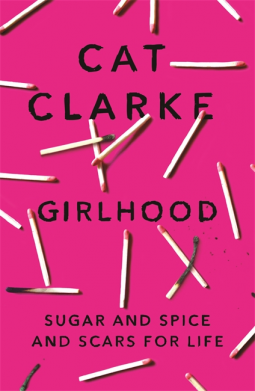
Girlhood by Cat Clarke

Sugar and spice and scars for life: Girlhood by Cat Clarke

image

Girlhood is a dark and emotional YA novel about friendship, grief, and whether things are really as they seem. Harper goes to a boarding school in a remote part of Scotland, but she hasn’t always: before, she lived at home with her twin sister Jenna and her parents. After her sister’s death, however, she went to Duncraggan Academy and found a tight group of friends who have her back. When new girl Kirsty turns up, it seems like somebody might understand the secrets Harper keeps hidden. Kirsty is not quite as she seems, though, and Harper finds herself falling down a hole, unsure who she is anymore and what is true.

Clarke’s novel is gripping, exactly the kind to read in a day or two, devouring the narrative. It is full of emotional tension, dealing with teenage problems of all sizes whilst also having a thriller-like sense of mystery. Harper’s first person narration gives an insight into someone dealing with guilt and grief, and how these issues help to blind her to the lies that start to appear. The intense friendships throughout the novel feel very real and varied, showing how groups of friends can be very different people and still get along, whereas when somebody seems exactly the same, that may not be the case after all. Indeed, they are the kind of characters that make the reader want to continue reading after the words are over and find out what they do next as they grow up. Harper and her best friend Rowan’s relationship in particular was a highlight, showing how falling out doesn’t stop a person caring and how sometimes the stakes end up bigger than realised.

Girlhood is a fantastic novel, not only for teenagers but for anyone who enjoys books centred on tension and female friendships. It is incredibly difficult to put down and manages to deal with big issues in a light and often funny way whilst also having a darkly compulsive narrative.

Shakespeare For Freedom by Ewan Fernie

Why Shakespeare’s Plays Matter: Shakespeare For Freedom by Ewan Fernie

image

Shakespeare For Freedom is a book – yet another – proclaiming to say why Shakespeare matters, why his plays still matter today. In this case, the lens through which Shakespeare’s relevance is viewed is ‘freedom’, a concept which Fernie opens up to mean personal freedom and freedom of identity. Though the title sounds like a kind of political call, Fernie’s book looks at freedom as more of an affirmation of life than a political or societal concept. Different chapters look at historical examples of the connection between Shakespeare’s works and freedom, examine Romeo and Juliet in light of freedom, and construct critical and historical narratives about Shakespeare, freedom, and identity.

Fernie’s introduction makes the salient point that after numerous cultural celebrations of Shakespeare in the past five years – with the Olympic opening ceremony and different anniversaries – it is important to restate why he matters, particularly to non-academics. He positions the book as coming after Jonathan Bate’s The Genius of Shakespeare in this regard, though Fernie’s book has less of an approachable feel, with a chapter on Hegel’s writing and a general assumption that anyone reading is already sold on Shakespeare mattering a lot. Despite this, Fernie raises interesting points about freedom, including the distinction between freedom to be who you are and freedom to be different, which he then uses to interrogate Romeo and Juliet through the title characters and through Mercutio. His argument that Ganymede in As You Like It should be mourned as a ‘death’ that is a loss of freedom shows this focus on identity and opens up fascinating potential.

Most of the questions raised in Shakespeare For Freedom seem to be answered with ‘freedom’, it being the reason to read Shakespeare and the reason to continue doing Shakespearean criticism. Thankfully a later chapter provides an opposing point, highlighting examples including Lincoln’s assassination and Tolstoy’s attack on Shakespeare to show that freedom and Shakespeare are not always straightforward. This leads well into the concluding point that we should learn freedom from Shakespeare, not a simple kind of freedom but an ambiguous one.

Fernie emphasises politics and personal identity at different points, suggesting that this Shakespearean idea of freedom is varied and therefore easily adaptable to different situations, as his variety of examples show. Ultimately, these examples are not groundbreaking, but Shakespeare For Freedom provides a varied look at historical events and critical arguments that shape this concept of freedom. Ferne certainly makes the case for Shakespeare’s plays as inviting everyone to look at their own personal and political freedom, though it may feel like a naive concept at times.

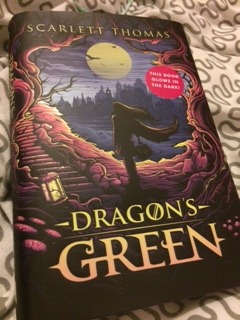
Dragon’s Green by Scarlett Thomas

Magical bookishness: Dragon’s Green by Scarlett Thomas

image

Dragon’s Green is a charming new children’s novel about magic, books, and friendship. Since the ‘worldquake’, magic has been seeping into the world and technology no longer cooperating. After Effie Truelove’s grandfather is attacked and his precious magical library becomes threatened, she discovers her own connection to this magic, and so do her new school friends from the Tusitala School for the Gifted, Troubled, and Strange.

The narrative of the novel follows Effie and her new friends discovering their powers and some of the rules of the magic that exists in their world and in the mysterious Otherworld and using these to battle to save her grandfather’s library. The emphasis amongst the characters is very much about their burgeoning friendships and it is clear that the series will continue to explore how their magic and friendship are tied together.

Effie is a great narrator, inquisitive and brave, and having a female hero figure is one of the great selling points of Thomas’ novel. Another is the use of books and magical power, which comes not only from what can be learnt from them, but also from different kinds of magic, as Effie finds out. This bookish element of Dragon’s Green is part of what makes it an enjoyable read for grown up children too, with references to classic literature peppered around (my personal favourite was the Rossetti-esque goblins selling fruit). Thomas’ method of explaining the magical interference with technology, down to children using old phones just as calculators and torches, was another endearing element, a kind of retro tech comeback that gave the parts set in the ‘real world’ a kind of magical realism feel.

Comparisons to Harry Potter are obvious, with a fated main character discovering magic with new school friends, but Dragon’s Green is quite different, with travelling between worlds and magical objects – called ‘boons’ – revealing magical specialities in people. It feels like a children’s fantasy novel infused with a love of reading, and the gang of main characters are a group that will capture the imagination and make children (and adults) hope for the next book to come soon.