‘But don’t forget the songs that made you cry, and the songs that saved your life’; Regardless of Morrissey’s fears, it is pretty difficult to forget the songs that have been monumental in your life. It’s the reason that wedding songs are so important and why those pop punk tracks you loved aged thirteen are still waiting, word-perfect, in your brain for the next throwback playlist. And when those songs are the ones that kept you putting one foot in front of the other, forced you out of bed and stumbling down the road towards public transport, they become particularly significant.
A new month means a whole new bunch of books coming out (probably more books than sun coming out, at least in the UK). To help you choose what to read, here are some of my favourites coming out this month, with quick summaries and links to reviews.
Little Gold by Allie Rogers – A moving and life-affirming tale of growing up different in Brighton in the 1980s.
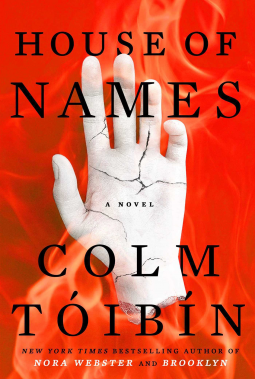
House of Names by Colm Toíbín – A retelling of the House of Agamemnon in modern prose, with tense character relationships and intense revenge.
Girlhood by Cat Clarke – A fantastically tense YA novel about friendship and grief in a Scottish boarding school, with a gripping and funny narrative.
New Boy by Tracy Chevalier – The next in the Hogarth Shakespeare series is an unforgettable retelling of Othello in a single day in a Washington schoolyard.
Peculiar Ground by Lucy Hughes-Hallet – A time-spanning novel about changes and connections, set mostly in the grounds of an old house after the Restoration and during the Cold War.
The Nothing by Hanif Kureishi – A darkly comic and characteristic new novella from Hanif Kureishi, trapped in the head of an increasingly bed-bound aging filmmaker.
Man Alive by Thomas Page McBee – A powerful memoir of a trans man dealing with ideas of masculinity in the wake of violence.
I’ll Eat When I’m Dead by Barbara Bourland – The female-led modern version of 80s and 90s alternative American satirical fiction like American Psycho, exposing darkness in an industry full of drugs, sex, and battles for the top (review coming soon).
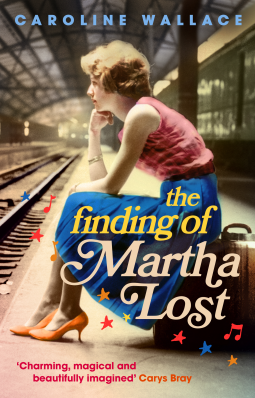
The Finding of Martha Lost by Caroline Wallace – An enchanting story about a sixteen-year-old girl who lives in Liverpool Lime Street station and has never known where she truly comes from.
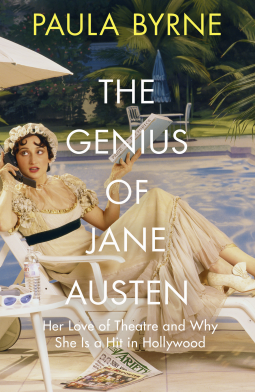
The Genius of Jane Austen: Jane Austen, The Theatre, and Why Hollywood Loves Her by Paula Byrne
The Genius of Jane Austen is a fascinating book about Jane Austen’s connection to and interest in the theatre and how her reworking of comedic drama and farce in her novels is comparable to the reworking of her novels into film and television in the modern day. The majority of the book is part biographical and historical account of Austen’s theatrical interest and part close reading of her works in relation to major drama and other comedic work of her time. This is a reissue of Byrne’s earlier book Jane Austen and the Theatre in time for the bicentenary of Austen’s death this year, but with a new look at Austen in Hollywood and on TV to close the book.
From the introduction, Byrne sets out to show the importance of specifically English stage comedy to Austen’s work, but also to the influence of drama in her life and her novels. The first section focuses on Austen’s experience of the theatre, giving details about private performances and about professional theatre at the time. It is an interesting introduction to the theatre of the period through the lens of a famous novelist. References to other works bring in a sense of the literary scene of the late eighteenth- and early nineteenth-century, from how Northanger Abbey uses theatre references to parody Burney’s Evelina to pointing out that Austen saw (and greatly enjoyed) the pantomime of Don Juan that Byron famously mentions at the start of his poem.
The second part of the book is about the theatre and Austen’s novels, with a straightforward structure of chapters focusing on certain novels and then interrogating both theatrical sources and theatrical techniques within these works. Casual fans of Austen and students working on certain texts may skim past to their favourite novels, but as a whole it provides an illuminating if rather detailed explanation of many interesting elements of Austen’s novels and how they relate to other texts and to dramatic conventions and stock figures.
The final chapter—the one which allows the word ‘Hollywood’ to be so prominent in the book—is possibly its most enticing part, a fairly critical look at Austen adaptations that argues that the best adaptations actively ‘adapt’ Austen, keeping the spirit of her comedy, but making it work in a different format. Byrne highlights key flaws in many Austen adaptations and gives an extended discussion of the film Clueless and how it adapts Emma more successfully than most straight adaptations of Emma that is fascinating to read.At the end, this seemingly unrelated chapter is brought together by comparing these less traditional adaptations of Austen with her own transformations of dramatic comedy of the eighteenth century, albeit briefly.
Byrne’s book is a great read for Austen fans, with enough depth and footnotes for further information, but without being an unapproachable book of literary criticism. Instead, it serves as an illuminating account of the early nineteenth-century theatre, an interesting take on various parts of Austen’s novels, and a ‘state of the nation’ type look at film and TV adaptations up to the present day. Even those with more of an interest in the general period and its literature than Austen in particular can find good material from the first section in particular, and the final chapter has interesting points that can be related to other overly adapted writers as well, such as Shakespeare who Byrne compares Austen to from the start.
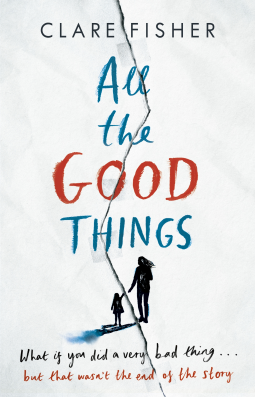
All The Good Things is a well-written and heartbreaking novel about a young woman, Beth, who is in prison and encouraged by her therapist to write down whatever good things she can think of. Though this list and each explanation, her story emerges: how her life lead to the incident which ended up with her in prison. It is a gripping and moving book which shows how there are different sides to the story, even your own story.
The structure of the book means that events are told episodically in roughly chronological order, but with enough references early on to work out in broad strokes what has happened to Beth. As the narrative reaches these events, it becomes clear that her story is about how bad things can keep leading to more bad things, even though good things happen on a smaller scale. The novel is not particularly sensationalist despite the subject matter, but instead gives Beth real and human problems such as the way in which trauma and mental health issues affect all aspects of her life, from relationships to getting trapped in payday loans. Her narrative draws to a climax both in the story she is telling of her past and her present in the prison, as it becomes clear that she has never really been given the help she has needed.
Fisher paints a vivid and moving picture of how a person can be let down both by people and by the system, creating both a gripping novel and a stark reminder of the human cost of cuts to services for children, vulnerable people, and prisons. It is definitely one of my top books of the year so far.
Sometimes fine isn’t enough: Eleanor Oliphant is Completely Fine by Gail Honeyman
Eleanor Oliphant is Completely Fine is a heartbreaking and powerful novel that is difficult to put down, drawing the reader into the life of the main character. Eleanor lives by a simple routine, eating the same meal every day, wearing the same clothes to work, drinking the same vodka to help her forget. She lives within her carefully arranged boundaries in order to survive. However, a series of small events make her change this routine and try to understand a world she has purposefully been avoiding whilst remembering the darkness in her past that she had been protecting herself from.
Honeyman’s debut novel is about a character with a very distinctive worldview, built up as a coping mechanism, and how terrifying change can be when it upsets such mechanisms. As the narrative unfolds, it becomes clear not only how horrible elements of Eleanor’s past have been, but how much she has repressed to enable her to get through each day, at the expense of human connections and the unpredictability of life. It does not represent every experience of trauma and mental health because it is just one story, but what is important is that Eleanor discovers she is allowed happiness and the book celebrates how other people can be better than expected whilst not undermining the terrible things that have occurred.
Through an immersive first-person narrative, Honeyman creates a novel that draws in the reader, both dark and touching, with a message of finding human connections—in whatever shape or form—even when you’ve given up on them. The epigraph is from Olivia Laing’s The Lonely City and this is very pertinent: Eleanor Oliphant is Completely Fine takes Laing’s look at loneliness amongst people and shows how the intersection between loneliness and mental health can be very difficult, but also that friendships and connections can be formed that can save a person’s life.
Greek tragedy rewritten: House of Names by Colm Tóibín
House of Names is a novel about revenge written with masterful and haunting prose. It tells the story of Clytemnestra, Agamemnon’s wife left behind after he has sacrificed their daughter and sailed off to the Trojan War, and how her thirst for revenge impacts her and her children, plus those around them. This tragic story of family killing family is also a detailed look at individuals waiting for revenge and hoping that it will bring catharsis.
Tóibín uses names and narratives from Greek mythology and dramatic tragedy by Aeschylus, Sophocles, and Euripedes, but uses modern language and new characters and events to provide a very fresh take on this ancient material. The cursed House of Atreus is here for those who know classical material, but at the same time, the novel works well for those unfamiliar with the other material, a gripping novel about murder and revenge. Reflections upon the gods and the loss and change of systems of belief is another major element to the book which gives it a modern feel, showing how revenge can substitute for belief when it seems as if one’s belief system has failed.
The style of House of Names, particularly in the sections from Clytemnestra’s point of view, are its particular strength, capturing an ancient feel of revenge alongside her personal emotions. Tóibín’s novel is a fantastic reworking of myth and tragedy into a thrilling and enjoyable read.
Lost and found in Liverpool Lime Street station: The Finding of Martha Lost by Caroline Wallace
The Finding of Martha Lost is an enchanting novel about a sixteen-year-old girl who was found in Liverpool Lime Street station as a baby and has been wondering who she is ever since. Martha runs the lost property office at the station, but when a series of mysteries start popping up—is there somebody lurking in the tunnels under the station? why is there a Roman soldier in the station every day? could a suitcase hold the fortunes of an Australian man?—and her position in the station becomes under threat, it is time for her to really become found.
Wallace creates a vivid picture of the station in the 1970s which is the backdrop for a moving and charming story about a girl who is both wise and innocent and who believes she is the liver bird of Lime Street station. Neither Martha or her friends in the station have had easy lives, and their found family dynamic forms the real heart of the novel, making it clear that Martha is not lost around them. Wallace touches on a number of problems whilst keeping the narrative an uplifting and enjoyable read, one perfect for anybody who is looking for a heartwarming book set in the later half of the 20th century and infused with the music and culture of Liverpool at the time.
When I asked for recommendation requests, a friend wanted books featuring a ‘pack of female characters doing stuff’. No problem, I thought. And then I looked through my Goodreads ‘read’ shelf. It turns out there are a lot of books I’ve read featuring one or two female characters doing things—together or separately—but a real lack of groups of them doing interesting things.
Leaving out Little Women and any of the teen fiction books I actually read when I was young, I’ve put together a list of books that are either general fiction or YA that fit the category. And have resolved to find more for the second version of this list. Links to longer reviews (if I’ve written them) from individual book titles.
Girlhood by Cat Clarke – Not out yet, but Girlhood has to go on my list because I read it recently and loved it. It centres around one female character and her group of friends at boarding school in Scotland, and what happens when a mysterious new girl appears and seems to have so much in common with one of them, down to the same tragedy. Clarke creates a tense narrative alongside an honest and and enjoyable version of teenage troubles like going to university, sexuality, and coping with grief.
The Stolen Child by Lisa Carey – A small community in an Irish island, mostly made up of women, deal with loss, a new stranger, and calls to leave their home for the safety of the mainland. A different interpretation of the request, but a book with a real range of female characters working together and apart.
Another Brooklyn by Jacqueline Woodson – A novel about the friendship between four girls living in Brooklyn in the 1970s and how they grew up, grew apart, and saw each other differently. The book is in a photographic style giving snapshots of memories and really getting across how friendship can be tied to time and place.
The Bomb Girls’ Secretsby Daisy Styles – I’ve included this one because it best fits the idea of female characters together doing things, in that it is a novel about young women coming together for the war effort, gradually getting closer and also forming a band. A light period read ideal for anyone who’d prefer something more historical than YA in the group of female characters category.
If I Was Your Girl by Meredith Russo – Russo’s YA novel about a trans girl starting a new school isn’t just about a group of female characters, but the friendship between Amanda and her new group of friends—each with their own secrets and problems—forms a crucial part of the book.
I love a modern retelling of Shakespeare. They can be insightful, thought-provoking, or just damn fun. For 23rd April—Shakespeare’s deathday/possible birthday and World Book Night in the UK—I’ve gathered together my thoughts on the current (and upcoming!) Hogarth Shakespeare series of modern novel retellings of his plays.
The Gap of Time by Jeanette Winterson – A transatlantic, slightly alternate universe version of our modern world in which The Winter’s Tale unfolds as a story still full of jealousy, grief, and discovery. The complex relationship between Leo, his wife MiMi, and his best friend/ex-lover Xeno is a highlight, turning a strange plot device in Shakespeare into an interesting look at three characters falling apart. The book that really sparked my interest in the series (read my full review here).
Shylock Is My Name by Howard Jacobson – Jacobson’s take on The Merchant of Venice is a little different to the rest of the series in that instead of updating Shylock fully, he parallels the sixteenth century character with a modern version, the art dealer and father Simon Strulovitch. The backdrop is rich side of Manchester and the updated plot line is quite impressive, but the merging Shylock’s world with Strulovitch’s and the writing style of the novel make for a dense read.
Vinegar Girl by Anne Tyler – In my original review, I said that this book wasn’t necessary because 10 Things I Hate About You exists. I stand by this statement, though more because I found the message of Vinegar Girl confused rather than ambiguous and its ending downheartening without illuminating on Shakespeare’s ending than because I think the enjoyable teen film is a work of genius. You might enjoy it. I didn’t.
Hag-Seed by Margaret Atwood – There is something endearing about the way that Atwood takes Prospero’s slightly flimsy plot for making his enemies see their bad deeds and turns it into an equally flimsy plot in which Felix tries to show the injustice done to him through a performance done by the inmates he has been teaching The Tempest to. The in-jokes about the existence of Shakespeare’s plays in these modern worlds really reaches its peak, with Shakespeare as a double meta-narrative. Read more in my review here.
New Boy by Tracy Chevalier – New Boy isn’t out until May, but I highly recommend you grab it when it is. Othello is retold in a tense and claustrophobic day in a 1970s Washington schoolyard, as new boy Osei finds himself out of place in the entirely white school. The strange timeline and irrational jealousies of Othello find themselves a good home in this novel, where intensity is heightened because this schoolyard is the world for most of these students. I review it in more detail here.
Back to the old house: Peculiar Ground by Lucy Hughes-Hallet
Peculiar Ground is a novel of divisions and connections, of the Berlin Wall going up and down and the changing world after the Restoration, of the young giving way to the old and the estate of Wychwood standing throughout. In 1663, the grounds of Wychwood are landscaped by Mr Norris, who watches the family as he plans the hedges. These same grounds provide the backdrop for a party in 1961 where eight-year-old Nell overhears the adults talking but scarcely understands their world of Cold War spies and love affairs. In the ensuing decades, Wychwood continues to stand as a place where the same people gather and play out the intrigues of their lives as a new world dawns with the Berlin Wall coming down and the grounds of Wychwood used as a tourist attraction.
Hughes-Hallet creates a varied novel with a wide cast of characters across both the seventeenth- and twentieth-century portions, using different narrative styles and perspectives to get across their differences. The seventeenth-century parts are largely narrated by Mr Norris in an archaic – but not overwhelmingly so – style, making them feel quite different to the Cold War narrative that forms the bulk of the book. The parallels drawn between the two are clear and expected, but this trope serves to show how the ‘peculiar ground’ of Wychwood bears drama across the centuries.
The narrative is controlled tightly, with mystery and ambiguity, hinting towards later events or details that will not yet be fully revealed. This is one of its main strengths: a sense of being drawn into the world of Wychwood in 1961 and watching the characters then and in the two subsequent periods in which they are shown, revelling in their triumphs and problems, waiting for more secrets to be known. Stand out characters are often the ones who are outsiders brought into the scene, like the art dealer Antony whose secrets everybody seems to know.
Peculiar Ground is an epic kind of English country house novel, but one that works to reflect the world around it, from Andy Warhol in the early 70s to Salman Rushdie and religious tension in 1989. The seventeenth-century part adds interesting parallels and ideas about religious difference, witchcraft, and garden landscaping, though it is less compelling that the large middle of the novel focused on the years when the Berlin Wall was standing, which has a more intriguing set of characters and events. The novel may appeal to fans of Hollinghurst’s The Stranger’s Child or Stoppard’s Arcadia, but also to anyone who enjoys novels spanning across changing times, watching as characters react and a crucial location stands still.



 Fiendfully Reading
You must be logged in to post a comment.