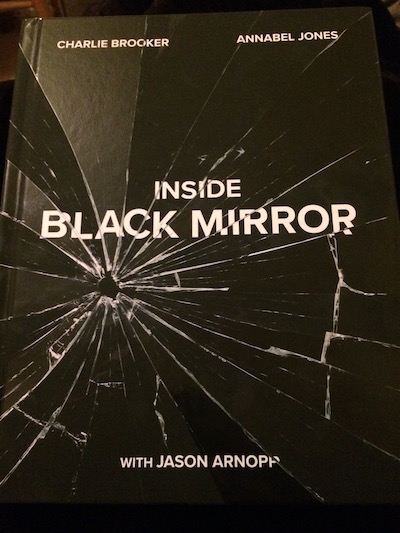
Inside Black Mirror by Charlie Brooker, Annabel Jones, and Jason Arnopp

Inside Black Mirror is, unsurprisingly, the story of TV series Black Mirror, told in oral history fashion by its creators, directors and actors amongst others. Due to the anthology format of the series, the book goes through each episode individually, with relevant people’s comments and discussion, and it is all held together by the voices of Charlie Brooker (creator, writer, executive producer etc) and Annabel Jones (co-show runner and executive producer). The writing is combined with stills and design images, which form a useful way of remembering key elements of the wildly differing episodes whilst reading the book.

TV tie-in books can be a bit naff. The sort of thing that make an easy gift. However, this one is less naff. Basically, it is very interesting, an in-depth look at both the process of creating an anthology show and fighting to get further series made, and how the cast and crew managed to actualise the weirdness that is Black Mirror. Brooker’s comments on the ideas and how plot lines evolved are particularly good, showing how much editing, rethinking, collaboration, and being forced by circumstance can make amazing narrative elements. It’s also worthwhile to read about the issues with getting Channel 4 to keep making episodes, for something that so notably moved to Netflix. Naturally, the book can veer towards self-congratulatory (all these famous actors wanting to be in it, oh look at the Emmys we won, etc, etc), but is kept from going too far due to Brooker’s trademark self-deprecation and the banter between him and Jones, who are longtime collaborators.

Seeing as the world has “gone a bit ‘Black Mirror'” (as Brooker says in the book), it’s nice to remember that the series is created as an entertaining art form, playing with genres and characters, rather than a collection of predictions we should all be worrying about.

My 2018 in reading: the awards

I’ve done my top books that came out in 2018, and my top books I happened to read in 2018, but what about some more specific and dubious honours? I didn’t really have a good enough selection for a simple spite list this year (though if anyone’s interested, I can share my least favourite reads of 2018), but have gone for a few random categories and some anecdotal justification.

The ‘finally read it this year’ – tie between Don Quixote and The Odyssey

Apparently 2018 was the year I sat down with some famous journeys. Homer was the greater omission, having read and studied The Iliad in translation at undergrad, and it was thanks to the Emily Wilson translation that I finally got around to it. Don Quixote was more impulsive, but I do now understand references to Don Quixote (and I managed to spill quite a lot of Vimto on my copy of it). A bonus mention to both Metamorphosis and The Trial, as I finally read some Kafka this year, motivated by going to Prague, though it felt less of an achievement.

The ‘oh hurry up and finish’ – Melmoth the Wanderer by Charles Maturin

Summed up above, really. I thought Radcliffe’s Mysteries of Udolpho, which I read not long before this, was slow (it really does take a long time to get to Udolpho), but Maturin does impressively well at making a narrative within a narrative within a narrative that just takes forever. Not an experience I enjoyed (Sarah Perry’s rewrite is worth a read, though).

The ‘thank god the sequel was worth waiting for’ – The Lady’s Guide to Petticoats and Piracy by Mackenzi Lee

The first book, The Gentleman’s Guide to Vice and Virtue, may be my ideal fun read: a YA historical romp across Europe by a bisexual eighteenth century young aristocrat, taking liberties with the bounds of possibility and throwing in a lot of adventure tropes like pirates and highway robbery. The sequel, focused on his sister intent on becoming a doctor, was worth the wait, a novel which kept the fun, adventure, and travel, but wove in more issues around gender and race in the period. Bonus mention to the novella that was a preorder bonus with the sequel, because it was joyous and proves how wonderful Lee’s characters are that you just want to keep reading more of them, their flaws and their triumphs.

The ‘gamble on the sequel of a book I didn’t enjoy’ – Kill ‘Em All by John Niven

I really don’t like Kill Your Friends. I found it boring, trying to be the British American Psycho or similar without really saying or doing anything interesting. I liked another Niven novel slightly more, so thought I’d gamble on this sequel to Kill Your Friends, set in the modern, post-truth world. I found it clever, darker, and more satirical than the first book, no longer just about excess and murder, but about how you can frame excess and murder in new ways.

The ‘knew it wasn’t for me, was vindicated when I was right’ – Lincoln in the Bardo by George Saunders

Despite its prize winning, the plot of Lincoln in the Bardo never appealed, and that was before I knew what the structure was. A colleague leant it to me because she didn’t like it (always a great way to come to a novel) and despite odd flashes when I was engaged with what was going on, I mostly just didn’t care.

The ‘YA that made me wish I actually could read it as a young adult’ – Clean by Juno Dawson

This is quite a tough category because there’s some great YA I read now that would’ve been great to read as a young teenager (at which point I mostly read Point Horror and books about teenage spies). However, Clean wins for 2018 because it is an honestly brilliant balance between suitably hard-hitting and grown up in its topics (kinds of addiction predominantly) and full of teenage drama amongst mostly rich, messed up young people. It would’ve been the kind of book that felt exciting to read, but was also bringing new perspectives.

The ‘how was it so actually bad when it could’ve been trash enjoyable’ – The Vampyre by Tom Holland

I know, it’s shocking that I didn’t enjoy the novel with the premise of Byron’s life, but he was actually a vampire. However, it was just…not fun. Too long, too slow, didn’t actually do much justice to any character except Percy Bysshe Shelley who was suitably busy talking about revolution. Better to just read Fiona MacCarthy’s Byron biography and then use your imagination.

The ‘most called out by its satire’ – Social Creature by Tara Isabella Burton

Are the categories getting more facetious? Possibly. Anyway, Burton’s focus on hipster bars and stupidly specific tea blends felt very much an attack on some of my more hipster habits (I drink a lot of a flavoured tea and do enjoy themed cocktails in themed bars). Though thankfully I don’t use Instagram even vaguely as much as her protagonists.

[Side note: If you fancy seeing everything I read this year (not quite sure why you would), take a look at my Goodreads reading challenge for 2018.]

Black Chalk by Christopher J. Yates

Part psychological game narrative with lashings of unreliability, part Secret History, and part all novels set at Oxford, Black Chalk is a tense and enjoyable book from my favourite subgenre, ‘group of friends in a closed off/privileged/academic setting Do Bad Things’. Six friends at Oxford University invent a game, a game for only six players that will span longer than just a few hours. Each week they must meet, play, and be given consequences, forfeits they must fulfil so as not to lose the game. As these get more humiliating and personal, it becomes clear it isn’t a game at all. And fourteen years later, the game still isn’t quite over.

Yates combines a plot that shows the underlying nastiness of people with a complex narrative structure, in which the story is being told but maybe not reliably, and maybe not just by who you think. This gives the tension an extra level, though the story isn’t as full of twists as might be assumed. As a literary thriller (and with characters falling into their own stereotypes), it can be possible to predict, but that doesn’t feel like a problem. In some ways, its similarity to The Secret History—in terms of psychological games, guilt, and narrators painting themselves in certain ways—defines it even though it is quite different, far more based around the tension of the game and an unfolding dual narrative than the kind of aesthetics and academia of Tartt’s novel. Its psychological element is probably one of its best traits, with a student game about humiliation slipping into something else.

Yates invents a kind of mirror Oxford, with fake colleges and streets and details changed or stolen, and in some ways the narrative involves a kind of mirror sense, of what happened to the characters and how they changed due to the game, how they might’ve been different without it. Black Chalk doesn’t always quite live up to its promise, but it is a gripping and atmospheric book that manages to combine a narrator with a questionable grip on reality with a tale of student recklessness and human darkness.

The Odyssey by Homer, translated by Emily Wilson

Odyssey cover

Here’s a quick review of Emily Wilson’s Odyssey translation, which I finished reading today (Christmas Day) after a Loot (the Joe Orton play) reread as an alternative to a Carry On film:

A hugely engaging translation of Homer’s Odyssey that works both as a readable version for those who’ve never picked it up, and an interesting take for those who have. As someone who has only read some of the big names in Greek and Roman literature in translation (thanks to one undergrad module and an enjoyment of Anne Carson), I found the introduction a good way in to the text, and Wilson’s book summaries and light notes highlighted interesting bits of wordplay and Greek mythology. In particular, her focus on assumptions made by previous translations,  one example being gendered insults, makes this an engaging act of translation that will hopefully pave the way for more translations of famous classical texts that open up some of this debate for a wide audience and question what has been usually translated before.

I read the new paperback edition, which still has the beautiful cover of the hardback plus uncut edges for decorative style, making both a good gift or treat as it’s a book you’ll want to keep.

My Sister, The Serial Killer by Oyinkan Braithwaite

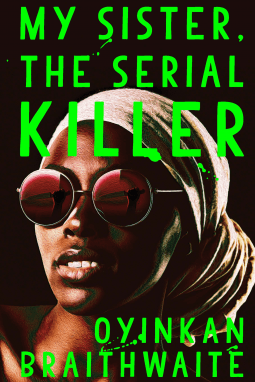
My Sister, The Serial Killer cover

My Sister, the Serial Killer is a dark comedy about the bond between siblings. Korede is a nurse in Lagos and lives with her sister, Ayoola, and her mother. Her mother thinks Ayoola can do no wrong, but Korede knows otherwise. When her dinner is interrupted by a call from Ayoola saying a third boyfriend of hers is dead and she needs help clearing up, Korede goes to help. However, when Ayoola meets the cute doctor from Korede’s work, Korede has to think about whether she can continue to cover up her sister’s crimes.

This is a brilliantly pitched novel, a black comedy that delves into the darkness of Korede and Ayoola’s past and their father whilst also creating this image of Ayoola, the clothes-designing, social media loving serial killer sister. The chapters are short and the pace fast, like a thriller or a high stakes sitcom. Due to Ayoola targeting her boyfriends, the book will probably get comparisons with novels like Gone Girl, but it is far more focused on the sisters than on any of the men, on their bond than on revenge or anger at any man.

Clever and unputdownable, this is one to recommend to everyone who likes black comedy or wants a story about sisters with a bit of a twist. It could clearly be adapted for film or TV, but it works very well as a short, incendiary book that plays with the expectations of sibling rivalry and hiding crimes.

The Furies by Katie Lowe

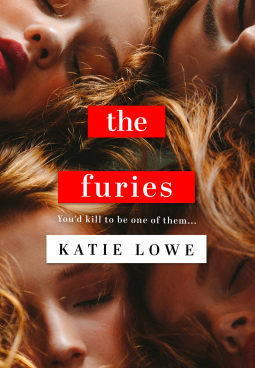
The Furies cover

The Furies is a dark literary thriller about friendship and the artistic history of female power and revenge. After an accident claims the lives of her father and sister, Violet ends up at a private girls’ school for her A Levels, Elm Hollow Academy. It has a grisly history of witchcraft and Violet isn’t sure she cares about being there, but then she’s drawn into the world of Robin, a charismatic girl with red hair, and her friends Grace and Alex. Together they take extra classes with Annabel, an art teacher who follows the tradition of teaching a few students about mythology, art, and literature. The strange power she describes starts to sound like it could be real, and just when it does, the body of a missing former student and member of Annabel’s study group is found on campus.

This is The Secret History crossed with a girls’ school in the 90s and a sharp gothic edge. It follows a classic kind of structure for stories about a group in an isolated environment (here, a private school in a run down seaside town), with the narrator lonely and easily obsessed with their new friends. The narrative style is distinctive, causing purposeful confusion at times as Violet narrates with hindsight and leaving elements ambiguous. Notably, the witchcraft history—and the apparent summoning of the Furies of Greek mythology—is more of an inspiration and catalyst than the entire plot, and the story itself follows the tangles of friendship, violence, and revenge. 

Violet and Robin’s friendship is crucial and well-written, tinged by Violet’s perspective and her lack of self-awareness around it. Grace and Alex are also great characters, though it is a little frustrating that Violet often ignores them in favour of Robin, meaning they don’t get as much exploration as they could. Otherwise, Violet’s single-mindedness works well to create an atmosphere in which she doesn’t notice much else going on outside of their circle, intoxicated by what they’re doing and by drink and drugs.

The Furies may seem at first like it could be a young adult novel about toxic friendships, it turns into something much darker, in which the academic view of the teacher is essentially turned into reality by the students who aren’t so captivated by the art and literature as by the meaning. This gives it a different edge to other reference-laden literary thrillers, as it is the drinking, dancing, and revenge that means most to the teenage protagonists. This is a book that fans of The Secret History, Heathers, and the new Netflix reboot of Sabrina (preferably of all three) will likely devour.

My favourite non-2018 books I read in 2018

It’s hard to do end of year ‘best of’ lists without making arbitrary divisions, so I did my top books that came out in 2018 already, and now it’s time for those I read in 2018 but that came out earlier (how much earlier does vary). Again, didn’t restrict numbers, so have ended up with a top seven.

  • Letters Written During A Short Residence in Sweden, Norway and Denmark by Mary Wollstonecraft – Wollstonecraft’s account of travelling with an infant daughter on the business of a man who was ultimately to desert her, and which famously made her later husband William Godwin say “If ever there was a book calculated to make a man in love with its author, this appears to me to be the book.” It covers varied topics including mocking tourists and lamenting her own mental state, as well as reflections on the self and nature.
  • Marriage of a Thousand Lies by S.J. Sindu – A gripping and at times heart-wrenching novel about Lucky and her husband Krishna, who are both gay but married to appease their Sri Lankan-American families. A look at families, truth, and what happens when an illusion needs to be shattered.
  • If Not, Winter: Fragments of Sappho by Sappho, trans. Anne Carson – One of the perks of working in a university was that I could take this out of the library just for fun. There’s not much to say about it: it’s the fragements of Sappho’s poetry, translated by Anne Carson in a punchy, Anne Carson way.
  • A Gothic Soul by Jiří Karásek ze Lvovic – The first of two Czech books on this list (can you tell I went to Prague this year?), A Gothic Soul is a Czech Decadent book that is lyrical, almost without plot, and about a nihilistic protagonist seeing his situation reflected in Prague, which he calls a dead city. Even in translation, the atmosphere comes through incredibly well (and there’s a great little edition of the English translation, which is also true of the following book).
  • May by Karel Hynek Mácha (in translation) – I have on good authority Mácha is the Czech Romantic poet, with his dramatic life cut short, epic poetry, and liking for Byron. May (Máj in Czech) is a four canto long narrative poem with an opening that Czech schoolchildren learn to recite and it is very much worth a read for its description and Byronic narrative.
  • S.T.A.G.S by M.A. Bennett – I had to have something from my favourite genre, privileged group at a university/school/similar do terrible things, on this list. This is a refreshing YA version, in which a scholarship student uncovers a sinister secret relating to a weekend of shooting and drinking that happens every year at a fancy private school. It has a good dose of mystery solving, teenage angst, and class issues.
  • Autobiography of Red by Anne Carson – I didn’t intend to end up with two Anne Carson books on here, but in that case I shouldn’t’ve read multiple Anne Carson books this year. Autobiography of Red is a poem about a modern version of an ancient Greek character, a novel in verse that plays with mythology, love, and sexuality.
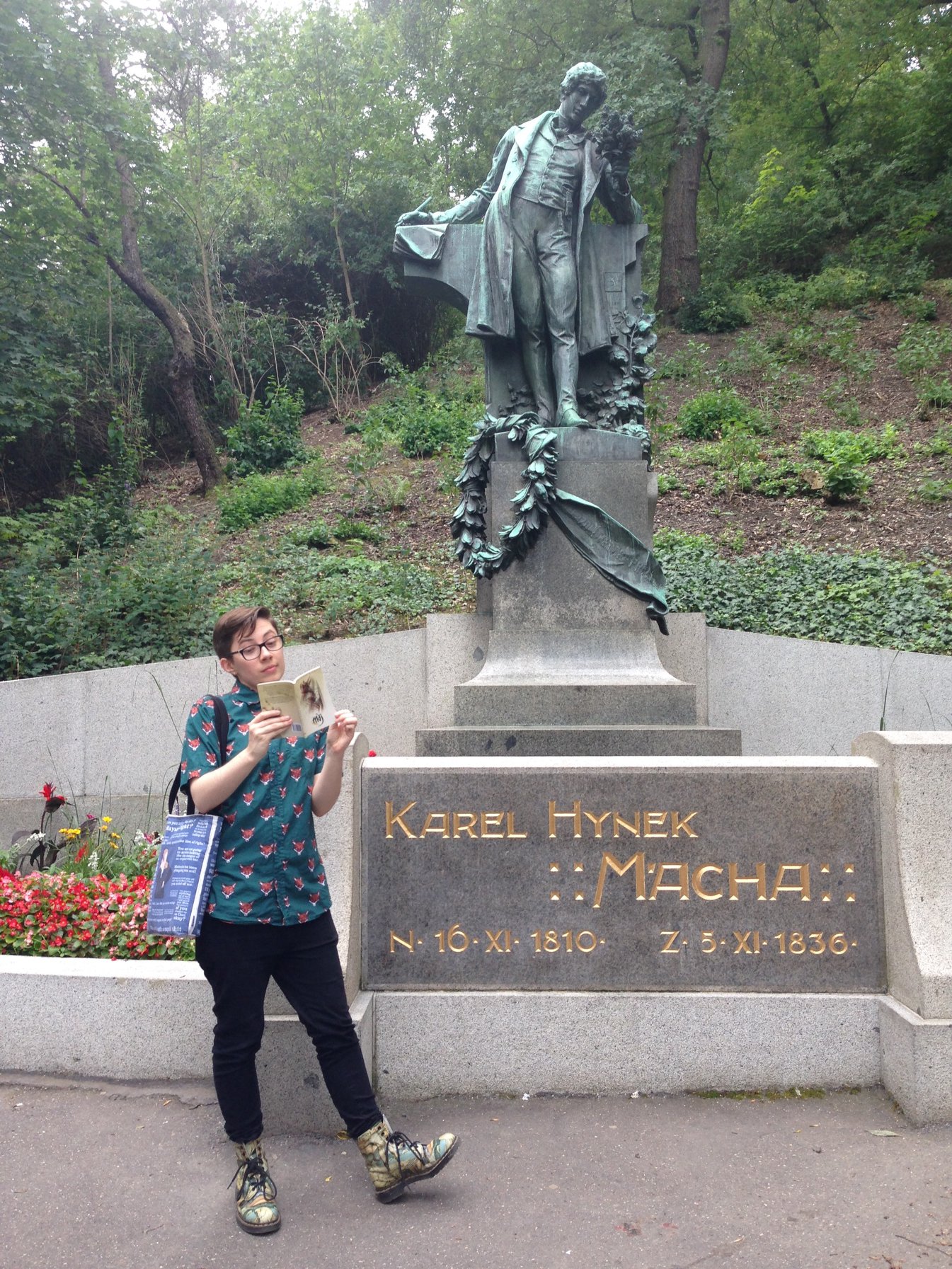
The author reading May in front of a statue of Czech author Mácha.
Me, reading Máj (well, pretending to, as it’s the Czech edition) in front of the Mácha statue on Petřín Hill in Prague.

My favourite books of 2018 (in order of when I read them)

Instead of narrowing them down any further, I’m just saying there’s something for everyone. Links to go my full review where they exist, mostly all on this new shiny blog except a couple the import missed that go to Goodreads.

Welcome!

You may have noticed I have a new URL and a shiny new look. You will also find most of my old posts over here (I think a few had some import issues) and whole new page for my published writing in case anyone is interested in that.

I’m not closing down the old blog (so all the Twitter links still work, mostly) and links will still take you back to the old posts for now (at some point I may try and update any links on blog posts here). It was time, however, for a nicer URL and some more features.

I’ll be writing up my top books of 2018 soon (because don’t we all love an end of year list…) and you’ll find all the usual reviews and things over here too. As ever, Twitter (@fiendfull) is the best way to keep updated with new reviews and content, and you can also hear about what tea I’m drinking and trains I’m on.

Death in Paris by Emilia Bernhard

Death in Paris is a charming murder mystery novel set in Paris, in which two best friends turn  amateur sleuths when a former boyfriend of one of them drowns in a bowl of soup. When Rachel hears that Edgar Bowen is dead, she is reminded of their time together many years ago and how he helped her grow as a person. The details she hears about his death don’t add up: surely Edgar, who previously hated rosé, wasn’t drinking it with his soup? With her best friend Magda, Rachel starts to delve into the case, as the police won’t listen to her suspicions, but amateur sleuthing isn’t as easy as TV makes it appear.

This is a classic kind of mystery novel that is suffused with references to fictional detectives and literature. Rachel and Magda are trying to think like the protagonists of mystery stories, but also finding out how difficult it can be to get information out of people and lie where necessary to get them to talk. Their friendship is a key element of the book: it is their partnership that allows them to think over the facts and fictions of Edgar’s death. They’re clearly depicted as friends who, as two Americans who’ve made their lives in Paris, have been supporting each other for a long time and are genuinely there no matter what. Another major part of the book and related to them being Americans is its depiction of Paris: this is a novel that invites you to take a trip down the streets of Paris, trying to give the reader a sense of living there too.

Ideal for murder mystery fans and especially anyone looking for female led fiction that prizes friendship highly, Death in Paris is a fun read that would go well with a glass of red wine (or, in my case, homemade French onion soup).