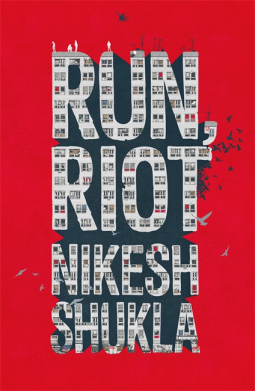
Run, Riot by Nikesh Shukla

Run, Riot is a fast-paced and tense YA novel about community, gentrification, and fighting to expose the system. Taran and her twin brother Hari live in Firestone House, a tower block near the centre of the city. It wasn’t where they would’ve chosen to live, but they have friends there and a life. When Hari gets caught up in police violence, the twins and their friends Jamal and Anna find themselves on the run in their own home, in a race to uncover what is really happening to Firestone House and how far the corruption really goes.

The novel is structured predominantly around one night with some flashbacks, which gives it an electrifying atmosphere as the reader is drawn into the world of Firestone House and the frantic anger and fear of the main characters. Shukla has created a gripping bunch of characters, particularly Taran who is chasing her dream of being an MC whilst her brother dreams of leaving the area for the potential jobs of London.

Run, Riot is for fans of books like The Hate U Give who would like a novel set in England, exposing racism, gentrification, and police brutality closer to home for British readers. It is also for anyone who is looking for a carefully-paced YA novel with characters who feel alive and varied, whilst also angry and learning how to effectively fight for themselves and their community.
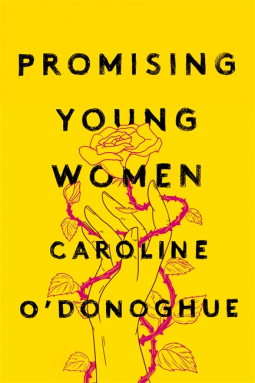
Promising Young Women by Caroline O’Donoghue

Promising Young Women is a witty and timely novel about a twentysomething woman living in London who is driven to doubting her sanity when she ends up involved with an older man at work, feeling like she’s turned into one of the people who submit problems to her anonymous blog. Jane works in advertising and an office party after a pitch starts off something with an older married man, but soon a promotion puts him as her mentor. Power and sex become blurred and Jane at first thinks everything is going well, but soon her friendships, her health, and her career seem to be tumbling down around her.

This novel is like Sally Rooney’s Conversations With Friends for the London office scene, where young women are forced to battle one another and older white men hold all the power. At first, it is readable for the millenial trash vibe that it exposes, but as the narrative moves forward, it spirals into something darker. Consent, online presence and abuse, and mental health come to the forefront as part of the difficult battleground that young women face. What is notable about this novel, which doesn’t depict a particularly fresh story, is that along with Jane, the main character, there is a whole host of varied female characters, flawed and fighting in an environment where men are holding much of the power.

Promising Young Women is a clever look at the male-dominated office culture world in London. It is also a biting look at mental health in young women and the difficulties of being listened to, taken seriously, and kept safe as a woman. Read it over an overpriced hipster cocktail in a pretentious bar and think about everything that is wrong with the world.

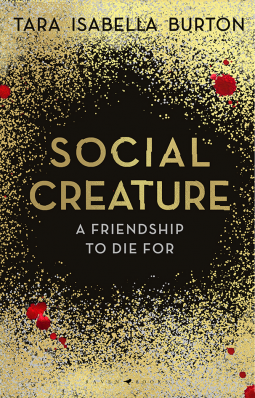
Social Creature by Tara Isabella Burton

Social Creature is an outrageous, biting novel that takes elements of Bret Easton Ellis and The Secret History and other detailed literary thriller-type books and gives them a modern twist. Louise lives in New York City in a shabby apartment in a sketchy location, working multiple jobs and barely even claiming to be a writer any more. In a twist of fate, she meets Lavinia: rich, fun, breathtaking, with a beautiful home and a social life to die for. Somehow, Lavinia pulls Louise into her world, sharing her clothes and paying for their Ubers as they party their way through the wannabe literati of NYC. However, this charmed life surely cannot last forever, and Louise might have to take drastic action if she wants to keep living like her new best friend.

Burton’s writing is fast and precise, using detail in a variety of ways to be both satiric and further the narrative. Instead of business cards and restaurant reservations, this is social media likes and ridiculous tea flavours. Online opinion writing is the big thing, selfies capture moments that barely even happen, and as long as someone keeps up an internet presence, no one will worry. This is an excessive world, parodic at times, but also the life that Louise wants is clearly one that could be real, if someone believed every article and photo they saw online and thought they too could have that.

The narrative is clever in its simplicity: not full of twists and turns, but a situation that continues beyond belief. Small moment of a fourth-wall breaking narrative voice may seem incongruous, but they give fleeting hints that they and the reader know the genre, the inevitability of this story. As with other similar books, it isn’t really a thriller, but also it has the pace of one in many ways, as well as the darkness. It addresses the homoerotic tension usually present in these kind of stories, as well as seeming to explore how a female friendship at the heart of the narrative might be different to tales of all-consuming male friendships.

Social Creature isn’t doing something new, but twisting a kind of book usually written or set in the nineties into a kind of millenial hell. There’s pretentious literary quotes and classical scholars, the desperation of trying to become part of a rich world you can’t afford to be in, an all-consuming new friend with an overpowering personality, but there’s also Instagram, secret hipster speakeasy bars, and opinion websites called Misandry!.

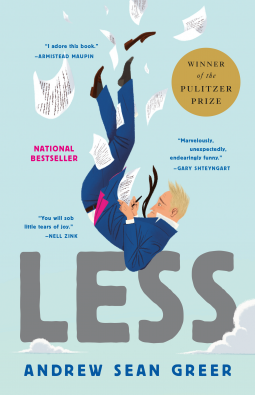
Less by Andrew Sean Greer

Less is a comic, bittersweet novel about a failing writer who travels the world to avoid his ex-boyfriend’s wedding. Arthur Less doesn’t want to go to Freddy Pelu’s wedding, nor does he want to decline and sit at home. So instead, he takes up some chance invitations to travel: teaching in Berlin, an award ceremony in Italy, a not-quite-writers’ retreat in India. He turns fifty and fails to avoid looking back on his past, all the while having minor travel mishaps and wondering if he still has a love story to come.

This is a touching novel about someone who doesn’t quite realise how their life appears to others. Arthur’s journey pokes fun at Americans travelling and at the things writers who aren’t quite the writers they want to be end up doing. At the same time, the novel is a kind of bittersweet love story, about someone who can see his two main relationships in the past and can’t quite escape them. The style is distinctive and Greer uses a not-quite-present narrator to frame Less’ life, a detail which makes sense by the end.

Less is a witty and charming novel that feels like a twentieth-century book updated slightly for the twenty-first. Arthur Less is the kind of slightly sad comic protagonist that you hope things will end up well for.

How The Light Gets In by Clare Fisher

How The Light Gets In is a collection of very short stories and prose pieces that explore modern life and details both light and dark. They examine the impact of smartphones on daily life, create playful extended metaphors, and tell the stories of distinctive characters in very short spaces. Many of the pieces have a very distinct sense of place: London, Leeds, and elsewhere, being in transit and being at home.

The writing style may be familiar to anyone who read Fisher’s debut novel, All The Good Things, and this collection has other similarities to that novel as well, particularly a sense of accurate detail about everyday life in Britain and characters dealing with tough situations. The modernity of these fleeting looks into characters and moments is enjoyable and the collection shows how very short writing can be perfect in the modern world. It is a book that can be read in the kind of scenarios the characters are shown to be—on transport, during a lunchbreak, whilst unable to concentrate, etc—because it is made up of powerful stories in a quick format.

Quick book picks for May

Only a few for this month, but a good bunch of fiction featuring some historical, some globe-spanning, and some very focused on the personal.

  • Less by Andrew Sean Greer – A bittersweet comic novel about a struggling writer who takes up invitations to strange events around the world in order to avoid his ex-boyfriend’s wedding.
  • House of Gold by Natasha Solomons – Europe poised on the cusp of World War One is the setting for this historical novel, about the Goldbaum family and how rebellious Greta attempts to reclaim her own life. Mixes the personal with the large scale history surprisingly well.
  • We Are Young by Cat Clarke – Another tense YA novel from Cat Clarke, this one focuses on how a car accident can bring various issues in a community to the forefront, from the perspective of the girl whose new stepbrother is the sole survivor.
  • The Pharmacist’s Wife by Rebecca Tait – A dark historical novel set in Victorian Edinburgh, where  Rebecca Palmer’s pharmacist husband tries to control her using heroin and manipulation.
  • Whistle in the Dark by Emma Healey – This novel tells the story of a girl who goes missing and then is found a few days later, unwilling to discuss what happened. Told from the perspective of her mother, it looks at depression and how a biased viewpoint can lead to assumptions.

No Holds Bard

Instead of a review, this is a shameless plug for the anthology I have a story in that is out today. No Holds Bard is a collection of twelve Shakespeare-related stories featuring LGBTQ characters.

Here’s the summary for my story: Young actor Niamh Valentine is cast as Poins in an all-female production of Henry IV. The infamous Jessica Condell is playing Hal. Soon Niamh is balancing Hal and Poins’ relationship with hers and Jessica’s whilst preparing for opening night.

More information and links on the No Holds Bard page on Manifold Press (Amazon UK link / Amazon US link)