
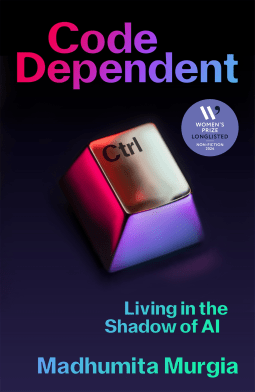
Code Dependent is an investigation into the human side of AI: the ordinary, non-Silicon Valley people affected by and involved in areas relating to artificial intelligence. Journalist Madhumita Murgia tells the stories of people and communities impacted by AI from people labelling AI training data to people whose lives are changed by the decisions of AI systems or having deep fake videos made of them. Not everything is negative: there’s also healthcare benefits, if only these technologies can be made freely available and in places that most need them. And as the book moves towards the ending, Murgia argues that these stories give us principles we should consider going forward to ensure AI works for ordinary people, not the other way around.
Notably, this book focuses on the human side of technology, rather than the technological side, and foregrounds the experiences of people and the complexity of AI’s role. Even for areas that are often discussed in other books, such as predictive policing, this book offers examples I’ve not seen before and direct interviews with people affected, not something all technology books have. At the same time, it does provide an accessible description of a lot of AI-related technologies; for example, it’s the first time I’ve seen—as someone who reads a lot about AI—a simple explanation of what a ‘transformer’ is and why it has been so important for generative AI. This combination makes Code Dependent useful both for people who do read tech books, but are interested in human stories rather than the same talking points, and people who are newer to the topic and would like a way in that focuses on people.
Sometimes I found the framing or phrasing a bit simplistic or lacking nuance and complexity, but generally, it was an accessible book about AI that tells stories rather than just facts, and takes areas we might have heard or read plenty about and shows specific people’s lives in relation to these topics. The parting message about religions coming together to discuss AI was not where I expected the book to go and I’m not quite sure how I feel about that being the conclusion (given that high up people in a religion aren’t really ‘ordinary people’ necessarily), but I do appreciate that this was a book about AI that had a lot of things I’d not read about before, or at least not in this form.
Given the current hype and fear around AI, Code Dependent is likely to become a much-talked-about book, offering people a different way in to reading and thinking about artificial intelligence and what it means for our lives.
 Fiendfully Reading
You must be logged in to post a comment.