Supremacy: AI, ChatGPT and the race that will change the world by Parmy Olson

Supremacy is a book charting the race between OpenAI and Deep Mind to bring out their AI products, focusing on their founders, Sam Altman and Demis Hassabis. Journalist Parmy Olson explores these two founders’ starts in the tech industry, interest in AGI (artificial general intelligence) and ultimately the race between their two companies (and the tech giants behind them) to have the best AI product on the market in this generative AI age.

As someone who reads and teaches people about AI, I was interested to see how this quite recent race would be turned into a book. The narrative starts early and quite broad, looking at Altman and Hassabis’ initial failures and interest in AI, as well as early tech industry contacts, and I found this part of the book was a bit too obsessed with the ‘tech genius’ idea, not just from them but around people like Elon Musk as well. Thankfully, as the book goes on, Olson moves away from this idea and looks more broadly at the big picture, including the struggles around both ideas of AI safety and of AI ethics, and the need for the AI world to be dominated by existing tech giants like Microsoft and Google.

The part of the book describing the invention of the ‘transformer’ and the impact of this on work to build better AI models was a highlight as it was an approachable explanation of why this breakthrough was so important, helping people to understand why these huge AI products seemed to come out of nowhere a few years later. I found the section that explores how effective altruism ended up connected to some of the movements in AI also interesting, showcasing how it is often the ideas of billionaires that have a massive impact on world-changing technologies. There was plenty I learnt from the book, even as someone who has a fair interest in the topic, and knowing where these companies came from is a useful part of critiquing and evaluating generative AI.

I did find that sometimes the book was so focused on tech billionaires and companies that it dragged, sometimes accepting at face value what these people say and argue for. Especially by the end, there was decent discussion of many of the issues surrounding AI, but I did think some were notably absent, particularly the climate impact of the GPU power needed and the human cost of data labelling for training data. The climate angle in particular I felt was needed, given that these companies often try and hide their negative climate cost, and it links back to other technologies like cryptocurrency that are mentioned in passing in the book. I do think that the way the book clearly distinguishes between AI safety and AI ethics, and how these can even be in conflict with each other, was very useful, especially for raising awareness of these to a general audience reading the book to learn more about the world of AI as it has become.

Overall, Supremacy is a detailed account of these two AI juggernauts over the past fifteen years and the road to get to tools like ChatGPT that have become household names, and it is a good place for people who want to know where AI has come from recently to start. For me, I found it did lean too heavily on ideas of the solitary tech genius billionaire and I wasn’t interested in that much detail about conversations between them, but the book didn’t go entirely in for the AI hype and did address a lot of the issues and controversies around AI at the moment.
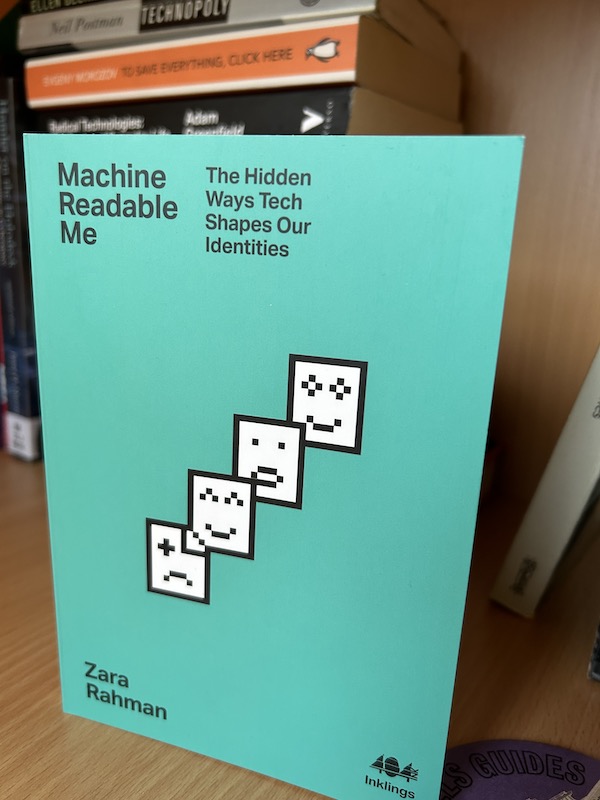
Machine Readable Me: The Hidden Ways Tech Shapes Our Identities by Zara Rahman

Machine Readable Me is an exploration of the data collected about individuals and what this means for the lives of people globally. Part of 404 Ink’s Inklings series, it is a pocket-sized look into the world of digital data, identification, and biometrics that then goes on to question if we should accept being categorised in such rigid, unchangeable ways.

I’ve enjoyed other books in this series, but this one was particularly exciting for me because I tend to read quite a few ‘tech books’ looking at similar topics. By the end of Machine Readable Me I felt revitalised in my interest in our technological past, present, and future, because it was a fresh look into the tech world and had a global focus (many of the books are very US-centric). As it’s a short book, it can only cover so many examples, but there’s a lot of situations I’d not seen covered before in other books rather than using the same old talking points.

The power of categorisation feels central in the book, and Rahman builds on other tech writers’ work to question some of the societal reasons behind power and tech, rather than focusing just on the technology itself. I’ve heard people talking about the need to let data be messier and less machine focused, letting humans and their needs take centre stage, and it was good to see that argued here.

I think Machine Readable Me is a good introduction to the area of personal data and technology, borders and ID cards, that focuses on people not tech companies, politics and society rather than just capitalism. At the same time, for people who are already engaged in the area, I think the energy and examples bring fresh insight and something a bit different, all in an accessible size.

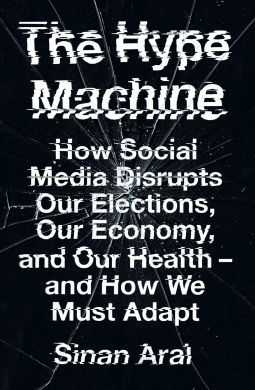
The Hype Machine by Sinan Aral

The Hype Machine is a book about social media—about its power and influence, and about what might need to be done to lessen its negative effects. Sinan Aral defines ‘the Hype Machine’ as the digital social media technologies that have particularly taken off over the last decade or two and considers how they do what they do, helping us to interact, engage, live our lives, and do a whole load more, but also how they impact our decisions, elections, and lives. Aral then goes on to lay out proposals for what could be done to regulate these technologies in ways which might have concrete impact.

As someone who reads a fair few books about popular technology and social media, what made The Hype Machine distinctive (other than the insistence on calling social media ‘the Hype Machine’ throughout the book) was the amount of research cited and used throughout. Whether done by Aral and his team or by others, the book provides a lot of references to research and studies on the actual impact of social media and how it works in different ways, from our brains to network effects. This makes it a good choice if you’re looking for a book on these technologies which balances accessibility with linking to academic studies. It is also notably up to date, with a prologue specifically discussing COVID-19 and references throughout to social media in 2020, which in some ways can blur the lines in debates around privacy and digital technologies through pandemic measures and tech companies’ involvement in these.

This is also a useful look at the two directions social media is being pulled in: towards greater openness, but also greater privacy and security. Aral outlines some of the issues and debates around these, making it a useful introduction for people new to some of these ideas, as well as proposing ways of managing the two areas. The later part of the book focuses on the future and on what should be done in terms of regulation and people’s behaviour, which is useful for starting discussion though (probably naturally) I had some questions about some parts (and as the focus of the book is on the US, the regulation was mostly focused on there).

The Hype Machine is a handy book for my work personally, and an interesting read for anyone who wants to think about how social media works and the effects it has been having over recent years. For my tastes, it lets the tech companies off a bit too much and occasionally falls into thinking that technology can always solve technology’s problems, but Aral often gives multiple sides to a debate and makes it obvious that things often aren’t clear cut.

The System / The Tangled Web We Weave by James Ball

This book, published as The Tangled Web We Weave in the US and The System in the UK, is a look at the internet and how it works, from its inception and the physical infrastructure that makes it work to the companies and money that control many of the platforms and interactions we have with the web. Ball outlines how the internet is a result of decisions, market forces, and government actions, and concludes by looking at the action that can be taken to try and change it to ensure it works for the vast majority, not the few who control it.

Ball provides a useful summary, in different chapters, of different areas of the system that is the internet, starting with its origins and then looking at the physical cables and service providers, then at the tech industry and possibilities of government and other surveillance. The book is designed for complete beginners to reading about these areas, trying to avoid using jargon that isn’t explained and not going into technical depth. This makes it particularly useful for people either looking at the internet from more of a social science viewpoint but wanting to know how it works, or for people who want to know more of the history and issues surrounding the internet and how it is controlled.

A useful starting point or general overview for anyone interested in the internet and how it works and is used, this book is an accessible option hopefully likely to inspire further reading or action, particularly as Ball concludes with a call for change, for fighting for tech companies actually paying the taxes they should and not being allowed to use unfair labour conditions as well as for better treatment of people’s data. What probably is needed next is more accessible information on how this might happen, but it is important that books like this, aimed at people not necessarily up to date on these tech issues, are published.