Czech It Out

image

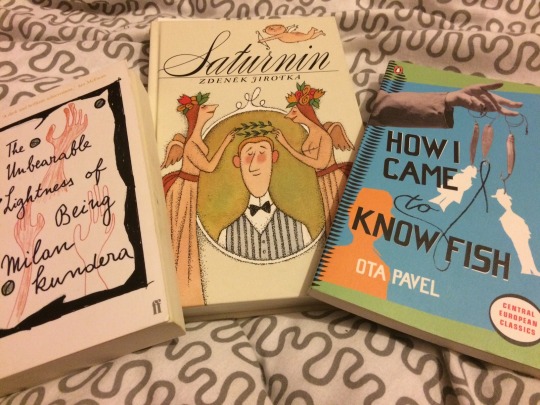
Firstly, I’m sorry about that pun. Secondly, I’m here to recommend some Czech books, which were in turn recommended (and given) to me by my friend Marcela, who deserves the credit for that. It can be difficult to discover literature from countries not your own without recommendations, so I was lucky to be given some Czech books (in translation, as I know only a few words of Czech) and had the chance to find out about their context. All three books were quite different and I suggest to pick the one that appeals to you most to start off with.

  • How I Came To Know Fish (1974) by Ota Pavel – This memoir of Pavel’s childhood in Czechoslovakia during the Second World War doesn’t sound from this introduction like it would be a sweet, nostalgic story of fishing and family, but it is. I wasn’t sure what to expect, but it turned out to be a quick, intriguing read that gives an unexpected viewpoint and the kind of story not often told. It is easily available in translation from Penguin’s ‘Central European Classics’ range, too, and is apparently popular for its nostalgic view of the rural past. Good for anybody interested in social history or looking for something insightful but not too intense.
  • The Unbearable Lightness of Being (1984) by Milan Kundera – By far the most famous on this list (and the only one I had previously heard of), Kundera’s novel is famous for its philosophical slant which gives it a fairly imposing reputation. However, The Unbearable Lightness of Being is much more readable than its reputation implies, a novel of love and tangled up lives with the backdrop of Communist occupation. The characters, whilst consciously created by the narrator and described as such, are also intriguing in what they stand for and how they view love and commitment. A novel full of both rich detail and metafictional awareness of the acts of writing and thinking, this is a book to get stuck into. Kundera’s fame means that this is also easy to buy in bookshops or find in libraries. Great for people who like novels that make you think, and also fans of books such as Nineteen Eighty Four or Steppenwolf.
  • Saturnin (1942) by Zdeněk Jirotka – The most fun of the three, Saturnin is a comic novel about the narrator and his strange manservant Saturnin. Their adventures are a kind of mundane-bizarre that is very enjoyable and there are classic comedy side characters such as a money-loving aunt who speaks in maxims. The fact it is in translation does not detract from the humour and in fact it’s a fascinating blend of a Jeeves-like character with Czech writing. The copy I have is a beautifully illustrated hardback one which is well worth it as it is beautiful. For anyone who likes comedy of manners, absurd situations, and well-meaning interfering servants.

Holiday Gift Books 2: The ‘Lighter-but-still-a-bit-cynical’ Read

2016 has been quite a year for most. The list of ‘negative things that happened in 2016’ is too long to fit here and also unnecessary, as undoubtably everywhere will be compiling lists as their ‘best of the year’ features quickly turn into ‘worst of the year’ features (my personal recommendation is to watch Charlie Brooker’s annual take on the year, 2016 Wipe, which if previous years are anything to go by, will be bitter and depressing, but with the kind of realistic hope possible from a cynical comedy take on events).

As gifts go, 2016 wouldn’t be great. Instead, here’s some lighter reads, but not those that are overly schmalzy, twee, or mundane. Books that offer a bit of a smile, hopefully, but also don’t patronise you by trying to claim that everything is rosy.

  • America Unchained by Dave Gorman – Gorman is a comedian who currently has a very good show airing on Dave (the channel, I know it’s confusing), but I first knew of him through his books. When recently rereading America Unchained, it was clear to me that his account of a challenge to get from coast to coast in America without using the big chain companies, a journey beset with problems and the signs of an unchained world quickly disappearing, is still relevant today. As well as this, it is touching and funny and provided me with a look at parts of America you don’t always see on TV.
  • ‘Campus Trilogy’ by David Lodge – This trilogy that aren’t quite a trilogy, namely Changing Places, Small World, and Nice Work, are novels set on university campuses in Britain and America, featuring a lot of jokes about the disheartening side of academia (bear in mind these are quite dated now so even more disheartening) and confusions between British people and the rest of the world, particularly the USA. Particularly good to buy for English students/ex-English students who will understand both the literary jokes and the questions of what the hell to do with an English degree.
  • Spectacles by Sue Perkins – I’m not usually a famous person autobiography person unless that person is a writer with a tendency to write themselves into their works anyway (Isherwood and Burgess, I’m looking at you), but my mum leant me this and having got into Bake Off this year, I thought I’d give it a go. It’s a funny memoir with lots of self-deprecation and stories about dogs. There’s also a strangely accurate description of what its like to go to Oxbridge and have people tell you to make sure you don’t end up ‘going posh’ by the experience.

Holiday Gift Books 1: The ‘You Have To Have Read It’

Books are a great gift, perfect for reading, keeping, sharing, and leaving on a shelf tactfully for years. However, sometimes buying books as presents can be tricky, with so many options vying for your attention and the easy tendency to get lost in a bookshop daze until you become convinced that your horror-hating friend really needs a set of Stephen King novels.

There are usually plenty of gift guides around, suggesting new releases and fancy hardbacks. Tables of novelty gift books, colouring books, cookery books, and TV tie-in books are all very well if the person in question likes something they are themed around, but what if you just want to give them a good read? I’m compiling a few lists of ideas, based around categories that you might think of when looking for ideas. The first is the ‘You Have To Have Read It’ book, those books that are often talked about and make great presents for the fact that they are genuinely very good.

  • The Secret History by Donna Tartt – A classic ‘can’t put down’ novel from the early 90s, a time when university students didn’t have mobile phones so could genuinely drive all over town looking for each other, as they do in Tartt’s book. Simply described as ‘eccentric classics students go somewhat crazy’, The Secret History is both very well written and very enjoyable to read, with a hilariously unreliable narrator and seemingly mysterious characters. Buy for students to remind them they’ve not resorted to murder yet or for pretentious people who will want to be the characters, regardless of how terrible they are.
  • The Importance of Being Earnest by Oscar Wilde – The play for anyone who has read a few quotations by Oscar Wilde and wants to see that wit in action. A ridiculous comedy about late Victorian society and perfect for getting anyone into reading drama, as it is quick paced, funny, and has a fairly small cast of characters to keep up with.
  • The Humans by Matt Haig – The sort of book you’ve probably seen in bookshops and had people recommend to you, if you’ve not read it. A novel about being out of place and seeing everyone else as ‘other’, it is touching and funny and would make a perfect gift for both avid readers and people who are less into books. Or if you want to buy for someone who has already read it, go for Haig’s The Radleys, which is a similar kind of book but about suburban vampires.
  • Trainspotting by Irvine Welsh – Whilst not traditionally a book you’d give at Christmas, Trainspotting is a fantastic book and a great gift for those who need their next challenging, edgy book or teenagers who want their fiction dark whilst still funny at times. Also, with the second film coming out in the new year, it’s a perfect time to read the novel.

Acceptable in the 1580s: novels set in the late 16thC

The late sixteenth century isn’t exactly an unheard of time: Shakespeare, Elizabeth I, Mary Queen of Scots, the Spanish Armada, Walter Raleigh, playhouses, tobacco…there was a fair amount going on. And they wrote plenty of literature too, about, well, all of those things, plus devils and murder and magic, which admittedly either did happen or some people believed did happen at the time. Novels set in the period also tend to be full of these things, plus people drinking a lot of beer and speaking random Latin.

This isn’t to be disparaging. I love books set around 1570-1600. Here are some recommendations in varied styles and genres, so I can convince others of my favourite time period.

  • A Dead Man in Deptford by Anthony Burgess – Burgess’ novel may well be the book I recommend the most. His last novel, it is in my opinion his best: the story of Christopher Marlowe, infamous playwright and possible spy, also infamous lover of tobacco and boys. Rather than get bogged down with infamy, though, Burgess plays around with words, historical accuracy, and what is acceptable to say in public in 1590. Read if you like blasphemy and cat puns.
  • The Sword of Albion by Mark Chadbourn – A three part series called Swords of Albion, this is the combination of historical fiction, spy thriller, and fantasy series involving the Unseelie Court. Will Swyfte is the most famous spy in Elizabethan England and he knows it. The supporting characters really make this series and the magical plotlines are tightly woven with historical events. Plus Marlowe is a character in the first two, and if you hadn’t guessed from my first recommendation, that’s a major selling point for me.
  • Hue & Cry by Shirley McKay – For those who prefer a gripping plot, this mystery is the right choice. Set in Scotland, it tells a story of scandal and murder in the town and university, plus an appearance from the young James VI and a troublesome horse. The characters and rich historical draw you in as much as the plot, making this a great way to immerse yourself in the sixteenth century and then forget that you can’t start offering people weird herbs and seeds to cure illnesses once you’ve left the novel.

Books for bad days

Bad days happen to everyone. Maybe little things keep going wrong, or the world is being a terrifying place, or you’ve received bad news. Maybe you’re feeling sad and don’t have the energy to battle it. Maybe one of millions of other reasons is making the day a Bad Day.

Now, on bad days, or bad weeks or bad months, many people don’t feel like reading, but for when you do, or if you’re someone who can retreat into reading when things aren’t so good, it can be good to have some ideas of what to read. Some standby books ready to go. These will, of course, be personal, perhaps books you love for their message of hope or endurance, for their escapism, for their happiness. Or perhaps it is a book that means something to you personally: a gift from someone you love or a book you read at an important time in your life. Though what books are good for bad days is very subjective, here are a few suggestions to perhaps keep close to hand or take out of the library next time you’re feeling down.

  • Reasons To Stay Alive by Matt Haig – I’m starting with a classic kind of bad day book. This is a memoir about mental health struggles, but it is also a short, uplifting book with chapters describing things that made the author feel better and a practical and hopeful yet not too schmaltzy tone.
  • Good Omens by Terry Pratchett and Neil Gaiman – My next offering is comedy, but the kind of comedy with some darker humour about sin amidst ridiculousness for when overly cheery things just feel patronising and fake. End of the world comedy with a fantastic angel and devil duo.
  • Childe Harold’s Pilgrimage by Lord Byron – You may have to hear me out with this one. Childe Harold’s Pilgrimage is the ultimate Romantic hero standing on a mountain yelling about feeling sad. The thinly disguised Byronic hero travels across Europe, but mostly the four canto poem is a lot of moody Romantic thoughts (the big R kind, with nature and desolation and thunderstorms). Byron’s concise way of getting across feeling bad (“I have loved not the world, nor the world me”) can be the perfect poetry to read aloud when things are too much.
  • From Russia With Love by Ian Fleming – This is my escapism option. I’m not one for fantasy so I’ve chosen my favourite Bond book as something for a ridiculous, predicable plot that can keep your mind occupied and away from reality. Substitute with your preferred genre of escapism if you wish.
  • The plays of Joe Orton – Another dark comedy option, this time in a drama format. Orton’s plays are black comedies where things rarely go well, but the combination of ridiculousness and seeing bad things and sticky situations happen to other people can be useful. I recommend Entertaining Mr Sloane or Loot for one to try.

Bonfire Books

It’s Bonfire Night, so bonfire books are required. I’m avoiding some obviously related to 5th November and going for books with a general autumnal feel or some other relevance. Here are a few books to curl up with for the next few days, with a mug of lapsang souchong or a toffee apple cider (not at all exactly what I had tonight to celebrate bonfire night):

  • The Devil’s Charter by Barnabe Barnes – I’m starting with an early seventeenth century play for the Gunpowder Plot/James I theme, but this one also has fireworks and devils, to make it even more relevant. The Devil’s Charter is the TV series The Borgias for the early modern audience, with plenty of soul selling and special effects. Plus the plot revolves around wording disputes with the devil.
  • Night Watch by Sarah Waters – This book has no connection to Bonfire Night, but has an overall autumnal feel, smoke in the air and people hiding their sadness under layers of coats. It is fantastic to sit and read on a cold afternoon wearing jumpers and drinking tea as the light fades and you sink into melancholy over Waters’ wonderful characters.
  • Jonathan Strange & Mr Norrell by Susanna Clarke – Again, no obvious connection, but the world of Regency magic that Clarke creates has an autumnal feel, partly set in Yorkshire countryside. The swirling smoke of magic and London contributes to the mystery and as a huge slab of a book, a perfect investment for long evening reading.
  • Inferno by Dante – Maybe hellfire is a bit obvious, but what better to consider as the nights draw in as the ways you can burn in Hell?