The Future Is Terrifying: Some Other Dystopian Reads

The title says it all, really. It was not a surprise to me to get a request for some dystopia recommendations, considering the current climate. 1984, Brave New World, and The Handmaid’s Tale have recently been headline books once again as people turn to fiction not for comfort, but for information and for inspiration on resistance and seeing what is going on in the world. Those three are certainly the big names, but there is plenty more dystopian fiction out there to check out.

  • The Transition by Luke Kennard – A young couple seemingly failing to make their way in the world land in trouble and their way out is a new scheme that promises to help them grow up and find their feet in the adult world. Only out last month, this is a modern dystopia about a generation unable to find its feet, with hints of Black Mirror thrown in. See my longer review here.
  • The MaddAddam trilogy by Margaret Atwood – Comprising of Oryx and Crake, The Year of the Flood, and MaddAddam, Atwood’s far more recent dystopian writings (the final book only came out a few years ago) have a much more complex narrative than The Handmaid’s Tale, comprising of a weird, almost post-apocalyptic world. Much of the story is told in flashbacks, looking into biological experimentation, class divides, and the commodification of sex. For those who prefer a less tradition approach to the dystopian genre (and in my opinion more engaging than her more famous one).
  • Bend Sinister by Vladimir Nabokov & We by Yevgeny Zamyatin – For an alternative novel about a totalitarian state – or one for people who’ve done all the big names before – then either Nabokov’s Bend Sinister or Zamyatin’s We are good options, novels that both use different elements of experience with Russian oppression to form their plots and ideas. We in particular is chilling, not even published in Russian until 1988 due to Soviet censorship and forming inspiration for 1984.
  • High-Rise by J. G. Ballard – Another slightly different take on the concept, High-Rise is like Lord of the Flies for the rich consumer age, a tale of enforced building hierarchy and breaking free of respectability. A recent film adaptation starring Tom Hiddleston reminded people of the novel, which offers a kind of social dystopia that would make anyone nervous of those flats you can rent with everything you might need on site.
  • The Last Man by Mary Shelley – For my final pick, I’ve gone for a slightly more escapist option as a reminder of how dystopian fiction can date in some ways and still be both touching and sad in others. The story of a plague hitting mankind, with sweet political optimism and less sweet terrifying isolation. Maybe her heavily Romantic writing style isn’t for everyone, but her descriptions of grief are heartbreaking.
So you want to read Middle English lit?

In honour of it soon being the Harrowing of Hell – the greatest episode in Piers Plowman, maybe tied with the dreams within dreams – here is my fun and somewhat irreverent guide to the big names of Medieval English literature. They’re in a subjective order of ascending difficulty when reading in Middle English, but when in translation, it’s similar except Gawain is easier and Piers Plowman is basically just as hard. Onwards, to knights and strange religious dream poems feat. weird Biblical apocrypha.

  • Morte Darthur (/other spellings/Works) by Thomas Malory – More fun than could be expected from a huge book (if you get the bright red complete works edition) written like a five year old tried to spell more modern English. Malory’s prose Arthurian stories have everything you might want from an epic – knights, fights, magic, the chosen one being too good for this world, Gawain recognising Lancelot from how he rides a horse – and some you might not – incest, doomed love affairs, accidentally killing people and starting all-consuming feuds.
  • Various medieval drama – Medieval plays, usually short and part of a cycle that was performed around a city for a special occasion, basically encompass the Bible from creation to the apocalypse. Don’t say they didn’t think big. There are anthologies of some of the best bits and you can find them online too (try the York cycle for a starting point). There’s weird comedy with Lucifer stealing God’s chair and jokes whilst Christ is being nailed to the cross. Really.
  • Geoffrey Chaucer – The big name. I’ve not specified a work first because it depends. Obviously there’s The Canterbury Tales, which true to its name is separate tales told by fictional pilgrims. Some are very dirty (try the Miller’s Tale if that’s your interest). Or read The Wife of Bath’s Prologue because she had a fun life. If you like Greek stuff/the Trojan War/Shakespeare’s Troilus and Cressida, try Troilus and Criseyde, though it is quite long and you will get pissed off at Pandarus. Or if you like a crazy narrative involving retelling part of the Aeneid and also flying on the back of an eagle trying to explain physics to medieval people, go for my personal fave House of Fame.
  • Sir Gawain and the Green Knight by (imaginatively) the Gawain poet – SGGK is a fantastic story told in a cinematic style, but it is also quite tough Middle English so good to read in translation first. Read it for the great descriptions or for the part where Gawain keeps having to kiss the Green Knight as part of a weird deal they made.
  • Piers Plowman by William Langland – On the surface, Piers Plowman doesn’t sound like much fun. A huge medieval dream poem in alliterative verse which features complex theology and dreams within dreams that are less heist-based than Inception. Once you read it, you’ll discover it still isn’t great fun, but it is also is, because it’s incredibly weird and features Christ jousting the devil in Hell.

Quick book picks for April

As the weather gets (vaguely) nicer, here are some books coming out in April, perfect for avoiding the burgeoning sun and staying indoors – with quick summaries and links to reviews.

Invited into their circle: the Oxbridge Secret History

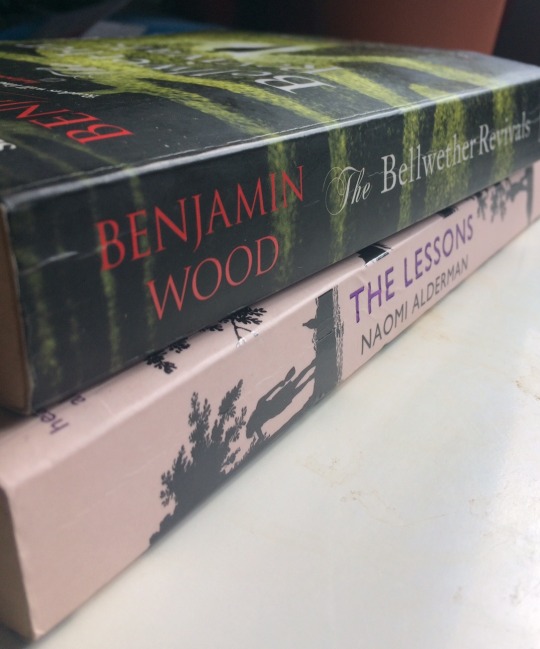
Today I’m going to talk about a category of books I love: privileged, genius, and/or eccentric students make questionable choices, mostly in books that are compared to The Secret History (Donna Tartt’s infamous epitome of this genre). To do so, I’m going to be discussing two books I bought and read recently, both set in Oxbridge, both featuring incredibly rich students and more ‘normal’ protagonists, both compared to both Brideshead Revisited and The Secret History on their covers.

I’m starting with The Lessons by Naomi Alderman because the second of my choices references this book on its cover so I felt that must be the natural progression. The narrator is James, a Physics student who falls behind almost as soon as he gets to Oxford and is feeling the weight of his parents’ and older sister’s expectations for him. Soon he is drawn into the world of the charismatic Mark Winters and becomes part of a group of friends living in Mark’s strange Oxford house. As the years pass, it turns out that they were not at all prepared for life and that their wild lifestyle in Oxford is not so suited to the outside world.

It is easy to compare James with Richard Papen from The Secret History: narrators apprehensive yet drawn into a seductive world of an enigmatic friendship group, unreliable in their description of characters, and far too entwined to narrate with any sense of objectivity. What differs is that James becomes far less of an onlooker and instead part of the narrative of desire and betrayal that runs through the novel. The other main characters are vividly drawn and run from recognisable stereotypes, but it is Mark who is the standout character, as is to be expected. His issues and unstable nature mixed with large generosity with the money he barely understands the value of make him exactly the kind of enthralling figure who captivates even when they are making terrible decisions.

In terms of plot, The Lessons is not hugely similar to TSH, but feels more a child of Brideshead, albeit without any wars. Much of its thrill comes from wondering what the characters will do next and watching as secrets are revealed and life fails to turn out how they expected it to. If you like the genre, it is a hugely enjoyable read, with the relationship between James and Mark forming a dark and complicated core.

The second book, The Bellwether Revivals by Benjamin Wood, is set in Cambridge and features a protagonist not actually at the university, a shock for the category. Instead Oscar is a care assistant who stumbles across the Bellwether siblings Iris and Eden by accident when he is lured into King’s College chapel by the music playing. What unfurls is a narrative dominated by Eden, a musical genius who attempts to conduct experiments on his group of friends and refuses to accept any boundaries that the world might place on him.

Oscar’s outsider view of the group lessens as he begins a relationship with Iris and he becomes a classic figure drawn into events he can barely comprehend. A lot is left unsaid in the book, creating lingering mystery and allowing the gaps to be filled in by the reader. Like The Lessons, the student backdrop is accurately painted, though their student lives are less important than in either The Lessons or The Secret History. More significant is Eden’s spellbinding power and the attempts of Oscar and Iris to work out if he really has something special about him. As in Alderman’s novel, The Bellwether Revivals opens with a mysterious scene from near the end of the narrative, begging the question of how things will go so wrong. In both cases this adds to the sense that a life of privilege and genius cannot turn out rosy and safe.

In my opinion, The Bellwether Revivals is more worthy of the Donna Tartt comparison, due to its plot and use of academic experiments and historical ideas, though The Lessons has a better cast of captivating characters who draw the reader into their circle (and I personally enjoyed more, possibly because the Oxford accuracy drew me in). Both books are worth reading for anybody who likes this kind of out of control academic setting and closely entwined messed up friendship group. Just don’t let them give you any ideas…

Quick book picks for March

In case you’re stuck for new books to read or want to know what’s coming out, here are my top books for March, with quick summaries and links if I’ve posted a review somewhere.

  • Stay With Me by Ayobami Adebayo – A moving story about hope, love, and freedom, set in Nigeria between 1985 and 2008 and charting Yejide and her husband Akin’s attempts to have children and live as the family they have imagined.
  • Little Nothing by Marisa Silver – A novel fusing fairy tale and reality that focuses on transformation and belief in the face of difference.
  • The Witchfinder’s Sister by Beth Underdown – A timely historical novel about persecution and prejudice centred around Alice, the imagined sister of 17th century Witchfinder General Matthew Hopkins.
  • The Lonely City by Olivia Laing – A memoir of loneliness in New York mixed with details and histories of major twentieth century artists who suffered from the same issue and how art and loneliness can connect.
  • Nasty Women by 404 Ink – A collection of essays about intersectional issues facing women in the twenty first century, often moving and funny.
  • The Roanoke Girls by Amy Engel – A dark literary thriller about a seemingly privileged family and their secrets.
  • The Bomb Girls’ Secrets by Daisy Styles – A light historical novel about the social issues and personal drama of women’s war effort in WWII.

#Burgess100

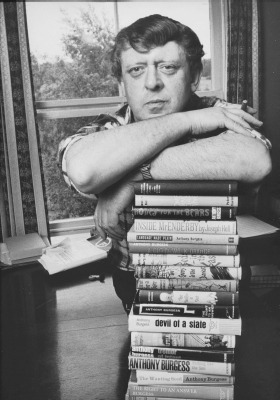
Anthony Burgess, born 100 years ago today, is most famous for writing A Clockwork Orange, the violent dystopian novel with its own teenage slang – Nadsat – and an infamous protagonist, Alex. Whilst A Clockwork Orange is a fantastic and hugely influential novel, a lot of Burgess’ prolific other work is lesser known, so for the centenary I’m picking a few of my favourites. For more info on Burgess himself and all of his work, check out the International Anthony Burgess Foundation website (or visit them in Manchester where they also have a lovely cafe).

  • A Dead Man in Deptford – I am starting with Burgess’ final completed novel and my personal favourite, his linguistically playful and endlessly delightful story about the life of Elizabethan playwright Christopher ‘Kit’ Marlowe. The prose revels in the scandalous life of Marlowe and creates a vivid picture of the dark world of spies, atheism and controversy in which Burgess has placed him. Also the image of Marlowe singing an ironic song about “dis-cre-tion” in the middle of a tavern will never leave you.
  • Byrne – Published even later than A Dead Man in Deptford, Byrne is the story of a Don Juan type Irish composer and his many descendants, written entirely in verse. Burgess plays around with the metres in which Byron wrote Don Juan and Childe Harold’s Pilgrimage as he self-consciously rewrites the former poem, making the novel a treat for Byron fans and anyone who likes ridiculous rhymes and long comic poems.
  • Earthly Powers – I stray away from Burgess’ work on my favourite writers with this pick, a fantastic novel spanning the twentieth century and following the life of a gay writer whose sister is married to the brother of the Pope. The narrative weaves through famous events and past historical figures as Burgess deals with one of his favourite topics, Catholics in crisis. Plus there’s a lot about defending literature from censorship and accusations of obscenity, to which Burgess and his infamous A Clockwork Orange had not been immune.
  • Honourable mentions to: ABBA ABBA (like A Dead Man in Deptford but about Keats dying and then Burgess writing dirty poems for the second half), Tremor of Intent (a Bond parody spy novel with a hapless main character), Burgess’ two part autobiography which is great for realising that the themes that come up in all his books were genuinely all the things he was obsessed with in life too.

LGBT biographies and memoirs: sharing time!

Biographies and memoirs are an important genre, full of insights about lives or about how other people view lives. And with that grand statement without insight, I introduce this post about biographies and memoirs for LGBT history month in the UK. Today’s post is not only a post, but an invitation to share. I’m starting off with some suggestions from me and then opening up the floor for people to share their favourite LGBT biographies and memoirs so that everyone can build up a nice reading list. Or feel smug they’ve read them all, I guess.

  • Close to the Knives by David Wojnarowicz – I read this the other day as there’s a new edition coming out in the UK (and reviewed it on Goodreads) so thought it was a good place to start. A memoir by artist David Wojnarowicz written in various styles and documenting his troubled life and the AIDS crisis in the 80s and 90s. A powerful, political read.
  • Prick Up Your Ears by John Lahr – Lahr’s famous biography of  playwright Joe Orton quotes from Orton’s diaries and explores the exploits and troubles of his life. It was made into a film in the 80s with a young Gary Oldman and is a great place to start for anyone interested in Orton and his life and works.
  • Byron: Life and Legend by Fiona MacCarthy – The Byron biography I recommend anyone who even makes a passing mention of him, MacCarthy’s is well researched, quotes primary material a lot, and, notable for the purposes of this list, does not shy away from talking about his interests in both men and women. And yes, she talks about the bear too.

Please share your favourites, especially those not by/about men (and mostly writers) as mine has turned out to be.

Tipping the Night Smith: a Sarah Waters list

There’s something great in ranking an author’s work by how much you personally like it: you can cause controversy by revealing to others your list and always feel like when you’re a child and know which toys you like more than others but don’t quite want to tell them. Here I present my personal ordered list of Sarah Waters books, in descending order because I’m not a clickbait article trying to get you to read to the end. For those new to Sarah Waters: she writes historical, famously-Victorian-but-only-half-are-Victorian novels mostly full of lesbians and dramatic plot lines.

  1. Tipping the Velvet – The Victorian stage show one with the famous TV adaptation and probably the quintessential Sarah Waters book. It’s also the one with lots of melodramatic love affairs, sex, and minor betrayal, rather than imprisonment or death or war, so it’s a fun place to start.
  2. The Night Watch – The melancholy 1940s one. The narrative runs backwards to show what the now post-war characters did during the war and how their lives are or have been interlinked. Makes you wish you could change what you know happens to them because you’ve already been told it. Probably not to everyone’s taste but I loved it.
  3. Fingersmith – The tense Victorian thriller with a twist one. Also the one most people seem to have read, from my personal experience. Gripping and awful at times, with elements from most images of the Victorian era you might have.
  4. The Paying Guests – The genre-change 1920s one. Starts off like a sad repressed lesbian story where they gaze at each other around the husband of one of them. Turns into a very different novel about a murder investigation.
  5. Affinity – The prison spiritualist depressing one. The Victorian prison scenes are claustrophobic and impressive, but it’s also about as far from the so-called romp of Tipping the Velvet as you can get.

Note: I’ve not read The Little Stranger so it can be the other 1940s one nobody has read.

‘All they that love not tobacco and boys’: a Christopher Marlowe reading list

February is LGBTQ history month here in the UK and for the first of hopefully a few posts to mark the occasion, I’m going to offer up some reading suggestions for Christopher Marlowe, everyone’s favourite suspiciously murdered, probable gay atheist spy playwright.

The title comes from the infamous ‘Baines note’, a document written by Richard Baines accusing Marlowe of saying ‘That all they that loue not Tobacco & Boies were fooles’ and also, amongst other things, ‘That St John the Evangelist was bedfellow to Christ and leaned alwaies in his bosome, that he vsed him as the sinners of Sodoma.’ Whether or not Marlowe did go around shouting such proclamations in late sixteenth century London (see Burgess’ novel A Dead Man in Deptford for the fictional image of him doing exactly that), his works show a fair deal of men loving men.

Marlowe is probably most famous (writing wise, as he’s probably most famous in general for being Shakespeare’s rival who was killed with a stab to the eye) for Doctor Faustus, his play on the Faust myth full of dramatic speeches on predestination, playing pranks on the Pope, and a devil a little too infatuated with Faustus, so I’m going to skip over that and start with the obvious for this list.

  • Edward II – Marlowe’s play on the English monarch overthrown by his barons for not being a very good king and preferring to just give a load of titles to his favourites, particularly Piers Gaveston. Marlowe spends plenty of time emphasising how much Edward loves Gaveston, despite this being not so great for his realm, and comparing them to classical male lovers.  Also famous for Derek Jarman’s incredibly artsy film adaptation which, among other things, adds in the word ‘fuck’.
  • Hero and Leander – A narrative poem about the hardships of two heterosexual lovers doesn’t sound like Marlowe, but he does add in a narrator who gives a very lingering description of Leander’s naked back and claims that ‘in his looks were all that men desire.’ Plus he’s compared to Ganymede, Jupiter’s male love/obsession/cupbearer, and if there was ever a Marlowe drinking game, it would be for how often he references Ganymede.
  • Dido Queen of Carthage – On that note, to see Ganymede and Jupiter in action (not quite like that), the opening scene of Marlowe’s play about Dido features them doing some godly fooling around before the plot begins. For basically no reason. Others of the four plays I’ve not mentioned here also mention Ganymede, unnecessarily.
  • Christopher Marlowe: Poet and Spy by Park Honan – I’ve finished up with the best Marlowe biography out there, because he’s nothing if not fascinating to read about. Honan’s book is readable and doesn’t require you to have an infinite memory for the names of early modern spies (as Charles Nicholl’s The Reckoning does, though it is also worth reading if you like Marlowe).

What I Got For Christmas: books for the post-Christmas lull

This Christmas, like many other Christmases, I got a number of books (though this Christmas, as with others, will not beat the Christmas when I was seven and got my own copies of the Harry Potter books that existed at that point). And now, as the dinner and chocolate and alcohol settles, it is time to share some of those and perhaps inspire some use of good old gift cards. Other than the first, these are all recent books that I’ve been seeing around in 2016.

  • Disobedience by Naomi Alderman – This is the only one of my presents that I’ve read so far because I impressively held off over Christmas and did things like hang out with my family. Disobedience is about a woman living in New York who has to travel back to her old Orthodox Jewish community in North London and face up to a few things about herself and her past. This book doesn’t quite go where you might expect it to and gives a variety of characters’ viewpoints whilst offering the reader the chance to question theirs.
  • Autumn by Ali Smith – Autumn was an exciting gift to me for two reasons: one, a new Ali Smith book, and two, it’s a beautiful new hardback copy. As someone who gets mostly secondhand books, it’s good to have a few nice copies. I expect wordplay and narrative play and can’t wait to start reading it.
  • A Little Life by Hanya Yanagihara – Probably one of the most recommended books of the year, but the kind of book that was suggested with a “it devastated me” kind of selling point. This is most of what I know about it, other than it featuring New York City, but I’m about to start it and find out more. Shoutout to KJ for recommending both this and Lily and the Octopus to me multiple times.
  • The Glorious Heresies by Lisa McInerney – Another of those books that I had seen on bookshop tables throughout 2016, the kind that is nominated for and wins prizes and you pick up when you see it and read the blurb and think ‘that sounds like something I would read’ and then put it back. The copy I have – all bright orange and in your face font – looks very much like a book I would read, so again, I look forward to it.