Them! by Harry Josephine Giles

I first listened to the audiobook of Them! and then I read the physical book, so my review is split into two parts:

Them! is a new collection of poetry by Harry Josephine Giles, and the audiobook is read by Giles herself, making full use of audio editing to get across poetic repetition and layering. I usually read poetry on the page or hear it performed, and this was the first poetry audiobook I’ve listened to, and wow, was it one to begin with. The collection is packed full of wit and hard-hitting moments, moving between register and style to explore the modern world of work, technology, and nature, and life as a trans person in that world.

I’m already a big fan of Giles’ work, but Them! is so packed full of things that get to me, from references to vaporwave, the Pokemon Mew, and the game Hades, to powerful commentary about existing. Many of the earlier poems take their titles from words relating to transness and queerness and I really like how these all formed different conversations with each other. A stand-out poem for me is ‘The Reasonable People’, which plays with public discourse around trans people’s existence.

I often form opinions on poetry collections based on whether they inspire me to write poems myself, and Them! was bursting with inspiration for me, and felt like a breath of fresh air, both in style and subject matter. I can’t wait to get my hands on a print copy to read alongside the audio performance and to return to over and over whenever I need it.

And now to return having read the physical copy. It is fascinating to see how the two versions of the text work together and sometimes against each other, with some parts easier/harder to get from the audiobook and some from the print book. I loved that the print version of ‘The Reasonable People’ was much more glitched and messy than the audio version, and that some poems that I didn’t quite get from listening I could get a lot more from when I could see their layout on the page.

Some favourites: ‘Some Definitions’, ‘Them!’ , ‘May a Transsexual Hear a Bird?’, ‘The Reasonable People’, ‘No Such Thing As Belonging’, ‘Elegy’.

I don’t think there will be a more vital poetry collection for me personally this year. I’d highly recommend either formats or, really, both if possible.

My favourite non-2023 books of 2023

I forgot to finish and post this in 2023, but seeing as the books didn’t come out then either, I think it’s fine. These are my favourite books I read in 2023 that didn’t come out in 2023, with a caveat that Greta & Valdin actually comes out in the UK in 2024, but was already published in New Zealand so I’m counting it as already out. The list is short and weirdly varied (two novels, two poetry books, and one horror manga), but I think it does give a good insight into what kind of books I like.

Uzumaki by Junji Ito – I’d been watching the Netflix adaptation of some of Junji Ito’s stories and finally read my first book, which very much lived up to expectations (and the whole obsessed with spirals premise wasn’t helped by the fact I keep feeling dizzy, made for an immersive experience).

full-metal indigiqueer by Joshua Whitehead – Having read Whitehead’s novel Jonny Appleseed, this poetry collection was very exciting to find in my local queer bookshop.

Greta & Valdin by Rebecca K. Reilly – A bit of a 2024 spoiler seeing as it is coming out in the UK this year, but I really loved this novel about chaotic queer siblings in New Zealand.

Signs Preceding the End of the World by Yuri Herrara – I’ve had a couple of a three-month book subscription where they picked specific books based on your taste, and my taste must be weird as a lot of them were just okay, but this novel really hit the nail on the head in terms of being a literary action thriller about immigration, feeling like the sort of film I would enjoy.

Your Emergency Contact Has Experienced an Emergency by Chen Chen – I love Chen Chen’s poetry and this title really can’t help but draw you in (I love witty poetry, but I especially love witty, long titles).

My favourite books of 2023

2023 had some ups and downs in reading, but the best part was probably that a number of my highly anticipated books turned out to be great, which has the side effect that this list isn’t particularly surprising. If I was doing some kind of “unwrapped” thing, I would have to note that the number of 2023 books I’ve bought t-shirts of is 2 (and both of those books are on this list). Note to publishers: I love inexplicable merch for queer literary fiction.

I’ve split into prose and poetry, though one of the prose is non-fiction and the rest are fiction. Links in titles to full reviews where I’ve written them.

Prose

Machine Readable Me by Zara Rahman – Reinvigorated my tech book reading by being compelling and interesting, and making me think a lot more about digital borders.

Brainwyrms by Alison Rumfitt – The first (on this list) of my much anticipated books did not disappoint. I loved the body horror and the influence of the internet on the plot and the way it felt so much like edgy books teenage me liked.

How to Get Over the End of the World by Hal Schrieve – Having also read Schrieve’s Out of Salem for the first time this year, I was glad this one was great too, fully of messy queer teens and adults not living up to their role model status.

The Unfortunates by J.K. Chukwu – This novel really delves into the mental health of a Black queer college student whilst also be darkly comic and cutting.

Penance by Eliza Clark – What can I really say? Another highly anticipated book that knocked it out of the park, by being a meditation on teenagers, weird internet fandoms, Sims mods, true crime, and whose stories we are really telling. I just love literary fiction about being weird on the internet.

Corey Fah Does Social Mobility by Isabel Waidner – And the third on my highly anticipated list, Waidner’s latest experimental novel is my favourite to date, blending class commentary, Joe Orton, queer relationships, and Bambi in their distinctive, surreal style.

Never Was by H. Gareth Gavin – Another book with a distinctive style, Never Was is a queer hallucination about storytelling with narratives within narratives and a mysterious unreal party.

Such Sharp Teeth by Rachel Harrison – Sometimes my favourite books are because they are fun, and Such Sharp Teeth is one of those: a funny werewolf novel that does the ‘supernatural creatures in real world setting’ well and plays with the body horror elements of being a werwolf.

Chain-Gang All-Stars by Nana Kwame Adjei-Brenyah – Tense and brutal, Chain-Gang All-Stars is a future of blood sports featuring incarcerated people and a book full of heart and a lot of perspectives.

Bellies by Nicola Dinan – Such a tender book about how a relationship between two people changes when one of them transitions, and how they both search to find themselves after university.

Open Throat by Henry Hoke – The queer mountain lion novel you never knew you needed (but you do).

How to Sell a Haunted House by Grady Hendrix – I wasn’t expecting Grady Hendrix to come out with my favourite of his novels to date, but How to Sell a Haunted House takes a high-concept sounding title and turns it into an emotional horror novel about grief (and weird puppets).

Wild Geese by Soula Emmanuel – Another novel about a changing relationship, as a trans woman’s ex-girlfriend appears on her doorstep and they have to face the past and the present. I loved how it was beautiful and wistful, but also full of references to things like Blåhaj).

Poetry

Ex-Cetera by HLR – I loved this punchy poetry collection that is hard-hitting, but also has references to things like Strongbow Dark Fruits.

Hard Drive by Paul Stephenson – My four word review from Goodreads says it all: “Deeply emotional; wonderful stylistically.”

Tomorrow Someone Will Arrest You by Meena Kandasamy – Powerful and varied (and the title poem is so memorable).

Synthetic Jungle by Michael Chang – Witty, catchy, funny, referential: all the things I like poetry to be.

Not A Book Review: my poetry chapbook is out tomorrow!

COVER

Syntax Error
Siobhan Dunlop

Title and author's name appear on black rectangles in commodore 64 text input format set against a field of white text on blue that spells out a repeat of the "Hello World" programme code

As the title says, this isn’t a book review, because it’s about my book! My debut poetry chapbook, Syntax Error, is out tomorrow from kith books. If you’re a fan of poetry, computer code, or living on the internet, you might enjoy it (and check out kith’s other books too)!

It is the result of a number of years of writing poetry relating to digital things, based on both my job teaching digital skills and various interests in digital things. There’s some definite inspiration from books like Several People Are Typing (especially the way that book plays around with the self in relation to chat app Slack) and also a lot of poetry I’ve read recently and tweets I’ve seen. It also pairs very nicely with the VERY ONLINE zine, which a couple of the poems in it were first published in.

Don’t forget, you can always check out my published poetry on the my poetry page – there’s lots of stuff there you can read online for free as well.

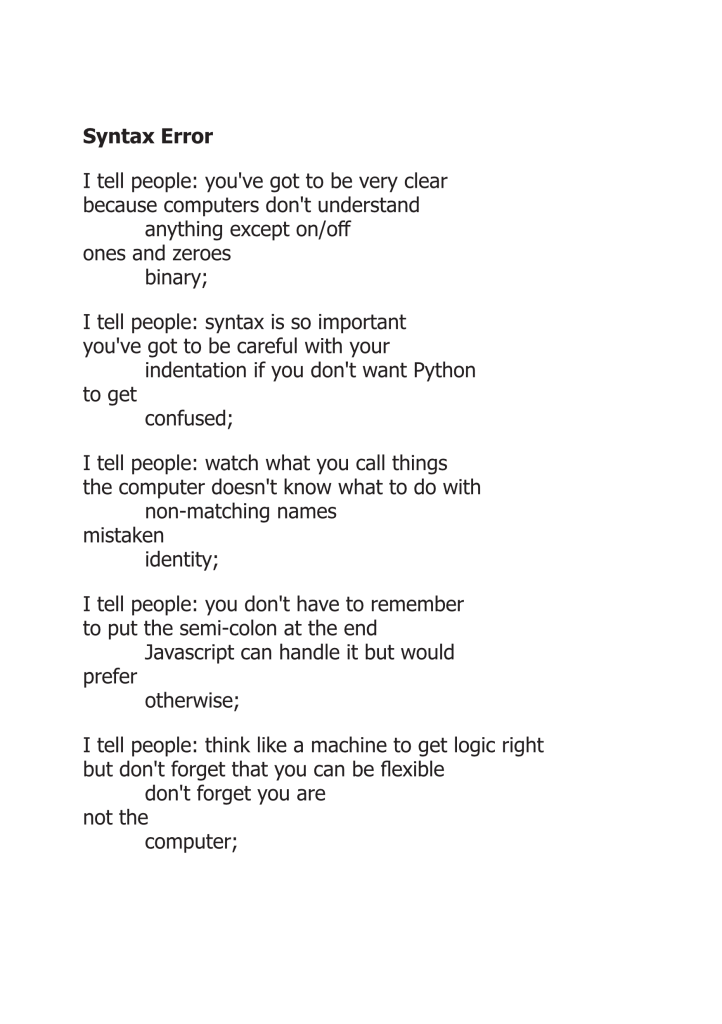
To finish up, here’s a little sneak preview of one of the poems:

Syntax Error

I tell people: you've got to be very clear because computers don't understand anything except on/off ones and zeroes binary;

I tell people: syntax is so important you've got to be careful with your indentation if you don't want Python to get confused;

I tell people: watch what you call things the computer doesn't know what to do with non-matching names mistaken identity;

I tell people: you don't have to remember to put the semi-colon at the end Javascript can handle it but would prefer otherwise;

I tell people: think like a machine to get logic right but don't forget that you can be flexible don't forget you are not the computer;

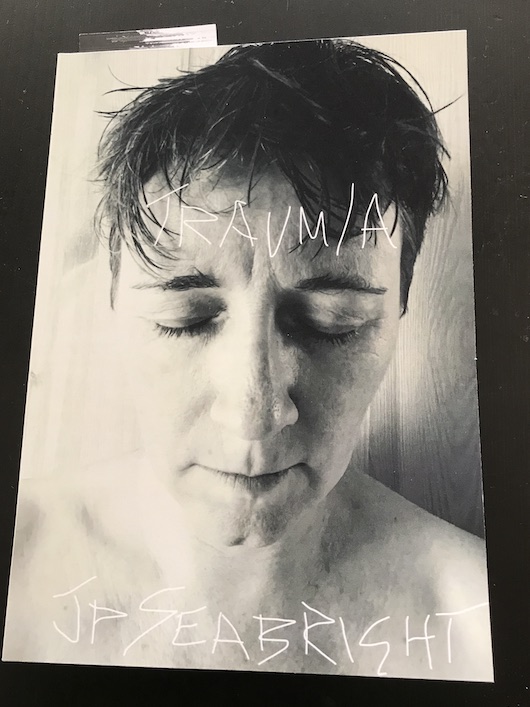
Traum/A by JP Seabright

Traum/A is a collection of experimental poetry that explores an alphabet of trauma and living with it, taking different forms of poetry and visual work to push the limits of meaning and what a poet might share or not share. There’s some clever uses of form to talk about trauma (‘Trauma Porn [Inverted]’ might be my favourite because it so effectively makes its point) and a real range of formats on the page (for example, the typography of ‘Notice’, found poem ‘EMDR’, and the disintegrating power of central poem ‘there is a hole in the centre of everything’). The range and structure of the collection really reflects the many forms and experiences of trauma and the complexity of the brain, using disintegration and experiment to make visceral poetry, and each poem feels fresh and different within a collection that is very much a complete whole. 

What We Lost in the Swamp by Grant Chemidlin

What We Lost in the Swamp is a collection of poetry exploring youth, growth, being a queer teenager, nature, and jealousy, amongst other things. The poems have a straightforward style and some memorable imagery (I think “holding out own internalized / homophobia like great big onions / in our hands” was my favourite, or at least the one I remember most now), but for lots of people will have relatable moments encapsulated within. The nature imagery in a lot of the poems is more direct than a lot of poetry that uses nature as imagery and metaphor, which may or may not be your thing, and some of the poems I found didn’t quite work for me in their simplicity, but that’s often true in collections. I liked the poems about being a queer teenager at school the most, especially the opening poem ‘When I Realised I Was a Green Tree Frog in Another Life’, as these really hit home and make you consider your own experiences at school.

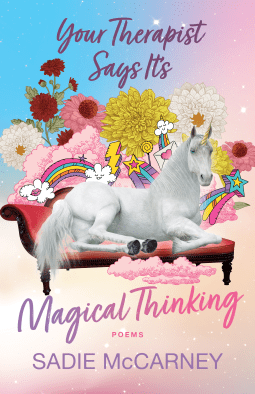
Your Therapist Says It’s Magical Thinking by Sadie McCarney

Your Therapist Says It’s Magical Thinking is a collection of poems that explores mental health and ideas of reality, moving through three sections: “Coping Strategies”, “Surrey Girls”, and “Alternate Timelines”. The first part explores a lot of the bad advice people give about mental health (the titles are all suggested coping strategies”, and the poems are written in a way that is readable and full of wit, satirising what people say about mental health whilst delving into some of the realities of their bad advice.

The second part, “Surrey Girls”, is based on historical photographs that were taken as part of the treatment of mental illness, written in the voice of different girls with multiple short poems for each. These poems really created different voices for these women and though I wouldn’t usually choose to read poems based around historical material like this, I really liked them. The third part, “Alternate Timelines”, worked less well for me, as I found it hard to engage with some of the poems, though I really loved ‘Fast Food Breakfast’, a poem about an everything bagel that truly has everything, and I appreciated the surreal nature of many of these poems.

The collection is varied, with each section feeling like a discrete part, and there’s a lot inside to think about on the treatment of mental illness and ways of seeing the world. Plus, the book has a truly hilarious cover which feels like a great representation of the title and the first section of the collection.

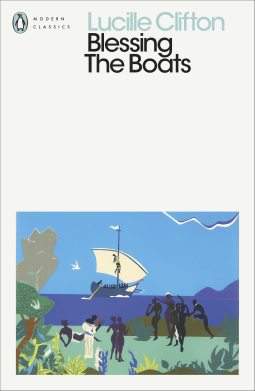
Blessing The Boats by Lucille Clifton

Blessing The Boats is a book of Lucille Clifton’s collected poetry spanning 1988-2000, now published under Penguin Modern Classics in the UK. The poetry within spans a huge range of subjects from injustice and race to motherhood and health, the Garden of Eden to Superman. Clifton’s style is deeply engaging, with a lot of precise and concise lines and imagery and short poems, sometimes in a sequence talking to each other.

 Some of my favourite poems in the collection were the ones about Lucifer and Adam and Eve (strangely the collection had already got me thinking about writing poems about Lucifer before I reached multiple of them to read) and the poems to Clark Kent. I also really like the ‘shapeshifter poems’ which I think would sit very nicely alongside a lot of modern poetry. In general, the poems felt really timeless to me, and it is the sort of collected poems that makes you want to return to it, and also read more of Clifton’s individual collections.

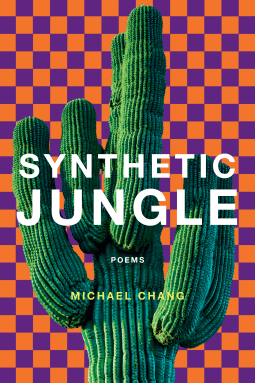
Synthetic Jungle by Michael Chang

Synthetic Jungle is a poetry collection that plays around with space, words, and humour, questioning what poetic language really is and what people want in a poem whilst also looking at identity, self, and shared reference points. I enjoyed the witty, catchy lines (one of my favourite things in poetry) – “app says our order’s in the river / you’ll be the one getting wet” being one example of some that stood out to me on first reading – and the range of pop culture references, but also the metacommentary on what poetry is and who can and should read poetry. Fresh, compulsively readable, and very funny: Synthetic Jungle is great if you like poetry that doesn’t take poetry too seriously, but still says some interesting things.

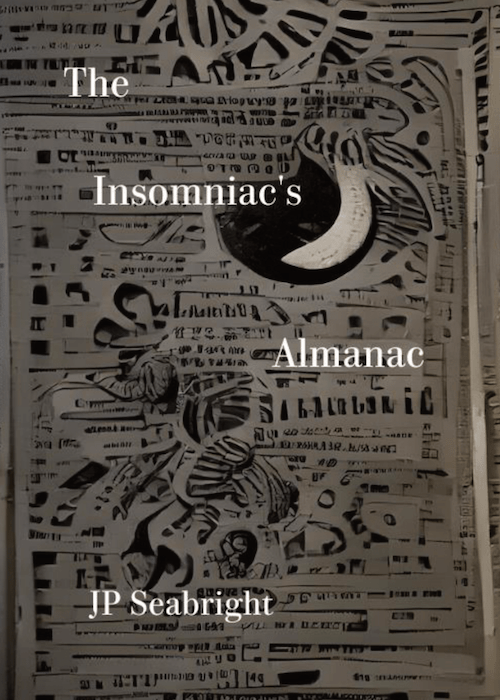
The Insomniac’s Almanac by JP Seabright

The cover of The Insomniac's Almanac by JP Seabright

The Insomniac’s Almanac is, as the name suggested, a book of poems for a year of sleeplessness, moving from January to December. The hybrid layout combines altered photographs of sleep with the poems, which are stark like the unsleeping night, and the whole collection has a real feeling of the middle of the night, of an uncertain time that people shouldn’t be awake for. Each poem ends with the sort of generic advice given to people with insomnia, really highlighting the gulf between clinical advice and the poetic exploration of dealing with insomnia.

One of my favourite poems in the book is ‘Cage & Kane’, the title a pun on the time, and the idea of being caught “between silence and psychosis” is a memorable image that lingers after the end of the collection. I also really enjoyed ‘Summer Night City’, which carefully paints a picture of a quiet, hot night, the sort of night you can’t help but feel the atmosphere of. This is a collection that feels like such a beautiful package, with the poems and images and general atmosphere all coming together to create a vivid portrait of insomnia and of the nighttime.

Note: as per the Kith Books page for the chapbook, “All proceeds from this chapbook will go to two charities that help provide that support: The Albert Kennedy Trust in the U.K. and The Trevor Project in the US”, and it is also possible to donate to other trans/queer organisations and still get a free copy, so take a look and donate!