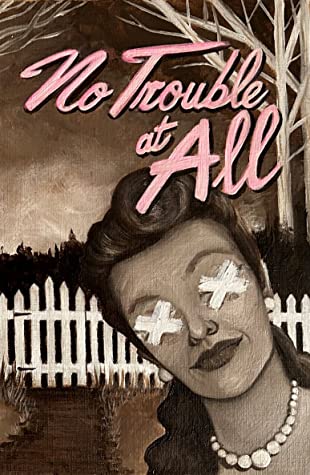
No Trouble At All edited by Alexis DuBon and Eric Raglin

No Trouble At All is an anthology of horror stories centred around politeness in various forms, from the hidden violence that comes with a polite veneer to strange promises you might be drawn into and forced to comply with. The fifteen stories within the collection are quite varied in terms of what ideas of politeness, polite society, or hospitality they engage with, far more than I expected when I came to the book with an image of unnervingly polite characters hiding terrible horrors in my head. There’s a lot of engagement with how other people treat you and how you treat other people, again in a range of ways, and what is most notable across the stories is the kinds of relationships and what goes said and unsaid in the name of politeness.

The stories vary in terms of the forms of horror they involve, and I did prefer some of the more extreme ones, like ‘Anger Management’ about a family with a strange method of dealing with stresses in their life, as I found the concept really stood out and it really explored what might be required to stay ostensibly polite to others. The ideas of promises and contracts also plays out in stories that look at deals with demons—I really liked how ‘Acid Skin’ told the story of an unusual wish in a contract that goes in a very different way to how you might expect, twisting the typical narrative of wishing for something with obvious downsides. The closing story, ‘Welcome to the New You’, offers something that’s more of a dystopian horror and it is interesting how the theme of the anthology, politeness, plays into it without being the main plot point.

Some of the other stories were less engaging for me personally, as the stories are quite varied and some didn’t quite grip me with their concept or execution in the sharp way I tend to like from a short story, especially a horror story. Probably other people will like these more, as it is often true of anthologies that everyone likes different stories within them. The polite horror concept is definitely an interesting one, looking at the undercurrents running beneath politeness or societal expectations, and whilst I would’ve preferred it to have more dark stories in it, I appreciate how there’s got to be a fair number of stories with more lingering horror that lurks underneath the veneer.
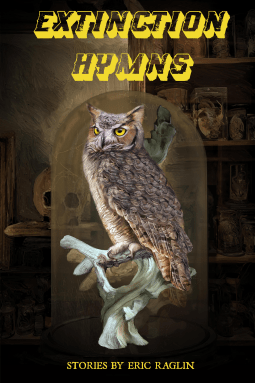
Extinction Hymns by Eric Raglin

Extinction Hymns is a collection of horror fiction that explores weirdness, extinction, and humanity. There’s a huge range of stories in the book, from a monstrous angel helping a woman with drug addiction to killing Nazis in the death metal scene with magic (and many with less extreme summaries), but there’s a common look at how we treat other people and the planet, as the title of the collection might suggest.

I really enjoyed the variety of the collection, with a lot of fresh concepts, and I never knew where the next story would take me. Some are obviously horror takes on things—like ‘A Most Bulbous Congregation’ and conversion therapy or ‘The Last of Her Kind’ and preservation of species—and I really enjoyed these, which all had different vibes but said some interesting things whilst having some horrifying imagery. Some of the other stories were more focused on weirdness, on unnerving things and strange situations. Stories like ‘Floaters’ and ‘Boning’ combine violence with sad medical concepts and leave you with things to think about.

As with any short story collection, there’s some that jump out and others which blend in more, but Extinction Hymns is a collection with variety that offers a look at some of the darker, weirder sides of life. Having already read Raglin’s ”Til the Sun Wheel Turns No More’ in Antifa Splatterpunk, I was looking forward to this book, and it didn’t disappoint.

Shredded: A Sports and Fitness Body Horror Anthology ed. by Eric Raglin

Shredded is an anthology of body horror stories that are centred around sports and fitness. The stories are a diverse set that cover a lot of different sports and fitness activities (including wrestling, american football, going to the gym, swimming, hockey, yoga, and gymnastics) and a range of ways in which the body horror plays out, helps and hinders. This really stands out, as you never know what kind of story you’re going to get next.

I really enjoyed what body horror has to say about sports and fitness, and vice versa. In particular, ideas around having the ideal body for your activity and the lengths people will go to, as well as more monstrous and uncontrollable elements of bodies pushed to their limit. I found both the stories featuring trans men particularly interesting, with one playing off ideas around T but also bear culture amongst gay men, and the other a water-based body horror that at the same time showed quite a sweet instance of a trans guy finding a place in a swimming team. Body horror has plenty to say about different kinds of bodies, but also about who finds a place within sports and fitness, which is something a lot of the stories address in some way or another.

Overall, this is an impressive anthology that will make you wince and laugh, and has a lot to say about the relationships between bodies and physical activity at the same time. Sports and fitness is not a topic I would usually look for fiction about and Shredded was a chance to see that the horror side of the topic isn’t confined to the jock getting killed near the start of a horror story.

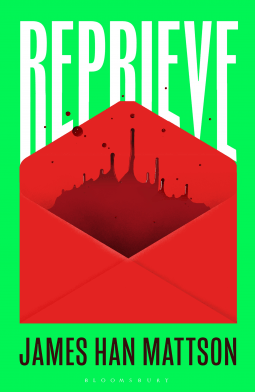
Reprieve by James Han Mattson

Reprieve is a novel that combines horror with an exploration of people and social dynamics, as an unlikely group try to compete in a full contact haunted house escape room. In 1997, four contestants take part in Quigley House, a controversial full contact horror experience that you must make it through collecting red envelopes and not shouting the safe word, ‘reprieve’. However, in the final cell, a man breaks in and kills one of the contestants. Combining the stories of some of the people there that night—an employee who encouraged her cousin to take part, a hotel manager drawn down a questionable path, and a gay international student looking for belonging—with testimony, it turns out that who is to blame might be more complex.

I was drawn into this novel by the distinctive, bright cover and the blurb, which sounded unique and intriguing, and it did not disappoint. From the start, which opens with a transcript about what happened that night, you have questions, but the book doesn’t focus just on exactly what occurred, but sets up the backstory of some of the main characters, exploring their lives and motivations that led them to being at Quigley House that night. In particular, Kendra, a teenager who loves horror, has just been uprooted to Nebraska, and feels out of place in a majority white area but has her cousin to rely on, and Jaidee, a Thai student who goes to college in Nebraska to look for his former English teacher who he has a crush on, had intriguing stories, exploring not just choices and motivations, but race and fitting in.

The combination of the tension of the horror side of the book, as snippets are given of the team working through the cells of Quigley House, and the exploration of the characters, especially around racism and fetishisation which comes out through Kendra, Jaidee, and Leonard’s stories in different ways, works very well, making a complex yet gripping novel that shows that horror as a genre isn’t so simple. There’s some interesting questioning of horror tropes too, and around the representation of non-white people in horror, especially black characters being killed, and what this might mean for black horror fans.

In general, the book doesn’t shy away from depicting uncomfortable situations, not in terms of horror (though some people might find the Quigley House scenes scary), but things like culpability when a man’s downward spiral becomes manipulated by someone else, or when someone tries so hard to be white. What’s clever is that the horror house elements almost become a reprieve (yep…) from the complexity of the lives of the characters, because jump scares would be easier to unpick than racism, prejudice, and complicity.

To quickly summarise Reprieve, I’d go for ‘come for the full contact haunted escape room, stay for the complex social commentary’. It’s impressive how well crafted this book is in terms of structure and the ways the characters connect, though fans of straight ‘horror’ might be disappointed at the lack of twists and turns.