Model Home by Rivers Solomon

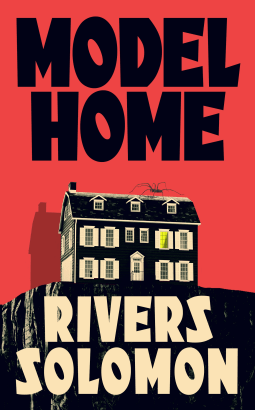
Model Home is a novel about three siblings and what happened in their seemingly ideal gated home. Ezri grew up in Texas with their two sisters, Eve and Emmanuel, in a McMansion their parents were proud to own, even in such a White community. When their parents are found dead in the house, Ezri and their sisters must face the haunted childhoods they spent there, and their blame on the house and their parents for keeping them there, because sometimes the what haunts us isn’t always what we think.

I was excited to read a new book by Rivers Solomon and this one didn’t disappoint, combining a complex family relationship and a classic haunted house premise with ideas of memory, justice, and recovery. The chapters are mostly told from Ezri’s perspective, with some from others’ points of view, and it works well to make it hard to work out exactly what people know and what memories might mean. The plot is quite like a horror story, and is split between the past and the present to explore what it was like for the siblings to live in the house as well as the present events, but the book also plays with these ideas of haunting, and what kinds of harms might be out there.

The characters are rich and well-realised, even shown through mostly Ezri’s perspective, and I like how details about them are slowly revealed rather than told to us straightaway. There’s also a lot of character detail that feels very real, like diabetic characters taking insulin and checking their blood sugar, and characters are allowed to be messy, complicated people without it needing to have a plot reason. I liked the relationship between Ezri and their daughter, and the complexity of not always being able to be the parent a child might need, and also how various parent-child relationships in the book showed how these can change over generations and there can be new models of parenting. Model Home is very much about family relationships and the ways that these can haunt, as well as how choices made by family impact each other.

There’s plenty more packed into the book as well, as it plays with expectations about what kind of story it is, and it defies easy categorisation, but is just a book that explores memory, haunting, family, race, and belonging whilst having a gripping plot about a house that reminds the siblings of a terrible past.
At Dark, I Become Loathsome by Eric LaRocca

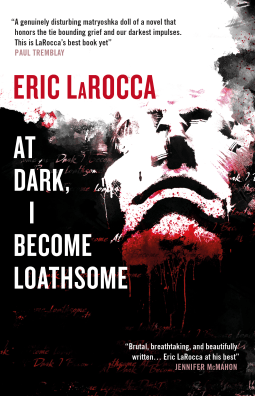
At Dark, I Become Loathsome is a new short novel from LaRocca about a hopeless man who has invented an unusual ritual for people who want to die, but also want to live a better life. Ashley Lutin has lost his wife and his son has disappeared, he struggles with the knowledge of his queerness and the queerness he saw in his son, and he’s positioned himself as an outsider who can be contacted by strangers for a strange ritual that, unbeknownst to them, involves being buried alive. However, one of these strangers tested Ashley’s carefully planned ritual and his ideas of salvation.

I’ve read a lot of Eric LaRocca’s books, and I tend to find his stories either work for me or they don’t. This one is in the former category, with a good mix of some LaRocca trademarks (weird online forums, depraved actions, grim violence) and a self-aggrandising protagonist who believes he can really change people’s lives. The writing style and layers to this book, with constant repetition of the title phrase and some stories-within-stories as internet posts, are likely to divide people, but I enjoyed how the book was almost self-obsessed with its own rituals and motifs, reflecting Ashley’s ideas and how he uses these as a way to deal with his grief and regret. Ashley’s own belief in his edginess and outsider reputation (particularly through his claiming that having face piercings makes him really weird) is also an interesting aspect and again reflects the title of the book and the certainty of the protagonist that he is loathsome.

As a fan of Dennis Cooper and books like Exquisite Corpse and Brainwyrms, I didn’t find the content particularly shocking, and it all centres around our ideas of death and life so thematically makes sense. I did think that, though I liked the almost novella length (and think LaRocca writes that kind of length well), a few of the plot elements could’ve had more depth to them, particularly the backstory of Ashley’s child, Bailey, and their relationship. Ashley’s own queerness and his reaction to Bailey’s felt like something that needed more space to really make the queer horror element of this book work. However, this is one of my favourite Eric LaRocca stories I’ve read, combining a good concept with a narrative written through a distinctive perspective, and I was glad to enjoy it after not being a big fan of Everything The Darkness Eats.

Wake Up and Open Your Eyes by Clay McLeod Chapman

Wake Up and Open Your Eyes is a horror novel about an apocalypse brought about by right-wing news and social media in the USA. Noah’s parents have been parroting far-right views for a while now, but when his mother leaves a cryptic message and then can’t be contacted, he drives from Brooklyn to Virginia to check on them, but what he finds is his parents in a weird state, trying to attack him. Then it turns out they aren’t the only ones, and Noah’s brother and his family have fallen victim too, and then Noah and his nephew must try and make it back to Brooklyn, through the radicalised hordes.

I’ve been hearing about this novel for a while, and even though I didn’t really enjoy the only other Clay McLeod Chapman book I’ve read, I wanted to give this one a go, and I’m glad I did. The satire in this is very explicit—there’s Fax News, there’s influencer juice cleanses, there’s Baby Ghost to the tune of Baby Shark—and the horror is too, with memorable moments of gore and sex. This isn’t for the faint-hearted, and a good recent comparison is Alison Rumfitt’s work: if you enjoy that, you’ll be able to handle the stuff in this, with Tell Me I’m Worthless cited at the end in a list of influences and useful works for writing the book. I enjoyed that it was more extreme, not shying away from ideas of possession and what horrible things that makes people do to their bodies.

The structure is more experimental than most apocalypse stories, focusing mostly on the initial moment in the first part, then the build up in the second, and then just after that initial moment in the final section, which is intercut with lots of found footage moments to give a sense of the scale of devastation. This format doesn’t give much space for connection with the central figure, Noah, but you delve further into the minds of his brother Asher and Asher’s family, and it’s not the sort of horror where you need a deep connection as it is more about the shock of what is happening more generally than specifically what is happening to Noah. The ending doesn’t give much closure or explanation, and perhaps lacks a really memorable closing moment, but it also plays on a ‘liberal’ idea that such an apocalypse could be easily recovered from, suggesting that far-right threats aren’t just something to ignore.

I really like horror that blends together modern fears with classic horror elements like possession, and Wake Up and Open Your Eyes feels like an American version of Alison Rumfitt’s work, exploring the visceral horror of media radicalisation and far-right views. The middle section, about how one family got to that point, was perhaps the strongest part for me, especially in light of this theme, but overall this is a great horror novel that doesn’t shy away from being in your face, and you just can’t shut your eyes.

All The Hearts You Eat by Hailey Piper

All the Hearts You Eat is a horror novel about life and death and the bonds that tie people together, as dead trans girl Cabrina appears to loner Ivory and to her best friends in life Xi and Rex. Cabrina Brite washes up dead in Cape Morning, and Ivory finds her death poem lying nearby. Ivory didn’t know the girl, but she seems to be haunted by her now. Meanwhile Cabrina’s best friends are also dealing with the realisation that Cabrina’s presence is still around, in this small town that held no space for her.

I didn’t know anything about this book going in, so it was a very welcome surprise to discover that it is, if you really want to boil it down, a trans vampire book. All of the main characters are trans and the book explores who you can choose to be and who you can’t, using the gothic horror of a town haunted by vampiric creatures and a mysterious island. One of the great things about this book is the complexity and messiness of the main characters, especially the complex relationships between the three teenage characters who are just reaching adulthood. The ending really highlights how this isn’t a simple ‘trans characters versus the world’ book, but a horror novel with the space to explore different ideas about who someone is and how they might act when treated badly.

I found the book took me a while to get into, with the writing style quite obtuse at first so I couldn’t quite work out what was going on. Once I settled into the book it became much more enjoyable, though still occasionally a bit confusing. As everything else about this book was so up my street, it was a shame that I found it so hard to get into at first. However, this didn’t stop me really appreciating this book, from its depiction of the messiness of feelings between trans teenagers to its exploration of what it means to feel like a outsider and how that might cause you to react to promises from supernatural creatures. Piper uses horror to tackle a lot of interesting things about growing up trans in a small town, but doesn’t forget to include gory and dramatic moments along the way.

Benothinged by Alvar Theo

[I was asked to blurb this book by the lovely Haunt Publishing, so this is a mini review I wrote for that.]

In Benothinged, Alvar Theo asks what if the real monster of queer horror is isolation, mental illness, grief, poverty, and all of the other things that people face in modern day Britain, and if so, how might we defeat that monster? The result is a book that is haunting, bittersweet, and yet also full of tiny joys, as the trans protagonists learn to work together to build a world free of this monster.

Coup de Grâce by Sofia Ajram

Coup de Grâce is a horror novella about a man trapped in an impossible subway station. Vicken is on the subway, planning a one way trip to the Saint Lawrence River, but when he gets off, he’s in a huge, Brutalist station. A station with no exit and no return line. A station that changes as he explores. And suddenly things aren’t as certain as they seemed when he stepped onto the train.

This novella combines some fantastic horror elements: liminal spaces, fourth wall breaking, body horror, and the kind of terrifying impossibility of space you get in House of Leaves. It is also a dark look at depression, suicide, and self-harm, and the warning at the start is important to note because it does make up a lot of the book. What you end up with is something visceral and weird, almost absurdly funny in the way it paints hopelessness and lack of control by its ending, and a book that never quite offers a reprieve. The ending might be a bit divisive, leaving a lot up to the reader, but it is exciting to see this kind of horror, that isn’t afraid to be unrelenting, and I loved the creepypasta and liminal space elements (the book itself feels like it could be a creepypasta even as it refers to them).

William by Mason Coile

William is a short horror novel about a reclusive robot engineer who creates an AI consciousness in his house. Henry doesn’t leave his home and spends all his time on his project, an AI-powered robot he’s called William, even though it is impacting his marriage to his wife, Lily. As William starts to turn dangerous, Henry tries to stop him, but their high tech house shows William’s power is further reaching than Henry thought.

This book was compared to Stephen King, Black Mirror, and Frankenstein, and unusually, I think that’s actually quite a good set of fiction to compare it to, particularly as it doesn’t give away too many of the twists whilst still setting up the kind of vibe you’re going to get. Initially, there’s the creator/creation thing that is key to the book, exploring ideas of artificial intelligence and what kind of ‘spirit’ might be created. Then you get the kind of horror when a house seems to work against its inhabitants, and that’s where you can really picture the book adapted for the screen as it cuts between different parts of the house.

The length is ideal for a quick, gripping horror story that purposefully focuses in on certain parts of the plot and characters, and it feels precise rather than too short. William is a tense, fun read that builds on a lot of existing ideas and tropes to play on fears of things we create turning out to not be as they seem, and ideas of creator and creation.

Guillotine by Delilah S. Dawson

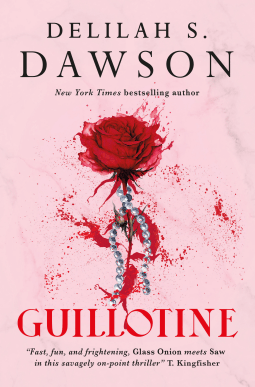
Guillotine is a short, sharp horror novel about a young woman who snags herself a chance to spend time with her heroine, fashion magazine editor Marie Caulfield-Ruskin, by dating her son Patrick, only to find that the private island retreat is going to be the site of revenge. Dez needs a job as she finishes college, but she’s not privileged and applying to fashion houses isn’t going anywhere. When she meets Patrick Ruskin, she realises that dating him might give her an in with his mother, but when that turns into an Easter weekend on their private island, things start to get weird. All the servants wear pink and mustn’t be talked to, and their prize polo pony breeding hints towards the family’s secrets that soon Dez must try and escape.

This is not subtle horror. This in in-your-face, eat-the-rich horror about going to an uber rich family’s home and discovering their secrets, whilst the servants fight back, and it’s great fun. The plot and pacing is very much like a film, which I do think is a good kind of horror novel: one that can be easily read in one go, not really a slow burn or explaining the backstory too much, but instead is filled with gore, revenge, and a memorable setting. It’s easily compared to a lot of horror and thriller films because of this, making it great for people who don’t want sprawling, long horror, but instead a fast-paced story filled with revenge set pieces that don’t overstay their welcome. The ending is pretty predictable, but this isn’t a book going for nuance and unexpected twists, because the rich people are just terrible.

I had a fun time with this book, which was gripping and dark, and delivered on the revenge set pieces. Some people might not like that it is so much like a film, down to not really dwelling on the characters, but I liked that it worked as that kind of narrative and didn’t leave space for greater nuance around all the rich people covering up their terrible actions.

Heads Will Roll by Josh Winning

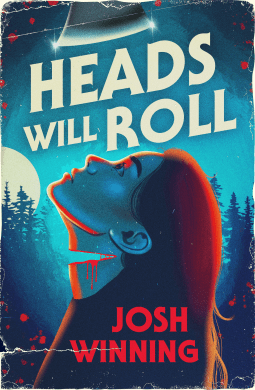
Heads Will Roll is a horror novel set in a remote retreat, in which a digital detox summer camp quickly becomes a slasher. A sitcom star, known as her character Willow, checks into Camp Castaway after being ‘cancelled’ for posting something stupid online, where she meets fellow campers with reasons to run away from society, and a harsh ‘Camp Mom’. After a ghost story about a headless girl, Nancy, who knocks on your door, people start disappearing, and being cancelled becomes the least of anyone’s problems.

I enjoy slashers and I find summer camp slashers particularly scary for some reason, so I was excited for this one. It is very aware that it is a slasher, which most slashers since the 90s have been, and the Hollywood aspect gives enough excuses for genre-savviness too. The novel is told mostly from Willow’s perspective, with a slow build-up and then plenty of heads rolling as the action gets going. The horror plotline itself is pretty fun, with some twists and turns and the classic concept that everyone there has some kind of past they are escaping from. I think some of the gore/beheading would work better onscreen, as in the book it becomes quite forgettable as more and more characters just seem to suddenly have lost their head.

The element I found less convincing was Willow’s backstory. I liked the detail of her burgeoning romance with a fellow camper (it was a bonus to get a surprise queer romance as a subplot in a slasher), but once you found out more about what she tweeted, and what happened next online, it all felt a bit flimsy. I guess the difficulty is having the protagonist do something to be cancelled that actually isn’t bad enough to make them seem like an unlikeable character, but because of this, it lacked the complexity of really exploring cancel culture, and seemed to pass it off once it had been revealed. The internet troll element also felt too rushed over, and way too neat in terms of who it was.

Heads Will Roll is a fun slasher that I found genuinely a bit creepy in the middle when I was reading it late at night, as it did make good use of the isolated camp setting. It felt like it would make a good slasher film, but for my tastes, I wanted it to have a bit more substance around the ‘cancelled’ setup and maybe how that plays into who people think might be a villain, given that it is a genre that often relies on having villains anyway.

I Was A Teenage Slasher by Stephen Graham Jones

I Was A Teenage Slasher is a horror novel set in Texas in 1989, as a seventeen-year-old finds himself part of a genre he never expected. Tolly Driver spends all his time with his best friend Amber, isn’t cool, and isn’t really notable other than having a recently deceased dad, but when Tolly and Amber go to an ill-fated party, suddenly Tolly finds himself the centre of a narrative he never expected. What happens when you’re the slasher and you never had an option not to be?

Having read several of Stephen Graham Jones’ previous books, I wanted to read this one without really paying attention to the blurb, so I didn’t have any particular expectations going in, but I love how Jones takes the concept—what if the protagonist (and narrator) becomes a slasher and the world bends supernaturally to facilitate all the tropes of the genre—and makes it both full of slasher gore and quite emotional. Tolly is telling the story by looking back from some kind of present day, giving the narration a sense of knowing what will happen without revealing too many details (though the twist near the end I felt was set up as I expected it). The narrative follows a particular pattern—it is a slasher, even as Tolly and Amber try to stop it being one—and it’s decently paced even with Jones’ distinctively detail-packed style (I definitely took a couple of his books to get used to his style, as you can get lost in all the offhand mentions of things).

There’s a fair bit of meta-commentary on slashers in horror fiction these days, with writers like Jones and Grady Hendrix exploring how the inconsistencies of slasher films could actually be utilised for interesting storytelling. In this book, the supernatural nature and inevitability of slasher tropes becomes the centre for a fun story of unexpected consequences. If you like meta-horror and know some of the expectations of the slasher genre, you’ll probably have a good time with this one.