Home by Cailean Steed

Home is a novel about someone who escapes a cult, and then ends up going back to try and save their sister. Zoe works in a coffee shop and lives in a little flat, trying to build a life she never imagined. When a man known as the Hand of God appears in her flat, the past returns to her, the cult of the Children she escaped and their compound, Home. What the Hand of God tells her makes her know she has to return, but going back won’t be simple.

The narrative is told from a split perspective, one from ‘present’ day Zoe and one from her past in the cult, as she navigates the horrors of her past and what the cult is still doing. The story is quite slow burn, almost entirely set with the ‘Home’ of the cult, so you slowly pick up their beliefs and lies. The cult itself is very focused on gender roles and has an almost Handmaid’s Tale vibe at times, and there’s a few moments in the book that suggest why people are drawn to it, which was quite interesting, particularly as it comes from the perspective of Zoe who was born into the cult.

The book is tense without quite being a thriller, as it is more focused on character and the realities of a cult. Personally, I would’ve liked to see more of Zoe’s life outside of the cult, as most of it is through flashbacks and glimpses, and it would be really interesting to think more about the impact of it on her, but the cult and the physical location it occupies is the focus of the book. The horrors are mostly alluded to rather than shown, so though a lot of the stuff that goes on is quite heavy, through a combination of Zoe’s lack of awareness and trauma, you don’t see everything, which means the book feels a bit more subtle than using shock tactics. There are some conversion therapy type parts that are quite intense though.

Home has a gripping story that explores a pseudo-religious cult and what happens when an escapee has to go back. I enjoyed the character stuff more than the thriller element and found that the book explores some interesting things. I liked the exploration of gender within the book, particularly how the cult frames a gender binary and then there seems to be a place for Zoe outside of that, but only in what turns out to be a horrifying and manipulative way. The fact that Zoe finds queer community outside of the cult is a nice touch too.
Quick book picks for February

Escape the bleakness of February with some new books. Many of my choices are tackling some hard-hitting subjects in varied and interesting ways. Titles link to full reviews as usual.

  • The House of Impossible Beauties by Joseph Cassara – A raw novel about LGBT life in NYC from the 1970s to the 1990s that weaves together characters whilst placing them firmly in real LGBT history (a good pick for February being UK LGBT History Month).
  • The Hoarder by Jess Kidd – The story of a woman who works as a carer for an eccentric old man and is drawn into the mystery surrounding him in his weird house.
  • Restless Souls by Dan Sheehan – A road trip tragicomedy about friends dealing with PTSD, war, and traumatic childhood events, which often feels like a specific kind of indie film.
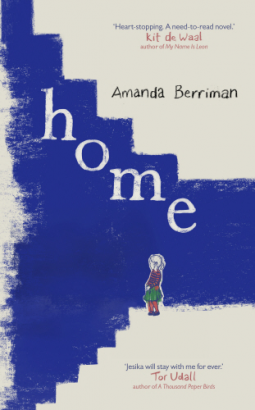
  • Home by Amanda Berriman – This novel about the housing crisis and sexual assault told from the point of view of a four-year-old is a tough but also sweet look at life using a distinctive voice.
  • Eat Up by Ruby Tandoh – A quirky book about food and eating, with a style that won’t suit everyone but will appeal to Tandoh’s many Twitter fans.

Home by Amanda Berriman

A child’s view of the housing crisis: Home by Amanda Berriman

Home is a moving and hard-hitting novel about a little girl and her family. Jesika is four and lives with her mum and her baby brother Toby in a flat that her mum calls a dump. She’s not allowed to touch the broken window and the scary money man is threatening to evict them. When Toby and her mum’s coughs get worse, Jesika finds herself away from home. All she wants is to be back at home, but her new friend Paige has a secret that Jesika isn’t sure if she should tell.

Told from the point of view of Jesika, the novel immerses the reader in her world and in the stark realities of the housing crisis. It doesn’t take long to get into the book’s style and understand the quirks in the way that a four year old sees the world, including the serious issues that she can’t quite grasp. Berriman uses campaigns and support for Shelter and the NSPCC to highlight real problems, including homelessness and sexual abuse, mixing this with heart and with a memorable protagonist.

With similarities to Kit de Waal’s My Name Is Leon, Emma Donoghue’s Room, and Allie Rogers’ Little Gold, this is a heartbreaking novel that uses a distinctive style and voice to show what children do and don’t understand about their situation and to present the housing crisis in a memorable and real way.