Books for bad days

Bad days happen to everyone. Maybe little things keep going wrong, or the world is being a terrifying place, or you’ve received bad news. Maybe you’re feeling sad and don’t have the energy to battle it. Maybe one of millions of other reasons is making the day a Bad Day.

Now, on bad days, or bad weeks or bad months, many people don’t feel like reading, but for when you do, or if you’re someone who can retreat into reading when things aren’t so good, it can be good to have some ideas of what to read. Some standby books ready to go. These will, of course, be personal, perhaps books you love for their message of hope or endurance, for their escapism, for their happiness. Or perhaps it is a book that means something to you personally: a gift from someone you love or a book you read at an important time in your life. Though what books are good for bad days is very subjective, here are a few suggestions to perhaps keep close to hand or take out of the library next time you’re feeling down.

  • Reasons To Stay Alive by Matt Haig – I’m starting with a classic kind of bad day book. This is a memoir about mental health struggles, but it is also a short, uplifting book with chapters describing things that made the author feel better and a practical and hopeful yet not too schmaltzy tone.
  • Good Omens by Terry Pratchett and Neil Gaiman – My next offering is comedy, but the kind of comedy with some darker humour about sin amidst ridiculousness for when overly cheery things just feel patronising and fake. End of the world comedy with a fantastic angel and devil duo.
  • Childe Harold’s Pilgrimage by Lord Byron – You may have to hear me out with this one. Childe Harold’s Pilgrimage is the ultimate Romantic hero standing on a mountain yelling about feeling sad. The thinly disguised Byronic hero travels across Europe, but mostly the four canto poem is a lot of moody Romantic thoughts (the big R kind, with nature and desolation and thunderstorms). Byron’s concise way of getting across feeling bad (“I have loved not the world, nor the world me”) can be the perfect poetry to read aloud when things are too much.
  • From Russia With Love by Ian Fleming – This is my escapism option. I’m not one for fantasy so I’ve chosen my favourite Bond book as something for a ridiculous, predicable plot that can keep your mind occupied and away from reality. Substitute with your preferred genre of escapism if you wish.
  • The plays of Joe Orton – Another dark comedy option, this time in a drama format. Orton’s plays are black comedies where things rarely go well, but the combination of ridiculousness and seeing bad things and sticky situations happen to other people can be useful. I recommend Entertaining Mr Sloane or Loot for one to try.
Bonfire Books

It’s Bonfire Night, so bonfire books are required. I’m avoiding some obviously related to 5th November and going for books with a general autumnal feel or some other relevance. Here are a few books to curl up with for the next few days, with a mug of lapsang souchong or a toffee apple cider (not at all exactly what I had tonight to celebrate bonfire night):

  • The Devil’s Charter by Barnabe Barnes – I’m starting with an early seventeenth century play for the Gunpowder Plot/James I theme, but this one also has fireworks and devils, to make it even more relevant. The Devil’s Charter is the TV series The Borgias for the early modern audience, with plenty of soul selling and special effects. Plus the plot revolves around wording disputes with the devil.
  • Night Watch by Sarah Waters – This book has no connection to Bonfire Night, but has an overall autumnal feel, smoke in the air and people hiding their sadness under layers of coats. It is fantastic to sit and read on a cold afternoon wearing jumpers and drinking tea as the light fades and you sink into melancholy over Waters’ wonderful characters.
  • Jonathan Strange & Mr Norrell by Susanna Clarke – Again, no obvious connection, but the world of Regency magic that Clarke creates has an autumnal feel, partly set in Yorkshire countryside. The swirling smoke of magic and London contributes to the mystery and as a huge slab of a book, a perfect investment for long evening reading.
  • Inferno by Dante – Maybe hellfire is a bit obvious, but what better to consider as the nights draw in as the ways you can burn in Hell?

Vinegar Girl, Vinegar Taste

image

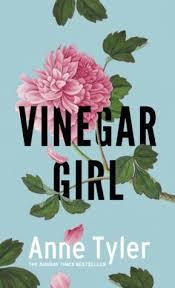
The problem with writing a modern American-set version of The Taming of the Shrew is that 10 Things I Hate About You exists. For anyone, myself included, who grew up with that film, with its lightly sprinkled references and liberally changed plot, it is perhaps difficult to read another version without comparing. Anne Tyler’s Vinegar Girl is another book in the Hogarth Shakespeare series, which I am broadly for (loved The Gap of Time, medium on Shylock Is My Name because I didn’t get along with the writing style). It moves The Taming of the Shrew to America, makes Kate’s father a scientist trying to arrange a marriage in order to keep his beloved research assistant in the country.

Although relevant to the source material, I didn’t feel Kate had enough character. Her sense of wasting her life thus far was apparent, but her textbook vague crush on the one guy in her workplace was pointless. Her eventual husband Pyotr was ambivalently dealt with, a guy trying to get on in a foreign country but also prone to fits of anger. Kate’s younger sister Bunny was the character I found most engaging: warning her sister off the scheme, rebelling against her dad, and constantly referred to as stupid by the other characters. Obviously, she has intelligence they don’t understand, as blunt and logical scientific thought comes up against other ways of thinking.

Kate’s choices weren’t totally nonsensical. She wanted to first help her father, who she mostly looked after, and then get out of his house to try and start a fresh chapter in her life. To follow the play, she has to commit to the wedding even when the need to keep Pyotr in the country is under threat, but it was hard not to root for her to just up and leave, both the wedding and her father’s house. The required ending speech was a bit forced and something that men’s rights’ activists might appreciate: her pity for the difficulties men faced seemed a bit too apparent in other points in the novel, as she realised how much they had to hold in their feelings, for the speech to seem particularly ironic.

Vinegar Girl was, for me, close to the original but without doing anything particularly interesting when updating it. The ending, whilst it gave Kate the freedom and second chance at college that she wanted, left me with a bitter taste in my mouth. Going back to college and achieving success required her to marry a guy with anger management issues. Sure, things can be tough for men too, but what Vinegar Girl suggested was that women should bend to them because of this. And there was no Letters to Cleo playing ‘I Want You To Want Me’ at the end, either.

Know What You Hate

Hating books is important. Nobody can like everything. There has to be books where, at the very least, you are bored as you read, each word pulling at your brain, making you want to give up. Books written in a style you despise, books with pointless plots or no plot or too much plot, books with pages of unnecessary details that you just want to rip out. And that is good. Disliking books gives the possibility to be critical, to think critically, and to question what it is that you enjoy or look for in reading.

People will not hate the same things, for the most part. You may not get along with the book everybody else has raved about. Maybe out of politeness you’ll tell them it was ‘alright’ or flat ‘good’ with no elaboration. Maybe it’s not your ‘cup of tea.’ Maybe you’ll give anybody who asks a full review of how much you hated it. Hating books, whether you shout it from the rooftops or politely avoid the subject, is natural and allows you better insight into what to pick to read next.

Of course, sometimes hated books are required reading: for school, university, a book club, or because someone well-meaning bought it as a gift. Even then, hating can be good. Considering why you hate a book, what it is that you specifically do not like, is analysing your media, even if in less of a ‘why is this metaphor here’ way and more of a ‘I loathe books with an unreliable narrator way’ (though if that is true, I do not understand you).

I can’t talk the talk without sharing a few books that I hate, and a few words about why I hate them.  I recommend trying out the same, whether online or to a friend or just in your head. It might be insightful. It might be cathartic. Know what you hate.

Some books I hate:

For Whom The Bell Tolls by Ernest Hemingway – It is so boring. It is so long. Why it is so long I don’t know, because Hemingway is known for writing stories in six words and sentences so short that end before they’ve begun. I remember very little about it. A bridge? I can only picture a bridge. The bridge I would throw this book off.

Heart of Darkness by Joseph Conrad – Also boring. Another book I read around the age of 17 and I am thankful that I read other stuff when I was 17 too or I may not have done my English degree, because I kept reading Classic Boring Books (™). I like Apocalypse Now more. ‘The End’ is a good song. A good song not in Heart of Darkness.

The Life and Opinions of Tristram Shandy, Gentleman by Lawrence Sterne – I feel bad about this one: I read it aged 16, gave up because it was so boring, and then years later during my degree learnt about eighteenth-century literature and what it was doing. I’ve never tried reading it again, however, perhaps because I’ve seen portraits of Lawrence Sterne and know much of a creep he looks.

Under The Dome by Stephen King – I like Stephen King. I like horror. I could not make myself finish Under The Dome. I very much did not care what happened to anybody in it. I did not feel a sense of foreboding, except at how much I had left to read of it.

The real, the fictional, and the young woman

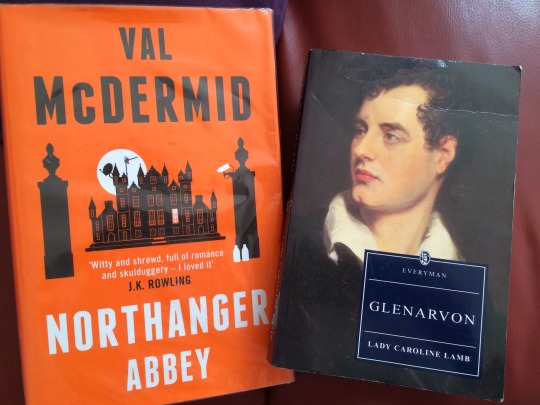
Val McDermid’s Northanger Abbey (2014) and Caroline Lamb’s Glenarvon (1816)

image

Austen’s Northanger Abbey is an exercise in how being genre-savvy only works if you know which genre you’re actually in. The tale is a relatable one to anyone who has ever watched a scary film only to panic that the same danger is waiting just outside the door. In Val McDermid’s version, the scare factor is somewhat lessened by the fact that the danger is vampires, something of a favourite of heroine Cat Morland. In an unsurprising but pertinent move, McDermid updates the gothic novels of Ann Radcliffe et al to the gothic teen franchises made most famous with the Twilight books. The dangers of female reading, a deep concern to the late eighteenth and early nineteenth century of Austen and Lamb, move from worries about female loss of identity whilst reading and having too emotive responses to their reading material to modern worries about girls who may be too influenced by heroines falling for supernatural creatures and their fangirl responses to these books. Times, it seems, do not change.

Glenarvon is famous (well, reasonably) for being Caroline Lamb’s fictionalisation of Lord Byron, with whom she had a four month affair a few years previous to its publication. Byron becomes the vampiric Glenarvon, not the only time the poet was figured as such a creature. Lamb’s fictionalisation of the various people and locations in the society of 1812 in which they had their affair is widely thought to have been pretty transparent to contemporary readers, who could share in the delight of reading a version of an infamous scandal. Glenarvon was published the month after Byron left England in a haze of notoriety never to return again and it is not difficult to imagine the vampire explanation seeming pretty compelling to those with only a vague knowledge of the gossip and a decent imagination. As the author of the phrase ‘mad, bad and dangerous to know,’ Caroline Lamb has a solid position in the Byron mythology, but in Glenarvon she actively contributes to it, taking a real experience she was condemned for and injured by and making it more, well, supernatural and out of her control.

The line between the real and the fictional is questionable in both of these novels. Cat Morland can believe that Henry Tilney and his family are vampires because the fictional vampires she has read about and seen in films appear so real to her, so plausible outside of their fiction. Caroline Lamb makes her real subject fictional, and through this creates the potential for her fiction to seem more likely than other gothic novels. Is the danger of being seduced by Byron real or fictional or both? Frances Wilson writes that Byron became ‘the first male literary sex symbol, as if the act of reading Byron was in itself seductive’ (1). Byron was seducing in real life, through his poetry, and through others’ representations of himself (must’ve been tiring work for him).

With this as some of the origin story for modern vampire stories, it is not surprising that the vampires of the books that McDermid’s Cat Morland reads can seem to leap from the pages, seducing readers as well as fictional heroines. The modern Northanger Abbey updates many of Austen’s plot points, like taking Cat to the Edinburgh Festival rather than Bath as one of the few conceivable places that people might decamp to for a period of time, but McDermid does not need to update the breakdown, or perceived breakdown, between the real and the fictional, particularly in relation to young women.

Female identity has been mocked and trivialised for centuries, and the fear that fiction can break down this identity and cause ‘inappropriate’ behaviour in women has stuck around too. Whilst this does not bode well for modern society, it suggests that vampires will continue to hold a strange position between fictional and real for a long time yet. They may evolve – Cat is not put off by the modern decor in Northanger Abbey because she knows the vampires in Twilight have a modern looking home too – but the potential for vampires to be lurking in the shadows can still have the power to put reason second behind an excited imagination. Byron was not a vampire, the modernised Tilneys are not vampires, but it may be more thrilling if they were.

References:

(1) Frances Wilson, ‘Introduction’, in Caroline Lamb, Glenarvon (London: J.M. Dent, 1995), p. xxiii. This edition of Glenarvon, sadly out of print, is the best for anyone looking to read the novel, with a brilliant introduction and useful notes on the real life figures, and is easily picked up secondhand.