Hot off the press: reading new books

Recently I’ve been reading a lot of proof copies and newly published books via Netgalley, as may be apparent from the reviews I’ve been posting. The experience of reading brand new books has been a novel one (pardon the pun there) for someone who has done a degree in all the historical periods of English Literature and a masters in specifically works of the 16th and 17th centuries. So far, it has been an experience that has taught me a few things.

For starters, that there’s a huge range of books coming out right now. The variation in subject matter, setting, and style means that it hasn’t even felt like an influx of similar books (I hate reading too many similar books at once), even though I’ve only been requesting copies of books I like the sound of. It wasn’t like I didn’t know this, but it has been refreshing to see the diversity and choice of books and to try out reading them.

Judging books by their cover (and blurb) is fairly necessary in order to pick what you want to review. I’ve learnt that intriguing covers do often mean intriguing books, but that some books have terrible blurbs. In one instance in particular, blurbs that misrepresent the content of the book, with it ending up far darker than expected and really needing a warning for some of its contents. I also discovered that sometimes a vague title and vague blurb may make a lot more sense once you take stock of the picture on the front (a horse picture turned out to be a long novel focused on raising race horses, rather than a more symbolic horse as I’d expected).

Reading books with smaller levels of feedback available can be freeing (who cares what those four other Goodreads reviews say), but also perhaps intimidating, as there’s less of a chance to consider what you already know about the book. Years – decades, centuries – of readers haven’t been there before you, saying things similar or dissimilar to you. Your words will probably have more of an impact if anyone looks for information on the book, but also it’s harder to look up things you didn’t quite get.

Brand new and unreleased books are exciting chances to read something with a slightly clearer canvas in your mind, though of course still influenced by author, publisher, cover, blurb, and a myriad of other things. If nothing else, it’s exciting to see what is coming next.

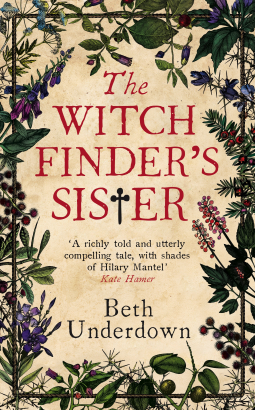
The Witchfinder’s Sister by Beth Underdown

Persecution and injustice (in the 17th century): The Witchfinder’s Sister by Beth Underdown

image

The Witchfinder’s Sister is a captivating historical novel about the real life witch hunter Matthew Hopkins, as told by his imagined sister Alice. The narrative occurs during the English Civil War, with a backdrop of mistrust and religious difference, though this is only the context to the more personal story of Alice Hopkins and how she is drawn into her brother’s world against her will. Mystery and intrigue are wound throughout the book as Alice tries to discover exactly what her brother is doing and secrets about their family’s past.

The style is easy to read and feels fitting to the time, without being bogged down in historical detail or attempts at accurate speech that fall flat. The novel is framed as Alice’s written account of events, printed afterwards, and in this way it acts as a fictional version of giving a woman a voice in the context of events that preyed upon vulnerable women, those who were mentally ill or lonely or confused. Alice herself has lost babies and, just before her narrative begins, her husband, and is a character trying to do good, but without the freedom or position to be morally unblemished. Though the novel does not actively condemn power hierarchies and the abuse of power, it is clear throughout the book that money, gender, and social position are playing an important part.

Using witch hunting fiction as a parallel to contemporary unjust persecution is well known since The Crucible and this novel does not need to be compared to any modern events to be a gripping read. However, it is easy in this time of seemingly rising prejudice to see even greater interest in books which show those caught between trying to help and also being trapped by those with the power of persecution. The Witchfinder’s Sister is therefore both a rich historical mystery and a tale of power injustice and preying on the weak.

Hamlet: Globe to Globe

Today being the day that I technically graduate (in absentia) from my Shakespeare MA, I’m celebrating with a review of a Shakespeare-related upcoming book that I got to read thanks to Canongate and Netgalley.

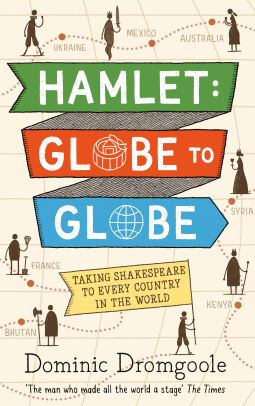
Hamlet: Globe to Globe by Dominic Dromgoole

Hamlet: Globe to Globe is a book about a huge project and one that those interested in Shakespearean theatre in the UK and beyond probably have heard about: Shakespeare’s Globe theatre took Hamlet on a tour to, as far as possible, every country in the world. In this book, Dominic Dromgoole describes their endeavours alongside thoughts on Hamlet and performing the play around the globe. Part memoir and part book about Hamlet and performance, Hamlet: Globe to Globe gives a sense of the excitement of the project whilst telling anecdotes about the reality of the undertaking.

Each chapter is focused around a theme and jumps between anecdotes about the tour and certain countries and Dromgoole’s discussions about Hamlet, which are fairly light and open, focused on character and performance. His vision of Hamlet as elusive and protean, as a play that should be less revered than actively used, fits with the book and project, suggesting that the play was right to be performed around the world in English. Whilst Dromgoole gives a rather romanticised image of Hamlet as a play at the beginning of the book, throughout the book he emphasises how it worked differently at different points in the tour, suggesting that he believes his romantic image of Hamlet as universal play full of human themes.

The specific anecdotes are the best part of the book, from playing in refugee camps and in hostile environments to the company doing speeches at the Globe in front of Obama. Political context is given for some of the performances and, though not perfect, shows an appreciation for the histories and contexts in which they ended up bringing their production. Descriptions of rotational casting practices and rehearsal methods adds theatrical interest, as does information about how they worked around some of the more difficult venue issues.

Hamlet: Globe to Globe is a subjective, endearing description of a touring production, one which accepts with self-deprecation that originally they naively believed they could change the world, but instead discovered that the world was a turbulent and difficult place, much like the world of the play.

Another Brooklyn

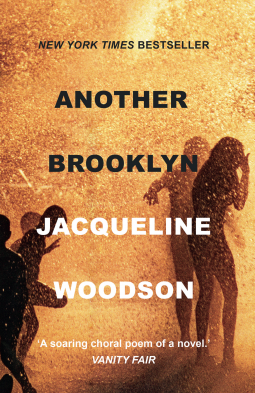
Another Brooklyn by Jacqueline Woodson

Another Brooklyn is a photographic kind of novel, one that creates vivid images and snapshots to show how fleeting time can be and how images might not tell the whole story. It is about the friendship between four girls in 1970s Brooklyn, told from the perspective of one of them, August, and what they saw of each other’s difficulties and differences.

The novel’s non chronological structure and writing style invoke a sense of memory, so the act of remembering feels built into the form and narrative. As with most non-chronological novels, details are hinted out and fleshed out later, but in this short novel, this feels less like holding back information and more akin to the act of telling an old memory, adding in detail that wasn’t meant to come yet. The sketches given of each of the girls’ lives leave plenty of questions, but also show how four girls can come together to be friends and yet that friendship cannot overcome the troubles of the world and the city in which they live.

The title and the narrator dream of ‘another Brooklyn,’ a place beyond the life that has been given, but the novel is also tied to location, to the journeys characters have made to live in Brooklyn, and how Brooklyn seemed like theirs but also not. Another Brooklyn is a welcome change from the often long and male-dominated books set in New York that have proliferated, portraying female friendship and how friendship can be tied to place and time.

Juliet Takes A Breath by Gabby Rivera

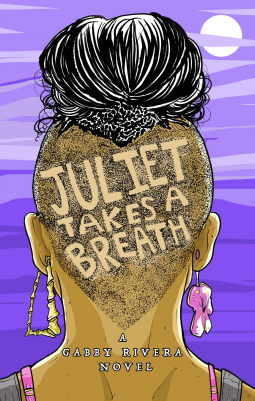
Juliet Takes A Breath by Gabby Rivera

image

Juliet Takes A Breath is the kind of book that simultaneously kicks you into action and warms your heart. It is the story of a summer in which Juliet, a Puerto Rican girl from the Bronx, discovers a lot about her own identity and others’, a coming of age tale that aggressively runs away from the straight white boy type story epitomised by Holden Caulfield and many after him. It is also a story about friendship, love, and the universe, about understanding the politics of your own self and of other people, and realising that the world may not be exactly as you see it.

From its summary, Juliet Takes A Breath promises the kind of novel where the main character’s questions are not always answered, a book where growing up isn’t learning the answers, but learning new questions. This is an accurate impression, as Gabby Rivera leaves Juliet full of possibility, ready to take steps to change or become more herself. As she learns more about the wider LGBT world, intersectional feminism, and racial politics, so can the reader, but the reader can also want to look further, just as Juliet does, as she discovers what relates most to her. A lot of different people contribute their suggestions to what Juliet should do, but she ultimately learns that she has ultimate control over that.

The side characters also help to make the novel a heartwarming and funny read, from Juliet’s sweet younger brother Lil’ Melvin to her cousin Ava who is always there to answer her questions about newfound ideas and terminology. This is the kind of book to share with people who you think might need it, whether to feel support and solidarity or to see more in the world.

Stay With Me

Stay With Me by Ayobami Adebayo

Stay With Me is an addictive read about a woman, Yejide, her husband, and her attempts to have children, set in Nigeria from 1985 to 2008. It is a novel about hope and it is the hope that keeps you reading, a hope for Yejide and for her husband Akin and for the hope that hope is worth it after all.

Adebayo’s book is often a subtle one, showing character relationships and moments rather than immediately telling the reader what to think or how everybody felt. The main characters are rounded and flawed, often thinking they know everything but missing crucial details. Yejide’s emotions in particular, from her huge desire to get pregnant to her feelings in the important final moments of the book, come across through the writing very effectively, making this a novel thoroughly grounded in its characters. The writing style is easy to get into and gripping, with the narrative jumping from Yejide’s point of view to Akin’s in order to show events from both sides. Neither character is wrong, but both characters think, hope, and love in different ways.

I read a proof of Stay With Me from Canongate (via NetGalley) after having been interested by the promotion of the book so far and it didn’t disappoint. It is a novel that draws you into the world of its characters and their lives. Stay With Me is literary fiction with emotion.

The Essex Serpent by Sarah Perry

The Essex Serpent by Sarah Perry

image

Whilst reading The Essex Serpent, I did feel like some mythical force was keeping me turning the pages. I couldn’t remember the blurb when I started reading and had chosen the book based on it being the Waterstones Book of the Year 2016, so went in with a clear mind. I did not know what to expect. The novel turned out to be a surprisingly captivating depiction of belief and friendship, the kind of historically set novel that isn’t bogged down by the period in which it is set.

The book follows the mystery surrounding a strange creature apparently living in the Essex waters, but also Victorian developments in science, poverty, and feminism. These elements form major parts of the narrative, rather than feeling like forced backdrops, and help create the vivid characters which seem to be the real charm of The Essex Serpent.  From Cora, looking for freedom in the serpent’s legend, to Naomi, a village girl overwhelmed by the spell that has fallen over the village, the characters are interesting and torn between aspects of belief and relationships.

The Essex Serpent took me a little while to get into. Once in, I wasn’t sure what to expect and though the plot line does centre around larger dramatic events, it was mostly propelled forward by the characters, meaning that you end up caring more what will happen to them than what will literally occur. There are lots of books out there set in the Victorian period, but this is a good one for sure, a gothic tale that shows wonder rather than repression.

The Woman on the Stairs

My review, originally posted here on Goodreads, for The Woman on the Stairs by Bernhard Schlink.


As the blurb on this book suggests, it is a novel about regret, lies, and perspective which lets the reader imagine the truth more than it is given. I won The Woman on the Stairs in a giveaway on Goodreads and had very few preconceptions about the book before reading, other than a sense that it was the kind of the book that I’d read the blurb of, think it sounded interesting, but not be drawn in enough to buy it. Though the blurb and some of the story focuses upon a painting, art, and creativity, the novel is more focused on life and time and what could have happened.

The narrator of the novel occupies a strange space as both part of the story and somewhat of an outsider, a character who has been not quite part of the action for his entire life it seems. This character and narratorial style are one of the defining things about the book, as you are given looks into his past and realisations about what he could or should have done differently, but also kept at a distance from him. The way that the novel reveals things about his life and also about Irene’s as he recalls his past with her and has to reconsider and find out things from her later on creates a gripping read even though there is not a large amount of action.

The Woman on the Stairs is most suited to people who enjoy mediative books that involve characters looking back on the past, but also learning a few things about the present. Its short length and tendency to hold things back from the reader make it good for reading in a short space of time and then thinking about it afterwards.

Lily and the Octopus by Steven Rowley

Lily and the Octopus by Steven Rowley

image

Novels about pets getting ill has never really been a category that appeals to me. The inevitable combination of sadness and positivity and the probable lack of much else is not something I’ve looked for. However, I was recommended Lily and the Octopus by someone who is exceptionally good at recommending books, so I didn’t doubt that it would be good. What it turned out to be, in fact, was a novel about coping mechanisms, loss, and hope that really gets inside how people think, grieve, and try to make deals with life.

The unreliable narration makes this book, because it allows for the processes people go through to try and deal with awful things to become the novel. You know from the start what the narrator is doing, but you can’t blame him because it feels so real. Whilst pet owners will understand the relationship between Ted and Lily and how their conversations are written, anyone who has ever tried to deal with something by trying to rewrite it in some way will understand how Lily and the Octopus is written.

Whilst it is not surprising how the book will move forward, it is the getting there that is the experience, the capturing of emotion and brain processes and how people tie things together and see them as interconnected. The ending (enjoyably for me) references another famous dog owner, Lord Byron, which I assume is there to chasten me for forgetting that I was already interested in an author who mentions his dogs. Even if – like me – you’ve no particular interest in a book about an animal getting ill, I still recommend Lily and the Octopus as a book about how we think and process things and also about hope and relationships. Also if you like dogs, I guess.

What I Got For Christmas: books for the post-Christmas lull

This Christmas, like many other Christmases, I got a number of books (though this Christmas, as with others, will not beat the Christmas when I was seven and got my own copies of the Harry Potter books that existed at that point). And now, as the dinner and chocolate and alcohol settles, it is time to share some of those and perhaps inspire some use of good old gift cards. Other than the first, these are all recent books that I’ve been seeing around in 2016.

  • Disobedience by Naomi Alderman – This is the only one of my presents that I’ve read so far because I impressively held off over Christmas and did things like hang out with my family. Disobedience is about a woman living in New York who has to travel back to her old Orthodox Jewish community in North London and face up to a few things about herself and her past. This book doesn’t quite go where you might expect it to and gives a variety of characters’ viewpoints whilst offering the reader the chance to question theirs.
  • Autumn by Ali Smith – Autumn was an exciting gift to me for two reasons: one, a new Ali Smith book, and two, it’s a beautiful new hardback copy. As someone who gets mostly secondhand books, it’s good to have a few nice copies. I expect wordplay and narrative play and can’t wait to start reading it.
  • A Little Life by Hanya Yanagihara – Probably one of the most recommended books of the year, but the kind of book that was suggested with a “it devastated me” kind of selling point. This is most of what I know about it, other than it featuring New York City, but I’m about to start it and find out more. Shoutout to KJ for recommending both this and Lily and the Octopus to me multiple times.
  • The Glorious Heresies by Lisa McInerney – Another of those books that I had seen on bookshop tables throughout 2016, the kind that is nominated for and wins prizes and you pick up when you see it and read the blurb and think ‘that sounds like something I would read’ and then put it back. The copy I have – all bright orange and in your face font – looks very much like a book I would read, so again, I look forward to it.