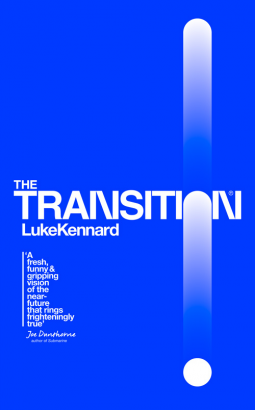
The Transition by Luke Kennard

Modern day housing crisis dystopia: The Transition by Luke Kennard

image

The Transition is a satirical and probing novel about modern day crises of housing, jobs, and life, and how an escape from your failings might be merely a path to further troubles. Karl and Genevieve are thirty somethings trapped under crippling debt and when the opportunity to go on a new scheme – The Transition – which involves living with an older couple and surrendering elements of freedom in order to learn how to live successfully, they opt in quickly. But what appeared like a quick fix to their issues doesn’t turn out as ideal as the blurb made it out to be.

Whilst comparisons to TV series Black Mirror are inevitable due to the near-future, technological narrative and highlighting of issues in modern society, Kennard’s novel is lighter and less focused on the technological elements. Instead, The Transition provokes thoughts on streamlining society, surrendering control to those – in this case an older generation – who know better, and how the housing crisis and overeducation issues could result in drastic measures. Karl is a blundering main character who is occasionally frustrating, but this really sets him up as one of the ideal candidates for The Transition, someone who does vaguely unethical online copywriting and essay writing and aspires no further, caught in a web of debt. His point of view allows Kennard to lead the reader through the experience of The Transition and weave a dystopian tale with a fairly ambiguous ending that leaves room for thought.

The novel was more enjoyable than expected, with a good balance of social issues and dystopian plot line. Its satirical bent makes it a lighter near future dystopian option, though it still highlights a lot of issues, from the inadequacy of the minimum wage against rising rent cost to the lack of relevant jobs for well-educated graduates. The Transition is a gripping novel that is perfect for fans of dystopian looking for something more recent or fans of Black Mirror who want similar reading material.

Man Alive

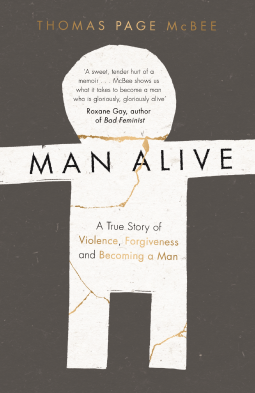
Man Alive by Thomas Page McBee

Man Alive is a powerful memoir about the past and the future, capturing McBee’s attempts to move beyond the violence done to him in the past and work out how it affects who he is as he goes through transitioning. It is about being alive and seeing that life in the face of terrible things. The book is an exploration of masculinity, but also how to navigate a masculinity tinged by trauma and negative experience and still emerge with a sense of the man that it would be good to be.

Though the subject is serious and reflective, the style of the book is uplifting and well-written, keeping a kind of positive force pushing forward through the narrative. McBee plays around with the word ‘man’, punning on pop culture references and displaying how disparate and changing the term can be. Man Alive is an important book, the kind of memoir that should be published to celebrate life and provide a variety of models and inspiration for others who may or may not have similar circumstances.

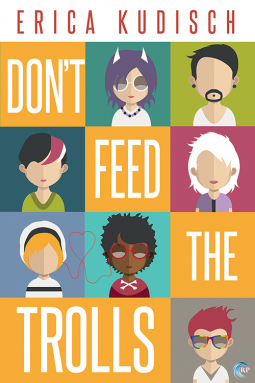
Don’t Feed The Trolls by Erica Kudisch

Battling the trolls under the (online) bridge: Don’t Feed The Trolls by Erica Kudisch

image

Don’t Feed The Trolls is an enjoyable and incredibly relevant novel about online harassment, friendship, and discovering yourself even when times are hard. The narrative centres around anonymous male trolls going after a player on an online multiplayer game and how this affects the lives of various people. Alongside this, the main character realising some stuff about their gender and presentation during the fallout from this online abuse. The highs and lows of modern technology and the problems when online free speech turns into harassment are dealt with, but the novel also focuses on the ways in which friends can help out and people can find their strength.

Kudisch’s style is easy to get into and the novel was not difficult to engage with for a non-gamer. The characters, particularly the main character Daphnis, are vividly painted and form a crucial core to the book, making it easy to be frustrated and angry at the effect that the trolls can have upon them. Many elements of fan culture run throughout the novel, including gaming, conventions, and musical references, and these give it a modern and relevant feel not only in the subject matter, but in the world it depicts.

Don’t Feed The Trolls is ultimately an uplifting novel about how the internet trolls can be beaten and how there’s always space to explore yourself and your identity in order to feel more comfortable as yourself. It is exactly the kind of novel that is perhaps needed these days, engaging with current issues but also a light and fun read.

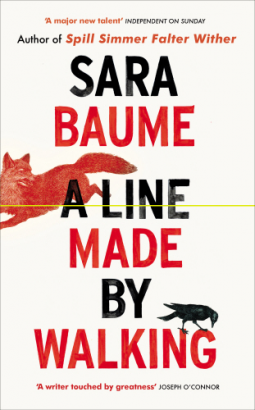
A Line Made By Walking by Sara Baume

Escape to the country: A Line Made By Walking by Sara Baume

image

A Line Made By Walking is about Frankie, a twenty five year old artist who moves from Dublin into her grandmother’s old bungalow in the countryside near her parents’ house, and what she does in this retreat from the world. Written in a relatable, immediate style, Baume’s novel is about loss, of self, of how you thought the world was, and of the grandmother whose home she stays in and the dead animals that she finds and photographs. It is about being in your twenties and feeling lost.

Frankie’s photographing of dead animals and her attempts to test her art knowledge through finding works that fit the theme of whatever she is thinking about strike a chord for anyone whose creativity or knowledge seem to be unable to find an outlet or are languishing away whilst their owner is unsure of life. The book is full of knowledge, about artwork, nature, and other things, and how knowing things cannot help against difficulties of life, loneliness, and depression. Details in the book, from Frankie’s description of getting caught obsessively smelling her old carpet to a reference to The Land Before Time to describe a leaf, help to make it a vivid and moving account of a relatable subject, feeling lost and alone in the world.

Comparisons to Olivia Laing’s The Lonely City feel inevitable, with art and loneliness deeply intertwined in both, but in Baume’s novel art does not seem to offer the same comparison or comfort that loneliness is not new, but rather a frame of reference for Frankie to try and cling to and use to create order. A Line Made By Walking is full of quotable lines about being in your twenties, being sad, and finding the world an overwhelming place, and it is a book to be savoured whether you are experiencing that right now or have done so in the past.

What I Learnt From Giving Away My Books For Free

Any promise of free books is incredibly exciting to a book lover. Libraries, of course, play a vital part in the world of free books, as do borrowing books from friends and relatives. The casual words ‘oh, do you want a copy of ___?’ can create a momentary mental frenzy that may end up with accepting books you have no interest in reading. I am aware of these facts, and yet I was surprised by the response to me offering friends and colleagues some of my books for free.

I did it for practical reasons: I was moving soon and the small room I was moving out of was full of books, in piles and on the squeezed-in bookshelf and even less read books forming the base of my makeshift bedside table. My collection was not easily moveable. In addition to this, I knew I would keep getting books, because if my life so far has taught me anything, it’s that books will just keep appearing.

Weeding out books was fairly easy for me as I hate clutter. Anything that I was unlikely to reread and to which I had no ties making me keep it would be put on the list. It ended up a varied offering: I was just finished a Masters degree in Shakespeare and his fellow early modern writers, meaning that I had a number of drama collections to go alongside popular books of the last twenty years and Victorian novels and poetry left over from undergrad. I really wasn’t sure if anybody would want any of them. I posted the list on some of my social media, expecting a couple of bookish friends to ask for a couple and then maybe I’d take the rest to a charity shop.

I ended up giving away over 50 books. Coworkers from my theatre bar job asked for a wide selection, surprising me as these were people who I’d never discussed books with at all. I reconnected momentarily with old friends and coursemates who wanted things like the first Dirk Gently book and all of Louisa May Alcott’s Little Women series. I posted off packages of free books and I lugged books around in bags to their new owners. I didn’t ask for anything in return (though one person gave me a bar of chocolate in thanks). What I ended up getting was a different kind of reward: book excitement.

People were very thankful. They seemed amazed when I responded to their tentative ‘can I have this book?’ with a ‘yes, of course!’. They watched in delight as I pulled out four dogeared books from my bag and handed them over to be forced into their own bag. I didn’t tell people of my opinions of the books I was handing over though I’d read basically all of them, but instead let them make up their own mind. All I hoped was that if they didn’t enjoy them enough to keep them, they’d pass the book on further. Surely all books can find their forever home somewhere.

What I discovered was that far more of my friends wanted to engage with free books than I had imagined and they were all so grateful for them. I realised that I shouldn’t assume what kind of books people might want to read or whether they want to read at all. The people who suddenly get excited at a book of Jacobean plays are more varied than you might expect. Anyone might want that recent popular thriller. And by giving out these books for free, maybe you can give the chance to read either – or both – to somebody who hasn’t tried them out before.

I would highly recommend offering up your books to your wider social circle, even if you only have a few you’re willing to part with. Not only does it clear space, but it can teach you things about the people you know and maybe find new ways to connect with them.

Tipping the Night Smith: a Sarah Waters list

There’s something great in ranking an author’s work by how much you personally like it: you can cause controversy by revealing to others your list and always feel like when you’re a child and know which toys you like more than others but don’t quite want to tell them. Here I present my personal ordered list of Sarah Waters books, in descending order because I’m not a clickbait article trying to get you to read to the end. For those new to Sarah Waters: she writes historical, famously-Victorian-but-only-half-are-Victorian novels mostly full of lesbians and dramatic plot lines.

  1. Tipping the Velvet – The Victorian stage show one with the famous TV adaptation and probably the quintessential Sarah Waters book. It’s also the one with lots of melodramatic love affairs, sex, and minor betrayal, rather than imprisonment or death or war, so it’s a fun place to start.
  2. The Night Watch – The melancholy 1940s one. The narrative runs backwards to show what the now post-war characters did during the war and how their lives are or have been interlinked. Makes you wish you could change what you know happens to them because you’ve already been told it. Probably not to everyone’s taste but I loved it.
  3. Fingersmith – The tense Victorian thriller with a twist one. Also the one most people seem to have read, from my personal experience. Gripping and awful at times, with elements from most images of the Victorian era you might have.
  4. The Paying Guests – The genre-change 1920s one. Starts off like a sad repressed lesbian story where they gaze at each other around the husband of one of them. Turns into a very different novel about a murder investigation.
  5. Affinity – The prison spiritualist depressing one. The Victorian prison scenes are claustrophobic and impressive, but it’s also about as far from the so-called romp of Tipping the Velvet as you can get.

Note: I’ve not read The Little Stranger so it can be the other 1940s one nobody has read.

Radio Sunrise

Radio Sunrise by Anietie Isong

Radio Sunrise is a satirical novel about radio broadcasting and underhand corruption in Nigeria which gives a humourous insight into the problems of being a journalist for a state-funded station. Ifiok works for Radio Sunrise and things start going wrong when his radio drama has its funding cut and his girlfriend leaves him after he cheats on her, but when he is sent back to his home town to make a documentary on a government-funded project he discovers there’s plenty more to go wrong yet.

Isong’s novel focuses on hypocrisy and corruption on both a large and a small scale, but it is the smaller scale moments that really capture the satire particularly well, with journalists only writing news stories if they are paid enough in their brown envelopes. The narrator Ifiok is a naive idealist much of the time which makes him an ideal satiric character, shocked by other’s adulterous relationships and unable to stand up to the system even when he wants to expose its flaws. Isong depicts a complex mix of problems across Nigeria, but all with a light satiric touch that makes for a fun and engaging novel.

‘All they that love not tobacco and boys’: a Christopher Marlowe reading list

February is LGBTQ history month here in the UK and for the first of hopefully a few posts to mark the occasion, I’m going to offer up some reading suggestions for Christopher Marlowe, everyone’s favourite suspiciously murdered, probable gay atheist spy playwright.

The title comes from the infamous ‘Baines note’, a document written by Richard Baines accusing Marlowe of saying ‘That all they that loue not Tobacco & Boies were fooles’ and also, amongst other things, ‘That St John the Evangelist was bedfellow to Christ and leaned alwaies in his bosome, that he vsed him as the sinners of Sodoma.’ Whether or not Marlowe did go around shouting such proclamations in late sixteenth century London (see Burgess’ novel A Dead Man in Deptford for the fictional image of him doing exactly that), his works show a fair deal of men loving men.

Marlowe is probably most famous (writing wise, as he’s probably most famous in general for being Shakespeare’s rival who was killed with a stab to the eye) for Doctor Faustus, his play on the Faust myth full of dramatic speeches on predestination, playing pranks on the Pope, and a devil a little too infatuated with Faustus, so I’m going to skip over that and start with the obvious for this list.

  • Edward II – Marlowe’s play on the English monarch overthrown by his barons for not being a very good king and preferring to just give a load of titles to his favourites, particularly Piers Gaveston. Marlowe spends plenty of time emphasising how much Edward loves Gaveston, despite this being not so great for his realm, and comparing them to classical male lovers.  Also famous for Derek Jarman’s incredibly artsy film adaptation which, among other things, adds in the word ‘fuck’.
  • Hero and Leander – A narrative poem about the hardships of two heterosexual lovers doesn’t sound like Marlowe, but he does add in a narrator who gives a very lingering description of Leander’s naked back and claims that ‘in his looks were all that men desire.’ Plus he’s compared to Ganymede, Jupiter’s male love/obsession/cupbearer, and if there was ever a Marlowe drinking game, it would be for how often he references Ganymede.
  • Dido Queen of Carthage – On that note, to see Ganymede and Jupiter in action (not quite like that), the opening scene of Marlowe’s play about Dido features them doing some godly fooling around before the plot begins. For basically no reason. Others of the four plays I’ve not mentioned here also mention Ganymede, unnecessarily.
  • Christopher Marlowe: Poet and Spy by Park Honan – I’ve finished up with the best Marlowe biography out there, because he’s nothing if not fascinating to read about. Honan’s book is readable and doesn’t require you to have an infinite memory for the names of early modern spies (as Charles Nicholl’s The Reckoning does, though it is also worth reading if you like Marlowe).

The Lonely City by Olivia Laing

Loneliness and art in NYC: The Lonely City by Olivia Laing

The Lonely City is a fluid book, part memoir on loneliness in New York, part history of art and certain artists in the later 20th century, and part exposition on how being alone and being different has affected different kinds of art. The witty subtitle, ‘adventures in the art of being alone,’ summarises the reading experience: it is an adventure, not always a happy one, through art and loneliness and the sometimes harsh environment of the city.

The title initially drew me to the book, which I didn’t realise was about art and the lives of artists in New York as well as about loneliness in a big city. As someone who knows extremely little about art, I found it easily engaging and a fascinating look at artists of varying levels of general fame. Chapters focus around elements of her own time in New York and a specific artist and their work and history, but later chapters bring together aspects of previous ones to form the larger picture. From Warhol to various artists working in photography, music, and other media, the way in which Laing draws lines between art, loneliness and New York, particularly in relation to the AIDS crisis and LGBT communities, is deeply interesting and moving. Gender and sexuality play an important part throughout the book, which I did not expect from the blurb but was pleasantly surprised to find.

The kinds of loneliness on display in art and in life, being physically isolated and emotionally alone and socially outcast to name a few, are discussed to show that the concept of ‘the lonely city’ is not a simple one. Ultimately, Laing focuses on positivity that can come from looking at loneliness as well as on great pieces of art in different forms. The way in which The Lonely City blends ideas of loneliness, self, and art, not rigidly in one genre or focus, makes it a versatile and engaging read for anyone interested in social issues, art, LGBT history, or how cities can shape the people and work within them.

The Blood Miracles by Lisa McInerney

The Blood Miracles by Lisa McInerney

image

The Blood Miracles is a fast paced novel, a gangster film with heart, and a story of one guy’s messy involvement with a new route for getting drugs into Cork. Ryan Cusack is half-Irish and half-Italian, but caught between far more things and people than that: his own issues chase him, his girlfriend’s not happy, and his allies are not always so allied.

The plot follows a fairly expected chase around deals, betrayal, and the mix between business and pleasure, but with Ryan holding the narrative together as he attempts to deal with everything at once. He is a gripping character, one who is barely holding together family problems and mental health issues, and who is trying to be clever but also facing mounting danger as allegiances and threats come to a head. His musical ability and inability to make something of it show how it is not always talent that can be a miraculous escape, but instead luck and circumstance. The supporting characters are the kind to be expected from a book about deals and drugs, from the paranoid user boss to the rival with a connection to the hero, but McInerney paints them well, forming a vivid picture of the Cork world that Ryan lives in.

Though The Blood Miracles may sound from its description like another kind of Trainspotting or a Guy Ritchie film, in reality it is a modern take on the genre, with references to cloud storage and Orange is the New Black serving as reminders that McInerney is perhaps the future of the gangster story, bringing cleverness and charm to her work.

(Catch it out on 20th April 2017 – I read a proof thanks to John Murray and Netgalley)