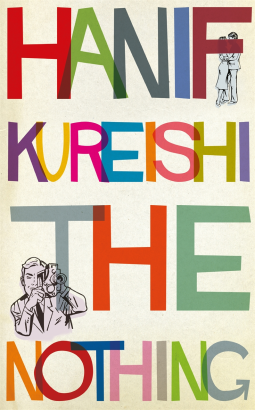
The Nothing is Hanif Kureishi’s new novella, a characteristic piece of stream of consciousness fiction about an ill old filmmaker, Waldo, his younger wife, Zee, and the younger man and almost friend Eddie who he believes Zee is having an affair with. Written in Kureishi’s distinctive style, it is a bitesize tale of old age and helplessness combined with lust and revenge.
Waldo is a classic bitter Kureishi character with a left wing past, blunt and sex obsessed, certain that he is being taken advantage of. Through the stream of consciousness style and supplemented by Waldo’s attempts to record Zee and Eddie’s conversations, the novella is an exercise in being trapped in your own head.
Its narrative focuses on Waldo’s attempts to get revenge on Eddie despite being confined to his flat and much of the material is very darkly comic, not necessarily to everybody’s taste. However, The Nothing feels like a microcosm of Kureishi’s work and will no doubt delight his fans.
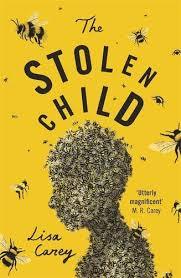
The Stolen Child is a heartbreaking and mysterious novel set on a remote island off the west coat of Ireland. It is about two very different sisters, Emer and Rose, who are part of the dwindling community on the island, and how their lives are affected when an American stranger, Brigid, comes to live amongst them. The narrative is difficult to adequately summarise, a epic set over just a year between 1959 and 1960, but it broadly follows what happens to make the community finally make the move to the mainland. The novel is focused primarily upon the characters, particularly Emer and her relationship with Brigid, and the world, religious, magical, and remote, in which they live.
There is a captivating element of the novel, with Carey positioning it and its events in a world where sidhe magic and religious miracles seem equally plausible, where blame, regret, and love are all complicated by the island setting, by magic, and by the belief in powers greater than humans. At the same time, The Stolen Child focuses a lot on the human and physical, on childbirth and desire, on physical isolation and the power of nature, but also on physical powers enhanced by unknown forces. This gives it a unique quality, a novel which both addresses very real emotions and difficulties whilst creating a world with rules perhaps beyond our own. The prose bolsters this world through detailed description and a straightforward yet somehow mystical tone and the use of Yeats quotes (and title) adds to the poetic feel of the novel.
The Stolen Child is the kind of novel that brings a whole minuscule universe into existence and then sets the reader within it. One for anyone who likes novels full of emotion, an undercurrent of belief, and characters caught in a savage and remote world.
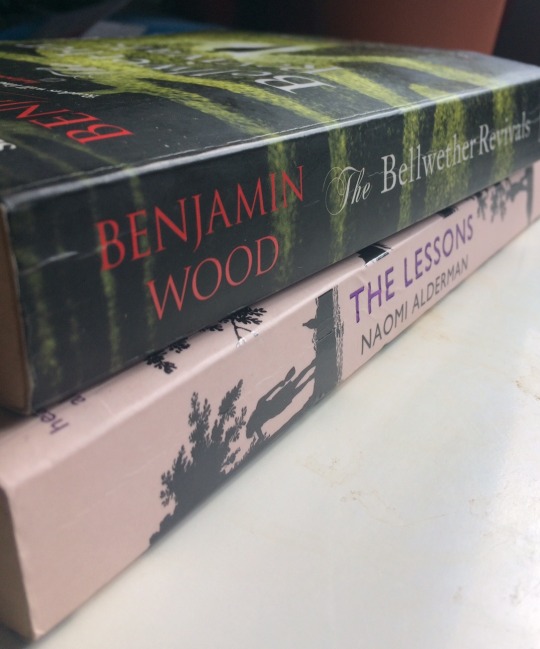
Today I’m going to talk about a category of books I love: privileged, genius, and/or eccentric students make questionable choices, mostly in books that are compared to The Secret History (Donna Tartt’s infamous epitome of this genre). To do so, I’m going to be discussing two books I bought and read recently, both set in Oxbridge, both featuring incredibly rich students and more ‘normal’ protagonists, both compared to both Brideshead Revisited and The Secret History on their covers.
I’m starting with The Lessons by Naomi Alderman because the second of my choices references this book on its cover so I felt that must be the natural progression. The narrator is James, a Physics student who falls behind almost as soon as he gets to Oxford and is feeling the weight of his parents’ and older sister’s expectations for him. Soon he is drawn into the world of the charismatic Mark Winters and becomes part of a group of friends living in Mark’s strange Oxford house. As the years pass, it turns out that they were not at all prepared for life and that their wild lifestyle in Oxford is not so suited to the outside world.
It is easy to compare James with Richard Papen from The Secret History: narrators apprehensive yet drawn into a seductive world of an enigmatic friendship group, unreliable in their description of characters, and far too entwined to narrate with any sense of objectivity. What differs is that James becomes far less of an onlooker and instead part of the narrative of desire and betrayal that runs through the novel. The other main characters are vividly drawn and run from recognisable stereotypes, but it is Mark who is the standout character, as is to be expected. His issues and unstable nature mixed with large generosity with the money he barely understands the value of make him exactly the kind of enthralling figure who captivates even when they are making terrible decisions.
In terms of plot, The Lessons is not hugely similar to TSH, but feels more a child of Brideshead, albeit without any wars. Much of its thrill comes from wondering what the characters will do next and watching as secrets are revealed and life fails to turn out how they expected it to. If you like the genre, it is a hugely enjoyable read, with the relationship between James and Mark forming a dark and complicated core.
The second book, The Bellwether Revivals by Benjamin Wood, is set in Cambridge and features a protagonist not actually at the university, a shock for the category. Instead Oscar is a care assistant who stumbles across the Bellwether siblings Iris and Eden by accident when he is lured into King’s College chapel by the music playing. What unfurls is a narrative dominated by Eden, a musical genius who attempts to conduct experiments on his group of friends and refuses to accept any boundaries that the world might place on him.
Oscar’s outsider view of the group lessens as he begins a relationship with Iris and he becomes a classic figure drawn into events he can barely comprehend. A lot is left unsaid in the book, creating lingering mystery and allowing the gaps to be filled in by the reader. Like The Lessons, the student backdrop is accurately painted, though their student lives are less important than in either The Lessons or The Secret History. More significant is Eden’s spellbinding power and the attempts of Oscar and Iris to work out if he really has something special about him. As in Alderman’s novel, The Bellwether Revivals opens with a mysterious scene from near the end of the narrative, begging the question of how things will go so wrong. In both cases this adds to the sense that a life of privilege and genius cannot turn out rosy and safe.
In my opinion, The Bellwether Revivals is more worthy of the Donna Tartt comparison, due to its plot and use of academic experiments and historical ideas, though The Lessons has a better cast of captivating characters who draw the reader into their circle (and I personally enjoyed more, possibly because the Oxford accuracy drew me in). Both books are worth reading for anybody who likes this kind of out of control academic setting and closely entwined messed up friendship group. Just don’t let them give you any ideas…
Befriending the wild: How To Be Human by Paula Cocozza
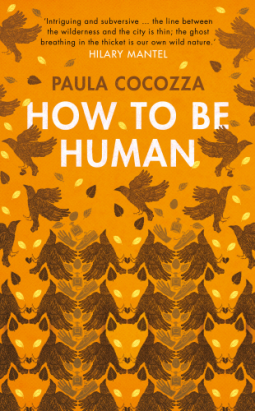
How To Be Human is a gripping and unusual novel about wildness, loneliness, and obsession. When a fox appears in Mary’s garden she tries to make him leave, but soon she realises they have a burgeoning connection that nobody around her will understand. As she battles against other forces – the neighbours with young children who want the fox problem dealt with and her ex-boyfriend who seems to be lurking around – Mary sees the fox as the constant in her life, but her preoccupation with the fox threatens to drown out everything else.
A plot summary does not do the novel justice. Cocozza’s writing gives the book a tight focus and draws the reader into Mary’s world, painted deftly as a place where she feels uncomfortable until she has the fox to keep her focus. It is a story of a woman befriending a fox, but it is also the story of modern day loneliness, of isolation in a city filled with etiquette and the wildness that Mary finds escape with. The writing is detailed and the action meditated, making the novel a careful exploration of how the fox changes the main character.
On the one hand, How To Be Human is a classic kind of book about a character’s mental state as they become obsessed. On the other hand, it is original and fascinating, highlighting the line between city and wilderness and how sometimes those can become blurred.
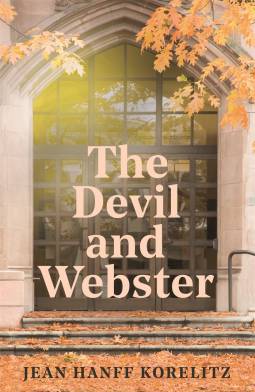
The Devil and Webster is a slow burn campus novel from the perspective of a feminist scholar college president who discovers that ideals and protest are not as clear cut as she once thought. Webster College is an elite liberal arts college in New England and from its less inclusive past has transformed into a centre of free thought, inclusiveness, and protest. Its president Naomi Roth has a protesting past and when another protest sparks up on campus, she sees no reason to discourage it. However, the events that unfold question her beliefs and show that corruption can spring up anywhere and protest can be a grey area.
The novel is full of detail and is quite slow paced, but this culminates in a twist that shows how one situation can very suddenly turn into another one. Naomi’s current life is vividly painted, from her troubled relationship with her daughter Hannah – a student at Webster – to her worries about her closest friend Francine, Webster’s dean of admissions. Combined with this is an image of protest in the modern day, with social media able to spread information and misinformation in the blink of an eye. The conflict in the novel unfolds gradually and though it took a while to be sure that it was going somewhere, the ending and the way in which Naomi is caught in a seemingly futile position despite her best intentions do make it worthwhile.
From reading the acknowledgements at the end, I found out that Naomi Roth had featured in an early novel by Korelitz, but The Devil and Webster worked well as a standalone book and any mystery about Naomi’s past felt like part of the narrative. Though its pace may not appeal to everybody, it is an incisive and sometimes satirical novel about intentions, corruption, and higher education.
The act of writing historical irony: Before The War by Fay Weldon
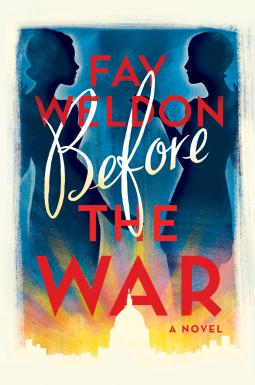
Before The War is a historical novel set in the early twentieth century with an ironic tone and a self conscious narrator. It tells the story of Vivien Ripple, the daughter of a publisher, Sherwyn Sexton, a writer and an editor at Ripple & Co, and the events that occur after Vivien makes the unlikely suggestion that they get married. Europe tries to recover from one war and hurtles headlong into another whilst the characters find themselves entangled more messily than they imagined and the world they live in shown to be ridiculous.
Weldon writes in a humorous and metafictional style, with a narrator who skirts between exposing the act of making up details on the spot and claiming that the events are true. The narrative of the novel is farcical and not particularly original, reading like something from Waugh or Burgess perhaps, but the narratorial style provides a driving force, exposing the act of looking back at fake history from the twenty first century through direct comments to the reader and references to modern things such as Gone Girl mixed into asides. The use of hindsight and historical irony makes this a novel more about the act of writing a novel set between the world wars than one focused on a narrative in the period.
Before The War is not quite the historical novel it seems to be, but this makes it suited to readers looking for irony, self consciousness, and something akin to Evelyn Waugh writing his novels from the vantage point of the twenty first century.
In case you’re stuck for new books to read or want to know what’s coming out, here are my top books for March, with quick summaries and links if I’ve posted a review somewhere.
Stay With Me by Ayobami Adebayo – A moving story about hope, love, and freedom, set in Nigeria between 1985 and 2008 and charting Yejide and her husband Akin’s attempts to have children and live as the family they have imagined.
Little Nothing by Marisa Silver – A novel fusing fairy tale and reality that focuses on transformation and belief in the face of difference.
The Witchfinder’s Sister by Beth Underdown – A timely historical novel about persecution and prejudice centred around Alice, the imagined sister of 17th century Witchfinder General Matthew Hopkins.
The Lonely City by Olivia Laing – A memoir of loneliness in New York mixed with details and histories of major twentieth century artists who suffered from the same issue and how art and loneliness can connect.
Nasty Women by 404 Ink – A collection of essays about intersectional issues facing women in the twenty first century, often moving and funny.
A dark tangle of thorns: The Roanoke Girls by Amy Engel
The Roanoke Girls is a dark literary thriller about one family and their mysterious secrets. Lane Roanoke goes to live with her grandparents and wild cousin after her mother’s death, trading New York for the family home Roanoke in rural Kansas. There, she becomes drawn into the family’s history and the life that her mother escaped before Lane was born. It soon becomes apparent that Lane left after that summer, but when a sudden event brings her back to Roanoke, there is a lot to be faced about that summer.
Engel’s novel is tense and carefully constructed, with a classic thriller structure of telling past and present narratives concurrently. The writing style is simple yet atmospheric, drawing a vivid picture of the large and oppressive house and the nearby small town where Lane and her cousin Allegra search out amusement. Lane’s grappling with her own nature, her ability to love and hate, and her attempts to escape Roanoke and being one of the Roanoke girls make her a complexly figured and compelling character. Engel doesn’t feed the reader details, but leaves plenty of the past broadly painted and lets the horror simmer in the background, particularly in relation to the other girls in the family.
Though the plot is broadly a thriller or mystery type narrative, The Roanoke Girls is more than that, a haunting book about dark secrets and about the strange kinds of bonds that tie people together, whether good or bad. The epigraph is a quote from Lolita and The Roanoke Girls shares the darkly oppressive and shocking atmosphere of Nabokov’s novel, but with a lighter prose style and a mystery narrative. It is perfect for thriller fans, but also people who prefer something a little more complex, exposing a dark yet compelling side to human nature.
(Thanks to Hodder and Goodreads for the proof copy I won, which is also a gorgeous looking book.)
World Book Day is an important day and not only for the children’s costume opportunities (though my Little Wolf costume complete with bits of fur was impressive when I was 10). It’s a celebration of reading (check out its website for more info) marked in over 100 countries around the world and is in its 20th year. Today’s post is not only inspired by today being World Book Day, but also by a couple of tweets I saw recently by author Holly Smale (which can be seen here) that were defending letting children, teenagers, and indeed anybody, read what they want without judging or claiming it is the ‘wrong’ kind of reading, in which she defends her “teen passion for Point Horror”.
Smale’s tweets particularly struck a chord with me because I loved Point Horror (and also have an MA in Shakespeare, in fact, as she also mentions). When I was about ten or eleven, there was nothing more exciting than being allowed to put Point Horror books on my mum’s library card (I was not 12 and couldn’t have the Young Adult card needed to take them out) and then go home and settle down with one, finding out how American teenagers dealt with what mostly turned out to be fellow teenagers angered into violence and murder.
Maybe the huge number of Point Horror books that I read from the library didn’t seem to improve me in any way. They didn’t need to. I was, after all, reading for fun. There should be no requirement for reading to be anything more than fun. Actually, I was getting insights into American culture that I knew nothing about because I only watched British TV. My reading precursors to Point Horror, the Goosebumps books, were some of my only other knowledge of the US (it was clearly a spooky place).
My other reading interests weren’t unusual. I read Harry Potter and Jacqueline Wilson, Jean Ure and Darren Shan. I loved Roald Dahl’s autobiographical Boy more than any of his novels for some reason. I did read some books because they were suggested to be ‘more challenging’, enjoying Little Women because of Jo and reading Anne Fine because a teacher kept pushing me to, but I also avoided the classics with boring looking covers in favour of rereading Harry Potter for the fiftieth time. This didn’t harm me. I did, eventually, want to read harder things of my own volition, but because they looked interesting rather than because they were more like ‘proper’ books.
From Point Horror I moved onto Stephen King and Anne Rice, and later Poe and Lovecraft. Even later, and initially as part of my English degree, I developed a huge love for eighteenth century gothic novels such as Lewis’ The Monk, which is arguably just as trashy as Point Horror in some ways. Though I can chart this interest to reach more acclaimed places, I don’t need to. I don’t need to justify Point Horror. Books are entertainment. Read what you like.

 Fiendfully Reading
You must be logged in to post a comment.