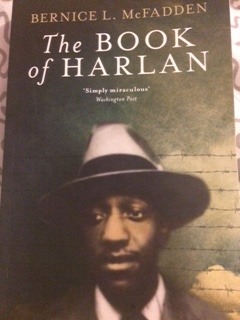
The Book of Harlan by Bernice L. McFadden

Sharp historical fiction: The Book of Harlan by Bernice L. McFadden

image

The Book of Harlan is a detailed and sweeping historical novel that follows the story of Harlan Elliot from his parents’ courtship in Macon, Georgia to the irrevocable effects that his time in the Buchenwald concentration camp had on the rest of his life. He grows up and becomes a musician in Harlem, ending up invited with his best friend Lizard to play in Paris with their band. However, they are still in Paris when the Nazi occupation begins, and so Harlan’s story turns from rising musician to a fight for survival, and the horrifying effects even once the war is over.

McFadden uses a combination of historical fact and research, the stories of her ancestors, and imagined characters and emotion to create the vivid historical narrative spanning decades. Though Harlan is the main focus, there is a large cast of characters, and they fade in and out as they would from Harlan’s life, giving a real sense of the way people come and go, and how lives can be close or far apart. The complex depiction of Harlan’s parents and their roles in his life is a notable element, showing how familial love can be both strong and complicated. The novel is written in short, sharp chapters, allowing McFadden to jump time and give devastating moments in concise lines. Overall, this makes for a highly readable historical narrative, which is detailed but also fast paced, and captures a sense of the music that is so important especially in the first half of the novel.

This is a refreshing historical novel, written in a distinctive style and with a focus on race both in twentieth-century America and in the context of the Holocaust. McFadden shows that there are still new historical narratives to be written about a period that has been much fictionalised, ones in which the highs and the horrors are both shown, and where lesser-known history can sit alongside that which must be remembered.

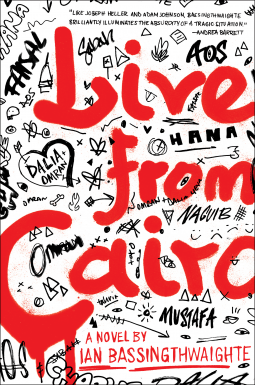
Live From Cairo by Ian Bassingthwaighte

Live From Cairo by Ian Bassingthwaighte

image

Live From Cairo is a gripping novel about Egypt after the revolution in 2011, told through the human consequences of one woman trying to escape Egypt on her path from Iraq to America to join her husband. The novel is about the way in which the characters – Dalia, her husband Omran, and those caught up in their story – hope and concoct a plan to try and get Dalia out of Cairo.

Despite the political realities of the book and the frequent depictions of the protesters and the army in Egypt, the novel is really focused not just upon Cairo but upon the whole situation in the Middle East and Africa and the way in which it affects individuals as people, with hope and love and friendship. Hana, the Iraqi-American UN worker tasked with dealing with Dalia’s case, has her own family trauma from previous conflict in Iraq, a reminder that the more recent conflicts are nothing new. The American lawyer fighting for Dalia, Charlie, and his Egyptian friend and colleague Aos complete the main cast of characters, all individuals from different places and backgrounds drawn together in Cairo.

The book’s style is light and straightforward; it gives a lot more weight to positive emotion and hope than despair or the harsh stories of both main and smaller characters. Live From Cairo is not a deep look at political unrest or a humanitarian crisis, but it a book about people and an enjoyable novel, all the whilst highlighting an issue that is just as prescient today as it was in 2011.

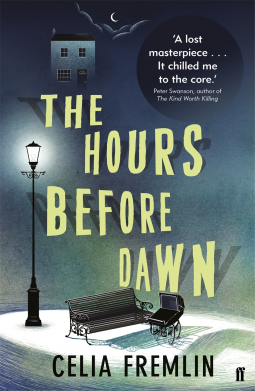
The Hours Before Dawn by Celia Fremlin

Forgotten psychological mystery from the 1950s: The Hours Before Dawn by Celia Fremlin

image

The Hours Before Dawn is a gripping psychological mystery originally published in 1958. This new edition of the book termed a “lost classic” is a fantastic chance to read a simple yet tense story about a woman who just wishes her baby would stop crying in the night so she could sleep. Louise is exhausted and this does not help her growing suspicions about their new lodger—suspicions that her husband does not share—or her ability to perform the role of a perfect Fifties housewife.

The mystery element of the novel follows the trope of a woman battling her own issues (in this case sleep deprivation and the pressures of being a woman, wife, and mother) whilst trying to prove that she is not becoming paranoid as a result of them. Though it was written fifty years ago, the book has a timeless kind of feel, without many time-specific details and with a general sense of the universality of a woman not being believed and struggling to deal with societal and familial pressures. In some ways, however, the novel says a lot about a woman’s position in the 1950s in particular, with comments about how different mothers view advice on raising their children for example, but it also shows that many elements do not change. Louise’s struggle to keep her house and children in order to stop the neighbours asking questions could have been written in the modern day.

This new edition has a preface talking about the reissue and a useful biographical note about Celia Fremlin that give context to the book. However, it does not need context, as it is a sharp-witted and timeless psychological story about crime, paranoia, and sleeplessness, which deserves to be discovered by new generations of readers.

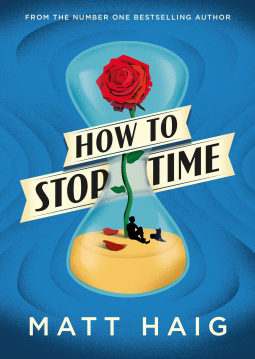
How To Stop Time by Matt Haig

Shenanigans with a near-immortal overthinker: How To Stop Time by Matt Haig

image

Calling a book life-affirming is an overused cliché. In How To Stop Time, Matt Haig once again creates a novel that holds up a mirror up to life and mental health issues to show a character dealing with their problems and coping with being different. He doesn’t so much affirm life as offer up a story about the freedom to live and to really feel like you are living.

Tom Hazard looks like he is a forty-one year old History teacher in a London comprehensive. Actually, he is older – a lot older – due to a rare condition that slows down aging. He was born in the sixteenth century and played lute for Shakespeare and piano amongst the Roaring Twenties, but now he is hiding from the past, trying to stop memories from catching up with him and not daring to think about having a future. For preservation, he is not allowed to fall in love. However, the past, the present, and the future have all decided that they have a date with him and Tom finds himself facing up to who he is and what he wants from his very long life.

Haig writes with a kind of honest straightforwardness that is similar to his other books, a style which brings the character’s insecurities and thoughts right to the surface and creates an emotional book. It is from Tom’s point of view and jumps between the present and his long past in a memory style. This means that much of the book is more focused on thoughts, introspection, and inaction than events occurring (perhaps Tom should’ve had a few words with Shakespeare about Hamlet). The narrative is simple and not particularly original – person alive for centuries runs into famous people, meditates on lost love, looks for others with similar longevity – but the real selling point is the way that Haig makes it more about learning to actually live life and not being fixated on the past or panicked about the future.

There are a number of particularly endearing details and characters, such as the Tahitian Omai becoming a modern surfing star who believes in living your life to the full. Haig’s descriptions of the Roaring Twenties stand out as getting across both the all-consuming feel of the period and poking slight fun at it appearing as an epitome in a similar vein to the opening of A Tale of Two Cities. The extended appearance of the sixteenth and early seventeenth centuries, with witchhunting and Shakespeare and the plague, are less exciting, but give a good base for Tom and his views of the world.

By the ending, Haig answers his promising title and shows a character learning to reclaim the chance to live his own life how he wants to, with less fear of the future or the past. The book’s messages will resonate with overthinkers and anxious individuals wanting to escape their own headspace and live, but also anybody who enjoys a character-focused tale of love, life, and history.

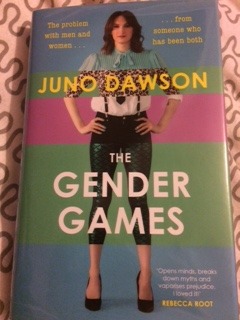
Gender Games by Juno Dawson

Thinking about gender: The Gender Games by Juno Dawson

image

The Gender Games is part-memoir, part-manifesto, covering many aspects of how gender messes up lives and society. It follows Dawson’s personal narrative around gender as a trans woman whilst also pointing out major issues with the ways in which gender is framed and how gender affects people, from being forced into looking one way or playing with that toy to being at risk of violence or lacking vital opportunities. The varied topics discussed include the north-south divide in England, issues with PE in schools, friendships (and how they are gendered), the rise of the alt-right and other internet stances of non-acceptance, transitioning, gym culture, fairy tales, and growing up.

She tells her own story in a witty, often self-deprecating way, and uses her experiences as a teacher and as a YA fiction writer as well as her own childhood to question how children are pushed into stereotypes or pushed away from what they really want to do or be. The book is full of pop culture references and relatable British jokes like her dad calling Little Chef ‘Little Thief’. It is an accessible, enjoyable read that encourages people to question gender and examine how it can be detrimental in society. It is also an important memoir that shows experiences that many people will know very little about and which can be a life line to those who do. She points out that hers is only one example, but that is the point: a personal reflection on gender from somebody who has thought a lot about it, which will inspire others to think further.

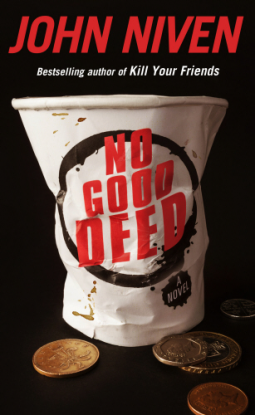
No Good Deed by John Niven

Kill Your Friend(’s successes and revel when they fail): No Good Deed by John Niven

image

No Good Deed is a satirical novel about modern day success which exposes male insecurity and friendship in the process. Alan is a food writer a comfortable upper-middle-class life and an upper-class English wife, a far cry from his Ayrshire roots and the accent he’s long since cast off. When a homeless man on the street turns out to be his old friend Craig—who dropped out of uni to become a rock star and they lost touch—Alan decides to do the good thing and help him out. However, with simmering resentment and an unequal dynamic, their friendship isn’t on the sturdiest of grounds and soon Alan’s life is thrown into ridiculous disarray.

The novel is a dark comedy about youthful friendship, adult success, class, and the modern world of success and failure. From the start, Alan’s privileged and insensitive world is highlighted through glib comments and more deep set attitudes, and it is this vein that powers No Good Deed on through its narrative, with a sense that somehow Alan also loathes himself a little bit for what he has become, but also has absolutely no desire to give up its comforts and excesses. The narrative has the predictable feel of an obvious downfall, with Niven making it clear that a simple mutually supportive friendship was never exactly what Alan and Craig had, but this suits the comedic style, a mocking look at helping out an old friend and how such a concept doesn’t really exist.

Niven places the events squarely in the modern day, with references to social media sites like Twitter and Tumblr and extended mocking of the London housing market (Alan and his wife were lucky in the nineties and then into the new millennium, allowing them an expensive house in the country in the present). Mostly these give it an up-to-date feel, though there is perhaps a bit too much comedy aimed at the easy target of hipsters and an unnecessary referencing of Trump.

I found it funnier than Niven’s earlier novel Kill Your Friends, with its continually poking fun at the lifestyles of the modern well-off middle-class being more engaging and easy to find ridiculous. In some ways it feels similar to the recent Trainspotting sequel film in that old friendships and nostalgia mix with modern technology and growing up in different ways, although Niven’s novel is less amusingly feel-good and more satirical. No Good Deed is a sharp and funny look at friendship, growing up, and the ridiculousness of wealth and class in modern society.

[Note: this is the 100th post on this blog, so thanks everyone for reading!]

The Bedlam Stacks by Natasha Pulley

A journey into Bedlam: The Bedlam Stacks by Natasha Pulley

image

The Bedlam Stacks is a strangely enticing novel set in the nineteenth century about a dangerous expedition and the lengths one man ends up going to not only succeed in his venture, but also to sustain a newfound bond. Injured expeditionary Merrick Tremayne is convinced by the India Office into one last adventure, a trip to New Bethlehem—a holy town known as Bedlam deep in Peru in areas uncharted by the British—to bring back cuttings of cinchona trees, whose bark contains quinine which will treat the malaria epidemic. Facing hostility on all sides once he reaches Peru, Tremayne discovers the secrets of the forest, makes an unlikely allegiance, and must fight to protect these and bring back the plants.

Pulley’s novel starts slowly and at first can appear an uninteresting colonialist tale, but it becomes mesmerising as Tremayne is drawn further into the Peruvian world. Part of this is due to his first person narration: initially he seems like an expeditionary gardener stuck in a British colonial viewpoint, but his sense of wonder, his attitudes towards the native people and the Quechua language, and his forging friendships there like his grandfather did before him make the novel engaging and make him a character who really becomes something special. Pulley avoids a lot of obvious plot points or ideas, instead making an unexpected and enjoyable narrative.

As with the narrative pace, at first it seems overly colonialist, focused on British forces and the East India Company, but again, as the novel progresses, it becomes clear that the focus is more upon Incan and other Peruvian culture and life in the nineteenth century, including the mysterious elements centred around Tremayne’s guide Raphael. Raphael is also the book’s most interesting character and the varied relationship between him and Tremayne is a real highlight and a crucial part of the second half of the novel.

The Bedlam Stacks is a great new novel for historical fiction fans who enjoy adventure, non-British cultures, and a mystical sense of both the past and the present. It is a book that questions belief, reinforces similarity over difference, and shows how someone who feels an outsider in society can find allies and a place in another.

‘Lyrical Ballads’: books and music

“Would put me up on the bookshelf / With the books, and the plants?”

Adam Ant, ‘Desperate But Not Serious’

Books and music are two of my favourite things, but that’s not my whole excuse for writing about them together today. The Adam Ant lines above were the first thing that came into my head when I thought of books and songs which likely says more about the inside of my brain than their connection. Nevertheless, books and music are definitely connected.

The obvious starting point is how they’ve influenced each other. From the most famous songs influenced by books (e.g. Kate Bush’s ‘Wuthering Heights’, the reason many people know the plot, or Dire Straits’ ‘Romeo and Juliet’) to the lyrics and titles that make slightly less obvious connections (I was a proud teenager when I understood the very obvious reference in the title of Green Day’s ‘Who Wrote Holden Caulfield’, only slightly more understandable because I’m not American), there’s plenty of music that mentions or is influenced by books. And the other way round isn’t lacking either, with book titles (Coupland’s Girlfriend In A Coma comes to my mind because I’m a Smiths fan) and endless quotations and epigraphs proving authors often have music on the brain whilst writing.

Next is where my title comes in. Wordsworth and Coleridge’s 1798 book of poetry Lyrical Ballads may not be to everyone’s taste (I say as someone who somewhat agrees with Byron’s use of ‘Turdsworth’), but it’s a pretty obvious reminder of something pointed out to my class at undergrad: poetry and music are connected. Plenty of poems have been turned into music (sticking with the Romantics, Blake’s ‘And did those feet in ancient time’ is perhaps the most famous example, better known as the anthem ‘Jerusalem’). Bob Dylan won the Nobel Prize for Literature, somewhat controversially. It is difficult, especially when being pressed by an Oxford tutor who wants you to admit it could be arbitrary, to explain the difference satisfactorily.

And finally, my real excuse for writing about books and music being connected. I think that they can create the same sense of nostalgia, the same knowledge of where you were when you read/first listened to/reread/listened excessively to them. I can tell you that The Secret History is what I read whilst also trying (and succeeding, I must show off and say) to read Richardson’s 1500 page Clarissa in my second year of undergrad, that The Libertines are the band that means moving to Holloway Road and walking the same locations mentioned in the songs, that I reread Order of the Phoenix on a trampoline whilst waiting for the day of the Half-Blood Prince release. To me, there’s nothing quite like books, songs, or bands for generating memories of a specific time and what I was doing then. And I love them both for it.

The Destroyers by Christopher Bollen

Privilege falling part on a Greek island: The Destroyers by Christopher Bollen

image

The Destroyers is a tense and ominous novel about childhood friendship and about the lengths people go to protect their power and assets. Ian Bledsoe flees the death of his disliked father to the Greek island retreat of his old schoolfriend, Charlie, whose life seems untroubled by worry or money troubles, the opposite of Ian’s own. The situation on Patmos is far from idyllic, however, with social tensions and shady dealings that start coming out of the woodwork just as Ian thinks he might have found a refuge. This literary thriller becomes a complicated web of priorities as Ian tries to work out just what is going on which Charlie.

Bollen’s writing style is full of witty observations and the narrative becomes gripping as the strands really start to take off, all held together from the perspective of Ian. He is a classic friend figure, a fellow rich schoolfriend of Charlie’s who is now saddled with a lack of inheritance and an inferiority complex about life. The importance of Ian and Charlie’s childhood game Destroyers adds a vivid touch, a thread of danger running from the start until the imagined threat starts to appear real. The novel shows the modern world as a place divided and tense, with the refugee crisis, the collapse of the Greek economy, and the thread of extremist violence all forming the backdrop of the story. At times this seems a little irrelevant – Ian’s time in Panama is shown in perhaps too much detail – but what Bollen creates is a thriller about privilege and power that focuses more on characters and on the society that made them who they are.

Comparisons to Tartt’s The Goldfinch are easily made, though Ian does not feel similar to her protagonist and Bollen’s style isn’t as distinctive. However, the tense world evoked – one in which modern threats recreate old problems – is similar and the complicated formation of Ian and Charlie’s now-rekindled friendship feels similar to her work. The Destroyers is for anyone looking for a modern novel that looks deep at self-interest and self-presentation amongst a privileged world whilst also keeping up a tense, thriller narrative.

Crime in all shapes and sizes

Working in a library, I see an awful lot of crime fiction. It is very popular in its various guises, from Agatha Christie to the action thriller kind where any investigation is mired in violence, but has never been something I read much of, excepting the odd mystery narrative. However, it doesn’t take much thinking for me to realise I read a lot of books with crime in them, even if they are not specifically crime fiction in some recognisable genre way. I’ve gathered up a few of my favourites for other people who either like stories with high stakes or who read crime and would like some other recommendations of something to read.

  • A Brief History of Seven Killings by Marlon James – This is how to turn a crime story into something else, something bigger. James’ Man Booker Prize winning novel focuses on the attempted assassination of Bob Marley in the 1970s and how the events affect a range of characters mixed up in political conspiracy, rivalry, drugs, and music.
  • American Psycho by Bret Easton Ellis – Quite famously about crime, but despite its infamy, it is still worth reading as a masterful and terrifying satire of 90s yuppie culture that will change the way you think about Huey Lewis and the News. Plus the way it interlinks with Easton Ellis’ other works (and how they link to Tartt’s The Secret History) is very satisfying as a reader who likes easter egg bonus content.
  • The Alchemist by Ben Jonson – An out-there choice, I know, but Jonson’s play about tricksters conning everyone in ridiculous ways is in some ways a great story of opportunity and comeuppance akin to modern gangster novels.
  • Skagboys by Irvine Welsh – I know it seems ‘edgy’ to pick the prequel to Trainspotting, but I want to emphasise how worth reading Skagboys is, both a dark and funny look at how the characters became the unforgettable personas from Trainspotting and a comment on the AIDS crisis in Scotland in the 80s. All three books about the characters are full of plenty of crime that isn’t just the prolific drug dealing and possession.
  • Loot by Joe Orton – Orton’s black comedy about two thieves trying to hide their loot around the dead body of one of their mothers is a classic example of how crime can be hilarious and also deeply twisted.
  • Caleb Williams by William Godwin – I needed at least one classic novel and Godwin’s story of revelation and persecution fits my criteria nicely, though the likelihood of convincing anyone to read it might be low. Written in the 1790s, it is about a man who finds out his employer’s secret and ends up on the run from the authorities. One to read if you like classic injustice, though the ending may surprise.