The Word Is Murder by Anthony Horowitz

Metafictional crime writer drawn into real crime: The Word is Murder by Anthony Horowitz

image

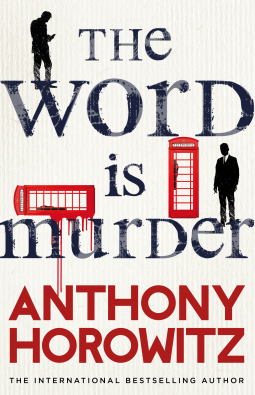
The Word is Murder is a whodunnit thriller with a metafictional twist from the acclaimed author of Alex Rider and a variety of crime and thriller stories. A former police detective draws a writer into the case of a woman who walked into an undertakers and planned her own funeral only hours before she was murdered. The deal is, the case is written about by the writer and the profits split 50/50. Before they can worry about that, however, they have to solve the case, following a trial of clues that lead around theatrical celebrity and an old car accident. The thing is, the writer is Anthony Horowitz, and he’s never wanted to get involved with a real crime before.

Horowitz has already written Sherlock Holmes and James Bond stories, proving that he can take other people’s characters and fit them into his own books, but in this novel he takes himself, his own writing life, and plenty of other real life details and turns them into a self-aware detective story. After the initial chapter that describes the murder, it becomes quickly apparent that the narrator is Anthony Horowitz, following in a writing tradition of fictionalising yourself and your own life (not dissimilar to Bret Easton Ellis’ Lunar Park, though that gets a lot weirder by the end). The narrator is unreliable from the start, describing the process of gathering information, deciding what makes it into the book, and cutting out things from endless expletives to boring and unnecessary detail.

The detective character, a former policeman turned consultant for both investigations and the writing of crime drama, is set up not so much through his personality, but by how difficult it is to make him a likable character. Other elements, such as the famous young actor whose roles are a mash-up of the big names from British acting in recent years, add to the meta quality, keeping a vague sense that this could almost not be fiction. These quirks give The Word Is Murder a fresh feel, though it still has a complicated whodunnit plot to keep it gripping too.

Horowitz has created a novel where he plays a modern day Watson, a crime writer caught up in a real investigation and making a few faux pas along the way. Maybe the conceit will seem unnecessary to some, but The Word Is Murder will undoubtedly exhilarate not only crime and Horowitz fans, but anyone who enjoys the sense of metafiction and fourth wall breaking found in books by authors like Lemony Snicket, Bret Easton Ellis, and Martin Amis amongst others.

Blog tour: The Book of Luce by L. R. Fredericks

The Book of Luce by L. R. Fredericks

Today I’m hosting the Book of Luce blog tour here on my blog, so here’s my review, and check below for the other dates on the tour!

image

The Book of Luce is a mysterious novel, filled with questions and uncertainties, as the identity of a godlike rock star and artist is unfurled by someone closely tied into their story. The narrator and metafictional author is known only by the pseudonym Chimera Obscura, and is attempting to tell the truth of Luce, a messianic figure who did legendary secret gigs as part of Luce and the Photons. Luce is genderless, maybe beyond human, a wanderer. Uncovering the secrets surrounding Luce seems to draw anyone into a dangerous game of dark agents and conspiracies. Regardless, this is the book to try and explain Luce to the world.

Fredericks has combined an intricate web of ingredients—rock music, art, mythology, religion, philosophy, LSD, demonology—to create an unusual and strangely intriguing novel, a kind of literary mystery that somehow can be reminiscent of House of Leaves, David Bowie, and Stranger Things amongst other things. The meta-book structure works well to frame the narrator’s quest and to leave many things unexplained, with a notably elusive narrator withholding information despite the claim to be uncovering the truth. It is long, but moves between so many episodes that it doesn’t really drag, and is broken up with short snippets from the narrator in the present day writing the book about Luce, giving further tiny clues as to where the Luce narrative is going.

The story starts in 1967 and there is plenty of Sixties and early Seventies culture infused into the novel, with plenty of acid taking, looking for hallucinogenic meaning, and conspiracy, but really the Sixties rock star element is only one part of this epic novel. It moves around the globe and through different art forms, identities, and philosophies as the narrator tracks different characters, under various names and personas. The mystery at the heart of the novel—who is Luce really—is also its meaning, and readers can take as many interpretations of this question as is said the various characters do. The overall effect is a kind of counterculture metafictional journey with a dangerous, almost thriller-like atmosphere at times, and a fourth-wall-breaking literary puzzle feel at others.

The Book of Luce is a clever and impressive novel, a drug-infused meta story that never wants to reveal too much or make definitive judgements or even descriptions. This style and story will not appeal to everyone (particularly the ambiguity of much of the book may annoy some), but certainly anyone who likes metafictional puzzles or acid trip conspiracy mixed with philosophy will find something interesting about the novel, which questions the need for definites whilst building up a mythology of its own.

image

The Reminders by Val Emmich

Remembering everything and nothing: The Reminders by Val Emmich

image

The Reminders is a heart-warming novel about grief, friendship, and memory, with a quirkiness that stops it being too sweet. Gavin is trying to deal with the death of his boyfriend Sydney, but when that process ends up with him setting fire to every reminder of Sydney in their home, Gavin realises he must try something else. He ends up travelling from LA to New Jersey to stay with friends and their ten-year-old daughter Joan, who has a rare condition meaning she can remember every detail from her life. With Joan, he can uncover memories of Sydney, whilst she ropes him into helping her write a song for a competition because she never wants to be forgotten.

The real heart of the novel is the way in which Gavin and Joan bond and help one another to deal with their own problems and goals. Each chapter alternates between the respective points of view, giving Joan’s distinctive powers of recall and worldview mixed with Gavin’s grief and attempts to remember what feels too painful to recall. Though it is a happy novel, Emmich shies away from making things too sickly, instead making characters face reality and learn from it. Music is constant throughout the novel and Joan’s obsession with songs and creating her song add a quirky creativity to the narrative.

The Reminders is a great light read with a sad undercurrent, a tale of trying to deal with a partner dying and of how unlikely people can help you out more than expected. It is a charming book that will probably appeal to fans of books like Lily and the Octopus.

The Golden House by Salman Rushdie

The rise and fall of one family: The Golden House by Salman Rushdie

image

The Golden House is a relevant and highly referential novel that charts the recent years of American culture and politics through the story of an immigrant real estate tycoon. Nero Golden moves to New York from Mumbai with his three grown up sons, where they are watched and befriended by their neighbour René, an aspiring filmmaker. René narrates the novel and charts the fall of the house of Golden, set against the years of the Obama presidency and the recent US election.

Rushdie writes in a captivating style from the outset, with a mysterious narrator who has a degree of self-consciousness about his own growing involvement in the story he is telling. The conceit of René being a filmmaker who slips into writing in a film script structure at times and who deviates from the narrative by discussing and comparing events to classic cinema works well to give the novel a sense of truth and fiction, an invented narrative suffused with real life events and popular culture references. Literary references are used more sparingly, but the narrator slips in Eliot’s Prufrock and various other quotation at times. The combination of these references with key elements of recent culture from gamergate to prejudice surrounding gender identity creates a novel that is very much situated in the modern world, whilst self-consciously telling a story.

The narratorial coyness surrounding real political events—a certain president’s rise, for example, is depicting though not in so many words—has a faintly smug feel, but this serves as part of the enjoyment too. The style is distinctive and will be a hit with anyone who likes highly referential prose with a degree of self-awareness. The narrative is gripping, with the story moving between Nero, his three sons, and the narrator René, and with a tendency to foreshadow that isn’t too obtrusive. Near the end there is a fair amount of exposition that can get a little slow, but otherwise the pacing is good and the story an interesting mix of drama, gangsters, identity, and lies.

In The Golden House, Rushdie has clearly written a novel for the Trump era, for the internet age of trolls, and for the mix of the old and the new. There is something about the book, particularly in its style and narration, that draws the reader in, even whilst it celebrates its own clever references. It is about reinvention and transformation, and about media for telling stories. Rushdie has captured at least some element of the modern day and it is worth reading.

My Absolute Darling by Gabriel Tallent

Terrifying and masterful: My Absolute Darling by Gabriel Tallent

image

My Absolute Darling is a dark and unputdownable novel about a terrifying situation and mindset forced onto a teenage girl and her battle to escape this life she is so used to. Turtle is a fourteen-year-old who lives with her father in a house filled with guns and supplies for the apocalypse he believes will be inevitable. He tells her how much he loves her, but she has never known a friend and is trapped by his creed and rules. The time comes for Turtle to fight to survive and to learn to escape from all she has ever known.

Tallent writes with a distinctively detailed style that carefully captures the ordered world in which Turtle lives and depicts her unnerving mindset as someone who has grown up knowing love and pain deeply entwined. She is a compelling character: heartbreaking in her internalised hatred and her difficulty relating to anyone, clearly intelligent and adaptable, and hard to forget once the book is put down. The narrative unfolds with tension, closely focusing on an event or occasion then jumping forward in a tightly paced manner.

The paranoia of her monstrous father is contrasted with the hippy attitudes of other locals, showing the difference between a distrust of The Man and an all-consuming belief in protecting someone who is actually being deeply scarred in those attempts. Apart from a few references by other characters, it is easy to forget the modern setting of the novel, which both gives it a timeless feel and shows Turtle’s disconnect from the world. Altogether, the writing style and seeing it all from Turtle’s perspective makes the reader feel unnerved and trapped, really getting across the horror of what is going on despite it not being described in a hysterical way.

To read the novel is to be horrified at times and to wish it was possible to reach into the narrative and make things better, in a similar way to books like Yanagihara’s A Little Life. Tallent creates a paranoid and abusive world that can be difficult to read at times, but also can be uplifting and gives a voice to a character who so often keeps to virtual silence.

Reservoir 13 by Jon McGregor

A troubled village over thirteen years: Reservoir 13 by Jon McGregor

image

Reservoir 13 is a surprising novel which charts the rhythms of life in a distinctive prose style, letting seasons rise and fall and people’s lives ebb and flow through the pages of the book. A teenage girl goes missing whilst on holiday in a hilly village in England and the whole area is called in to help look for her. However, the searching is not fruitful, and meanwhile the villagers’ lives must go on, their personal dramas, crops, hopes, and dreams. Thirteen years pass, with the memory of the missing girl still lingering over the village.

The style of the novel takes a moment to settle into, with the narrative voice quickly moving between villagers and short sections denoting chunks of time. Once settled in, though, it finds a rhythm that gets across the idea of everyday life going on in this place where something terrible happened, a kind of relentless moving forward at a mundane pace. The characters, like a real community, vary a lot and many stay fairly mysterious throughout, but there are a great number of small details in their lives picked up by the narrative as part of the tapestry of the village. What is perhaps most notable is the way in which, like in real life, people can disappear entirely from the story when they move away, or only return for brief visits, showing great change in comparison to the more constant progression of those who stay in the village.

Despite the missing girl concept, what McGregor has most memorably done is find a style that captures a community changing over thirteen years, whilst being something interesting to read. Reservoir 13 is an understated book in many ways, with drama often played out in a passing way and moved on from as it would in real life, but also a very literary novel in an unusual style without dialogue.

The longlist so far…

image

This week the Man Booker Prize longlist was published, ahead of the shortlist announcement in September and the actual winner being revealed in October. The prize, awarded to literary fiction written in English, tends to make a big name of its winner, at least for a while, and this year’s longlist is full of books you might have seen on a bookshop table, looking shiny and new (or brown and new in the case of Ali Smith’s Autumn).

Whilst you can read the longlist here, I’m going to write some mini reviews of the five books from the list I’ve already read, with links to longer reviews where they exist. Expect a few reviews of others in the coming weeks (any help sourcing copies is appreciated!).

  • Days Without End by Sebastian Barry – A moving story of love, family, and living outside of society during the American Civil War, which can be horrific at times, but also shows how two men loved one another despite these conditions. Searing descriptive writing and worth trying even if the setting doesn’t sound appealing (as it didn’t to me).
  • Solar Bones by Mike McCormack – The single sentence novel that is actually split up using line breaks and feels poetic in its execution, as well as being a kind of microcosm of life held within this sentence. Far more readable that that description may sound. (full review)
  • The Ministry of Utmost Happiness by Arundhati Roy – Roy’s highly anticipated book weaves together the stories of different characters across the Indian subcontinent, such as the life of a transgender woman who finds community in different ways and how fighting and spying can come together through one woman who is loved by many. (full review)
  • Autumn by Ali Smith – I hate to call this her ‘Brexit’ novel, but in some ways it is, a book about divisions and modern British society in the mundane, which is also about finding your place and trying to follow other people’s stories, written in her characteristically witty style. And yes, she is meant to be writing more for the other seasons.
  • Swing Time by Zadie Smith – The lives of two girls who dream of dancing, though only one of them can dance. The characters form the core of the novel, which feels distinctly Zadie Smith (though I still prefer N-W). (full review)

Homegoing by Yaa Gyasi

Two sisters, seven generations, one novel: Homegoing by Yaa Gyasi

image

Homegoing is an epic, absorbing novel that spans seven generations, showing how characters’ lives and their consequences reverberate through time. It starts on the Gold Coast of Africa, with two half-sisters, Effia and Esi, who don’t know each other. One is sold into slavery, the other becomes a slave trader’s wife. The book follows their descendants across Ghana and America as they face war, imprisonment, tragedy, and love, and dream of fire and water.

The narrative follows one character at a time in small segments jumping between the sides of the family and then to the next generation, which gives it a fast pace that is easy to follow. The way the story is weaved together as it moves forward is masterful, giving enough detail to fill in the picture of characters’ lives whilst always feeling lightly done. It is difficult to pick stand out characters because the whole thing fits together so distinctly, but the way that the progress of America is shown through slavery, civil war, discrimination, and imprisonment alongside the depiction of British colonialism in Ghana from the first pair of stories to the final two is perhaps most memorable.

Homegoing is the kind of novel that spans so much time and place that it cannot be defined as being one historical period or location, but rather has an epic scope with a huge variety of characters. It tells the story of how two people who started off in a certain close proximity can have lives and then generations of descendants that go so far apart, yet still have similarities. This is one for fans of novels that draw you into the lives of their characters and can’t be confined to boundaries.

A Secret Sisterhood by Emily Midorikawa and Emma Claire Sweeney

Female literary friendships: A Secret Sisterhood: The Hidden Friendships of Austen, Bronte, Eliot and Woolf by Emily Midorikawa and Emma Claire Sweeney 

image

A Secret Sisterhood is a look at the friendships that some of the best known female writers had with other women who wrote and how these affected their lives. It sets out to show the importance of the support, rivalry, and inspiration that characterises famous male literary friendships to these authors, in friendships that have been often overlooked by biographers and critics. The writers, real-life friends, emphasise how these friendships are a major part of literary history and suggest by the end that more female literary friendships should be appreciated and studied, to compare with famous male ones like Byron and Shelley or Fitzgerald and Hemingway.

The book is very much literary history, focused upon the writers’ lives and mentioning a great deal of other writers and literary trends on the way. It is split into four sections, covering each of the writers named in the subtitle and their relationship with a particular other female writer in their life. Reading it does not require a huge familiarity with each writer, making it accessible to those with an interest in writers, but who don’t necessarily know a huge deal about the lives of the individuals covered already. There is quoting from letters and diaries to give detail of these friendships, but no literary analysis of the writers. Instead, it is very much biography, opening the way for people to look at these and other female literary friendships in the context of their writing and specific elements of their texts.

A Secret Sisterhood is an enjoyable book about lesser known literary history and an important one for showing that female writers do not have to either be reclusive and isolated, or tightly bound to a man without female support.

Well-adapted

Book adaptations are not always a disappointment. Whilst plenty of fans complain about the misrepresentation or loss of their favourite character or the changing of major plot points or important themes, there are also the films and TV shows that do books justice, transforming them into a different format whilst keeping essential parts that make them good adaptations. Maybe they capture an notable narrator in some way, make changes or cut out unnecessary material that actually make it a better experience, or just faithfully capture a book in a new way. However these adaptations work, they form an extra way to enjoy your favourite books, or even make a book even better.

There are plenty of books that don’t work in certain adapted formats. The Harry Potter films have to cut out so much that without book knowledge they can be at times confusing or incomprehensible. I couldn’t make it further than one episode of the Wolf Hall TV series before I got before, despite enjoying both books. The Baz Luhrmann film of The Great Gatsby is fun, but it can’t quite match up to the book.

On the other hand, both Trainspotting and Filth show that adapting Irvine Welsh’s books can make very different yet still fantastic and dark films. Plenty of classic and hugely popular films and TV shows are based on books, though sometimes loosely. I’ve picked out a few where I think the adaptation has been particularly notable to me, and would be interested to know which book adaptations are most important to other people.

  • American Psycho – Bret Easton Ellis’ novel is an onslaught of brand names, restaurant reservations, and graphic violence and sex. The film version pares this down into an unnerving vision of a psychopathic killer hidden in yuppie culture, talking over the action and dancing around the room to Huey Lewis and the News.
  • The Shining – Even though I was a fan of Stephen King, I didn’t actually read the book until after I’d seen Kubrick’s film. The psychological tension of following Danny around the Overlook Hotel can’t quite be matched by the novel, which differs in some major ways.
  • A Single Man – Tom Ford’s film of Christopher Isherwood’s novel somehow takes the breathtaking prose style and uses a visual beauty to get across a different, but somehow recognisably similar too, take on how the story is told. The ending differs too, but it is a case where both the book and the film feel valid in their own right.
  • Fight Club – One of the most famous cases of the adaptation surpassing the fame of the book, Fight Club has contributed to the cultural zeitgeist in a way that angers its author Chuck Palahniuk and allowed plenty of people to misunderstand and misrepresent its ideas of toxic masculinity and violence. Regardless, the film is incredibly good, with a great soundtrack and cinematography that gets across its twist and the bizarre perspective of its messed-up protagonist.