Summer Rolls is a novel about family and cultures, as a British-Vietnamese girl battles with her mother who left Vietnam for her children. Mai lives in London and as a teenager in the 90s, she feels that she isn’t allowed the same freedom as everyone else in her class, with her mother’s strict rules and idolisation of her older brother who just graduated from university. But her mother, Trinh, hasn’t had a simple life, and secrets from the past resurface as they try to find a way to understand each other.
This novel is told in two parallel narratives, one in the 90s and early 2000s in London and the other in Vietnam over two decades, unfolding the stories of Mai and Trinh and what freedom, love, and family have meant to them. The style really draws you in, immediate and with enough untranslated Vietnamese in dialogue to get across the importance of culture and language in the novel. The blurb compares the book to Pachinko, but it is much less epic in scope than that novel, and more focused on two main characters and those close to them.
I enjoyed Summer Rolls and its powerful exploration of a mother-daughter relationship caught across countries and time. I do think the UK cover does the book a bit of a disservice, looking more like a YA novel or something without the depth of Summer Rolls, but it is nice artwork.
Love in Exile is a memoir about love and an exploration of types of love in modern society, centred around Shon Faye’s own experiences not just of love and sex, but also ideas of motherhood, addiction, friendship, and religious love. Taking the idea that love “in exile”, for those not in the mainstream of love, might give space to consider love far more broadly, she describes her own experiences and combines them with sociological and historical thought to explore the topic in chapters that function like mini essays.
I think a lot of people will come to this one on the back of Faye’s powerful previous book, The Transgender Issue, and it offers something quite different, with its themes focused on areas of her own experience. This means that it has some really great bits exploring what it means to be a trans woman attracted to men and the state of modern dating for women who are into men, and it feels in conversation with other recent books on the latter, bringing important trans and queer thoughts into that conversation. As someone for whom these conversations around modern heterosexual dating aren’t relevant, I enjoyed Faye’s insight, but it was probably less impactful for me than it would be for women dating men.
Other chapters broadened ideas of love and how love interacts with other elements of life too, like addiction. The chapter on friendship looked at the position of friendship in society and how this can differ between queer and non-queer people, offering a good space for everyone to reflect on their own friendships and how they treat these in their lives. Due to the fact Love in Exile is a combination of memoir and more of an essay style, there’s always going to be gaps or areas that could’ve been covered or mentioned (any kind of dating beyond heterosexual, polyamory, etc), but Faye’s perspective on the areas she covers is witty and interesting.
Sky Daddy is a novel about a woman who wants to ‘marry’ a plane by dying in a plane crash, and what happens as she tries to achieve her apparent destiny. Linda works as a content moderator, ensuring comments adhere to a tech company’s terms and conditions, but once a month she takes a flight somewhere, to be with her true love: planes. When her only friend, co-worker Karina, invites her to vision board brunch, Linda has to find a way to hide the fact she’s attracted to planes and wants to die in a plane crash but still create a vision board that represents this, and as her life starts to be changed, she has to decide whether to follow her true dream or not.
This is the sort of book that you feel you need to read, because the concept is so weird, but then you actually read it and it is actually quite sweet and explores what it means to live the way you want and have meaningful connections with others. In particular, it has an underlying exploration of friendship between unlikely friends, and what it means to be there for someone. However, it does also live up to the weird, not shying away from Linda’s attraction to planes and the fact she believes that she will find her soulmate, a plane in which to die.
I had a great time reading Sky Daddy: it’s fun, it’s occasionally sly and funny, and it takes something pretty weird at face value. It sits alongside other recent novels that take a weird concept and actually do something both fun and tender with it, without taking themselves too seriously.
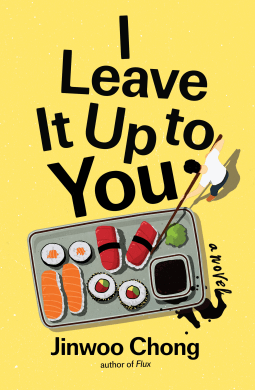
I Leave It Up to You is a novel about a man who wakes up from a coma and returns to working in his estranged family’s sushi restaurant, finding family and love along the way. Jack Jr was in a coma for two years, during which a global pandemic happened, his parents got older, his little nephew became a teenager, and his family’s restaurant struggled. When he wakes up unexpectedly, he has to rebuild his life from scratch, with his job long gone, his soon-to-be-husband now married to someone else, and his only place to sleep being his childhood bedroom. With bonds to heal, a restaurant to fall back in love with, and a new love interest to get to know, Jack Jr has a lot to deal with.
I’ve wanted to read Jinwoo Chong’s previous book for a while now and not had the chance, so when I saw this one available on Netgalley, I needed to read it. This book is filled with a lot of heart and is your classic romcom setup of a character having to return to their hometown in order to rediscover what makes them happy, only with the twist that it is due to a two year long coma. Though the book is somewhat of a romcom (with some ridiculous elements like a video suddenly going viral on TikTok), it is really most about various characters feeling able to go after their passions, and how family can be complicated. I saw it described as ‘messy’, which is such a compliment in this case: both the protagonist and the supporting characters have a lot going on and it all comes together to show that you make the best of things.
If you’re looking for a queer version of the kind of romcom about returning home to rebuild your life, then I Leave It Up to You is a fun, heartwarming take on that story that has more of a focus on the protagonist and all of his relationships than just on romance.
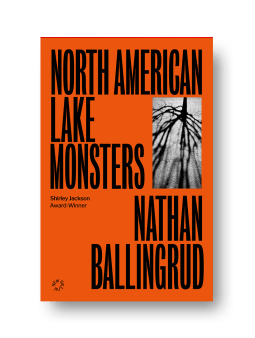
North American Lake Monsters is a short story collection exploring different kinds of monsters, human and otherwise, and the messy realities of these. There’s a real range of stories in the collection and you’re always guessing what kind of horror, whether creature or psychological or something else, is going to appear in each one. There’s a lot about class in America and the impacts of desperation in relation to class, wealth, and worth, and I particularly like how this plays out in the titular story, which explores how we see different kinds of monsters and the importance of viewpoint. I also like how often any supernatural or otherworldly elements feel almost secondary in relevance to the working class lives in the book, with other people having a more important role in their stories and the horror within. If you like literary-tinged horror that shines a light on working class America, then this collection will be ideal.
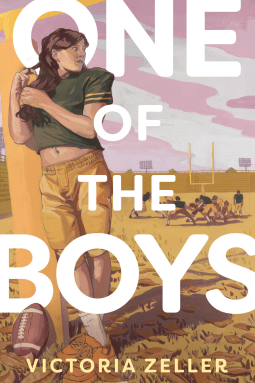
One of the Boys is a novel about a trans girl who returns to playing football in her final year of high school, dealing with being caught between the sport she loves and if she has a place within it. Grace Woodhouse used to be a stereotypical jock: on the football team, popular girlfriend, eyes on a college football scholarship. That was, until she came out as trans, leaving the football team and her former life behind. Back at school for senior year, she’s navigating the loss of her sport and built-in friendship group, but when her old teammates convince her to come back, her non-football friends think she’s crazy and there are a lot of hurdles in the way. Grace has to consider what is important to her and what the future after high school might hold.
This is the kind of young adult novel that should be read by anyone, because it is just a great coming of age story about being trans and having to decide what to keep from your past and who you want to be as you grow up. There’s a lot of nuance, not only in Grace’s story but in everyone’s in the novel, and a real sense that high school isn’t everything, and the person you are at the age of eighteen isn’t the end of anything. There’s so many great characters, some with small roles, and others with larger, but everyone gets something going on, even just in the background, which felt very real to what it is like as a teenager at school when there’s so many people you peripherally know or are aware of. I liked how it plays with classic ideas of cliques, like the football players and the theatre kids, but Grace was there trying to convince them that maybe things aren’t so clear cut
It is also a small town America story, specifically Western New York, and how that might shape being trans and a lesbian and loving football, and how it shapes the people around her too. Strangely for a British person, this has a very specific subsection of things I do know about (I’ve been to Brockport, my sister played American football on a men’s team), and I really liked all the details, even appreciating those (mostly all the football stuff) that I’m not so familiar with. I also like how the book explains more about football than it does about being trans, because the book is really about exploring your passion and what happens when your relationship to it changes, rather than being just focused on Grace’s gender.
This book was delightful to read, heartwarming yet with enough grit to make it more compelling than a fairytale version of this narrative. There’s so much packed into it, but ultimately, it’s a coming of age tale about doing what you love, finding your path after school, and how being trans changes the future you thought you had mapped out.
I Want To Go Home But I’m Already There is a novel about the horrors of the housing crisis in London, as a young woman moves into a rental flat with her boyfriend and becomes convinced something is wrong with the flat. Áine has just moved into a flat in a nice area with her boyfriend, Elliot, pleased because their rent is affordable, but the flat seems different once they move in: damp, cold, and hostile. As she spends time in the flat working from home, or not working, it feels worse and worse, but Elliot doesn’t seem to see it.
I was drawn in by the description of this book, combining the rental crisis with the ‘young person’s life is falling apart’ genre of literary fiction and ghost story elements. That really is what the novel is, with the caveat that it is also very ambiguous and slow paced, playing with ideas of what kind of nightmare Áine is actually living. The atmosphere is perhaps the best thing about the book, sharply realised and accurate to the sense of dread that comes with hostile living conditions and a mental weariness that you cannot do anything about them (and, in this case, people don’t even believe her about them). You can practically feel the mould growing as you read (and having lived in a mouldy flat in London, it gave terrible flashbacks).
Whilst reading, I couldn’t tell if the book was going to have something big and decisive that would reveal whether this ghost story had a particular cause, otherworldly or mundane. It is more of an ambiguous narrative, not even delving into for example what Áine’s Prescription that she often doesn’t take is for. The effect of this is to leave you wondering, particularly around Áine and Elliot’s relationship and how much either of them actually paid attention to the other one, and it does work well to explore the sense of being trapped that can take many different forms.
I enjoyed reading this book, though it did feel slow at times, and I liked that it took the genre that was around a lot a few years ago, with a young woman spiralling, and used it to focus on the housing crisis and how its impact goes far beyond just a place to live in. The ambiguity made sense, but I also felt like it lessened the ability to really explore the impact of the housing crisis on mental and physical health, with a vague, neat conclusion. I do think the book would be good if adapted for film or TV, as I feel the sense of dread would work well.
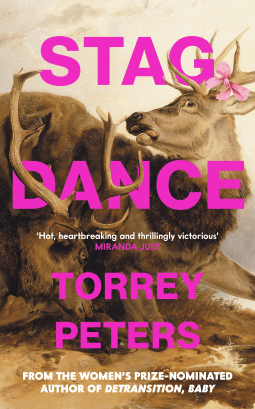
Stag Dance is the follow-up to Detransition, Baby, a collection of three novellas and one short novel that use genre to explore different narratives of transition and gender. There are two previously self-published novellas, ‘Infect Your Friends and Loved Ones’ and ‘The Masker’, which explore trans community and desire from a speculative fiction and horror perspective respectively, and then a new novella, ‘The Chaser’, which tells a teen drama story in a boarding school. And then there’s the titular ‘Stag Dance’, a short novel about an illegal logging camp in which a winter dance brings to the forefront a rivalry between two ‘jacks’.
It’s hard to summarise my anticipation for this book, even with the fact that I’d already read the two self-published novellas before. I didn’t know how it would work with the four different stories, but as Peters herself explains in the closing acknowledgements, they come together as using genre to explore transition, each written at a different time for Peters but also taking a very different framing. The world of trans community and hormone farming in ‘Infect Your Friends and Loved Ones’ feels just as relevant now, and was just as punchy as when I first read it, and I think I enjoyed ‘The Masker’s depiction of a horrifying choice amidst the wannabe glamour of Las Vegas more this time, with its echoes of trans media to come post-2016 (for example, a very different version of I Saw the TV Glow). ‘The Chaser’ felt very different again for Peters, with boarding school teen drama not a genre I’d expected, and it sits nicely with Idlewild and ideas of pre-transition relationships and desire.
And then, there’s the titular story ‘Stag Dance’, which if you’d told me the summary without the author, I would’ve assumed there was no way I’d enjoy it, but instead, it turned out to be an incredibly written and gripping look into what a transition can be in a completely different context. The honesty of costumes and crossdressing for trans people becomes something fresh in this world of lumberjacks in which some are pretending to attend a dance as a woman, but for others, that is entirely revealing. It is written in such a specific way and I found that fascinating: as I’ve heard Peters talk about, her writing often is interpreted as having a trans audience through the vocabulary and what she does or doesn’t explain, but in ‘Stag Dance’, that is not explaining any of the ‘jack’ vocabulary and just letting you pick it all up through context. It shows how much language shapes our understanding and our ideas of gender and transition, with the narrator having a very different way of describing transition, but still having one nonetheless.
Stag Dance is funny, insightful, horrifying, deeply sad, and won’t be for everyone. I’ve heard a talk in which Torrey Peters spoke about the fact (in a far more nuanced way than I’m putting it) that there should be “trans” every genre rather than the idea of “trans literature” and Stag Dance is doing that work, four stories at once. Entirely predictably, I loved it.
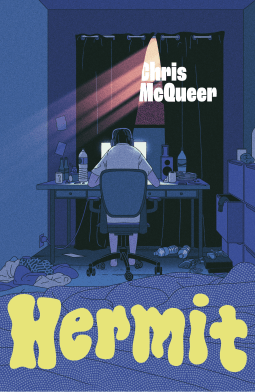
Hermit is a novel about a guy who can barely leave the house, but whose attempts to get away from his mum’s nagging might take him much further than he thought. Jamie is nineteen and since he dropped out of school three years ago, he just stays in his room playing games and watching YouTube videos with his online friend Lee, occasionally venturing downstairs for microwave burgers and fries, and chocolate spread. His mum Fiona despairs, but she also struggles to connect with other people, especially after kicking out her abusive husband. When Lee tells Jamie about a new friend, who says they are both incels and should come down to London to stay with him, it seems like an escape, but it isn’t as simple as that.
Having enjoyed Chris McQueer’s short stories, I would’ve wanted to read this one regardless of the content, but the blurb drew me in too, with the idea of exploring online and incel culture through the perspective of someone who might be targeted by incels online as a potential ‘convert’. McQueer treats it all with nuance, through chapters that alternate between Jamie and Fiona’s perspectives to compare how their similarities led them in different directions, and particularly how online incel and “manosphere” culture preys on people who don’t even feel that connected to its key tenets and claims. Jamie doesn’t care that much about girls until he is told he should be angry at all women for rejecting him, and you see how that makes him lash out at his mum and believe she doesn’t care about him.
There’s an underlying dread that particularly sets in halfway through, as Jamie and Lee go to London, and you know something isn’t going to go well. It’s darkly ridiculous, but also feels horrifyingly real, especially if you know anything about incels or other online communities (for example, the elements in which Jamie didn’t understand the terminology or ideas of incels, but felt like he had to go along with it). Fiona’s story is also moving, not just how she cannot help Jamie or even feel able to tell him that she loves him, but also how she basically had a similar trajectory that was different due to it being a earlier time and her being a woman (and the element where people on Facebook accused her of killing Jamie was darkly real too).
From McQueer’s short stories, I was expecting something maybe surreal alongside the darkly funny elements, but Hermit is actually more of a deep look at feeling like an outsider and the impact these days of certain online communities finding prey in these people, with more dread and sadness than weird elements. It is refreshing to read a literary fiction novel that takes this kind of thing seriously, rather than just having some reclusive incel character as a joke. McQueer makes this a moving look at two people, mother and son, who could be described as hermits, with plenty of humour but not treating them as a joke.
Carrion Crow is a novel about a woman shut in an attic to learn how to be a good wife, in a gothic exploration of polite society and secrets. Marguerite was locked in the attic by her mother, Cécile, with only Mrs Beeton’s Book of Household Management and a sewing machine for company, plus a crow she discovers has made its own within the roof. Cécile appears sporadically to bring food and check on Marguerite’s progress, but Marguerite starts to lose track of how long she’s been there, and why is she fighting to get married in the first place?
Told alternatively in Marguerite’s present and the history of her mother, this novel slowly unravels a story of social position, respectability, and secrets, whilst still not handing the reader everything on a plate. The narrative unfurls in a way that the reader starts to understand things before Marguerite does, creating a sense of dread as you realise what she hasn’t. In particular, Marguerite’s ‘plan’ that has led to her being in the attic is heartbreaking once you realise how her belief, from her mother, in ideas of polite society and what she must do to be allowed what she wants is misguided, but also deeply tied up in class, position, and gender. Queerness is shown in opposition to these ideas of polite society, but also the thing that offers alternative ideas of freedom.
This historical gothic novel is slow and lingering, without an easy answer or way out. I’m not usually a fan of historical novels, but Carrion Crow gripped me, though the backstory elements sometimes felt too drawn out. Fans of gothic novels will enjoy this one, which doesn’t shy away from some more disgusting elements.




 Fiendfully Reading
You must be logged in to post a comment.