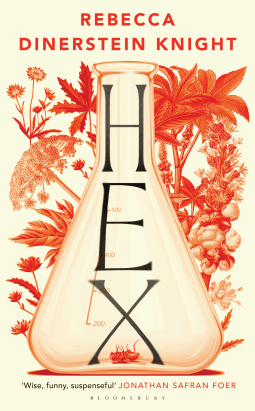
Hex by Rebecca Dinerstein Knight

Hex is a novel about obsession, complicated relationships, and poison set around a university campus. Nell Barber was expelled from her PhD after the death of a fellow student, but is still desperate to keep trying to find answers for the detoxification of poisonous plants. She is obsessed with her advisor and mentor, Joan, who thinks she should try and pursue less controversial work, and they both find themselves in a web of relationships and grudges that may be more toxic than the plants Nell is now growing in her empty apartment.

Hex is a surprising novel, which seems like it is going to be about poison and death, and turns out to be about relationships and obsession. Written in the second person as Nell’s notebooks, the book’s unusual style and lack of real plot won’t be for everyone, but it creates an atmosphere and draws you into Nell’s obsession, which is less about the poisonous plants and more about Joan. The blend of details about plants and Nell’s focus on the other characters works well in giving it the claustrophobic sense of a campus novel that centres around a small group of people whilst using the academic work as a way of exposing elements of the story and characters.

Going into Hex expecting a poison-focused version of The Secret History probably will leave you disappointed, as it lacks the threat of Tartt’s novel, but it is an interesting look at obsessive love and the complexity of relationships, and one for anyone who likes slightly dark novels set at universities.

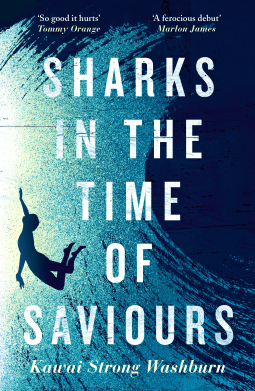
Sharks in the Time of Saviours by Kawai Strong Washburn

Sharks in the Time of Saviours is the story of a family, a miraculous son, and life in modern Hawaii. When Nainoa is seven, he is saved from drowning by sharks, and his parents see this as a sign things are looking up for them. But things aren’t simple for Nainoa, and for his siblings Dean and Kaui who both feel like he has a special place in their parents’ affections. Each of them travels to mainland USA looking for something, but things don’t work out as their parents hope.

It is difficult to know what to expect from this novel, which starts with a kind of mystical atmosphere as Nainoa is saved and becomes a kind of myth, but also looks at the struggles of economic downturn, and later the tarnished American dream. The magical elements, though vital to the narrative and the blended atmosphere of myth and harsh reality, are much less prevalent than you might assume, which works well with the different characters’ senses of the myth elements of the book. Though Nainoa’s narrative is the more unusual, it is through Dean and Kaui that you get a real sense of the novel’s power as their connections to Hawaii and their family become complicated and change, and the dreams or goals they once had become untenable.

This is a novel for people who like stories that combine sadness and harsh circumstances with interesting explorations of place, myth, and people. For many readers it’ll give new ways to think about Hawaii and how people might interact with it as a home and what they might seek in mainland USA.

Only Mostly Devastated by Sophie Gonzales

Only Mostly Devastated is a YA reimagining of Grease, in which a summer fling becomes a complicated school situation. Ollie and Will’s summer fling seemed perfect, but when Ollie didn’t go back home to California but stayed with his family to help look after his sick aunt, he finds himself at a new school in North Carolina. It turns out Will goes to the school too, and the guy from the summer isn’t the same amongst his straight basketball team friends. Ollie doesn’t want to spend all his time pining after someone who isn’t ready for a relationship, but his new friends aren’t enough to distract him, and Will seems conflicted about what he wants.

The first thing to say is that I’ve never seen Grease. I know many of the songs and some ideas from it, but otherwise nothing, and this wasn’t detrimental to enjoying the book at all. The book seemed most focused both on the difficulties of not being straight in high school and navigating that, as well as other teenage issues and family emergencies. The tapestry of different characters and their personalities worked well to make it more than just the synopsis, though Ollie made a good protagonist, caring but also in need of realising when he was being self-absorbed. The amount of the plot that deals with someone trying to make sure nobody realises they aren’t straight did make me worry that it would feature someone being outed against their will (pun unintended), but the plot lampshades this as an issue earlier on rather than doing it.

Only Mostly Devastated is a fun YA romance that knows it is updating a few tropes and playing around with different high school romance narratives. The protagonist is three-dimensional and is given more going on in his life than the romance or the circumstances that cause the plot, and the story is enjoyable if not groundbreaking.

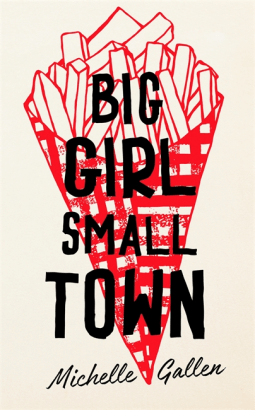
Big Girl, Small Town by Michelle Gallen

Big Girl, Small Town is the story of Majella, a woman with a predictable life that other people find odd, and how a family death shakes up her routine. Majella lives with her alcoholic mother in the same small town in Northern Ireland that she’s always lived in. She works in the chip shop, doesn’t like small talk, and knows her daily routine. Other people seem to think her grandmother’s recent death should have more of an impact on her, but Majella doesn’t see any change in her life, until it turns out her grandmother had a will nobody knew about.

The novel covers a week in Majella’s life, the minute details and the long list of things she dislikes, and uses timestamps and dialect to give a real picture of her reality. The Northern Ireland setting—from her father’s disappearance during the Troubles to the language used in the book—is vital to the novel and gives an insight into the very real kind of world that is fictionalised in the novel. The narrative isn’t so much about major plot points happening as how events have a day to day impact and even big things can become part of the everyday. 

This is a novel that may sound like a lot of books centred around an unusual protagonist whose everyday routine is thrown off, but the setting and facts of Majella’s life make it something different, and a look at being classed odd in a town that has a kind of ‘normal’ that a lot of people would think is odd in itself. Majella is a memorable character who will likely stick with readers after the final pages.

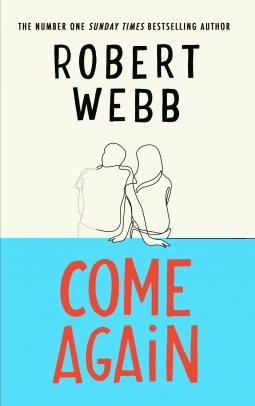
Come Again by Robert Webb

Come Again is a surprising, genre-defying novel about a woman who has recently lost her husband. Since Kate’s husband Luke died, things have started to fall apart, and she can’t help but focus on the fact that he’d technically been ill ever since she met him during Freshers’ Week years ago and fell in love. After dramatically losing her job in shady circumstances, Kate suddenly wakes up in the wrong place: her eighteen-year-old self’s body, just starting university. She has the chance to try and change things, but is that even possible, and what might it mean for the future?

From the blurb, the book sounded like One Day or something similar, a story about love happening regardless of circumstance or across time. However, it turned out to be quite different: a kind of tragicomic love story with a side of dodgy dealings and spies. If it is about anything, it is possibly about grief and about being unpredictable (both characters defying expectations others have of them in the narrative, and the actual narrative itself). It took a while to settle into the novel, with a few details or comments from characters that felt a bit off, but it became more immersive and raised questions about where the plot was going to go next. The tone changes somewhat between the different sections, but it suited the novel which has a kind of funny yet sad quirkiness (also a description that could work for Kate as a character).

Come Again is a light read that blends different genre conventions to be a funny book about grief, moving on, and, strangely, when your life becomes a little bit more like the plot of multiple different bits of fiction. It is easy to imagine it as a quirky film that leans heavily on the different sections having different styles and tones (and the fast pace of the novel would probably suit being adapted into a film).

Haunted Voices: An Anthology of Gothic Storytelling from Scotland

The Haunted Voices cover with a tiny ghost in a tiny jar on top.

Haunted Voices is a collection of spooky stories by Scotland’s oral storytellers, in both text and audio format. The stories are short and varied, including some from archival recordings of past storytellers and others that are distinctly modern involving video shops and ghosts watching Love Island. The collection has a wide range of tales, all featuring gothic elements but with varying levels of terror and humour, and often a sense of locality and oral tradition.

Though the anthology has two elements, text and audio, it is difficult not to think of all of the pieces as how they’d be told out loud, even when reading the book. The variety of the collection makes it exciting to see what is coming next, and the short length of the stories means that readers could easily pick and choose which to read or listen to at what point. As someone who doesn’t listen to audiobooks due to an inability to focus on them, I read the collection first, then went back and listened to some of the stories that had stuck with me, but I imagine that for a lot of people, it will be the audio version that is the real selling point, and the text more of a bonus extra. Some of my highlights were ‘Soul Mates’, a goth love story in a graveyard (there are a lot of graveyards in the collection, as you might expect), ‘the possession’, a tale of hungry ghosts and what they really want, and ‘The Cravin’, a comic yet thoughtful reimagining of Poe’s ‘The Raven’.

This collection features a range of stories, storytellers, and Scottish locations, really showcasing the fact that Gothic oral storytelling is alive and haunting. The audio version will definitely appeal to anyone who enjoys spooky podcasts and similar audio storytelling forms, and the text version is great for dipping in and out of due to the short length of the stories.

(Get the book or audiobook from Haunt Publishing)

You Let Me In by Camilla Bruce

You Let Me In is an eerie gothic novel about the life of one woman and how stories can be true and false at once. Novelist Cassandra Tipp has disappeared, and left behind a long manuscript, a letter to her niece and nephew that starts to unfold the truth behind the murders that she is infamous in the local area for being somehow involved with, though her guilt could never be proven. As her narrative progresses, it is clear there are two stories: one of faeries in the woods, gifts, and blood, and another of a girl mistreated, tormented and tormenting, who imagined an alternate reality. The question is, what to believe?

This is a distinctively written novel which uses a metafictional framing device to pose questions about whether the protagonist lived a life of magic, abuse, or both. As with a lot of modern gothic novels, the gothic elements are there to be questioned as they seem to stand in for terrible realities, but also to feel like a fleshed out, supernatural world. The quirks of the narrative voice—from the bookending sections written as hypotheticals to elements of style and naming—create some of the atmosphere, particularly around the horror of Cassandra’s faerie companion, with whom she has a twisted relationship spanning her entire life. Don’t expect answers with this book: the ambiguities are purposefully there to leave the readers, both fictional and real, asking questions and wondering which stories were meant to be ‘true’ and what ‘true’ might even mean.

You Let Me In is a good example of how the use of supernatural can blur the line between ‘it was all people making it up’ and ‘the monsters were real’. It is a novel that self-consciously only gives the reader as much as the protagonist is being shown to want to share, and is a creepy story however you interpret the narrative. The gothic is a genre for using the imaginative work of the reader as part of the thrill, and that is what You Let Me In does, asking you to be Cassandra’s audience and consider the narrative options. This ambiguity won’t be for everyone, but it suits the novel and genre well.

Kim Jiyoung, Born 1982 by Cho Nam-Joo

Kim Jiyoung, Born 1982 is a novel about a normal South Korean woman and the reasons why she starts acting strangely. Jiyoung’s life story isn’t anything unusual: the second daughter born to a family who wanted a boy, made to share a room with her sister while her younger brother has his own, a good student tormented by boys and male teachers at school, goes to university but doesn’t get put up for internships, and who is expected to give up everything else to become a mother. The book charts that life, up until the present day when, with a young daughter and a husband, she seems to have a breakdown. What has caused this to happen to Kim Jiyoung, and is her story more than just one person’s life?

The novel is being marketed as a sensation in South Korea now translated into English, and it is clear why is so: this is a book that uses the story of one woman to look at misogyny and systematic oppression on a large scale, raising important points using the everyday details of life. The narrative is fast-paced and descriptive, going through the stages in Jiyoung’s life and showing how they aren’t exceptional, but also feel in many ways inevitable, even without knowing that she ends up a depressed mother. Society has given her certain paths to take, and even her fighting against the rigid walls of these paths is contained, decisions both hers and not hers at all. These themes aren’t surprising, but the style of the narrative works to show how everyday it is and how it can wear women down.

This is a short book that makes powerful points about the institutions that contain South Korean women, and indeed women all over the world, using the lens of one character and her relatively usual life. It is both an insight into one country’s society and a reflection of many others, and it is clear why it has been so popular.

The Quarry by Ben Halls

The Quarry is a collection of short stories all told by men and centred around a housing estate in West London. The Quarry Lane estate is a pretty generic estate: dodgy pub, club that changes name, bookies, and people dealing with lost families, addiction, sexuality, and relationships. The stories are all centred around the estate and the people who live there, with locations and people straying across stories and building up a picture both of modern Britain and of the different ways people from the same place live.

Short story collections can sometimes feel disjointed and not part of a whole, but this isn’t the case in The Quarry, which has a real focus and a sense that it could almost be a novel that just happens to only show small snippets of each person’s life. Some of the stories end with a twist or revelation and others are more meditative, like the postman returning to the estate he grew up on for the first time. Halls tells these characters’ stories in individual voices, trying to get across the sense of different ages and lives, but it comes together well in a way that makes the stories gripping rather than too fleeting or not fleshed out enough.

The Quarry is an impressive thing, as a short story collection that feels very much like a whole work. It is at its best when tackling things like addiction, but also very good at showing the ways that the male characters don’t realise what things are like for other people in their lives.

Swimming in the Dark by Tomasz Jedrowski

Swimming in the Dark is a love story set in Communist era Poland, in which two young men meet one summer at agricultural camp, but then must return to the realities of the city. Ludwik is just graduating university and is worried about the future, both his and the country’s. When he meets Janusz they spend time adventuring through forests, swimming in lakes, and falling in love, but then they must return to Warsaw and their very different takes on their own lives.

This is a short, captivating novel that combines a love affair with the grim realities of living somewhere where people can’t get enough food, can’t get a doctor’s appointment, and where bribes and ‘contacts’ are how you get anywhere. It gives an insight into Poland’s history, but also a very personal look into a character full of anxieties and disillusionment. The narrative is told with hindsight, a classic method with a story of love and sacrifice, but the time gap is short so it feels more like reflection after the fact than looking back with nostalgia. Jedrowski combines a lot of detail and elements into a concise narrative that really focuses on Ludwik.

Swimming in the Dark is a Cold War era love story about life in a Communist country and realising you make very different choices even to someone you love. Readers will likely be drawn in by the love story, but then also get caught up in the tension and detail of the setting.