Assembly by Natasha Brown

Assembly is a short, carefully crafted novel about an unnamed narrator preparing for a garden party at her boyfriend’s parents’ country house. The narrator, a Black British woman who works in the City, reflects on her assimilation into the world that it seemed she should aspire to, as she travels from work in central London to the house in the country, and watches the reactions of those around her, including her boyfriend and his parents.

Written in an immediate style that quickly moves between thoughts (like other recent literary fiction in a similar vein, also often focusing on a workplace or woman’s position in the world), Assembly draws you into questions of race and class and the decisions people make like an observer pulled in too close. The result is a fascinating look at ideas of millennial success (the narrator owns a flat in London, has health insurance, has money) and what it takes to get there (work too hard, always be scared, and still have to be a diversity role model, standing up to tell people to follow you). At the same time, there’s the fact that the narrator will never actually ‘get there’, because she will never be seen as the same as others in her office, in the society her boyfriend and his family socialise in, and in myriad other situations, due to race and gender and who gets to be seen as “British”.

The cutting, even disorientating style and the short length of the novel work well to not find solutions or answer questions, whether about the narrator’s life and what she will do after the moments shown in the novel, or about the questions of becoming the ‘right’ sort of person. The book addresses the latter directly as the narrator confronts the idea of why she’s working in finance rather than something more progressive or at least not directly building class inequality. There are no easy solutions, but the narrator is trying to take control of her own story, at least.

Assembly is short, engrossing literary fiction that plays with race, class, and belonging in modern Britain. I found it easier to get into the style than with other books with similar style, and the structure building up to a moment before the party began gave it a real sense of precision and that it went exactly where it was planning to.

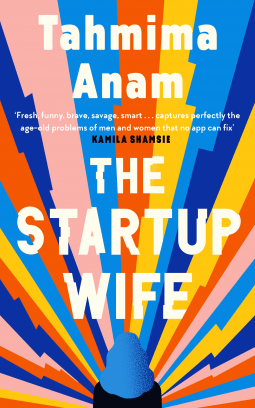
The Startup Wife by Tahmima Anam

The Startup Wife is a novel about big tech, dreams, and the reality that follows, as a tech startup becomes something more than its co-founder imagined. Whilst working on her PhD, Asha reconnects with her high school crush, Cyrus, and they fall into a whirlwind romance. Newly married, they and their friend Jules come up with an idea for a social network based around Cyrus’ ability to get to the bottom of what rituals individuals crave in their lives, tailored to their interests. As Asha codes the algorithm for this alternative to religion, Cyrus’ charisma makes him the face of the platform, and soon they’re the tech ones to watch out for. As popularity grows, Asha starts to feel like Cyrus—and men with money—are making the decisions, and when a big change is decided against her will, their platform might not be the same again.

I was drawn to this novel by the premise, and particularly by the look at a female programmer and co-founder in the tech startup world. A lot of the narrative is focused around the building of the company and the challenges as it becomes successful, and how Asha and Cyrus’ relationship works in the background, and then near the end the main narrative tension happens, after some foreshadowing comments earlier. This means it can feel a little slow at times, and possibly more so for people who don’t enjoy the side helping of startup/hipster satire, but Asha is a gripping main character, and there’s some vivid supporting characters too. 

The big tension later in the narrative (without wanting to give spoilers, though this might make it guessable so you might want to skip this paragraph if you’re worried) is very similar to an episode of Black Mirror, which seems to possibly be alluded to in the novel. Though it works in the story, after the build up it was a bit disappointing for the conflict (and inevitable backfire) to be something already in a TV show, especially as the platform itself is a clever way of imagining new technology and also building a story around a character who has to play a central part in it. The narrative also has a subplot around the apocalypse, with a tech incubator that has a survivalist focus coming into play as the novel ends with the start of the pandemic, which felt like a fitting note if a bit weird given we’re still very much living through it.

I enjoyed The Startup Wife, particularly Asha and what happens as she realises she isn’t being given enough credit for her role in basically creating the platform. At times it felt quite a bit like The Social Network meets Black Mirror, but as I like both of those, and it also comes with a sharp look at the treatment of women in the tech industry, this wasn’t a bad thing. It’s a very modern novel and one that does benefit from an awareness of big tech/issues around social media platforms to some extent, but is also generally enjoyable as a story of what happens when you build a business and a marriage at once.

The Other Black Girl by Zakiya Dalila Harris

The Other Black Girl is a tense social commentary thriller about what happens when a New York publishing house gets a second Black girl in the office. Nella is in her twenties and trying to make it at Wagner Books, but as an editorial assistant and the only Black person in the office, it isn’t easy. When Hazel joins the company and the desk near hers, it seems like a chance to have an ally, but they’ve barely had a chance to bond before it starts to seem like people like Hazel a lot more than Nella, and notes begin to appear on Nella’s desk telling her to leave Wagner now.

Going into the book having seen it being compared with Get Out, I was aware something was going to be up, but this slow burn novel lingers on the edge, occasionally cutting to another narrative that you’re waiting to intersect with the main one, but mostly showing Nella in the office as she tries to improve her reputation at work and work out what’s going on with the notes. Without wanting to give spoilers, it is a clearly done concept that provides a sly take on Black people’s success in predominantly White spaces.

The characters are mostly there to keep you guessing about whether they might be friend or foe, especially at Wagner, and the way the book ends means you don’t necessarily get answers. Nella’s best friend Malaika provides some much needed outside perspective, especially as you don’t see much of her boyfriend Owen (which may be for plot reasons), and the mysterious side narrative shows a bit of the wider picture without taking it too far away from Nella’s story. Though some people might like more depth into some of these characters and plotlines, it’s easy to see why the narrative was written this way, adding a shadowy, sinister side even to the ending.

This is undoubtedly a debut novel that people will be talking about, combining thriller with elements of satire and also a look at microaggressions in an office environment. Even if you feel like you’re not interested in books about toxic work environments or read too many, this is something different, original and clever and with lingering dread.

Black Buck by Mateo Askaripour

Black Buck is a satirical take on ambition, race, and the world of sales, as a Black Starbucks employee sudden finds himself offered a job at a tech startup. Darren lives in Brooklyn with his mother, who hopes he can find something to do beyond making coffee for a living (and he doesn’t even like coffee). When the CEO of a new tech startup offers Darren a chance to work there instead of at Starbucks, he warily agrees, and even makes it through the ‘hell week’ of training. To be a salesman, though, he becomes ‘Buck’, someone his family and girlfriend no longer recognise, and soon everything becomes larger than just Buck, expanding to help more people of colour become part of the sales workforce.

Written as if it is a self-help memoir from Buck, with tips about sales breaking out of the main narrative, this is a distinctive novel that takes a biting look not only at working in sales, but at how people change due to ambition and also how white people react to organisations excluding them to support people of colour. The combined absurdity and energy of the novel sweeps you along, with time jumps every so often to move the narrative forward, and it is a gripping look at somebody who forgets to think about the consequences of their actions whilst also dealing with the racism and microaggressions of white coworkers. The narrative often veers into ridiculous directions and the characters can be extreme, but you expect that from the genre and satirical tone: you’re meant to wince at the dark comedy and the fact bad things happen to characters, all part of the whirlwind plot.

People looking for realism or gritty novels perhaps won’t like this one, but anyone who enjoys sharp exposés of particular professions and worlds will enjoy Black Buck, a book which challenges ideas about race and success (there’s a great moment about ‘race’ being something people don’t want to hear about, but then ‘diversity’ being something they do).

All The Things She Said: Everything I Know About Modern Lesbian and Bi Culture by Daisy Jones

All The Things She Said, subtitled ‘everything I know about modern lesbian and bi culture’ is an exploration of being a queer woman in the 21st century, through the lens of one person’s experience and also including snippets of conversations with a range of people. Each chapter focuses on a different aspect of life, from media like film, TV, and music, to things like dating, the internet, and mental health, and Daisy Jones combines personal anecdotes and favourites with broader looks at what has been popular over the last twenty years, especially as some lesbian and bi culture has become more mainstream for various reasons.

There were two aspects of this book that particularly stood out to me: the inclusivity, and the personal perspective. In an act that was accidentally kinda prescient of some of the things discussed in the book, before reading All The Things She Said, I first read through the blurb and looked up the author to check that it wasn’t going to be likely to include transphobic or exclusionary stuff. In fact, the first chapter explicitly gives the book a broad approach, pointing out that a lot of the queer culture found within isn’t necessarily linked to specific ideas of gender, attraction, or other facets of life and identity, and has snippets of interviews with people like trans and non-binary lesbians to get different perspectives. This was a welcome setting of the scene, and it was also interesting in acknowledging that there aren’t clear divides between different facets of LGBTQ culture in many ways, and people often choose what feels right to them.

The other element of the book I found important was the personal perspective. There’s no way anyone could write a comprehensive look at any kind of culture as it is in the present day (or past twenty years, as the book broadly looks at), because there’s no universal experience, so using a personal lens alongside the more journalist side works well to distinguish what is included, and why. Jones’ own experiences help to show the significance of things like club nights and pop culture moments (for example the titular song by t.A.T.u. which I think most people around a certain age vividly remember as a song and music video – one of the most relatable parts of the book for me), and quotes from interviews with other people help to bring in further perspectives.

I found this a highly readable and funny book that manages to cover quite a lot of ground, not functioning as an explainer but more of an exploration, looking at why things are or were popular and how they relate to queer people’s lives (the film chapter, for example, is mostly about Carol and the internet’s love of Cate Blanchett). As someone who is non-binary, I enjoyed that some parts were relatable (particularly loving skate trainers and baggy jeans and t-shirts as a kid) and other parts less so (for me personally, that included: current TikTok culture as I’m a bit too old, a lot of modern queer woman fashion, and much of the music that wasn’t t.A.T.u.).

An inviting book that feels very much like the internet (a lot of the first chapter is basically explaining things that anyone who has been in LGBTQ spaces online will know/have seen debated/etc), All The Things She Said is a modern way of looking at aspects of modern culture. It focuses on some serious stuff, like the prevalence of mental health issues and the closing down of queer venues, but also on the joy of finding your people, and finding the things that feel like home.

We Can Do Better Than This: 35 Voices on the Future of LGBTQ+ Rights (ed. by Amelia Abraham)

We Can Do Better Than This: 35 Voices on the Future of LGBTQ+ Rights is a collection of short essays by various contributors that set out the present and future of areas such as healthcare, community, and visibility for LGBTQ+ people. Covering topics across the UK and USA but also Uganda, Russia, Bangladesh, Brazil, and more, the book manages to get a great breadth of material from people doing work or who have personal experience in these areas. It opens with essays on the topic of ‘safety’, highlighting the dangers faced by many people in the present day, and then does on to cover visibility, dating, love and family, health and social care, going beyond the binary, and community and organising.

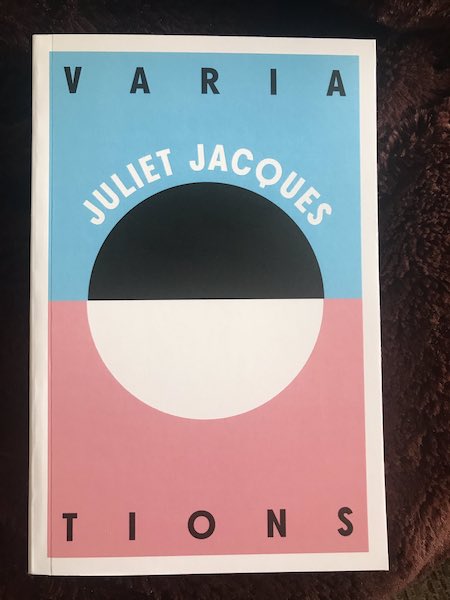
What is particularly impressive the range both of topics covered and of people involved, with famous names in various areas contributing to the collection. Everyone is going to have essays that particularly speak to them—I personally found Juliet Jacques’ look at transphobia and the UK media particularly powerful as it charted the history of the UK media’s treatment of trans people, which obviously is a pressing and depressing subject. A lot of the international essays taught me about what is happening in other countries, and it’s good to get that balance alongside the UK-focused contributions. I also liked Yasmin Benoit’s look at asexual visibility, especially non-white asexual people, Amelia Abraham’s essay on gendered sporting frameworks and how they need updating, and Travis Alabanza’s imagining of a trans future without surveillance.

I didn’t expect the collection to be able to cover so many different interesting topics and futures for LGBTQ+ people, but by keeping the essays short, the book both covers a lot and stays readable and engaging, suggesting you should go away and find out more if it’s something new to you. It serves as a reminder that globally there is still a lot to do and also that by imagining futures and setting out the change that needs to happen, more people can be drawn into being a part of making that change.

The Secret Life of Albert Entwistle by Matt Cain

The Secret Life of Albert Entwistle is a novel about a postman set to retire, who gets a new lease of life to try and hunt down his lost love, George. Albert has been a postman all his life, living in a small Northern town and keeping himself to himself, living with just his cat since his mother died eighteen years ago. When a letter from work tells him that he’s due to retire in a few months, he realises that he doesn’t want to be lonely, and starts building up connections with people in the local community, and building the courage to look for George, the man he loved and lost in his youth.

The sort of book you have to call ‘heart-warming’, The Secret Life of Albert Entwistle has deep meaning underneath its light and sweet story and characters. In particular, it highlights the way people hide things for such a long time (like sexuality, but also the issues Albert had with his parents) and the importance of finding people you can talk to and be open with. The trauma Albert has due to these things in his past means he doesn’t expect people in the present to be kind or sympathetic, and his amazement at people being supportive as he comes out to them shows how deep that was ingrained.

The main narrative is around Albert hunting down George, who is a big presence in the novel though mostly in flashbacks, and George being in the drag scene is a nice way for Albert to discover some of the gay culture he’s missed due to fear. The subplot in which Albert becomes friends with Nicole, a young single mum whose boyfriend’s family won’t accept her, feels typical of the genre (person stuck in their ways makes a new friend who is different to them and pulls them out of their rut), but works well to show friends can come from unexpected directions.

The depiction of an older gay man coming out is important and poignant, and hopefully this sort of book will open the eyes of lots of people who wouldn’t think about the issues faced due to decades of fear and trauma. It’s an ideal story for this kind of book, a light read about someone who is lost and lonely finding hope and people, as it shows the need for different kind of community and also for self-acceptance. Not necessarily the kind of genre I’d usually pick up, but definitely the kind of narrative I want to read and see in the world.

sikfan glaschu by Sean Wai Keung

I was excited to read this collection as I loved Sean Wai Keung’s poem in the Haunted Voices anthology, and it did not disappoint! The format of focusing on different Glasgow restaurants to explore identity, language, and authenticity worked really well (‘tinto tapas’ was one of my favourite poems in the collection and was very much on this theme) and gave a sense of travelling through the collection around Glasgow, thinking about who you are and where you belong. Some of the poems also explore lockdown, in terms of food and getting outside and also pandemic racism, and they had a wry yet relatable approach (especially ‘wing rush’ which is about whether anyone knows if you’ve already been out once that day) which I also really liked.

I love Sean Wai Keung’s poetic style and these poems were clever and enjoyable, a fresh take on identity and what is authentic (cuisine or otherwise).

The Rules of Revelation by Lisa McInerney

The Rules of Revelation is a novel about secrets, the past, and the future, as Lisa McInerney delivers the third in her series of books about Cork and one teenage drug dealer now turned musician. Ryan Cusack is back in Ireland, looking to create an album with his new band, but there’s still someone in Cork looking for him, wanting him to keep quiet about the past. However, that’s not so easy when Georgie is also back in Cork, trying to make Ryan’s drug dealing past common knowledge, and another old secret relating to Ryan puts pressure on both his band and his ex-girlfriend. Still, there’s one old lady trying to look out for Ryan.

I wasn’t sure whether to read The Rules of Revelation, as I enjoyed the previous two books in the series, but I read them in the wrong order (I happened to read The Blood Miracles without knowing it was a sequel) and found it hard to keep track of the plot in the first one. I couldn’t remember the other two and wasn’t sure how it would go, but I’m glad I did pick this one up, as I found it enjoyable and much easier to get into the world of the characters even when I’d forgotten them than I expected.

The other two felt notable in being more up to date small time gangster stories, and The Rules of Revelation also feels up to date, but less of a gangster narrative this time. Instead, it’s a lot more about secrets and scandal, sex and gender, and how to reinvent yourself. It wasn’t too hard to distinguish between the different narrators and it worked quite well to bring the stories together, though Georgie’s felt like it lost steam partway through. The stakes never felt particularly high, but that suited the fact it isn’t a book about gangsters, but about people trying to forge new paths even with their pasts on display.

I did find the book a bit too long, as it does meander and give a lot about what the characters are thinking, but it gripped me more than I expected as I thought I was going to spend most it trying to remember who the characters are. The start had to do quite a lot of ‘here’s the major things you need to know about this person’ seeing as they weren’t being introduced from scratch, but I appreciated being given the information even if it was a bit slow.

As someone who likes gangster narratives, but also likes books that address actual modern issues and aren’t stuck with a dated mindset, I appreciated The Rules of Revelation for being up to date and looking more at the treatment of female characters, sex, trauma, class, and gender that makes up the fallout from the previous two books. I found it readable without remembering the previous two books, but other people might prefer to feel like they knew the full histories of the characters and ensure they’ve read the other two books first.

Crying in H Mart by Michelle Zauner

Crying in H Mart is a memoir about grief, family, and food, as musician Michelle Zauner tells stories about growing up with her Korean mother and American father, navigating her identity in Korea and America, and losing her mother after a cancer diagnosis. Throughout the book are tales of food, eaten and cooked, and how important food has been to her in her relationship to her mother, her other Korean relatives, and to getting through things.

The hype about this book is definitely deserved, as it is both emotional and powerful, and also leaves you hungry, really feeling the importance of the food described throughout and thinking about how food can create bonds between people. I found myself eating spicy egg ramen whilst reading it and saving YouTube videos about Korean cooking, significant in the book as Zauner looks to learn how to make the food her mother made, to watch later. The exploration of grief and illness is sad but also witty at times, getting across how complicated both emotions and families can be.

Written in an engaging way, Crying in H Mart does as maybe good memoirs should and draws you both into Zauner’s anecdotes and makes you reflect on your own experiences. It is a testament to mother-child relationships that are messy but full of love, and also to how much food can define moments and memories.