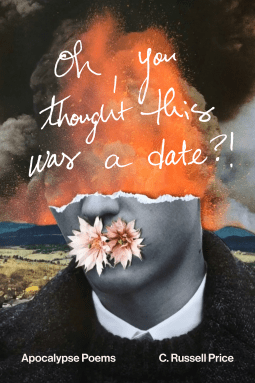
oh, you thought this was a date?! is a poetry collection exploring the apocalypse through trauma, desire, and the realities of America. The collection is split into sections, each with a quote, dictionary definition, ‘Soundtrack’ and ‘Ritual’, and the book feels like a ritual overall, a chance to speak about brutality and destruction through lyric and song. There’s a lot of music, titles and lyrics, infuses throughout the book and it almost feels like the hazy soundtrack to a wasteland, playing whilst poems explore kinds of apocalypse, trauma, vengeance, and personal histories. At times, in poems like ‘Ars Poetica: We Can Take Our Turn, Singing Them Dirty Rap Songs’ but also through its own structure and tone, it is also a manifesto for poetry that isn’t “fluff”, that does things rather than gently meditate, and that’s a good message to leave with: poetry should have power, and can feel dangerous to those who’d rather it was hidden.
The Kingdom of Sand is a novel about ageing, friendship, and sex, as an unnamed narrator, an older gay man living in rural Florida, reflects on his past and present. Told in episodes, including a central one about the slow death of a close friend, the narrator considers his position in the world: living alone in the house his parents bought, having to go to his sister’s for the holidays because he doesn’t want to tell her he’d rather be alone, visiting cruising spots, and remembering the past, parties in New York and AIDS and how he ended up staying in Florida.
This is a highly readable book that I felt drawn into, with some initial shorter sections and then a much longer section in the middle that focuses on the narrator’s older friend who is dying, and their shared love of movies. The book reflects a lot on ageing as a gay man in America, especially in terms of loneliness and connections, but also on knowing and supporting people who are ill and dealing with what you are left with when people die. That does make it pretty melancholy, but it’s not entirely tragic, and the narrator’s ways of fitting in and around the world in which he lives, even as it changes, brings a perspective that is complex and contemplative.
I can’t think of many other books that explore the lives, friendships, and sex of older gay men, and this one brings to life not only the protagonist, but the Florida setting as well, exploring a place known for old people and retirement. I’m not always one for books made of different length ‘episodes’ rather than a single plot, but I found this one easy to get into thanks to the writing style and perspective.
Double Booked is a novel about a twentysomething woman working out her sexuality and finding who she wants to be, as she’s drawn between two parts of her life. Georgina is 26, with a long-term boyfriend, a job teaching music to children, and a carefully planned calendar. After her best friend Sophie drags her to a gay bar, she watches a lesbian pop group and realises that she needs to get back into performing, and that she’s quite into their drummer. When a spot opens up in the band, she works out she can live a double life, thanks to her careful schedule: sensible Gina sometimes, and keyboardist-in-a-band George at others. However, even with wardrobe swapping and a versatile new haircut, it might be too much to try and live out the parts of her life separately.
Despite the blurb describing this as a romcom, it’s heavier on the comedy and the finding yourself plotline, as the protagonist comes to terms with being bisexual and tries to compartmentalise her life to have to change too much. Romance is obviously part of this, both in terms of her long time boyfriend Doug and possible new love interests, but a lot more of it is about Georgina dealing with her musical and romantic future, working out her own style rather than diving head first into what she thinks are the queer tropes she needs to follow, and realising she doesn’t have to live in a rigidly structured life since her dad died. There’s fallouts, romantic drama, and misunderstandings, but also she finds her feet and works out that parts of her life can come together, even if they must also change.
It was nice to have the ‘discovering yourself’ plotline for someone older than you might get in a young adult novel, especially in terms of trying to navigate coming out as bi when you’re a woman in a long term relationship with a man, and to see the fact that Georgina didn’t have all the answers, but instead had to spend the book trying to work out what was best for her. There’s some good comedy around the fact she initially throws herself into stereotypes, being worried about liking the right music or dressing right, but the book didn’t feel a need to try and explain these too much. I did feel like she needed to meet some LGBTQ people who loved dogs, seeing as the book offered a lot of cat-loving queer people with the joke that only Georgina seemed to think both were good, and I was expecting it to end with her finding other people who liked dogs (and the cover is kinda suggesting that dogs are for her old life/straight people). The book also explores open relationships a bit, especially people perhaps opening up relationships not always for the right reasons.
Double Booked is a light read, a comedy about someone in their twenties coming out and navigating their sexuality and their sense of self, and has a satisfying ending suggesting that Georgina is working out what’s next. I was very glad that the protagonist’s love of Friends at the start of the book wasn’t really a recurring thing, though, as I think that could’ve got a bit grating. I could imagine a sequel which perhaps leans more into the romcom territory and/or focuses on one of the other characters (Rudy felt like a great side character who didn’t get much of a role). If you’re looking for something deep or more incisive, this maybe isn’t the right book, but it’s easy to engage with and fun to read.
So Happy For You is a darkly comic novel about a maid of honour who has to try and survive the wedding—literally. When Robin’s childhood best friend Ellie asks her to be maid of honour, she wants to say no. She doesn’t believe in marriage, which has become a desperate industry in America due to hugely declining rates of marriage and skyrocketing divorce, and doesn’t want to deal with straight-people rubbish when she could be at home with her partner, Aimee. When Robin says yes, she hopes this will mean Ellie won’t go in for any of the strange rituals that have become part of weddings, but as celebrations begin, it seems that Ellie will do anything to get her perfect day.
I wasn’t a fan of Laskey’s previous novel Under The Rainbow, but the wild summary of this book made me want to read it, and it certainly was quite a ride. Told from Robin’s first person perspective, you immediately know that she and Ellie will try to kill each other. A lot of the book is building up the characters, telling the story of Robin and Ellie’s friendship intercut with the journey to the actual wedding ceremony, including a bridal shower and bachelorette that show Ellie might be taking things a little far, and meeting the other members of the bridal party (though by the end, they fade into the background). This all means that by the end, with a few moments of tension (like Robin’s nut allergy that suddenly appeared as a plot point), you know something is going to happen, and the book is just drawing out getting there.
The big centre of the book is the idea of weddings, and what would happen in a slightly alternate version of America in which weddings starting going out of control as people become desperate for marriages to work out (think gender reveal parties that start wildfires or cause deaths, but for weddings, basically). Robin is writing a thesis on this whole turn of events, which provides motivation for actually going to Ellie’s wedding, and also has opinions on weddings and marriage that will chime with a lot of queer people, even without this somewhat-extra version of what weddings might become. The whole concept of wedding traditions and what they mean to a marriage is satirised, though marriage itself comes out okay, with a sense that maybe Robin hasn’t given Ellie’s fiancé a chance, and her self-righteousness and anger maybe doesn’t always come from a good place. Despite being a satire of wedding culture in many ways, So Happy For You isn’t really saying anything new about weddings, other than pitting two extremes of idea against each other, but it presents a funny picture of what people might do and offers an entertaining ride that feels like a fairly regular comedy up until the parts when it becomes darker.
If I’m honest, I might’ve expected the book to go a little darker or weirder (probably saying something about my taste in literature), or to have sustained the threat for a bit longer (the ending feels like a ridiculous thriller, with the kind of drama I used to like in Point Horror books as a child, but much of the rest of it is build up without danger). However, I like the ridiculousness of the premise and the flaws of both Robin and Ellie, and this is a fun, trashy read that asks what if instead of mocking bizarre traditions involved with life events that society deems worthy, you were drawn into a deadly version of them?
Boys Come First is a novel about three thirtysomething Black gay friends from Detroit, trying to get their lives on track. Dominick has just moved back to Detroit from New York City, after losing his job and longtime boyfriend at the same time, and he’s keen to catch up with his best friend Troy, a teacher whose school is under threat and whose boyfriend is more work than he should be. Troy introduces Dominick to Remy, his other best friend, a hotshot estate agent caught between men who won’t commit, and the three of them become firm friends as they try to sort out their love and work lives.
I was drawn in by the cover of this book, which really emphasises the friendship that is at its heart with a beautiful design, and it was definitely worth it. The chapters move between the perspectives of the three protagonists, bringing a lot of backstory and detail as you see them navigating love, sex, and work, all whilst thinking about what Detroit means to them against the backdrop of gentrification and the loss of Black history and culture in the city. It is packed full of location detail (it’s one of those books where the city is basically another character), but also a lot about the different characters and their drama.
At its heart, the book is about three friends trying to come out of their thirties where they want to be, and it has an uplifting ending (and a few good ‘uh oh’ moments of drama) that also shows that friends really are vital. It feels like it would make a great TV show, adapted to keep the messy drama but also the comedy, as it has the character focus that comes with a lot of witty, modern TV looking at millennial lives.
Covering race, sexuality, family, gentrification, and a whole host of other things in a witty, modern way, Boys Come First is a novel that plunges you into the protagonists’ lives, packed with observations and harsh truths. One for people who like books that feel like the drama from the group chat, but with social commentary too.
100 Queer Poems is an anthology of, as the title suggests, 100 poems from across the twentieth and twenty-first century that evoke queerness in some way, with the introductions by each editor exploring some of the definitions and ideas behind this concept. Split into seven sections, the poems follow a range of topics and styles, with some in translation, so there’s likely to be something for most people to enjoy, regardless of what sort of poetry you prefer.
For me, I found myself often most drawn to poems by poets I’ve already read (Mary Jean Chan, Matthew Haigh, Peter Scalpello, Richard Scott, Danez Smith), which possibly suggests that I’m already good at finding the poetry I like, and it was nice to read various poets together. I found myself drawn into the collection and accidentally stayed up too late reading it all in one go, almost in suspense for what poem would come next. I would like to have a physical copy (I read the book in PDF form) to use as a proper anthology, to flick through and dog ear and find that specific poem you want to read again at that moment.
Probably my favourite poem in the collection is one I think I’ve read before, Harry Josephine Giles’ ‘May a transsexual hear a bird?’, which I don’t think will ever stop being such a powerful poem and one that strikes a real message about poetry and what can be in it, offering with that an interesting commentary on what should or could be included in any collection of queer poetry. Surprisingly, I also found myself really drawn to the ability to reread Auden’s ‘Funeral Blues’, a poem I’ve read a lot but not recently, in the context of poems from a range of decades, but especially alongside a lot of modern poetry. Some other poems that stood out to me were ‘Go Away and Then Come Back by Martha Sprackland, ‘I See That Lilith Hath Been with Thee Again’ by Shivanee Ramlochan, and ‘Ganymede’ by Jericho Brown.
As the introductions touch upon, it is refreshing to see a major publisher bringing out such an anthology, which feels like the sort of book that all queer poets and poetry fans need a copy of, both as something to return to and as a representation of a current moment (which the acknowledgements suggest, referring to the idea of there being another one of these in ten years). As with any anthology, people are going to prefer different poems or wonder why certain things weren’t included, but it is a great chance to survey some of the queer poetry out there from the past 100 years or so. It’s a jumping off point rather than a closed book, as any good anthology should be, and I think it just being readily available and visible is still important.
We Had To Remove This Post is the story of a content moderator and how she came to leave her job, looking into the dark realities of what lives under our social media. The novel opens with Kayleigh explaining to a lawyer that she’ll recount what happened when she worked as a content moderator for a social media platform she cannot name, and that’s what she does: explains why she needed money, how she trained and became a moderator, made new friends and a girlfriend there, and then how things started to go downhill, with her colleagues’ newfound interests in conspiracy theories. The question is, did the content affect Kayleigh too?
This is a short, sharp novel that can easily be read in one sitting, a book that doesn’t waste space with extra detail but focuses in on Kayleigh’s job and her relationship with Sigrid, building towards her leaving. I assumed it would have a dramatic end to her being a content moderator, but actually it’s a little more ambiguous, not quite offering up all the details and ending on a slight cliffhanger. In this way, I felt like it reflected the content Kayleigh moderated: she talks of context, of captions and of not caring about other videos from the same account, not knowing what happens to people after the content is or isn’t taken down.
Some people might find the offhand dark and traumatic content—or the conspiracy theories that the workers start to pick up from the content they have to moderate—too much to handle, but the chilling way that this content becomes part of their everyday, their jokes, is an important part of the book. I’ve read about content moderation and I think this novel sits quite nicely alongside factual accounts (there’s a list of further reading at the end) as something that uses shock value a little differently, and really utilises the first person narration to make you think about perspective, just as online content is governed by perspective. The focus isn’t really on the content itself most of the time, so if you’ve read anything about content moderation, nothing in the book is likely to be very shocking, but what hits harder is the reactions of the people behind the moderation.
As someone very interested in internet culture and evaluating the ethics and hidden elements of tech and social media, I knew when I kept hearing about this book that I needed to read it, and I wasn’t disappointed by it, as it delivered a sharp jab about the impact and complexities of content moderation whilst using its narrative style and structure to reflect the fast-paced nightmare of said moderation. It doesn’t offer answers, or give you the closure that the content moderators also don’t get with each post, but instead will make people talk and gives a chilling look at whether exposure to content will make people change.
Tell Me Everything is a novel about a therapist who needs to work out what she wants in life and what she's avoiding dealing with. Natasha has been living with her ex-girlfriend for ages, going on dates, drinking too much, and feeling like a mess. Her twin sister Natalie seems to have much more in order. Not that her clients know this: as a therapist, she has boundaries. When she moves in with an old friend and meets Margot at an event she's running, it seems like Natasha is pushed even further, unsure whether to deal with the past or look towards the future.
I was expecting this book to be more of a romcom, but actually, it's more of a feel good read about a protagonist who needs to repair relationships and take some of the advice she might tell her clients. There's a lot of characters with their own little dramas—like Natasha's friend Poppy whose perfect work and boyfriend might not be perfect—but the centre of the book is Natasha's own ability to control her life, rather than let things—especially her love life—spiral. Though the title centres around Natasha's job as a therapist, the book isn't really about that, especially later on, but really focuses on her relationships with other people, including her twin sister, mum, and estranged dad, as well as friends, ex-girlfriend, and new people she meets.
Her relationship with her sister is particularly good, with the book not falling into the trap of making them antagonistic twins because they're different, but instead making them close, and Natasha clearly cares a lot about her sister but also her sister's children. The plotline around Natasha and Natalie reconnecting with their dad, who came out as gay and left when they were children, is very sweet, and unsurprisingly ties in with Natasha's own issues. I also really liked Charlie, one of Natasha's best friends and a fellow therapist, especially the way that they call Natasha out for being a bad friend, but are also there for her when she needs it.
The ending doesn't resolve everything, but does bring together a happy ending that is comfortingly predictable (though one element is purposefully a little bit of a twist). Like Laura Kay's previous book The Split, this is the sort of easy read that brings LGBTQ stories to the feel good light fiction genre.
You Made A Fool of Death with Your Beauty is Akwaeke Emezi’s journey into the romance genre, as a woman looking for artistic success and happiness after tragedy falls for someone who makes things complicated. Feyi lives in New York with her best friend, Joy, and is maybe ready to try sex and dating again, after the death of her husband a few years previously. What starts as a slightly messy situation with two men who are friends, Milan and Nasir, turns into something much more dramatic, as Nasir invites Feyi to the island he grew up on, to stay with his dad and have her work at an art show there. But when Feyi is immediately drawn to Nasir’s father, Alim, everything is going to get a whole lot messier and Feyi has to evaluate what she really wants.
I didn’t know what to expect going into this book, which I wanted to read as I like a lot of Emezi’s other books, and was intrigued what they’d do with the genre. For me, it took a while to get going, and at the start I wasn’t sure what was going to happen or how it would stand out, as the opening scenes didn’t quite draw me in, other than Feyi and Joy’s friendship. However, once Feyi and Nasir travel to Nasir’s father’s house, the book changes, becoming deeply suffused in its setting and opening up to a whole range of emotions, particularly the grief and trauma that both Feyi and Alim are dealing with. This made it a lot more gripping to me, watching Feyi, often frustrating as a protagonist in a classic ‘why are you doing this’ way, try and navigate her situation, and the feelings she has for Nasir’s father.
It’s hard to describe or review the book without some spoilers about the main relationship. The romance isn’t a simple one, and will probably put a lot of people off the book (though this shouldn’t be all that surprising to people who’ve read The Death of Vivek Oji, though that wasn’t a romance), as it is between the protagonist and someone who seemed like her love interest’s father, though Feyi and Nasir are never actually officially together, and it becomes clear that she’s much less into him than his is her, even though she doesn’t tell him this soon enough. Both Feyi and Alim are bisexual and this is a highlight of the book, in the way that this impacts their connection in small ways. I don’t read that many romance novels, so I can’t really judge the book’s romance elements particularly well, though I liked that it is at the literary end of the genre, and does feel quite fiery and lingering.
One of my favourite characters was Joy and there wasn’t enough of her, particularly as the book wasn’t set in New York for the most part, and I would’ve liked to have seen more of her and Feyi’s friendship, especially as different forms of love and friendship are so important in the book. Possibly some of Joy was being held back, so I wonder if there might be sequel (the ending seemed to leave Joy with somewhat of a romantic cliffhanger).
This book really turned around for me, with a slow start and then becoming something quite layered and intriguing, focusing a lot on the characters’ emotions and the protagonist’s relationship to the world in general as much as the romance. It’ll probably divide people, either because of the relationship or the ways in which the book fits into either romance or literary fiction, but I found it surprising and vivid, whilst still being full of quite messy drama.
The Arena of the Unwell is a novel about a music-loving guy in London who is drawn into a toxic relationship with two older guys in the music scene. Noah is twenty-two, works in a record shop (when he can force himself to be awake there), spends his nights at gigs and pubs, and is coming to the end of his allocated therapy sessions. After he and his friend Mairead go to a secret comeback gig by their favourite band Smiling Politely, Noah runs into Dylan, a bartender he’s wanted to approach for ages. Soon, Noah is drawn into the complicated relationship between Dylan and his flatmate Fraser, and as everything else falls apart around him, Noah is drawn into a co-dependent world, all as Smiling Politely prepare to release their first album in years.
I really enjoyed Konemann’s non-fiction book The Appendix, but I was particularly drawn to this book from the premise, particularly the promise of it being suffused with a grimy indie music scene, and that did not disappoint. Though the actual band in the book are at arms’ length, as we see them through interviews and news coverage as Noah would, the book feels deeply part of the music world, and in how important to basically all elements of Noah’s life this is, from work to fun to friends to love. The offhand comments and jokes (like Mairead’s girlfriend and Noah’s coworker Jenny having been an emo) really build up a picture, and one that makes you both want to be at a gig and really not, seeing as Noah isn’t exactly using music in a healthy way a lot of the time.
The book is told from Noah’s first person perspective, with the previously mentioned press snippets about Smiling Politely intercut (I very much enjoyed that these were often cut off like real news sites if you weren’t a paying member). As a lot of the book is about mental health and a toxic relationship, it can be intense, but also funny. The relationships between Noah, Fraser, and Dylan are really well depicted, with the reader able to feel each cutting moment and see how they were hurting each other. I really enjoy books that do co-dependent, messed up relationships well, and this is a great example, and being from Noah’s perspective meant you saw how much he started to ignore everyone else when he really needed them.
A really notable element of the book is the depiction of queerness in the indie scene, whether that’s Noah trying to navigate the fact all the bands are singing about women they think wronged them, his repeated belief that he can’t fit into any gay world because he doesn’t fit in, or the hints of how the music scene shown has more space for guys who are apparently straight but maybe down for something with a guy than actual queer people. Queerness is just part of the novel, and that feels refreshing and not something I’ve seen in this kind of genre (though, admittedly, I’m not sure what kind of genre it is—music scene novel?).
A coming of age novel for people who like or came of age themselves deeply into music, The Arena of the Unwell spirals the reader into not only sticky floors and spilt pints, but a hard-to-put-down toxic relationship amidst the realities of NHS cuts for mental health services. It puts you on the streets of Camden and leaves you with a sense of what might have changed or stayed the same since the earlier heyday of indie bands.
You must be logged in to post a comment.