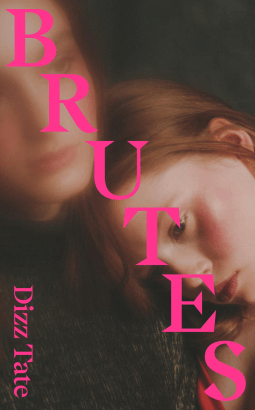
Brutes is a novel about teenage friendship and its strange wildness, as a group of thirteen-year-olds obsess over a missing girl. In swampy, theme-park-filled Florida, a group of friends—all girls, with Christian an honorary girl—are obsessed with Sammy, a preacher’s daughter. They watch her, but then she suddenly goes missing, and the group watch the town instead, with a sinister sense of hunger underneath.
Most of the chapters are told from a first person plural perspective, with the group of thirteen year olds the ‘we’ telling the story, and this really sets up the conceit of the book, the weird friendship group, the ‘brutes’ as their mothers call them, watching and wishing. The narration is very effective, showing the strange bonds and the ways in which this breaks down, as well as a dark story of trying to get more than a run-down Florida life. Some of the chapters are told from the perspective of one of the group as adults, and this works less well because they’re very fragmented and don’t quite come together with the rest, although some of these chapters work better than others.
An ambiguous book that dives into a vivid Florida and a specific group mindset, Brutes is likely to divide between people who like the style and ambiguity, and people who wanted more definitive answers about what is going on.
Home is a novel about someone who escapes a cult, and then ends up going back to try and save their sister. Zoe works in a coffee shop and lives in a little flat, trying to build a life she never imagined. When a man known as the Hand of God appears in her flat, the past returns to her, the cult of the Children she escaped and their compound, Home. What the Hand of God tells her makes her know she has to return, but going back won’t be simple.
The narrative is told from a split perspective, one from ‘present’ day Zoe and one from her past in the cult, as she navigates the horrors of her past and what the cult is still doing. The story is quite slow burn, almost entirely set with the ‘Home’ of the cult, so you slowly pick up their beliefs and lies. The cult itself is very focused on gender roles and has an almost Handmaid’s Tale vibe at times, and there’s a few moments in the book that suggest why people are drawn to it, which was quite interesting, particularly as it comes from the perspective of Zoe who was born into the cult.
The book is tense without quite being a thriller, as it is more focused on character and the realities of a cult. Personally, I would’ve liked to see more of Zoe’s life outside of the cult, as most of it is through flashbacks and glimpses, and it would be really interesting to think more about the impact of it on her, but the cult and the physical location it occupies is the focus of the book. The horrors are mostly alluded to rather than shown, so though a lot of the stuff that goes on is quite heavy, through a combination of Zoe’s lack of awareness and trauma, you don’t see everything, which means the book feels a bit more subtle than using shock tactics. There are some conversion therapy type parts that are quite intense though.
Home has a gripping story that explores a pseudo-religious cult and what happens when an escapee has to go back. I enjoyed the character stuff more than the thriller element and found that the book explores some interesting things. I liked the exploration of gender within the book, particularly how the cult frames a gender binary and then there seems to be a place for Zoe outside of that, but only in what turns out to be a horrifying and manipulative way. The fact that Zoe finds queer community outside of the cult is a nice touch too.
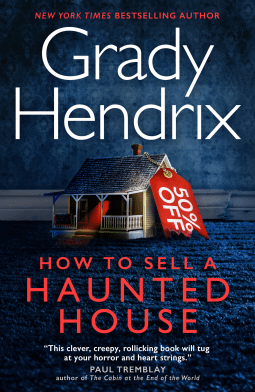
How to Sell a Haunted House is horror writer Grady Hendrix’s newest novel, about a woman who returns home after her parents’ death and is faced with a lot more than she bargained for. The sudden death of her parents throws Louise—she has to leave her young daughter Poppy with her ex and travel back to Charleston, where she has to deal with her estrange brother Mark, who she’s always seen as getting anything from their parents that he wanted. She wants them to sell the house and then she can get away, but first they have to deal with the house and everything in it, including their mother’s extensive puppet collection.
I love the high concept nature of Hendrix’s books, but sometimes the concept overshadows the book a bit. In the case of this one, the concept is actually a much smaller part of the book than it might seem, and the heart of the story is a creepy story of puppets, grief, and family secrets. The start sets up a fraught family situation between Louise and Mark, driven not just by their parents’ deaths but by the conflicting views of each other they hold. As the unnerving horror starts to trickle in to the plot, so do the revelations that their family has been hiding things and that not talking about things does not mean they did not happen that way.
The bizarre horror of some of the book (evil puppets mostly) sits strangely well with the deep sadness that also underpins it: the ways in which people deal with emotion, misunderstand each other, and resent things they cannot make sense of. The central puppet seems to find people when they need it, aka when they’re emotionally vulnerable and looking for something else to take control of their life, and both Louise and Mark react to events in the book by doubling down on who they think they are, haunted maybe by what they do to cope. A point later in the book after Mark and Louise have been through something horrific, shows how horror sometimes misses out the part afterwards where what someone had to do in the heat of the terrifying moment still has terrible consequences.
How to Sell a Haunted House is not at its core a haunted house book (see The Haunting of Hill House, Tell Me I’m Worthless, and the YouTube video ‘Control, Anatomy, and the Legacy of the Haunted House’ for interesting ideas about what a haunted house might be), but it is a creepy puppet book and a family grief book. It has the ridiculousness of Hendrix’s work combined with some tense emotion as two siblings work through their lives and why their family is the way it is. Some people may be disappointed that the title is seemingly purposefully misleading, but what you get instead is a look at family being more of the ‘haunted house’ than a house ever could.
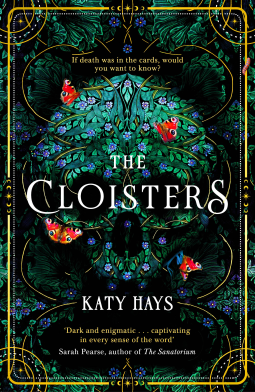
The Cloisters is a novel about a woman who moves to New York City to work in a museum, only to find herself drawn into strange Tarot research, questions about fate, and a toxic web of relationships. Ann moves from her hometown in Washington to New York, ready to start a summer role at the Met. When a mistake leads her to end up working at The Cloisters instead, a small museum and garden focusing on medieval and Renaissance art, Ann meets Patrick and Rachel, both working at The Cloisters and intrigued by the history of Tarot. As Ann finds herself drawn into the work and into Rachel’s world, things start to spiral out of control.
This book is being marketed as very much a modern version of The Secret History, and the focus on Tarot seems perfect for that, fitting into the contemporary internet interests in astrology and Tarot that probably are liked by people who also like the dark academia genre. The premise, with a less well-off protagonist moving across the country to find academic success, sounds very much like The Secret History, but like many similar books, it lacks the actual atmosphere and ever-increasing stakes of Tartt’s novel, focusing more on Ann’s torn allegiance between Rachel and Leo, Ann’s love interest and gardener at The Cloisters.
The novel starts promisingly, but a lot of the narrative doesn’t quite go down the dark routes it seems it might and doesn’t really linger with the questions of power and fate as much as a mystery story and some flawed characters. The revelations in the plot are neither surprising nor particularly bring tension (Ann as the narrator doesn’t really draw out any kind of sinister atmosphere and the big moments in the narrative don’t really get enough drama), but it is a decent story, particularly if you focus more on Ann’s journey from an uncertain person leaving her past behind to someone with more of a sense of purpose. The wider main characters don’t actually interact as much as you might expect, and any interesting elements between Ann and Rachel in terms of their dynamic aren’t really explored, either in terms of a Talented Mr Ripley-esque wanting to be her or any kind of sexual tension.
Though on paper The Cloisters sounds like a perfect novel for the moment, with Tarot and dark academia and a young woman trying to prove her research-worth, for me The Cloisters didn’t quite delve far enough into its characters and concepts. Plenty of fans of books like The Secret History will probably like it (and maybe if you’re more interested in Tarot than me, that side of thing will particularly appeal, as there’s a lot of interesting history and lore), but as with many books trying to be this kind of novel, this one doesn’t quite feel dark enough or build up enough atmosphere.
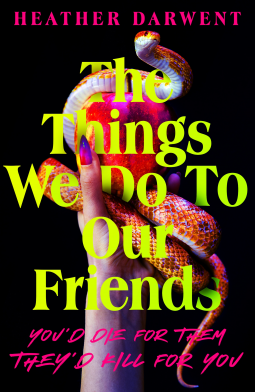
The Things We Do To Our Friends is a literary thriller in a dark academia type vein, in which the protagonist is drawn into a group of students who start up a secret project. Clare is starting at the University of Edinburgh and putting her past behind her, but she’s picky with who she wants as her friends. When she meets fellow History of Art students Tabitha and Imogen, and their friends Ava and Samuel, it seems that Clare has found what she was looking for: rich, beautiful friends who live somewhere far nicer than a student house, who make up plans that grow to include Clare, like going off to France. And, it seems, their new project, which Clare will have a vital role in, but it seems they might know what she’s running from.
The blurb suggesting this book was The Secret History but set in Edinburgh drew me in, and rarely can books live up to that comparison in my opinion (except perhaps The Lessons, but that’s just because it works for me personally). This one starts with a strange prologue scene and then we’re immediately in Clare’s first person narration. As she emphasises how she doesn’t have money, has to get a bar job, and feels like an outsider, the comparisons with The Secret History seem very vivid, and I thought it was going to be very similar, but just with History of Art instead of Classics. The narrative style works to lead you in, making you aware that Clare is telling this story with hindsight, but for me, the atmosphere wasn’t quite as vivid as I’d hoped for.
The actual “project” part of the book is a bit more generic and less shocking than I would’ve liked too, and not related to the university setting or initial focus on three of the group studying History of Art. Without wanting to get into spoilers, the narrative does engage quite interestingly with possible consequences of what they get into and is fairly gripping, though I think in general the stakes tended to not feel very high for Clare and the ending wasn’t entirely satisfying for me, seeming to be more about telling you how warped she is.
I liked the Edinburgh setting, though it fell away later in the book, which didn’t really sustain the atmosphere of the start throughout. A lot of the time I felt like it was too busy trying to be like The Secret History but not quite getting the dark eccentricity of Tartt’s novel as being a selling point. I also felt like the interpersonal relationships between the group weren’t really explored as much as they could have been, perhaps because the book is more focused on the plot element of their project as it goes on. I think people who are more interested in a dark academia type thriller rather than something that pulls fully on the twisted, toxic relationships and dark actions would maybe enjoy this book more than me, though it did keep me interested.
As usual, I feel a need to give a shout out to my favourite books I read in 2022 that were not published this year. Apparently this is how I found the particularly good fiction this year (particular note for The Haunting of Hill House and Lost Souls for both living up to expectations) and a poetry anthology that I know I will be returning to over and over again.
See my favourite fiction and poetry books of 2022 for the more up-to-date offerings.
fiction
The Haunting of Hill House by Shirley Jackson – My review of this at the time was simply “Oh right yeah it is THE haunted house novel, fair.” and I stand by that. The writing, the atmosphere, the house. Watch Control, Anatomy, and the Legacy of the Haunted House on YouTube for more great haunted house stuff.
Jonny Appleseed by Joshua Whitehead – Someone living in the big city has to return to their roots is a classic formula, and in this book, young Two-Spirit Jonny Appleseed has to attend the funeral of his stepfather and bring together the elements of his life.
A Safe Girl To Love by Casey Plett – Any short stories that can make it onto one of my lists must be impressive as it’s a form I often have issues really enjoying, but Plett’s range of trans girl experiences is a fantastic collection.
We Are Made of Diamond Stuff by Isabel Waidner – I read this whilst trying to kill time sitting outside and in a cafe and it really transported me into a surreal world of British culture to explore national, queer, and migrant identity in a very weird way.
Lost Souls and Exquisite Corpse by Poppy Z. Brite – It was finally the year, after wanting to since my teenage horror/vampire loving years, to read both Lost Souls and Exquisite Corpse and they were so far up my street. The former is The Lost Boys run through a Dennis Cooper novel (who I also read a lot of this year) and the latter the serial killers in love novel you didn’t know you needed. I’m actually glad it took this long to read them so I could fully appreciate them rather than just like the vibes as a teenager.
Summer Sons by Lee Mandelo – As I wrote when I finished it: “Loved this southern gothic street-racing in-love-with-your-best-friend suspicious-academia haunting horror novel.”
poetry
Ports by Calum Rodger – This pamphlet from SPAM Press reimagines poems through the lens of video games and I just really enjoyed the playfulness and form, plus what you could get about poetry, narratives, and games from doing that.
Postcolonial Love Poem by Natalie Díaz – There is a lot of poetry about bodies, but this collection really stands out. I’d been meaning to read it for a long time and was very happy that I did.
We Want It All: An Anthology of Radical Trans Poetics ed. by Andrea Abi-Karam and Kay Gabriel – A beautiful anthology that’s perfect if you’re a poet as it’s packed full of inspiration and great if not just because there’s a lot of great innovative and experimental trans poetry in there.
As I mentioned yesterday, I read a lot of great poetry in 2022, so it was tricky to put together this list. A lot of my poetry reviews boil down to ‘vibes good’ and ‘imagery or lines that just hit me in the chest’ so this isn’t the most articulate list of why these collections are good, but just some of my favourites of 2022. Links to full reviews in the titles where I’ve written them.
Please Press by Kat Sinclair – A powerful pamphlet that I sadly cannot say anything else about because I am many miles from my copy currently and I did not write anything about it at the time. But go get it from Sad Press and see why it’s great.
Limbic by Peter Scalpello – I ended up with two copies of this, one from each of the book subscriptions I had in 2022 (Cipher Press and Lighthouse bookshop’s poetry subscription), which tells you it must be a good intersection of my taste. Sex, queerness, tracksuits, tiny moments – there’s plenty to enjoy.
All The Flowers Kneeling by Paul Tran – A collection exploring violence and storytelling that was so compulsive I accidentally stayed up late reading it, not something I tend to do with poetry.
A Little Resurrection by Selina Nwulu – Some of my favourite parts of this great collection was the use of imagery and the engagement with space, as poems look at race and place and bring in elements of climate and convenience.
Yo-yo Heart by Laura Doyle Péan – Powerful poems moving through a breakup to show the political nature of healing, filled with wit and sadness.
The Moral Judgement of Butterflies by K. Eltinaé – I loved the form of these poems, which explore trauma and immigrant experience and the idea of home. One of the books I got from my Lighthouse bookshop poetry subscription and wouldn’t have discovered otherwise.
At Least This I Know by Andrés N. Ordorica – Going to steal a line from my own review to sum it up: “I knew I was going to like the collection from the first poem ‘November 16th, 2014’, which is a perfect opening for it: a moment at border control, encapsulating fear and desire for a place to belong, and a poem that almost makes you laugh and cry at once.”
It’s been an interesting year for me for reading. As well as a lot of new and upcoming books, many of which did not make the cut for these lists, I read a lot of horror (including a month of it in October) and plenty of poetry. So much of the poetry was good that I’ve split up fiction and poetry into two different ‘best of 2022’ lists, so we’ll start with fiction.
A lot of fiction I read this year was good, but not so good as to be one of my top books, so it is quite a brief list this year. Not only that, but two of them aren’t actually from 2022, only first published in the UK in 2022, which I’ve decided to count on a whim. Links in titles to full reviews where I’ve written them.
Nevada by Imogen Binnie – I’m counting the UK publication this year as making it released in 2022, though clearly it’s not from 2022. I actually read it right at the start of the year, before this rerelease, but still. Classic trans roadtrip novel.
Portrait of a Thief by Grace D. Li – This book was just very fun and I thought highly of it for that, plus it’s basically a genre of a film I enjoy. Chinese-American students do heists to steal artefacts and have various drama along the way. Ridiculous but great to read.
The Arena of the Unwell by Liam Konemann – A coming-of-age novel about male mental health and queerness in the grimy indie music underbelly that retains humour whilst looking at a toxic relationship and the realities of NHS cuts.
Shredded: A Sports and Fitness Body Horror Anthology ed. by Eric Raglin – Such a fresh way of viewing both body horror and the whole world of fitness, with a really diverse set of sports, characters, and takes on the brief. There was a lot around who can find places within sports and fitness (and what kinds of bodies), which felt like the perfect use of body horror.
Summer Fun by Jeanne Thornton – Truly an epic. Another one where I’m counting the UK publication as making it a 2022 book, this is a complex tale of a trans woman obsessed with 60s band the Get Happiness and their mysterious leader B—. Fascinating look at music, creativity, self, and constructing stories and histories.
Scream is an Object Lessons book which explores screaming, combining personal essay elements with a look at the variety of screams in the world, from fear to joy to catharsis. Seidlinger’s own music taste and growing up provide ways into some of the discussions, like alternative music and rollercoasters, and other elements focus on pop culture like Munch’s The Scream and film screams.
The Object Lessons series always interesting for such short books can combine, in different amounts, personal and analytical, with authors using their own experiences to explore the titular concept in each case. This one definitely appealed to me and it contains some of the things I expected—like the Scream films and fear—but also other elements I wouldn’t’ve guessed. I enjoyed the discussion of musical genres that use screaming, as I remember some of the 2000s fads for nu-metal and screamo and how the screaming element felt divisive, and I learnt about the different styles of scream-related singing. Scream has a lot of personal essay elements and it was very interesting to think about how these various scream-related things could say a lot about feeling out of place or alternative when growing up.
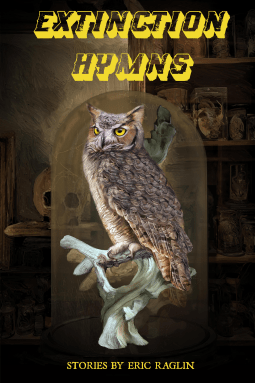
Extinction Hymns is a collection of horror fiction that explores weirdness, extinction, and humanity. There’s a huge range of stories in the book, from a monstrous angel helping a woman with drug addiction to killing Nazis in the death metal scene with magic (and many with less extreme summaries), but there’s a common look at how we treat other people and the planet, as the title of the collection might suggest.
I really enjoyed the variety of the collection, with a lot of fresh concepts, and I never knew where the next story would take me. Some are obviously horror takes on things—like ‘A Most Bulbous Congregation’ and conversion therapy or ‘The Last of Her Kind’ and preservation of species—and I really enjoyed these, which all had different vibes but said some interesting things whilst having some horrifying imagery. Some of the other stories were more focused on weirdness, on unnerving things and strange situations. Stories like ‘Floaters’ and ‘Boning’ combine violence with sad medical concepts and leave you with things to think about.
As with any short story collection, there’s some that jump out and others which blend in more, but Extinction Hymns is a collection with variety that offers a look at some of the darker, weirder sides of life. Having already read Raglin’s ”Til the Sun Wheel Turns No More’ in Antifa Splatterpunk, I was looking forward to this book, and it didn’t disappoint.



 Fiendfully Reading
You must be logged in to post a comment.