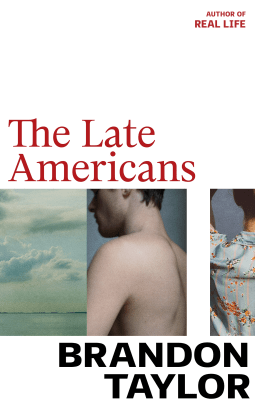
The Late Americans is a novel that weaves together the lives of a range of young people in Iowa, exploring relationships, sex, class, race, and searching for your future. A group of dancers are looking to see what they do when their college course ends, various friends test their dynamics with sex and arguments, and, eventually, some of them go to a cabin for a last vacation before they leave Iowa.
Each section of the book tells a chunk of the story through a focus on a particular character or two, mostly within a particular friend group though some characters are much more on the periphery than others, and you continue to see characters and their narratives even once their particular chapter is over. I was expecting this structure to be more confusing than it actually was: it isn’t a style of novel I tend to enjoy, but in this case I felt I could easily start to pick up how everyone wove together after the first few chapters and the perspective changes meant you go to see various viewpoints and senses of character dynamics. The writing has a distinctive style, occasionally purposefully at arms’ length, and it may take a moment to get used to, but then it does bring an interesting vibe to the novel, a sense of zooming in and out, seeing into the lives of complex characters who often make mistakes and put pressure on their relationships.
Even if you’re not usually a fan of novels that move between a range of characters in a broader group, The Late Americans may be worth reading (also, I found Taylor’s Real Life just fine and preferred this one). It depicts a messy group of people who have different takes on the world, but are all looking for their future, and does create something coherent out of the cacophony.
Y/N is a surreal novel about a woman who quickly descends into obsession with a K-pop idol and believes she is the only person who understands him. The narrator is a Korean-American woman who lives in Berlin and had no interest in K-pop or fandoms until she happens to go to a concert with her roommate, during which she discovers Moon, the youngest member of a globally famous boy band. She is immediately obsessed, writing fanfiction where you can insert Your/Name (Y/N), and then suddenly Moon leaves the band, and she ends up on a quest to South Korea to search for her obsession at the cost of everything else.
This book is a fascinating idea: turning the story of fandom and obsession into surreal literary fiction that questions identity, self, and what obsession and love really mean. Initially, it can be hard to pick out quite what it is going on, as the book is dreamy and disjointed, purposefully not really telling you that much about the narrator as she doesn’t feel any need to tell you much beyond her obsession, and once you start getting snippets of her self-insert fanfiction as well, which is even weirder, some people may find it too much. However, I really liked how you drifted through the prose, with a lack of control that feels like what she encounters as she feels like she must find Moon, that she is destined to know him because she’s the only person who understands.
The book also has some interesting commentary on the globalisation of K-pop and fandoms, in terms of languages, origins, and even authenticity of self and what that might mean in different places. This all links together with identity and loneliness, and the narrator’s strange connections with people as part of her quest to be closer to Moon, to find him and settle what she sees as a key part of herself. I imagine that a lot of people would expect quite a different style of book to be about fandom culture, maybe one that delved more into the specifics and commentary on fans, rather than more of a boundary-less journey into the surreal world of one woman, but it works effectively for me to question what people really use to give meaning to their lives and how hard it can be to express that, as the narrator struggles to really explain clearly what her obsession is about.
I enjoy this style of literary fiction and the subject matter brought a fresh angle to the book. It’s a short novel that’s easy to read in a couple of sittings and once you get into the style and the fact that you might not always know what is going on, there’s a lot to get out of it.
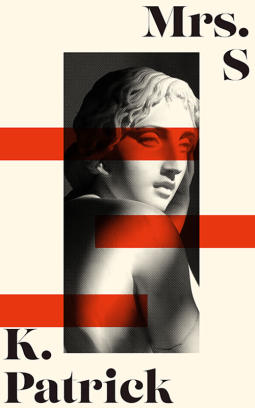
Mrs S is a simmering novel about a love affair between staff at a girls’ boarding school. The narrator has moved from Australia to England to work as the matron at a boarding school, where she finds herself an outsider, not only in accent, but in being obviously queer. She becomes fascinated with Mrs S, the headmaster’s wife, who seems so different, and yet they are drawn together, eventually starting a secret affair over the summer, but they have to decide what it means for them.
I keep hearing about this book and it lives up to the hype, written in a beautiful way that defies specificity (for example, no characters have names—Mr and Mrs S being the closest—and all of the students are just Girls) and yet tells a very particular story of butch identity and embodiment. Though the love story is the titular focus and centre of the plot, the book also tells a story of a butch lesbian finding both community, through a fellow staff member, and more of a sense of herself and how she wants her body to be. The rigid structures of the school serve as a backdrop to this more fluid, queer sense of being, and the students’ transgressions against the rules, whether justified or unjustified rules, bring a parallel sense of roles, rules, and defiance.
As a literary love story, readers might focus on the writing and fluid style, but it feels that the depiction of queerness and butchness is particularly crucial and the style cannot be separated from that. Mrs S is a book to languish with, yet with plenty to think about.
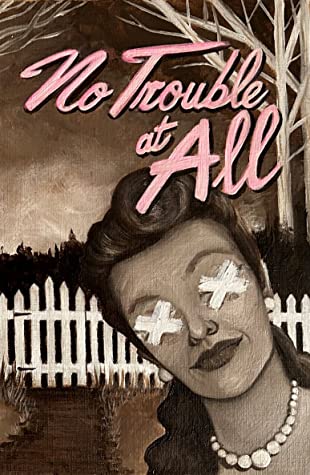
No Trouble At All is an anthology of horror stories centred around politeness in various forms, from the hidden violence that comes with a polite veneer to strange promises you might be drawn into and forced to comply with. The fifteen stories within the collection are quite varied in terms of what ideas of politeness, polite society, or hospitality they engage with, far more than I expected when I came to the book with an image of unnervingly polite characters hiding terrible horrors in my head. There’s a lot of engagement with how other people treat you and how you treat other people, again in a range of ways, and what is most notable across the stories is the kinds of relationships and what goes said and unsaid in the name of politeness.
The stories vary in terms of the forms of horror they involve, and I did prefer some of the more extreme ones, like ‘Anger Management’ about a family with a strange method of dealing with stresses in their life, as I found the concept really stood out and it really explored what might be required to stay ostensibly polite to others. The ideas of promises and contracts also plays out in stories that look at deals with demons—I really liked how ‘Acid Skin’ told the story of an unusual wish in a contract that goes in a very different way to how you might expect, twisting the typical narrative of wishing for something with obvious downsides. The closing story, ‘Welcome to the New You’, offers something that’s more of a dystopian horror and it is interesting how the theme of the anthology, politeness, plays into it without being the main plot point.
Some of the other stories were less engaging for me personally, as the stories are quite varied and some didn’t quite grip me with their concept or execution in the sharp way I tend to like from a short story, especially a horror story. Probably other people will like these more, as it is often true of anthologies that everyone likes different stories within them. The polite horror concept is definitely an interesting one, looking at the undercurrents running beneath politeness or societal expectations, and whilst I would’ve preferred it to have more dark stories in it, I appreciate how there’s got to be a fair number of stories with more lingering horror that lurks underneath the veneer.
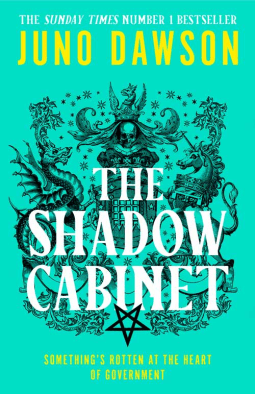
The Shadow Cabinet is the second in Dawson’s Her Majesty’s Royal Coven series, following on from the first book left off in this alternate modern day where there are witches and warlocks secretly living around the world. Book one’s cliffhanger becomes some of the focus of this one, as Ciara is now impersonating her sister Niamh to try and work out why she was helped to come back, as well as keeping Theo, Elle, and HMRC off the scent about the truth of who she is. There’s also the warlock Dabney Hale, escaped and after power, so Leonie sets off after him to try and find her brother. And then there’s the bureaucracy of HMRC and the Shadow Cabinet, where the British government actually know about the existence of witches.
Just like the first book, there’s a lot packed into this one, with chapters from a range of characters’ points of view and lots of threads to follow. The narrative starts slow, with a lot needing to happen and be set up before the big conclusion to the book, and then starts to pick up later on, before a climax that resolves more than I expected for a second book in a series, whilst still leaving plenty of loose threads (and a cliffhanger, like book one) for the next one. It takes a while to understand how the title is going to come into play, and it’s a nice element that it vital to the plot, but also doesn’t appear that much as there’s so much else going on.
The book focuses a lot around misogyny and, like book one found ways of both explicitly and implicitly tackling transphobia, The Shadow Cabinet does similarly with misogyny and with what can be broadly termed the ‘manosphere’, with multiple groups of men who think their beliefs about the place of women and witches to be correct. The uneven power between witches and warlocks is particularly interesting, and though it wasn’t delved into that much, it would definitely be something to address more in book three: magic in the books is very binary and even unfair, and it would be good to see more about that, as it is clear characters have different view about it.
As there’s so many characters and so much going on, you see varying amounts of each of them and their inner lives and motivations. Ciara is central to this book and I really enjoyed her story, as it brought in layers of complex morality and questions of agency that stands out against the black and white morality at points in the first book. I liked the use of demon summoning as something akin to alcohol or drugs in terms of being addictive and a way to escape your reality, and it would be really interesting to see more of the darker side of this series. Unsurprisingly given Dawson’s YA skills, Theo and Holly are some of the best characters, though they don’t get a huge amount of plot in this one, but it seems like that may change for book three.
As someone who isn’t a big fan of fantasy, I appreciate how Dawson weaves together the magical and non-magical worlds in this series, combining interpersonal drama (that always ends up relevant to the main plot, too, in some way or another) with big dramatic magic stuff. The worldbuilding comes up when needed, but I could enjoy this one without remembering every detail from the first book.
The Shadow Cabinet is a solid sequel that really follows on from Her Majesty’s Royal Coven, but also adds in some deeper exploration of the divided world of the books. I enjoyed the darker directions it went, particularly due to having Ciara as a main character, and I hope the aftermath of the events continues to be explored in the next one and the morality is messy and complicated, as it brings a lot of depth to something that could otherwise just be a straight ‘good’ and ‘evil’ story. Also, I hope Leonie and Chinara catch a break at some point!
My Own Worst Enemy is a romantic comedy novel about an up-and-coming actress who runs into someone with the same casting as her in an audition, who also happens to be just her type, and they spark up a rivalry that threatens to turn into something else. Emmy Clooney is obsessed with acting and came top of her year at drama school, but now she’s graduated, she’s floundering, not quite getting anywhere and overthinking everything. At an audition she meets Mae, who looks similar to her—short, dark hair, masc clothing—and is, in Emmy’s eyes, far more charismatic. Clearly, they must become rivals, as there’s not much room in acting for two people like them going for roles, but things get more complicated than that.
This has a classic ‘enemies to lovers’ set up, combined with a romance between two butches, so it is likely to appeal to plenty of people looking for those elements. Emmy makes a lot of classic romantic hero mistakes—she makes a lot of assumptions about people and their thoughts and motives without actually checking, she assumes that her new crush must be much more popular and confident than she is—and though she can be frustrating, she’s also written in a way that does make sense to have some of these traits, particularly in such a competitive business. We learn less about Mae as what we see is through Emmy’s eyes, but the hints towards more than her exterior are interesting. Emmy’s flatmates (who are also her best friends) are fun supporting characters (and believable potential London flatmates), though Emmy’s pizza-obsessed dad’s disapproval of her acting felt a bit random, as his entire character is ‘loves pizza and doesn’t outwardly support her acting’.
The twists and turns of Emmy’ new relationship, the queer Twelfth Night production, and Emmy’s relationship with her mum bring a lot of the later plot, with one character in particular a bit of a comedy villain who raises red flags from the start, but that is often the case in romance novels. This is a fun novel, a light read that doesn’t delve deep into things, but keeps the enemies to lovers plotline and the acting world at the forefront.
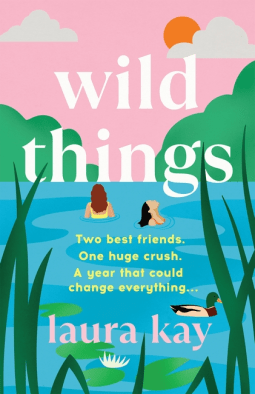
Wild Things is a romantic comedy about a woman who resolves to be more wild and ends up moving to a falling apart house in the countryside with her three friends, whilst hiding from the fact that she’s in love with one of them. El has been stuck doing admin at a newspaper in London for years, where the only perk is that she can see her best friend Ray, who she also has a crush on. After El starts trying to do a wild thing a month on Ray’s suggestion, El finds that she’s not really enjoying these wild things, until the wild thing is a suggestion for El, Ray and their friends Will and Jamie to move to a house a 45 minute train journey from London and to attempt to do it up. As they start their queer (apart from token straight Will) commune, can El handle living so close to Ray?
This is exactly the kind of light romcom that it’s easy to get into and read quickly (I stayed up late to finish and then write this review), as you follow El’s ups and downs. Though her crush on Ray, and Ray’s presence in general, is important in the novel, the romantic plotline isn’t the only thing in the book, as there’s also the whole moving to the countryside with your friends element, which is more of the concept of the book than the romance is. In light of the housing crisis, it’s a concept that isn’t so far away from reality, even if this version of moving with your friends to be a queer commune is very idealised and simple, because it is a romantic comedy. The vision of the countryside and the village they live in is very much how characters who lived in London would see the countryside, and probably if you grew up in an English village, as I did, then you do question a bit how harmonious it would actually be, and if people would be so community-spirited, but it is meant to be escapism, and maybe aimed more at people who have lived in cities or large towns more.
The narrative is very light and clearly going to end up happily (the main troubles in the book are the crush, somewhat absent parents, and a dead-end job), which makes it ideal for people looking for that sort of thing. It is cosy and sweet and though it isn’t really the kind of thing I would usually read (it’s more saccharine I think than Kay’s other books, which I’ve also read), I did enjoy it, and it had a satisfying romcom plotline.
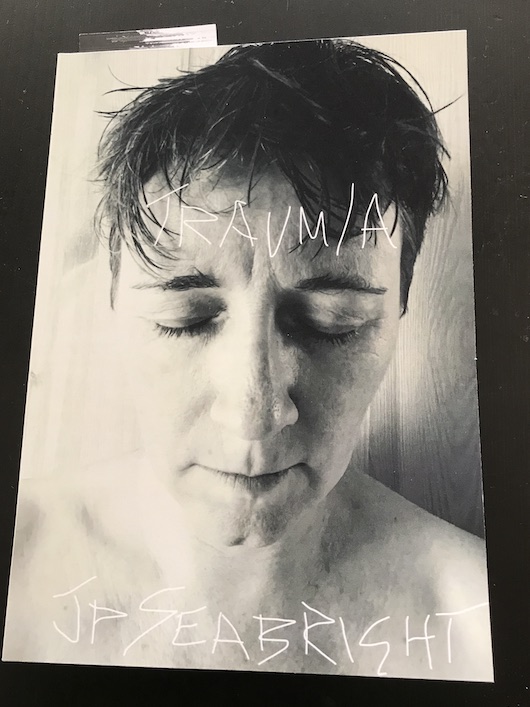
Traum/A is a collection of experimental poetry that explores an alphabet of trauma and living with it, taking different forms of poetry and visual work to push the limits of meaning and what a poet might share or not share. There’s some clever uses of form to talk about trauma (‘Trauma Porn [Inverted]’ might be my favourite because it so effectively makes its point) and a real range of formats on the page (for example, the typography of ‘Notice’, found poem ‘EMDR’, and the disintegrating power of central poem ‘there is a hole in the centre of everything’). The range and structure of the collection really reflects the many forms and experiences of trauma and the complexity of the brain, using disintegration and experiment to make visceral poetry, and each poem feels fresh and different within a collection that is very much a complete whole.
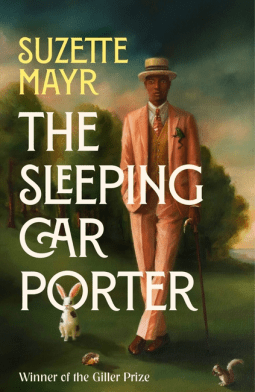
The Sleeping Car Porter is a historical novel set in 1929 about a gay Black sleeping car porter. Baxter works on the cross-country train in Canada as a porter whilst he saves enough money for dentistry school. He relies on the tips from white passengers, who he must appease whatever they want, whilst trying to work with the sleep deprivation that comes as part of the porter job. When a mudslide strands the train, the drama of the passengers and of the postcard of two men that Baxter found on the train and has been storing in his pocket will come to a head.
This is a novel that can be slow to get going and it takes a moment to get into the style of the book, especially as it opens on a different train to the main narrative is going to be set on. At first, I wasn’t sure if I would like the book, as I was interested by the blurb and the specific historical moment in terms of the porters, race, and sexuality, but the book didn’t seem to live up to it. However, as the book progressed, and particularly as you got to know both Baxter and the other passengers on the train more, it became more gripping, with the passengers’ dramas providing low level intrigue alongside the stresses of Baxter’s situation: needing to make enough money, fear of being fired or being imprisoned, and lack of sleep causing hallucinations.
The insight into the world of railway porters at this time (and after the novel ends there’s a list of references showing the research that went into the novel) is fascinating, particularly their labour conditions and the unpredictability of not knowing what the passengers might report them for, all whilst hardly able to get any sleep for days. For Baxter, dealing not only with the work and the power of the white passengers over him, but also having to hide his sexuality at all costs, you see how precarious his existence is. The ridiculousness of the spiritualist character and the seances provides a different tone to the serious despair of Baxter’s existence, showing the disconnect between the well-off passengers and the porters.
The Sleeping Car Porter wasn’t a book I got into immediately, but by the end I was invested in the narrative and the claustrophobic world you get to see on the train. It’s a fairly short book, not packed with endless detail like some historical novels, and brings Black queer history to the forefront to tell the story of a man trying to make it to his dream.
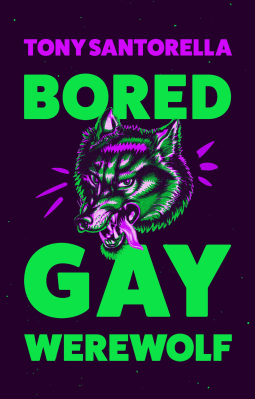
Bored Gay Werewolf is a novel about an aimless guy who happens to be a werewolf and what happens when he meets someone trying to create what seems to be a start-up for werewolves. Brian works at a restaurant, spends his time drinking with his coworkers Nik and Darby or having Grindr hookups, and doesn’t deal well with his monthly transitions into a wolf. When he meets Tyler, who seems to have everything sorted out and is also a werewolf, maybe it is the chance Brian needs to get his life on track. Tyler’s plan for the The Pack (™) includes getting Brian in shape and in control, but it seems that Tyler’s business plans might go further than that, and meanwhile, Brian is drifting away from his friends and his previous self.
The title of this book is such a hilarious draw to read it, and it really gets across the tone, which is partly satirical, partly fun, and partly a sincere look at queer community and finding your people. I love books that integrate some kind of mythological creature into an everyday modern world and this one is a pretty funny way of doing it, exploring toxic masculinity within hustle culture and within ideas of werewolves at once (and it’s not just the name Tyler that offers hints of Fight Club). The plot turns from a slower paced slacker falls into something unexpected to a faster pace by the end, with at least one twist I didn’t see coming. I did expect the ending to be less uplifting yet ridiculous and maybe more satirical or dark, but to be honest, I think the ending does suit the book generally (and seems to set up for a potential sequel).
If we’re going through each part of the title, then the werewolf element is well-covered and fun, it’s got some classic slacker protagonist stuff, and then there’s the depiction of Brian being gay and of queerness in general, which really makes this book enjoyable. There’s lots of interesting parts of the book exploring queerness, like excessive heterosexuality of the people Brian meets through Tyler (and the ways in which Brian has to navigate the gender and sexual stereotypes that arise when he’s around these people) and the various jokes about coming out as a werewolf, and it was nice to see a non-binary friend character in adult fiction who, yes, is a bit notably quirky, but is also a rounded person.
I had a lot of fun with this book, which is like hustle culture werewolf Fight Club but the protagonist has some friends. It’s not what you’d expect from a werewolf novel and that makes it an enjoyable read, even if the ending is perhaps a little too easily resolved. Definitely one where the wild title and cover actually deliver a suitably fun book.



 Fiendfully Reading
You must be logged in to post a comment.