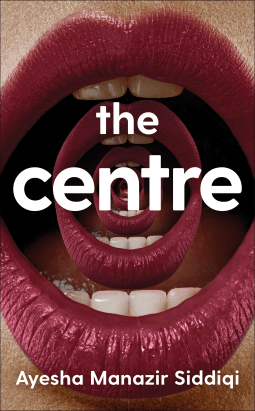
The Centre is a novel about a mysterious language learning centre and a Pakistani woman in London who is drawn into its strange world. Anisa wants to translate “great works of literature”, but actually translates Bollywood films, complains about life with her best friend Naima, and ends up with a white boyfriend, Adam, who seems to know a surprising number of languages fluently. After Adam learns Urdu almost instantly, Anisa needs to know his secret, but it turns out to be a strange language learning facility called the Centre, expensive and so secret you can only tell one person about it. Drawn by the promise of translation, Anisa signs up, follows its weird rules, and starts to uncover the secrets of the Centre, intoxicated by her mentor, Shiba.
This is a book that immediately draws you in, with a gripping writing style and opening chapters that give you plenty of clues that things are going to get stranger, especially with this concept of being able to learn a language so quickly. The blurb does give a fair bit of this away, meaning you are filled with unease even before Anisa goes to the Centre, but the novel also packs a lot of other ideas in too: thoughts about translation, privilege, race, class, and fulfilment that are woven throughout. Anisa is a complex narrator, often self-centred and unaware, trying to think about things but also justifying stuff to herself however she needs, and these become relevant to the book as a whole as it seems that the Centre’s secrets fit in with these elements too.
The twist is set up pretty well, so it is something you can guess, but also suits the suggested ominous tone with almost a darkly comic edge, satirising at times what rich people actually think is acceptable. The book doesn’t really answer the questions it raises, but rather invites you to consider some of the complexities and ambiguities within, like the act of translation. It is an entertaining ride that it is easy to get hooked by.
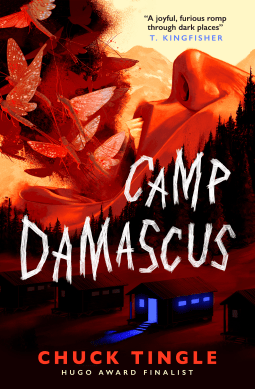
Camp Damascus is a horror novel about a conversion camp and the dark secret embedded in a town. Rose is twenty but is treated like she’s much younger by her god-fearing parents, who try to force her to hide her autism and want to control her life. When Rose starts coughing up flies and seeing a strange woman in a red polo shirt that her parents don’t acknowledge, she starts to wonder what is going on, but her parents act like it is nothing. But Rose has questions, and those questions start to bring her back to the idea of Camp Damascus, the 100% success rate gay conversion therapy camp that makes their town famous.
I’d heard of Chuck Tingle as the internet-famous author of novelty erotica, but from the summary of this novel I had to give it a go, despite not knowing what Tingle’s horror would be like. Told from Rose’s perspective, Camp Damascus tells a gripping and strangely real-feeling (despite the demonic twists and turns) story of a conversion camp that makes you forget you ever went, and a woman forced to be someone she isn’t. The plot is straightforward, following a pretty predictable trajectory that goes in a satisfying way, though upon reflection I might’ve expected there to be more around Rose’s parents, who leave the narrative and never come back.
Rose is an interesting protagonist, a neurodiverse character who has to fight against the older adults in her life trying to quash anything she does that doesn’t seem neurotypical and someone who has always been told what to believe (or as far as she remembers) trying to work out what she does think as she realises this. As the book is quite plot-focuesd, you don’t get to see a huge amount of her relationships with other people, but later on in the narrative there is a focus on chosen family and the idea of both queer and neurodiverse people finding who they can be themselves around. The other major characters don’t get much backstory, partly due to the fact it is from Rose’s point of view and because the book is quite concise and doesn’t delve into character emotions that much.
I love queer horror and the demonic concept of this one combined with the horror of a conversion camp you can’t remember makes it a memorable read. There’s a few gruesome moments, but generally it’s pretty accessible for people who aren’t necessarily big horror fans, and I also think it would work well adapted into a film, as it is plot-focused and has some memorable set pieces. Some of the implications and nastier concepts weren’t really explored as much as I’d like (particularly one character who dies early on brings in some terrifying implications that don’t really get discussed in the narrative much), but I did like how quick and compelling it was to read.
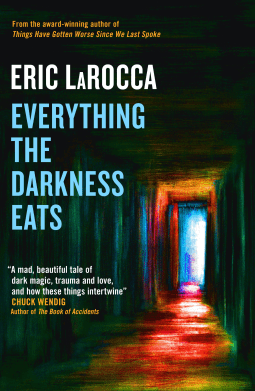
Everything the Darkness Eats is a horror novel by novella and short story writer Eric LaRocca, about strange disappearances in the small town of Henley’s Edge. People keep disappearing in Henley’s Edge, but the police have no idea what is going on. Ghost, a widower, is drawn in by the strange Mr Crowley, and Malik, a policeman dealing with the homophobic reactions of the town to him and his husband’s moving there, finds himself up against an unknown enemy. Something is wrong in Henley’s Edge.
I really like LaRocca’s other work that I’ve read, particularly the novella Things Have Gotten Worse Since We Last Spoke, and I was excited to read this novel. It is quite different to the other stories I’ve read by LaRocca, with a low burn, almost Stephen King-esque start that cuts between a few points of view and sets up the town, but the slow pace suddenly changes at the end to something faster and more grim and dark. The novel is pretty short, as you might expect from a novella writer, and I appreciate that it is focused, building in mystery without going overboard with endless description or new characters you lose track of.
There are really two stories within the novel: the one with the strange older man, Mr Crowley, and Ghost and a mysterious darkness, and then one in which a gay couple deal with homophobia from their neighbours, with horrific consequences. They both feel quite separate, even when they do come together, and the ending which brings them together happens very quickly, so they can feel a bit disjointed, despite being interesting things to explore in horror separately. A lot of the book is more lingering, without much horror but with more of a mystery of what is going on, and then there’s a darker ending where some really horrible stuff happens, which is a pretty classic horror set up, though some people might want more of the nasty stuff earlier on.
Everything the Darkness Eats felt like a solid horror novel for me, but it didn’t capture the unnerving power of You’ve Lost A Lot of Blood or Things Have Gotten Worse Since We Last Spoke for me, so was maybe a bit of a let down in that way, as I was expecting something that really stood out. This book explored some classic horror elements and also insidious hatred within a community and I like the use of small town horror to tell a queer horror story. It’s a good book, but maybe I was expecting the distinctive use of storytelling and cursed vibes of LaRocca’s novellas, and I didn’t feel this novel quite had enough of these elements.
All About Romance is a YA novel about a non-binary teenager in the North East looking for their big romance. Roman Bright lives in Tynemouth with their mum and brother, appearing confident and uncaring at their school and around their two best friends, but still unsure after they were messed around last summer by sporty JJ. When anonymous postcards signed by ‘Big Red’ appear in Roman’s things and then Big Red seems to be painting murals around school, maybe something exciting is happening to Roman, but will they get too caught up in the excitement, even with new boy Beau to keep them grounded?
As a queer YA book set in the north of England, All About Romance definitely stands out, showing one teenager’s experiences of growing up different in a small town and trying to deal with that. Consequently, Roman is your classic flawed young adult protagonist: they frequently don’t see things from other people’s points of view and get caught up in their own ideas of what is happening. Supporting characters like Roman’s mum and best friends are there to try and help them have a bit of perspective, and also to provide support to Roman, showing that despite difficulties at school, there’s still people around them who love them for who they are. It’s good to see Roman as a teenage non-binary character whose story is not about coming out, and who is allowed to be a sometimes annoying teenager who throws out too many pop culture references.
The main narrative, about the mysterious wall art and postcards, is pretty predictable (it’s easy to work out almost instantly who it is) and fairly similar to Simon Vs The Homo Sapiens Agenda, so will appeal to people who like that romcom kind of plotline where you know that the protagonist is misunderstanding something, but don’t yet know the full story. A few elements of the writing style didn’t work for me (there were a lot of asides in brackets, possibly too many), but this book brings what people are likely looking for from the genre: a heartwarming story that still has some tough moments for characters, exploring queer characters at school and how they ultimately carve their own spaces. As an adult, it makes me hope that queer teenagers do get to have the freedom to make mistakes and be themselves and grow, even though I’m not really the target audience of the book itself.
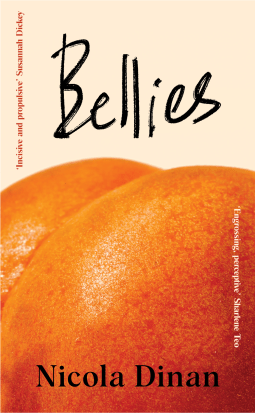
Bellies is a coming of age novel that explores where a love story goes when its protagonists change and when one person in the relationship transitions, as well as the difficulty of people finding who they are after university. Tom and Ming meet at a drag night at university and are drawn together, with Ming a playwright and Tom not quite sure what he’s doing, recently out as a gay man after breaking up with his girlfriend when they both came out. When Tom and Ming move to London after leaving university, Ming announces that she is transitioning. The novel follows the pair of them as they navigate what happens next and try to work out what they mean in each other’s life.
This is a tender book that at its heart focuses on the time after graduating university and how people look for the lives they want. The chapters are told from Tom and Ming’s points of view, and this dual perspective is vital for the narrative, allowing you to see into both of their lives and understand how vulnerability (as the title refers to) can be precious, but also leave people feeling exposed. You also see more into their respective experiences, both Ming with OCD and with being trans and having grown up in Malaysia, and Tom’s ways of navigating what he seems to see as things happening to him and a sense of loneliness. There’s a great cast of supporting characters, with a web of messy friendships at the core of the book that both explore the trials and tribulations of holding down friendships as you leave university and also difficult modes of queer friendship.
I found myself deeply drawn into the story and wasn’t sure how the book could end considering that it is only the start of their lives, but actually the hopeful ending worked well for me, offering up something transformational and satisfying that felt like a good conclusion to a coming of age novel. Bellies offers something that feels fresh after all the novels about straight white people trying to find themselves after university: a messy yet tender experience in which people make mistakes and try to find what is vital to their lives, but without a sense of certainty or necessarily models to follow.
Penance is a novel masquerading as a true crime book written by a disgraced journalist, exploring the murder of a sixteen year old by three other teenage girls in a run down seaside resort in North Yorkshire. Nearly a decade ago, Crow-on-Sea was rocked by the murder of Joan Wilson in a beach chalet by three girls. Now, journalist Alec Z. Carelli is publishing his book about this murder, the apparent definitive account based on staying in the town, interviewing those connected to the victim and perpetrators, and getting an insight into their lives and social media accounts. The thing is, is he really telling the true story?
After Boy Parts, it is easy to anticipate something exciting from Eliza Clark, and Penance goes in a very different direction, but definitely lived up to my expectations. It is entirely written in true crime framing, with the journalist’s book and a follow up interview, and this is very effective in getting across the complexity of true crime and what counts as entertainment, research, and factual content. Carelli’s book is a mixture of his descriptions of interviews and research, snippets from podcasts and social media posts, and dramatised sections that describe events as if in a novel or similar, and these all weave together to create this vision of what a writer might want to say about something so sensational. The narrative is so gripping, and Clark’s writing adapts to the registers that suit each part, that you feel fully engrossed in the story even as you question why it is being told like this.
A really compelling element of Penance is the exploration of teenage girlhood and particularly elements of it that aren’t usually turned into novels: strange macabre online obsessions, petty fallings out and friendship changes turning into something much more charged, what it is like to be caught in various stereotypes, particularly in a small town. It is truly a book for people who were too online in the 2000s or 2010s, and though footnotes in the book explain concepts from Tumblr and Livejournal (as if it was a middle-aged journalist explaining them), there’s definitely a sense of ‘if you know, you know’, which is also how the characters seem to feel at times. And it is packed full of little details that make it all come together (for example, one of the girls has a harmless blog where she’s obsessed with musicals and Glee, rather than an edgy blog about death or killers). Filtering this all through the journalist Carelli gives it an extra layer, this middle-aged man trying to understand teenage girls (and with his own motivations too).
Turning some of the darkest elements of teenage internet culture, serial killer fandoms, into a literary fiction novel is definitely a choice and it pays off, offering something that is disturbing but also feels like something you could definitely find online without much effort. It forces people to question some of the lines between these kinds of content—true crime books and podcasts, serial killer fanfiction, etc—to see that it isn’t always an easy ‘this one is okay and this one is terrible’, but that everything is going to be tinged with personal opinion, motivation, and perspectives.
Also woven in are some very British elements, like in Boy Parts: the backdrop of Brexit and one of the characters having a UKIP father, the class divides in a small town, the legends and histories of a fading seaside town, abuse scandals from former entertainers. It also depicts going to a bog standard British school very well, especially in terms of how different kinds of outsiders function and how difficult it can be for the “misfits” to actually get along when all they have in common is being different (Jayde’s story in particular felt packed full of elements straight out of an actual school from that time, like assumptions about your family, being seen as one of the only gay teenagers, and being into sports but not in a cool way). Similarly to in Alison Rumfitt’s Tell Me I’m Worthless, there’s a sense that Britain itself formed a place for everything in Penance to happen, that it was a malevolent force in some way (or at least helped form the pocket hells that the perpetrators are looking for).
Immediately gripping and also forcing you to question why that is, Penance is both a highly entertaining read and a book that poses a lot of questions, not all answered. The nature of it only being Alec Z. Carelli’s book and a follow up interview means you don’t really know what actually “happened”, as with true crime stories, or if that even really matters. For people who haven’t misspent a lot of time on the internet, it might not feel quite so real and immediate, but for me, it was like taking a 2 hour video essay on some old internet drama and turning it into a layered novel about the darkness of teenage girls, the impacts of true crime, and how anything is ever even constructed as “true” in the first place. Plus it might be the first novel I’ve ever read that mentions Neopets, so that is a win from me.
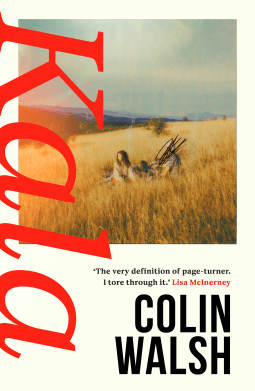
Kala is a novel about teenage friendship and youth, revenge and forgiveness, as three adults find themselves back in their Irish hometown. Mush, Helen, and Joe haven’t really spoken in years, but they are all back in Kinlough, where they were friends as teenagers along with Kala, Aiden, and Aoife, but Kala’s disappearance in 2003 started the path of them falling out of touch. When human remains are found in the woods and two more teenage girls go missing, the three must face up to what they remember about the past and the secrets Kinlough is hiding.
The book is told from three perspectives, moving fluidly between the past and present as the narrative unfolds. It doesn’t take long to pick up the protagonists’ perspectives—Mush who never left, Joe who is famous and struggling with alcohol and fans, and Helen, who left and doesn’t know how to come back—and the many characters in the novel are vividly drawn (with the exception maybe of Aoife, who seems purposefully further outside of narrative, which I expected to go somewhere, but didn’t). By the end, you see a lot more of the complexities of the characters, and I almost wished to have seen just a bit more of their character development beyond the end, which perhaps shows how it draws you into their personalities and lives.
The combination of literary and thriller elements gives the book its pace and readability, and I think without one or the other it wouldn’t work, but instead it brings together a look at the innocence or ignorance of youth and the troubles of growing up from teenage friends with a suspenseful story of small town corruption and teenagers stumbling upon this. Kala is a good book to get immersed in and read in one sitting, with the tense plot making it more interesting than a book just about growing up in a small Irish town.
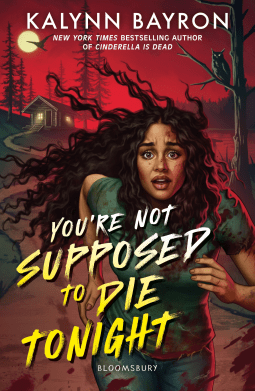
You’re Not Supposed To Die Tonight is a horror novel about teenagers working at an immersive horror summer camp experience who suddenly get more scares than they bargained for. Charity is playing the final girl at Camp Mirror Lake, filming location of a famous slasher film and now a full contact horror experience during the summer. As the season draws to a close, other employees start disappearing and Charity thinks she’s seeing figures around camp, but surely it’s just the spooky atmosphere, or so she thinks until it turns out Camp Mirror Lake has more of a history than she realised, and it’s up to her, her girlfriend Bezi, and anyone else left to try and stay alive.
Though this was badged as young adult horror, it’s definitely a crossover book, as despite having a teenage protagonist it doesn’t really feel like young adult fiction, more just like general horror. The plot starts off seeming like it is going a standard slasher route, but it actually goes off in a different direction partway through, whilst still playing around with having characters who are meant to understand horror tropes because they reenact them all the time. The narrative is pretty fun and, most notably for me, I did find the early parts of the book quite scary, with a real sense of them being out in the woods alone with something unknown going on.
It’s a pretty fast-paced book and is fairly short too, meaning that it is mostly tension and doesn’t get boring. There’s some elements that could’ve had more explanation, but it comes together pretty well, and the ending is fitting, making it a good horror read especially for fans of slashers that don’t do a straight slasher or fiction that plays with the summer camp goes bad vibe.
Girls of Little Hope is a horror novel about three teenage friends in small town America who find more than they bargained when they explored a hidden nearby cave. It is the 90s and Donna, Rae, and Kat are fed up of their hometown of Little Hope, California. When they explore a mysterious cave as part of a bid to have something cool to write about in the zine they’re selling at school, however, only two of them come back: Donna can’t remember anything and Rae wants to hide whatever it was that happened. What happened to them might make all the difference for Little Hope.
The book is told by following Donna, Rae, and Kat’s mother Marybeth, as well as excerpts from Kat’s diary and some “found” documents, but the layers of perspective don’t make it confusing. The early part of the book is slower and you can’t really tell where on earth it is going to go, but once it hits around the halfway mark, the real horror elements become much more apparent. There’s a focus on the characters in the book: particularly the three main teenage girls, but also their relationships with their families and the ways in which they need each other and their differences.
There are some real issues delved into (it is worth being aware before reading that the book feature/talk about self harm quite a bit), particularly with Rae who has a strict Christian family and cannot rebel or know herself in the same ways that Donna and Kat do. Because it’s a horror book, a lot of these elements don’t really get to go anywhere by the end (with the except of Kat’s story) because character has to turn to the plot, which is particularly a shame in the case of Rae who by the end really needs a bit more space for all of the stuff that has happened to her to be addressed.
Throughout the book, teenage friendships are shown as vital, and this all comes together with the conclusion, which is a neat way of making a horror story about friendships end by reiterating this. As the pun in the title suggests, the three main characters are the weird girls, who’ve come together and bonded through this, and a horror story is a fun way to explore this, seeing as lot of weird teenagers really get into horror books and films as well. Girls of Little Hope is a fun horror book set in the 90s that’s perfect if you used to read 90s Point Horror books as a teenager and want something that feels a bit like that but with a much more complex and interesting plot.
Mild Vertigo is a stream-of-consciousness novel about a housewife in modern day Tokyo, exploring what makes up her life and how societal structures and capitalism impact it. Natsumi lives in an apartment with her husband and two young sons, and her days are made up of regular mundanity, like laundry, grocery shopping, cooking, observing and talking to the neighbours, and thinking about her family. Each chapter is a separate episode, generally focusing on a theme but moving around topics as Natsumi’s mind does, packed into a neat package like many of the things in Natsumi’s life.
The stream of consciousness element stands out a lot in this book, and the translation made this easily readable, unlike some stream of consciousness narratives, as sentences flow into each other and there is a real sense of things passing by Natsumi (especially in the grocery shopping parts). The other thing is the separate chapters: I found out after reading that these were all written separately, but also to be brought together into a novel. I wouldn’t have guessed this from reading, as I felt like the episodic nature made sense, apart from the two photography reviews which I also learnt apparently are real life reviews by the author. I found this part of the book hard to engage with as I don’t know much about photography or the people referenced, and was glad when it returned to Natsumi’s life rather than her reading these reviews (though it’s definitely an interesting concept to put in a book).
The book does well to depict the ‘mild vertigo’ of late stage capitalism and the ways in which Natsumi feels both a part of and external to things in her life. Not much happens, of course, as that is really the point, and as a short book it is easy to get engrossed in the reality and unreality of Natsumi’s life.





 Fiendfully Reading
You must be logged in to post a comment.