I’m New Here is a novel about a Taiwanese-British man who goes to Taipei looking for meaning, only to instead find a mysterious man with an unusual request. Sean has been fired from his job as a photojournalist and has split up with his girlfriend, and he’s at a loss, in Taiwan even though he feels caught between his heritage and not part of Taiwan. In a doughnut shop he meets Charles, an older man who seems to take a sudden interest in him, wanting his photography and skills, and as Sean is drawn into Charles’ world, things get weirder, and Sean can hardly be sure what is real.
The distinctive writing style of this book draws you in to Sean’s head, not always a great place to be as he’s depressed and self-loathing, full of internalised racism and a lack of belief in his own abilities. It’s hazy yet fast paced, reflecting the dream-like way in which Sean experiences things and the uncertainty around what might actually be happening or not, especially as the novel draws towards its conclusion. The kind of style, which feels similar to other recent novels, isn’t one that I’ve seen before used for this kind of caught between cultures narrative, and it works well to position Sean as an outsider who also seems to be alienated partly due to his own mindset.
In terms of the narrative, it feels almost like a film to me, with the photography element lending itself to making the book feel quite visual, and the strange events add to this. I liked this visuality, and the way that the narrative itself could almost have been a black comedy crime story at times, but also a literary exploration of alienation and depression. I’m New Here dives into the mind of a self-hating man looking for purpose, combining hazy ambiguity with internalised prejudice, and it’s a great short novel that was gripping and hallucinatory.
Cinema Love is a novel spanning decades that explores the relationships of gay men, and their wives in China and in Chinatown in New York. Old Second and Bao Mei live in New York City, in an ever changing Chinatown, but they first met in China, at the Workers’ Cinema that had become a cruising spot for gay men and where Bao Mei worked selling the tickets. After tragedy there, they married and came to America, but the ghosts of the past followed, and in modern day New York during the pandemic, they must face it all.
This is a sweeping, epic novel that captures the everyday sadnesses and intimacy of human relationships, particular those born out of forbidden circumstances. It is told from multiple perspectives, weaving together a range of central characters with entangled relationships and showing the choices that can have great impact on each other. Particularly intriguing is the way that the book explores both gay men and the women they marry, and the complexities of love and human emotion that can occur in different circumstances. The cinema, though central to the plot, doesn’t actually feature that much, making it almost feel like a lost ideal, despite being run down, and throughout the book there’s a constant yearning for things, people and places.
This kind of decades-spanning epic novel can be confusing or meandering, but in Cinema Love Tang uses vividly-drawn characters to hold the heart of the novel together and tells an unseen story of both gay and immigrant experience.
Enlightenment is a novel about science and faith, as two unlikely friends push at the edges of belief and love. Thomas Hart and Grace Macauley both worship at Bethesda in the Essex town of Aldleigh, long time friends despite being very different ages. When Thomas meets James Bower, and they are drawn into the mystery of nineteenth century astronomer Maria Veduva, he falls in love, but as they are frustrated in their searches for Maria’s history, Thomas realises that James doesn’t love him in the same way. And Grace meets Nathan, a teenager with no connection to Bethesda, and is caught between different kinds of love and faith, until one moment throws all of them apart.
This is a hard book to describe, with the feeling of a historical novel at times despite being set in the 90s onwards, and with the narrative intercut with Thomas’ articles for the local paper. It is about different kinds of beliefs, from religious to astronomy to love, and Perry mingles all of these ideas together in a way that transcends any of them, really. The book focuses in on very human moments and emotions, such as love that wasn’t meant to be, and the seemingly small things people do that have huge consequences, and you really feel this from the way it moves perspective, the narrative voice flying through Aldleigh at times to show you what is going on.
Both Thomas’ and Grace’s stories are moving, particularly Thomas’ slow realisations of how things might seem or impact other people differently, and in the importance of just knowing people. The depiction of a gay man who had grown up in a faith that made him feel ashamed of that is gripping and sad, but also he does find purpose and peace, not the least within astronomy and science. Grace’s narrative is perhaps a more traditional ‘grown up within a particular church and then leave it’ one, but again, with a lot of wistful longing for what might’ve been.
Enlightenment isn’t necessarily the sort of book I’d immediately pick out, but I was interested by Thomas’ story from the blurb, and actually the book was complex and bittersweet.
This Is How You Remember It is a novel about growing up online and navigating the public and private spaces. Told in the second person, a girl’s family gets a computer when she’s nine, and she quickly finds out how great it is that she can find everything, going on virtual pet sites and talking to strangers who become friends. But soon, she’s finding darker things, and then social media comes into her life, and her attempts to fit in IRL become blurred with who she might seem online, especially as what is posted online is often beyond her control.
I was drawn to this book because I’m really interested in internet culture and its impacts upon people, plus the blurb describes things like virtual pet sites and emerging social media, which is the era of the internet that I grew up with, and I wasn’t disappointed in the way it is immersed in all of this. Particularly for the first half of the book, everything is built around milestones of internet use and misuse, of technology and its impact upon the self, and it is gripping to see this unfold in often horrifying and often realistic ways. The protagonist’s learning about shame and self was particularly powerful, starting with going on websites other people might think are uncool or people questioning online friends, and turning into experiences with sex and trauma.
The chilling narrative does calm down a bit as the book goes on, exploring how the protagonist’s life and relationships are impacted by social media use and also by things that happened to her in the past, but also leading towards a more hopeful ending, focusing on the offline constant she’s had and offering the possibility that people might start healing from things that happened online. I liked that there’s a hinted subplot about online male culture, possibly around incel culture though this isn’t stated, and it is seen through the second person perspective as something that the female protagonist might ignore or try to block out, which feels very realistic. Generally, the book has some broad takes about gendered social media use in a very heterosexual culture, and it is interesting to see how this plays out as time goes on in the story, and what that might say about the present day.
For me, my interest in the internet side of things and appreciation for how this book delved into some of the darker sides of child internet use, particularly through the early 2000s lens, meant that though I was glad the ending was hopeful, I did want a bit more exploration at the end of some of the key things that had come up earlier. For example, the protagonist’s relationship to sex and female sexuality felt like an area that was really explored, particularly through trauma and through a unreal narrative element I won’t spoil, but by the end felt like it wasn’t quite wrapped up. However, the ending does really explicitly go into the themes of public and private and what this means on the internet and for someone’s identity.
This Is How You Remember It is a powerful novel that uses a distinctive tone to chart one history of the internet: a messy, personal one of a protagonist unable to look away from it. Though I’m about the target age in terms of the internet milestones charted in the novel, as a queer person my experiences on the internet (and offline) were quite different, so I’ll be interested to see what people who had more similar experiences as those in the book find it. Early on in the book I thought it was going to keep getting darker and darker as the protagonist disappeared into versions of herself online, and maybe I’m slightly disappointed that it didn’t go that way, but I can see why the book takes a different approach, offering not just a cautionary tale but some form of conclusion.
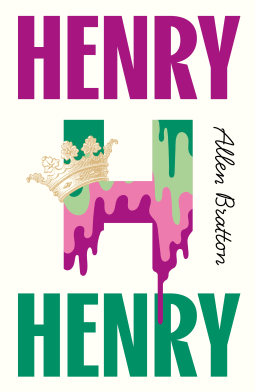
Henry Henry is a literary fiction loose retelling of Shakespeare’s Henry IV plays, bringing Hal into the twenty-first century as a gay Catholic son of the Duke of Lancaster. It is 2014 and Hal Lancaster drinks and gets high to avoid his father, but when an unlikely invitation to join family friend Harry Percy at a shooting retreat turns into a romance, Hal’s life is pulled in more directions, balancing shame and guilt and addiction with the possibility of something different to what his father wants for him.
As someone who has been obsessed with the Henry IV plays and read plenty of Shakespeare retellings (including Henry IV ones), I was intrigued to see how Henry Henry would approach the play and also how it would be a novel. After finishing the book, I’m still a bit conflicted about how it relates to Henry IV, as it feels to me like it occupies a middle ground between between a faithful adaptation (which it is definitely not) and being a very loose adaption, because it does adhere to having most of the characters from the plays (and more from history) to the extent it almost doesn’t work without knowledge of the plays, but then deviates from the themes and plot of the plays a lot, perhaps making it better to not know what it is based on. In some ways, I like this, because it really does reimagine the plays as something different, but it is confusing that it has such a precise cast and some key story elements retold, and then other elements and the overall arc not matching up at all.
Told from a third-person perspective, the book explores a lot—sexual abuse, Catholic guilt, addiction, eating disorders, the treatment of people with AIDS—whilst also notably not really exploring other areas. The monarchy has been removed, and indeed is barely even referenced to, and the layers of class issues present both in the original plays and the scenarios of this retelling get a bit lost in the mix, so the book ends up being a bit ‘wow rich people’ without really saying anything about this. The Catholicism in the book is A Lot (one of the characters even complains that the Catholic guilt is A Lot), and I imagine people interested in it will really like how entwined it is with everything (and there’s something interesting about taking a play set when the characters were Catholic by default and making the characters Catholic as something more unusual in modern day London).
In terms of characters, the endeavour of having so many of the characters from the plays and real historical figures is a notable choice, and it works well in some places. For example, modern Henry IV retellings do well by making Philippa appear as Hal’s youngest, wayward sister who can be a reflection of him in a different way to other characters are reflections of him. Both Falstaff and Poins are quickly sidelined and generally the ‘Eastcheap’ part of the plays is downplayed hugely, a sort of sticky carpeted Wetherspoons vibe that Hal leaves for Catholic guilt and Harry Percy’s much posher leftism. Hal’s brothers become interchangeable, which is fair, and generally a lot of the characters recede as the novel progresses, so it becomes mostly Hal and Henry, with occasional family members and Harry Percy. The third person narration keeps a bit of distance (there’s a sudden chapter that is narrated by someone to Hal later in the book, which felt suddenly out of place), making Hal a little more unknowable.
Two main elements of the novel are Hal’s relationships to his father, Henry, and to Harry Percy, family friend turned lover. The blurb suggests these are going to be equally important, positioning the book even as potentially a kind of coming of age romance, but going in expecting that will leave you disappointed. This is a much darker take on Henry IV than retellings tend to be (and the marketing suggests), exploring trauma and abuse and victimhood in quite complex ways, but it does feel like it would be helpful to have any sense going into the book that incest and sexual abuse were going to be so crucial in it, given that they aren’t in the original plays. These parts are going to be divisive, especially for people going in for the Hal and Harry Percy romance element or the “queer retelling”, and actually getting much more of a focus on an abusive father-son dynamic. For me, it was a surprise because the opening feels like it might be a more straightforward modern retelling and then suddenly you realise it is not at all, and that’s certainly an interesting choice.
Henry Henry feels part of a lineage of gay literary fiction, bringing hints of Brideshead (Catholicism) and Dennis Cooper (abuse and addiction) alongside occasional 2015 references to try and prove it isn’t actually from an older time. The thing is, I’m still not entirely sure why it is a retelling of Henry IV, and not just a novel about being gay and Catholic and having an abusive father. I might’ve either preferred it to be more of a retelling, at least in terms of narrative structure as this version is a completely different kind of arc, or less of one, with more experimental prose/character framing or less of a reliance on every single character/family member from the play/history. The ending is an interesting choice that says something about this version of Hal and suits a literary novel about abuse and addiction, but for me, doesn’t say enough about the book as a retelling or reworking.
Henry Henry was always going to be a novel I had opinions about, and to be honest I wasn’t expecting them to mostly be confusion about how I feel about it as an adaptation and as a novel that should work without knowing the plays. It is an experience to read—it’s well-written and it brings in a lot of interesting things, as well as darkly comic images of Hal’s life—but it left me frustrated, that it is being marketed as something very different and that it doesn’t always seem to know its own relationship with Shakespeare’s plays. Messed-up, dark gay novels are great, but I think this one would’ve worked better for me if it also wasn’t Henry IV.
Fragile Animals is a haunting novel about religion, sex, family, and the idea of sin. Noelle flees her life as a hotel cleaner in Leith to the Isle of Bute, staying in a hotel in which she meets Moses, who tells her he is a vampire. As they draw closer to each other by confessing lovers, the lingering trauma of Noelle’s Catholic past and her mother’s affair with their priest surfaces, and maybe a vampire was exactly what she needed to confront her own ideas of sin and weakness.
This book is an experience, a fascinating way of using a vampire as a plot device in a book that is a literary exploration of sexuality, guilt and religious trauma. Jagger plays with the audience, making Noelle at times unreliable and with a distinctive narrative style that luxuriates in hot and cold, in sensations and specific wording. Noelle is torn between binary ideas of good and evil, straight and gay, right and wrong, and she’s an interesting protagonist because of this, someone searching for certainty she can’t get. The book is gothic and luscious, but it’s also about bodily fluids and dirt, and mostly about what people desire and what they actually do.
On a personal level, I found it funny that it had a few elements/details that I’m particularly familiar with (the fact that Satanism isn’t actually what it sounds like, the village of Crail) and I liked that it had sharp realistic details whilst also being dreamy and unreal at times. I imagine people going into it for the vampire sex element might’ve expected there to be more, but the build up feels like the more plot-crucial part. I really liked how Noelle’s relationship with Lomie was slowly explained through the book—it could’ve been a separate book itself, but instead, it’s like a faux-background plot that Noelle is purposefully positioning as such.
Fragile Animals is a book about religious trauma and sexuality that happens to contain a vampire, and there’s something very funny about that.I thought near the start that I had a handle on what the book would be, but actually it was quite different, in a refreshing way that made it much more of a literary journey through a character’s troubled past than a ‘bad boy vampire’ story (not that there’s anything wrong with the latter—I love vampire books—but I liked the complexity of this version).
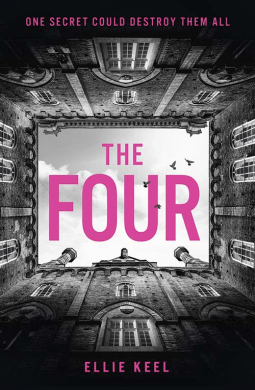
The Four is a novel about four scholarship students at a prestigious boarding school and what happens after an animosity gets out of hand. Rose starts at countryside boarding school High Realms alongside fellow scholarship students Marta, Sami, and Lloyd, all starting at the age of sixteen to help them get into top universities. They are immediately outsiders, not versed in the traditions of the school or the strange social hierarchies, but Marta is especially so, and doesn’t seem to care about fitting in. Popular girl Genevieve takes a disliking to Marta, and in High Realms that means extreme treatment, but then things start to spiral out of control.
This is very much the sort of book that is marketed as dark academia because it is set in a school and dark things happen, but which isn’t really “dark academia” because it lacks the actual academic subject matter playing a part in the book. This means that it is best to throw away comparisons to The Secret History etc, as this isn’t really that book, and not just because the characters are younger. High Realms is more of a hostile environment that should’ve looked after the teenagers in its care, rather than a mysterious dark place, but it definitely asks some questions about boarding schools and how easy it can be for unfair hierarchies to take over. There’s not that much exploration of class and privilege beyond the obvious ‘the other students don’t treat the scholarship kids the same and the school just wants them to look good’, but that does form an important part of the book and how ‘the four’ experience High Realms.
The novel is from Rose’s point of view and you get the kind of unreliable narrator where she is acting like she is trying to tell you what happens, just with some ominous hints towards the later plot, but at the same time, there are hints that Rose is never going to be able to give an objective account, and is a flawed teenager too. This does work well, and by the end you do see how the pretty intense narrative is being told by adult Rose who knows she didn’t always make the right choices because she was too self-absorbed (and young). Rose and Marta in particular are interesting characters, though the book does shy away from interrogating Rose too deeply, even at the end set years after the events of the book, and there’s definitely character elements that could’ve been explored further. Some of the relationships in the book felt underdeveloped (especially Lloyd and Max), and I did find it a bit weird that the book didn’t want to discuss queerness beyond one reference to a character working out who they were, as if High Realms in 1999 was an alternate reality school where non-straight characters and relationships were treated the same as straight ones.
The actual narrative of the book is quite a wild ride, starting out feeling like any boarding school story which goes dark because people’s rivalries go too far, and ending up exploring trauma, sexual assault, and what happens to someone in crisis when they can’t get the right care. Some people might find it goes a bit sensationalist—it has touches of A Little Life in that respect—and seeing it through Rose’s perspective means that it often does feel quite voyeuristic, which gives it a specific tone that can make you feel uncomfortable, whether successfully or not. People should go into the book knowing that there is going to be a lot of content around self harm and sexual assault in it, as this is vital to the plot and is what takes it further away from an idea of a slightly dark boarding school rivalry book into something more visceral and nasty. This also makes it a lot more interesting than what I expected from it, as it could’ve been a paint-by-numbers type of boarding school book being marketed as dark academia.
The Four is a book that does a lot of interesting things and I found gripping to read, but which afterwards I feel a bit conflicted about. It has a lot of expected elements from the kind of novel it is—lots of complex love triangles and longing, harsh rivalries and close bonds, and the sense that the boarding school is causing problems through its environment—which can make it feel predictable (but also thrilling), but at the same time, what happens in the book is more twisty and messy, what happens when teenagers try and deal with something way beyond their experiences. It was a compulsive read and I like books that go to dark places, but something about the tragedy and trauma in the book didn’t always work for me. However, as a book about a boarding school written for adults, I think it does well to not be childish, whilst also having a lot of flawed teenage characters who make mistakes big and small. Definitely more of the ‘dark’ than ‘academia’, The Four looks at privilege and power, but more importantly, at what teenagers would do for each other.
This Skin Was Once Mine and Other Disturbances is a collection of four stories from horror writer Eric LaRocca, all delving into the weird and dark sides of people’s nature. The opening letter to the reader warns of claustrophobic stories and asks the reader if they want to read such upsetting stories, a framing that plays with expectations as much as it warns people. As I’ve found with other LaRocca story collections, some of them felt unsettling and dark, with clever endings, and others didn’t work as well for me.
My favourite was probably the titular story, ‘This Skin Was Once Mine’, which is also the longest in the book. It combines what happens when you learn the truth about an idolised family member after their death with a load of snakes and a weird caretaker-type figure, and the length of the story meant that it was vividly drawn with a decent amount of depth to the main character. The ending is predictably fitting and overall the story looks at the ways in which families perpetuate violence.
I also enjoyed ‘All the Parts of You That Won’t Easily Burn’ because it starts as one kind of story and ends as another, a weird journey into self-mutilation that just gets more horrifying. That story probably justifies the warning at the start, as I’m sure it’ll make a lot of people flinch (and it reminds me of the vibe of something like Alison Rumfitt’s Brainwyrms).
The other two stories, ‘Seedling’ and ‘Prickle’, were short and felt a bit too similar to other LaRocca stories to me (‘Seedling’ comes immediately after ‘This Skin Was Once Mine’ and is also about someone returning to their family home after the death of a parent). ‘Seedling’ wasn’t for me, as I didn’t feel like it went anywhere, and whilst I liked the premise of ‘Prickle’ (two old men playing a cruel game in a park), again it didn’t particularly go anywhere interesting or resolve a few of the details in it.
The two meatiest stories in this collection were exactly what I was looking for from it, with well-fleshed out protagonists in weird, dark situations. The other two were perhaps less distinctive short stories, but I suppose it’s probably a good idea to not have four very intense stories in the book for some readers…
The Mars House is a literary sci-fi queer romance novel about a Mars colony and the unlikely fake marriage between a refugee from Earth and a politician from Mars. January was a principle ballerina in London, but when London flooded he was forced to Mars, to live in the colony Tharsis. There, he’s an Earthstronger, seen as dangerous as they are stronger than those naturalised to Mars, and forced to work in a factory as his only option. When a politican named Aubrey Gale, who stands for forcing Earthstrongers to be surgically naturalised to protect those natural to Mars from accidents, meets January at the factory, a press junket blows up in their faces, and a plan is proposed: a five year marriage to protect January’s future and secure Gale’s political chances. There’s politics, environmental fears, and Gale’s mysterious past to contend with as the pair learn what it is like to be each other.
I don’t usually enjoy sci-fi books, but I was intrigued but the premise of this one (I’ve never seen a political sci-fi book that uses the romance ‘fake marriage’ trope before) and I’d heard of the author, though only read one of Pulley’s books before. What I found was a book packed with ideas, from the abolishment of gender to the primacy of Mandarin as a language (and its morphing into a new Mars dialect), and not bogged down by some of the things I don’t enjoy about sci-fi, like too much dry explanation and terminology. The writing felt playful, maybe because Pulley has moved from historical fiction to sci-fi so the genre was less solid, and the slow burn elements, particularly romance, meant that even though it was long, it was also gripping, creating plenty of tension around what would happen to the characters.
The plot itself was pretty straightforward, with the main twist being very easily guessable because it is quite heavily foreshadowed (and it was the kind of plot line that does frustrate me, without wanting to go into any spoilers), but there’s still a lot going on, and a focus on characters and particularly January’s experiences. Most of the book is focused on January, occasionally showing things from the perspective of someone else, and this gives it a particular slant, guiding the reader through things on Mars from the point of view of an outsider. This is a notable choice because a lot of the book is about perspective and morality, and the difficulty of making both big and small decisions when there are so many consequences and potential for people to be hurt. I liked how much the book engaged with these big ideas about morality and the complexity of the two main characters in arguing about it.
The relationship element is likely to be quite love/hate for people, because on the one hand you have a classic fake marriage scenario in which the two characters hate each other, or at least fear what each other believes, and then they have to learn to understand the bigger picture, but on the other hand, one of them does believe the other should be physically harmed in a process to make them no longer different to the “citizens” of the colony, and that seems like quite a hurdle to get over. Their characterisation does make this developing relationship believable, but there’s also a lot of unanswered elements, including the fact that both of them seem to have issues around relationships and romance that never get resolved or really addressed. The book almost needs a sequel to make it believable that they have a future.
One major part of the book that made it quite stressful to read was the choice to make the naturalised-to-Mars people all agender or something similar, with gendered terms and pronouns only used for Earthstrongers and animals. As a non-binary person, it is hard not to try and read into what the author is saying about the construction of gender in the novel, which is quite messy (as gender is) and doesn’t always have the space to explore the implications of this system. Especially earlier on in the novel, there can feel like a sense that the removal of binary gender is framed as a bad thing done in an effort to remove inequality, and though there are some moments that explore the implications of this, there were things that felt like they boiled down to ‘people just need to know what body parts someone has or they won’t be comfortable’ without delving into it. One thing that would’ve been interesting to address would be the implications for someone who was trans to come to Mars and be naturalised (maybe even in one of the book’s many footnotes if not in the narrative), but the book didn’t really discuss being queer or trans on Earth at all. There was also not much really about sexuality and romance in Tharsis, despite romance being central to the plot, as far as I remember.
In short, I enjoyed reading The Mars House and I liked the two main characters and the way in which their disagreements were about big questions of morality and society rather than some random grudge, but I also felt conflicted reading it at times due to the way in which it handled some of the big questions and ideas within it, flattening interesting messiness.
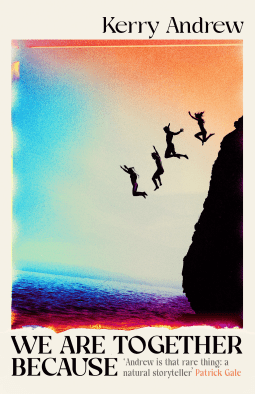
We Are Together Because is a twisting piece of literary fiction that starts with half siblings on holiday together and turns into an apocalyptic story of an eerie world ending. Luke and Connor’s father left their mother before Connor was born, and now they’re on holiday with their half sisters Thea and Violet, with their father planning to join them later. As the fragmented family deals with their own preoccupations, strange things start happening: a strange sound only Connor can hear, Violet seeing some kind of plane crash. And then, everything changes as the world seems to break before their eyes.
This novel is hard not to describe as one of two halves, because the story so suddenly changes partway through (and not having reread the blurb before reading, I wasn’t expecting it, either). It moves between the perspectives of the four protagonists, exploring their mindsets and their dynamics as they spend a hot summer in France, and the characters’ stories are quite varied, with Violet dealing with a traumatic event in her past, Luke avoiding a relationship that turned abusive, and Connor and Thea having a strange incest-y subplot. Just when you think that whatever happens will come out of these plotlines, the book takes an apocalyptic turn, and it becomes about survival and humanity in an eerily desolate setting. The second half unfolds quite expectedly, not answering any questions and focusing on the characters still in a way that makes for an unsettling sense of how it might feel to have these events happen to you.
I found We Are Together Because gripping and I liked how it went from coming of age to end of the world whilst staying very lyrical (though occasionally there were moments of description so jarring that they pulled me out of the narrative). As with Andrew’s previous books, there’s a lot of exploration of language and sounds and gender and sex, but this time with an unnerving end of the world element. A lot of people will probably prefer one half or the other, but I liked how the parts of the story talked to each other, and how the characters’ preoccupations didn’t disappear because things had radically changed.





 Fiendfully Reading
You must be logged in to post a comment.