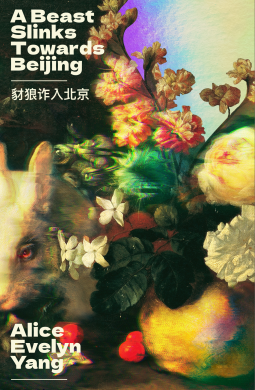
2025 in reading

Last year, I decided in my final blog post of the year to reflect on my reading over the year rather than just list my 5-star books, in an effort to not just focus on data. I’m going to do that again, though ironically one of my endeavours this year involved creating a spreadsheet, so maybe not avoiding data that successfully. My resolutions from last year’s post were to read more pre-2005 books, to reread some books, and to work on my physical to-read pile, so we’ll see how those went as well.

Balancing recent and older books

In an effort to read more pre-2005 books, I decided that I would try to alternate between review copies of books and other books, as I can get stuck reading a lot of review books in a row. I stuck to this pretty well for most of the year, reading a lot of books borrowed from library apps and ones I physically own, but by the end of the year I’d managed to amass a backlog of digital review books thanks to a hectic few months at work, meaning that I did have to stop the alternating for a bit (I’m back on it now, though).

In terms of books newly out this year, I have to mention Torrey Peters’ Stag Dance, probably my favourite book of 2025. I went down to London to see her talk about the book and it was a delightful experience. I also loved Woodworking by Emily St. James, You Weren’t Meant To Be Human by Andrew Joseph White, and The Buffalo Hunter Hunter by Stephen Graham Jones. Despite not being a huge reader of young adult books, I also loved One of the Boys by Victoria Zeller and Fawn’s Blood by Hal Schrieve, both of which are trans YA that I wish I could’ve had as a teenager. Both A/S/L by Jeanne Thornton and Basilisk by Matt Wixey hit my novels-depicting-tech need in different ways. And I had a lot of fun with R.F. Kuang’s Katabasis, even if I might be somewhat loath to admit it.

For other books, I’ll split into pre- and post-2005 so we can measure against that goal. Pre-2005, the big hitter was The Hellbound Heart, my first Clive Barker and a book I’d been waiting for a good way to source for ages. In a book that is either incredibly old or very recent, I finally read Emily Wilson’s Iliad translation, which I very much enjoyed. Pre-2005 poetry-wise, I liked The Ink Dark Moon, a collection of love poetry by two different Japanese female poets from the Heian period. I also read more Junji Ito this year and whilst none of it surpassed Uzumaki for me, I had a good time with his work nonetheless.

Post-2005 but from before this year, some of my favourites were A Dream of a Woman by Casey Plett, A History of My Brief Body by Billy-Ray Belcourt, This Thing Between Us by Gus Moreno, and Minor Detail by Adania Shibli—all very varied, but good. Minor Detail in particular was a book I saw people talking about and was very glad I read. Maybe strangely, I’d also add Granta 169: China to the list, as the pieces in that issue of the literary magazine really opened my eyes to some contemporary Chinese writing, which wasn’t something I expected to be part of my year in books.

Reading habits

My rereading plan failed completely this year, as the only rereads I did were the first two Her Majesty’s Royal Coven books in preparation for the final book of the trilogy (I technically reread the story Rage by Stephen King the other day, but as I have no recollection of the first time I read it when I read The Bachman Books, it barely counts, and I’m not counting reading a different Iliad translation). Basically, I just ended up with so many new-to-me books to read that I never even thought about rereading anything much.

Some books that I’ve wanted to read for a while and finally got around to included The Exorcist, Fluids by May Leitz (who is also a YouTuber whose videos I enjoyed this year), Making Love With The Land by Joshua Whitehead, and Drawing Blood by Billy Martin (Poppy Z. Brite). I tried to catch up with my physical to-read pile, but the combination of digital library loans and digital proof copies made that difficult in the later part of the year.

Most of my nonfiction reading this year fell into two camps. Partly for work and partly for interest, I read more of my usual diet of technology books, mostly about the history of tech companies and the current state of AI. Karen Hao’s Empire of AI was perhaps the most useful. The other strand of non-fiction I read this year was about the deep ocean, which I became fascinated with by accident (said accident being watching part of a Blue Planet II episode about the deepest parts of the ocean).

As with last year, I didn’t have a number in mind for a reading goal. It’s looking like I read a few books fewer than last year but basically the same amount (just under 200). Maybe one year I won’t be tempted to look at the number at the end of the year, but it is hard not to. I like to try and read at least three books a week, but I also need to remember that sometimes books take longer or shorter and that’s okay.

Books around the world

Out of nowhere, one day I decided I wanted to track which countries I had read authors from. This involved a bit of spreadsheet wizardry to get a suitable list of countries and some nice conditional formatting. I set myself some loose guidelines—each author should be from the country or have close heritage from there, but the book could be set in other places, and the book could be fiction or non-fiction—and I used an Around the World reading challenge list to help me work out which places I’d already covered. I log one book from each place as an example and I also have a column for potential book(s) from unread countries to help me remember books I’ve clocked as something to read. 

So far, I’ve read books from 67 countries (not all this year) which is about a third of the list. I think seven of those were books I discovered from starting this project, including the great African Psycho by Alain Mabanckou and Michel the Giant by Tété-Michel Kpomassie, which I would’ve never read otherwise because I don’t tend to read travel writing. I also discovered Prabda Yoon’s short stories after realising I’d never read anything from Thailand, which gain the rare accolade of being short stories that I immediately really enjoyed.

Looking ahead

I don’t want to make resolutions or set anything in stone, but the first thing I’d like to do next year is to continue my books around the world reading. I originally was going to give a percentage goal here, but no, I’m fighting against data, so I’m just going to say that I want to read from more countries. I’ve got a good few books earmarked for particular countries, but I’m also going to have to do some research to find books written in or translated into English and published in a way I can access them for some countries.

I plan to continue alternating between upcoming books I’m reviewing and other books, as that really broadened my reading this year. I will aim with a bit more determination to do a few rereads, which will rely on me not getting overwhelmed with digital library loan return dates. And I sort of hope that I find another random topic to get into nonfiction about, in the same way I love deep dive YouTube video essays.

And to finish up, my final book of the year was Terry Dactyl by Mattilda Bernstein Sycamore. We’ll see what 2026 brings… 

Love Machines: How Artificial Intelligence is Transforming Our Relationships by James Muldoon

Love Machines is a book exploring the world of AI chatbots for human relationships and the kinds of intimacy and connection that these tools are currently being used for. Muldoon documents a range of case studies featuring people who use different kinds of AI chatbots as a friend, lover, therapist, or replacement for a real individual, discussing what they’re used for and the companies behind them, as well as testing out a tool himself. The book concludes with his six recommendations for future use of AI chatbots in this relationship-type capacity.

As someone who reads quite a bit around AI, the content of this book wasn’t news to me. However, I appreciate how Muldoon offers a range of examples of how chatbots are used in a more personal way, not just as a tool to answer questions or write things for you, as it feels like for a lot of people who are only aware of ChatGPT and its main use cases, they might not know about other tools and uses of generative AI chatbots. The ‘deathbots’ side of things is perhaps most notable to some people as being similar to multiple bits of Black Mirror episodes, but this book gives more real life perspective on the issue.

Muldoon does discuss the companies and products currently available and in the deathbot chapter does refer to the fact that people creating a chatbot of a loved one are reliant on the company continuing to exist and them still having the money to pay for the subscription. However, I think the book could’ve gone into more depth around the economic side of these tools and the different use cases for them, and in particular how the digital divide and the high cost of subscriptions to these tools mean that it isn’t just a simple case of ‘these might help mental health or loneliness’, but a question of who would even be able to afford that help. I think Muldoon’s final point in the conclusion–that we also need to look beyond technology for solutions to some of the problems these chatbots are apparently trying to solve–is an important one that could’ve been more prevalent in the book before that point, as it offers a critical framework for considering the claims of the technology companies discussed.

This book is an accessible exploration of the use of AI chatbots for human relationships that focuses on real life case studies and a discussion of the tools currently on the market. As it is a new and fast-moving area, there’s not much scope for looking at the longer term effects on human relationships, so it is a book for the current AI moment rather than something that can necessarily last for a long time.

I, in the Shadows by Tori Bovalino

I, in the Shadows is a young adult supernatural novel about a teenage girl who can see ghosts and what happens when there’s one haunting her new room. Drew’s the new girl in town, getting used to the fact that her sibling has gone to college, but there’s also the complication that she (and her sibling) can see ghosts, and Drew’s new bedroom is haunted by Liam, a teenage boy who needs to be helped to move on before he turns into an energy consuming husk. If that wasn’t enough, Drew develops a crush on Hannah, who was Liam’s best friend before he died, and soon it is a race to help Liam whilst he helps Drew to actually talk to Hannah.

This book is a multi-faceted story that blends a supernatural narrative about grief and moving on with a queer romance and the protagonist learning to not just push people away in the fear they might leave. It’s the kind of young adult book that doesn’t just feel one dimensional, but instead offers something that is both fun and bittersweet, with a protagonist who makes mistakes but also knows herself and what she wants, even if she can struggle to say it. One element of that which I found quite refreshing was Drew’s certainty that she doesn’t want to go to college and how a little detail like that made her feel like a more interesting character. The romance is basically a classic ‘getting help from someone who knows the love interest better backfires when they find out’ story and it sits nicely alongside the paranormal aspects.

When I chose to read this book I didn’t realise it was young adult as it was just listed as horror, but it is definitely more of a supernatural mystery with a (non-supernatural) romance. I’m 15-20 years older than the target audience, but I had fun with the book and the characters are interesting (Drew’s sibling Reece could definitely get their own spin-off sequel).

Palaver by Bryan Washington

Palaver is a novel about an estranged mother and son who are suddenly staying together in Tokyo and have to try and navigate the spaces in their lives for their relationship. The son lives in Japan, having left Texas and his homophobic brother for life as an English tutor, spending his evenings drinking in a gay bar in Ni-Chome. All of a sudden, his mother arrives in Japan, unexpectedly. They struggle to live alongside one another, but as they slowly start to talk, and they both develop other connections in Tokyo, they start to gain more understanding of each other at this moment in their lives.

Having read Washington’s previous novels and short story collection, I would’ve read this anyway, but the fact that it is set in Japan and explores a gay man’s experiences in Tokyo was even more of a selling point. The book feels deeply immersed in Tokyo, and in ideas of community and location in relation to loneliness and separation. It creates a vivid atmosphere, even in the mundane details. The son spends time with a group who gather at a local gay bar, many of whom have moved from other countries to Japan, and the book is full of characters who move in search of home, whatever that might be. I liked the subplot about the bar patrons and the bar owner getting top surgery and them all supporting his recovery, which serves as a quiet reminder of queer community and family in a book all about the fact that family shouldn’t just be taken as a given.

Quietly powerful, Palaver is a book that manages to be deeply about its characters and their present and past, but also very much about its setting too, and the importance of places and what they mean to people.

The School of Night by Karl Ove Knausgaard

The School of Night is a novel about a photographer who dreams of success, but when it comes, there’s a price to pay. Kristian is a Norwegian student who moves to London to study photography. There, he feels bored and frustrated, getting negative feedback on his work that he doesn’t agree with. He meets Hans, a Dutch artist who sees the world differently and is interested in the historical occult, and when something terrible happens, Kristian finds inspiration. However, Kristian’s success might not be as stable as it seems.

This is my first Knausgaard novel—I’d always assumed his work wasn’t going to be my sort of thing, but the connection this book has with Christopher Marlowe made me want to read it. It is really a novel of two halves, with the first half a story of London in the 1980s, a young photographer who becomes intrigued by Marlowe, a strange new friend, and what happens when the photographer does something terrible. I really liked the first half, with its vivid 1980s London setting and the way that Kristian is shown to be pretentious, often annoying, and focused on his own success over anyone else. There’s a lot of narratives running alongside each other and they all play together, in an accessible style and lots of detail (I liked how Kristian kept returning to trying to decide an order for his record collection, for example). I was intrigued how the motifs from Doctor Faustus that the story plays with were going to play out as the book continued.

The second half jumps forward in time. Kristian is now a successful artist with his photographs getting a major exhibition, and he’s balancing that with his wife and child. There’s a framing narrative at points throughout the whole novel that hints to his current position as he’s been narrating the novel, too. I found that the second half didn’t quite live up to the promise of the first half, for me. The things I’d liked about the first half—the specificity of detail, the lingering occult—were no longer really present, and maybe a few more flashes of time before reaching the final section would’ve made it feel more like it was getting across Kristian’s rise and readying his fall. The events of the second half, mostly around the same self-centred man now dealing with interviews and arguments with his wife before a final dramatic moment, were less exciting to me and felt more like any novel about an self-obsessed artist.

However, the conclusion to the novel does bring everything back together and I think it works quite powerfully to get across the novel’s message. I have to admit that I do find the middle part of Doctor Faustus less interesting as well, so maybe it was inevitable! I also just really enjoyed the 1980s pretentious artsy vibe and how it played into the Marlowe/Faustus side, whereas I’m less interested in the atmosphere of the second half, at least until the ending. Overall, I enjoyed The School of Night and how it engaged with Doctor Faustus to tell a story of ambition and the price of success. Also, it made me realise I should actually read more Knausgaard.

Greedy by Callie Kazumi

Greedy is a novel about a desperate man who finds himself the private chef to a billionaire with a specific greed. Ed is a British man who now lives in Japan with his Japanese wife and their young daughter. After losing his job, he fell into a pit of gambling that led to massive debts with the yakuza, and no way of paying them off. When he sees a newspaper ad for a private chef job that values discreetness over culinary skill, it seems like the perfect opportunity for Ed to pay off his debts. But the deeper Ed gets into this world, the more it seems like he might’ve gone out of the frying pan and into the fire.

This is one of those novels where you can guess even from the marketing what the twist will be, but it is all about getting there. The narrative spends a long time building up Ed’s mindset and each choice he makes that takes him further down the road to finding out his new employer’s secrets, and unless you’re someone who hasn’t worked out the twist, it does at times feel like Ed is incredibly naive, maybe frustratingly so. If you’re looking for a book that focuses more on the “special meat” side of the narrative, this isn’t that book, as that is more like the climax to the story and it isn’t necessarily explored as much as in other books that have similar themes, but instead it is more about the desperation and greed that people have.

I did like the final additional twist at the end, which brought an extra layer to the narrative that we hadn’t seen before, and made one character seem very different to what we had previously seen. Overall, it’s a fun book that is very predictable (other than the final twist, which I hadn’t predicted), but in the sort of way where you’re watching someone’s descent with a knowing eye whilst they don’t seem to realise.

Black Flame by Gretchen Felker-Martin

Black Flame is a short horror novel about a closeted Jewish woman who works on restoring a film seemingly destroyed by the Nazis. In 1980s New York City, Ellen works restoring old film and dodging her mother’s desire for her to settle down and marry a nice man. As she starts working on a film brought in by a group of German academics full of queer debauchery and strange occurrences, not only is Ellen’s repression pushed to breaking point, but she starts to realise that the film is bleeding into real life.

Having read Manhunt and Cuckoo, I was always going to read Gretchen Felker-Martin’s next offering. This one is quite different, a shorter book that focuses on a smaller story centred around one protagonist. It explores queer repression, Jewishness, and the concept of things from film stock coming into the real world, and has a level of gore and sex that you’d expect from Felker-Martin. It starts off fairly gently as we’re introduced to Ellen, but it gets nastier as the book goes on, with some memorable moments near the end. The horror is more around the horrors of repression and violence rather than actually being scary, but it’s still more of a book for extreme horror fans like Felker-Martin’s other books.

Superfan by Jenny Tinghui Zhang

Superfan is a novel about a college student who discovers a new boy band and becomes a huge fan, whilst secrets about one of the band members threaten to be revealed. Minnie is lonely, a freshman at college in Texas who feels like an outsider struggling to make friends. When she discovers a video of HOURglass, an American band created in a K-Pop model, she’s found her new obsession. The band, especially the group’s bad boy Halo, bring her happiness and an online community that is there for her as she struggles in real life. However, Halo himself is struggling, with secrets from before he became famous and the pressures of life in a band where everything is controlled by the record label.

This is a multi-faceted novel that combines a coming-of-age college narrative with a story about parasocial relationship and manufactured fame. It is told concurrently from Minnie and Halo (real name Eason)’s perspectives, bringing a dual narrative that you know must collide at some point beyond Minnie’s obsession. A lot of the book actually isn’t just about Minnie and the band, but about Minnie’s time at college as she attempts to find herself, but instead finds a controlling guy who isn’t quite her boyfriend and his creepy friend. It is interesting therefore that the book has a dual narrative, as it is easy to imagine it just from Minnie’s perspective, but by having Eason there as well with a separate tense narrative, there’s a lot more packed in. There’s a lot of realistic details about online fan communities, though there’s not as much resolution from that side of things, nor around the ways that the band were manipulated and the ethics of that.

Overall, Superfan is a campus novel crossed with a boy band novel and a dash of thriller, and it’s definitely fascinating for anyone who has spent time online seeing fan communities in action. 

Taco by Ignacio M. Sánchez Prado

Taco is another instalment in the Object Lessons series, focusing on the taco and its fame as a Mexican food. The book explores elements of the taco such as the definition of what one is and what has caused variations such as soft and hard tortillas, whilst also delving deep into ideas of authenticity and who can make Mexican food.

The Object Lessons series is often delightful, but Taco has definitely been one of my favourites. I felt like I learned a lot not only from the information about tacos, but from Sánchez Prado’s personal experiences as someone from Mexico City who has tried a vast range of tacos (and has opinions re: some of the big debates around tacos). As someone from the UK (where tacos weren’t even that well-known not that long ago, especially anything other than an Old El Paso kit), I liked how the book touched on a lot of aspects of Mexican cuisine and culture, whilst also highlighting what has happened to the taco once it crossed the border into the USA. The only downside is, I’m now craving tacos.

Somebody Is Walking On Your Grave by Mariana Enriquez

Somebody Is Walking On Your Grave is a nonfiction book from Mariana Enriquez, whose short story collections and the novel Our Share of Night have previously been translated into English. The book explores her visits to a range of graveyards around the world, blending a travelogue, personal memoir, and history as she explores these places and what took her to their locations.

I liked the way she blends travelogue and personal essay, capturing the excitement of visiting new places (it’s fun that a few of them are so she can see bands in that country) as well as her clearly deep interest in graveyards and cultures around death in different places. As a fan of Enriquez’s writing, it was fascinating to find out more about her and travel with her on a few wild adventures (stealing a bone from the Paris catacombs the most thrilling). Some of the historical context I found more interesting than others—New Orleans was maybe my favourite—but it was good to find out more about not just the places she visited, but the people either interred there or connected to it.