Eleanor Oliphant is Completely Fine by Gail Honeyman

Sometimes fine isn’t enough: Eleanor Oliphant is Completely Fine by Gail Honeyman

image

Eleanor Oliphant is Completely Fine is a heartbreaking and powerful novel that is difficult to put down, drawing the reader into the life of the main character. Eleanor lives by a simple routine, eating the same meal every day, wearing the same clothes to work, drinking the same vodka to help her forget. She lives within her carefully arranged boundaries in order to survive. However, a series of small events make her change this routine and try to understand a world she has purposefully been avoiding whilst remembering the darkness in her past that she had been protecting herself from.

Honeyman’s debut novel is about a character with a very distinctive worldview, built up as a coping mechanism, and how terrifying change can be when it upsets such mechanisms. As the narrative unfolds, it becomes clear not only how horrible elements of Eleanor’s past have been, but how much she has repressed to enable her to get through each day, at the expense of human connections and the unpredictability of life. It does not represent every experience of trauma and mental health because it is just one story, but what is important is that Eleanor discovers she is allowed happiness and the book celebrates how other people can be better than expected whilst not undermining the terrible things that have occurred.

Through an immersive first-person narrative, Honeyman creates a novel that draws in the reader, both dark and touching, with a message of finding human connections—in whatever shape or form—even when you’ve given up on them. The epigraph is from Olivia Laing’s The Lonely City and this is very pertinent: Eleanor Oliphant is Completely Fine takes Laing’s look at loneliness amongst people and shows how the intersection between loneliness and mental health can be very difficult, but also that friendships and connections can be formed that can save a person’s life.
House of Names by Colm Tóibín

Greek tragedy rewritten: House of Names by Colm Tóibín

image

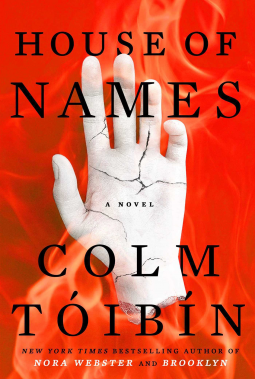
House of Names is a novel about revenge written with masterful and haunting prose. It tells the story of Clytemnestra, Agamemnon’s wife left behind after he has sacrificed their daughter and sailed off to the Trojan War, and how her thirst for revenge impacts her and her children, plus those around them. This tragic story of family killing family is also a detailed look at individuals waiting for revenge and hoping that it will bring catharsis.

Tóibín uses names and narratives from Greek mythology and dramatic tragedy by Aeschylus, Sophocles, and Euripedes, but uses modern language and new characters and events to provide a very fresh take on this ancient material. The cursed House of Atreus is here for those who know classical material, but at the same time, the novel works well for those unfamiliar with the other material, a gripping novel about murder and revenge. Reflections upon the gods and the loss and change of systems of belief is another major element to the book which gives it a modern feel, showing how revenge can substitute for belief when it seems as if one’s belief system has failed.

The style of House of Names, particularly in the sections from Clytemnestra’s point of view, are its particular strength, capturing an ancient feel of revenge alongside her personal emotions. Tóibín’s novel is a fantastic reworking of myth and tragedy into a thrilling and enjoyable read.

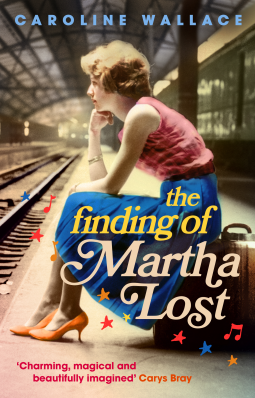
The Finding of Martha Lost by Caroline Wallace

Lost and found in Liverpool Lime Street station: The Finding of Martha Lost by Caroline Wallace

image

The Finding of Martha Lost is an enchanting novel about a sixteen-year-old girl who was found in Liverpool Lime Street station as a baby and has been wondering who she is ever since. Martha runs the lost property office at the station, but when a series of mysteries start popping up—is there somebody lurking in the tunnels under the station? why is there a Roman soldier in the station every day? could a suitcase hold the fortunes of an Australian man?—and her position in the station becomes under threat, it is time for her to really become found.

Wallace creates a vivid picture of the station in the 1970s which is the backdrop for a moving and charming story about a girl who is both wise and innocent and who believes she is the liver bird of Lime Street station. Neither Martha or her friends in the station have had easy lives, and their found family dynamic forms the real heart of the novel, making it clear that Martha is not lost around them. Wallace touches on a number of problems whilst keeping the narrative an uplifting and enjoyable read, one perfect for anybody who is looking for a heartwarming book set in the later half of the 20th century and infused with the music and culture of Liverpool at the time.

Peculiar Ground by Lucy Hughes-Hallet

Back to the old house: Peculiar Ground by Lucy Hughes-Hallet

image

Peculiar Ground is a novel of divisions and connections, of the Berlin Wall going up and down and the changing world after the Restoration, of the young giving way to the old and the estate of Wychwood standing throughout. In 1663, the grounds of Wychwood are landscaped by Mr Norris, who watches the family as he plans the hedges. These same grounds provide the backdrop for a party in 1961 where eight-year-old Nell overhears the adults talking but scarcely understands their world of Cold War spies and love affairs. In the ensuing decades, Wychwood continues to stand as a place where the same people gather and play out the intrigues of their lives as a new world dawns with the Berlin Wall coming down and the grounds of Wychwood used as a tourist attraction.

Hughes-Hallet creates a varied novel with a wide cast of characters across both the seventeenth- and twentieth-century portions, using different narrative styles and perspectives to get across their differences. The seventeenth-century parts are largely narrated by Mr Norris in an archaic – but not overwhelmingly so – style, making them feel quite different to the Cold War narrative that forms the bulk of the book. The parallels drawn between the two are clear and expected, but this trope serves to show how the ‘peculiar ground’ of Wychwood bears drama across the centuries.

The narrative is controlled tightly, with mystery and ambiguity, hinting towards later events or details that will not yet be fully revealed. This is one of its main strengths: a sense of being drawn into the world of Wychwood in 1961 and watching the characters then and in the two subsequent periods in which they are shown, revelling in their triumphs and problems, waiting for more secrets to be known. Stand out characters are often the ones who are outsiders brought into the scene, like the art dealer Antony whose secrets everybody seems to know.

Peculiar Ground is an epic kind of English country house novel, but one that works to reflect the world around it, from Andy Warhol in the early 70s to Salman Rushdie and religious tension in 1989. The seventeenth-century part adds interesting parallels and ideas about religious difference, witchcraft, and garden landscaping, though it is less compelling that the large middle of the novel focused on the years when the Berlin Wall was standing, which has a more intriguing set of characters and events. The novel may appeal to fans of Hollinghurst’s The Stranger’s Child or Stoppard’s Arcadia, but also to anyone who enjoys novels spanning across changing times, watching as characters react and a crucial location stands still.

The Lesser Bohemians by Eimear McBride

Love, innocence, and drama school: The Lesser Bohemians by Eimear McBride

image

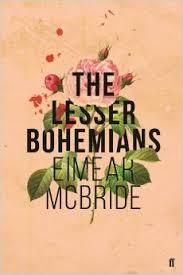
The Lesser Bohemians in an in-your-face, beautifully written novel about an eighteen-year-old Irish girl who arrives in London to start drama school. Despite her naivety, she is quickly taken in by the city, but it is when she meets an older actor and learns to shed her innocence about love and lust that she really becomes sucked into London and into the life it has offered her. It is a novel about the intensity of a love affair and overcoming the lingering past, with a 90s London backdrop and a distinctive style.

McBride writes in a poetic and stark way, a style that hurtles through the excitement, passion, and fear of  Eily’s point of view, using a kind of stilted stream-of-consciousness that takes a moment to get into, but works well once you are. It might not be readable for everyone, but it makes The Lesser Bohemians stand out as a book that gets across the intensity of her new life in North London through this unusual writing. The narrative mainly focuses on characters’ feelings and secrets than events, with the acting very much in the background, giving yet more sense of how Eily’s emotions have drowned out everything else. This is a stylish, exciting novel, a kind of harsh poem about the highs and lows of love and youth.

(Sidenote: The Lesser Bohemians was on the Bailey’s Prize longlist this year. Also check out my reviews of Hag-Seed and The Essex Serpent, both also on the longlist, and, even more importantly, Stay With Me and The Sport of Kings, both on the shortlist right now.)

The Valentine House

The Valentine House by Emma Henderson

The Valentine House is a family saga with a French Alps backdrop – a novel full of the intrigue and ambiguity that is to be expected from its spanning generations of the same family and their time in their summer house in the mountains. The story is held together by Mathilde, a girl from a local farm who goes to work at the house in the summer of 1914, surrounded by the mountaineer Sir Anthony Valentine and his family. As her story unfolds, so does the tale of the summer of 1974 when Sir Anthony’s great-great grandson George comes to visit the house and old secrets are brought back out.

The plot line is much to be expected from this kind of novel, with scandal, arguments, and hidden secrets being revealed by showing the impact of multiple generations of a family and the location they kept returning to. The remote mountain setting allows for some interesting points about the effect of les anglais (as the novel calls them) on the locals and how these intruders are seen. It also adds to the kind of claustrophobic feel of a family all coming together and staying in one house, out of the way of most of humanity, which is reflected in the oppressive heatwave of 1974. Henderson plays around with bits of French and with language barriers in a way that highlights the differences between the English and French characters, particularly in terms of the lack of French much of the former speak. These moments add colour to the novel, adding interest beyond that of the family intrigue.

This novel is an enjoyable read, similar to others focusing on the span of generations of a family in a certain place, but with a setting that brings an interesting look at cultural exchange and language as a sideline. The twists in the narrative are quite easily worked out, but the various descriptions of the mountains leave a lasting impression. The Valentine House would make a good, fairly light holiday read of a more literary nature.

Best friends celebrated in poetry

Best Friends Forever: Poems About Female Friendship edited by Amy Key

Best Friends Forever: Poems About Female Friendship is a heartwarming and often brash collection of poems that explores different female friendships, young and old, sisters and best friends. It is a refreshing breath of honesty about the small details and big feelings in friendship from The Emma Press, a UK independent publisher.

Many of the poems focus on the intensity and specific feelings of teenage friendship, such as ‘Snakebite’, Catherine Smith’s wonderful poem about feeling grown up and invincible, and ‘Agnosia’, Martha Sprackland’s poem about friendships changing when a shared hometown is left. On the other hand, Kathryn Maris’ hilarious ‘Will You Be My Friend, Kate Moss?’ is one of a few poems looking at making friends when older. The vivid retro aesthetics and female dangerousness of ‘I Want To Be In Your Gang’ by Andrea Quinlan and ‘Roller Girls’ by Camellia Stafford are a particular highlight in the collection, as are the details and ordinariness of ‘best’ by Laura Webb and ‘Stars of the County Down’ by Fran Lock.

The collection can’t help but make readers reflect on their own friendships and on the details that make them special. It is an emotional anthology, and one that contains some exciting poetry as well as a nostalgic feel. Buy it for your best friends, or keep it for yourself and make them read it over your shoulder.

(Note: I got the ebook from their website here.)

Little Gold by Allie Rogers

Growing up different in the 1980s: Little Gold by Allie Rogers

image

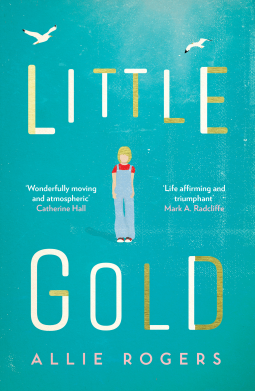
Little Gold is a moving and tense novel about growing up, facing difficulties, and finding the words for problems. Set in Brighton in 1982, it shows a tough summer for Little Gold – who has cast off her too girlish name and is teased by other kids for being weird. She has left middle school, her dad is gone, and her mum will barely get out of bed. Her older brother and sister are caught in their own problems, but when she becomes friends with Peggy Baxter, the old woman from down the road, she finds a place to escape to. When things get even worse, Little Gold has to find a way to tell somebody what is going on before it is too late, but she might not have words to say it.

In Little Gold, Rogers has created a fantastic character, a girl on the brink of adolescence and trying to deal with being different. Much of the narrative is from her point of view and the style gets inside her head, leaving the reader tensely hoping that better will come for her. Peggy’s chapters are slower to get into, but as soon as her backstory starts to be revealed they become more gripping, with the visit of her former lover Vi a particularly touching part, especially when Little Gold joins them. The dark, abusive threat at the heart of the novel is carefully written, not for shock effect, but as part of a narrative showing how those in need of protection can be exploited and how problems can all become entangled.

This is a novel that touches upon a lot of issues, held together by an enchanting main character whose struggles with knowing who she is as she grows up are moving and relatable. Rogers creates an oppressive atmosphere showing the limits of being both young and old, a world where it is the middle aged adults who are the threat or let down, but also a positive novel that affirms that being different is okay and that friend and family connections can help even at the darkest times.

Girlhood by Cat Clarke

Sugar and spice and scars for life: Girlhood by Cat Clarke

image

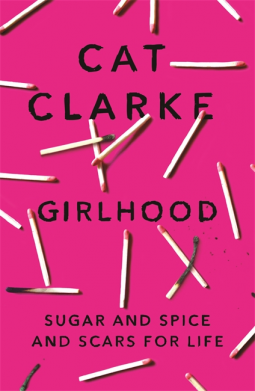
Girlhood is a dark and emotional YA novel about friendship, grief, and whether things are really as they seem. Harper goes to a boarding school in a remote part of Scotland, but she hasn’t always: before, she lived at home with her twin sister Jenna and her parents. After her sister’s death, however, she went to Duncraggan Academy and found a tight group of friends who have her back. When new girl Kirsty turns up, it seems like somebody might understand the secrets Harper keeps hidden. Kirsty is not quite as she seems, though, and Harper finds herself falling down a hole, unsure who she is anymore and what is true.

Clarke’s novel is gripping, exactly the kind to read in a day or two, devouring the narrative. It is full of emotional tension, dealing with teenage problems of all sizes whilst also having a thriller-like sense of mystery. Harper’s first person narration gives an insight into someone dealing with guilt and grief, and how these issues help to blind her to the lies that start to appear. The intense friendships throughout the novel feel very real and varied, showing how groups of friends can be very different people and still get along, whereas when somebody seems exactly the same, that may not be the case after all. Indeed, they are the kind of characters that make the reader want to continue reading after the words are over and find out what they do next as they grow up. Harper and her best friend Rowan’s relationship in particular was a highlight, showing how falling out doesn’t stop a person caring and how sometimes the stakes end up bigger than realised.

Girlhood is a fantastic novel, not only for teenagers but for anyone who enjoys books centred on tension and female friendships. It is incredibly difficult to put down and manages to deal with big issues in a light and often funny way whilst also having a darkly compulsive narrative.

Shakespeare For Freedom by Ewan Fernie

Why Shakespeare’s Plays Matter: Shakespeare For Freedom by Ewan Fernie

image

Shakespeare For Freedom is a book – yet another – proclaiming to say why Shakespeare matters, why his plays still matter today. In this case, the lens through which Shakespeare’s relevance is viewed is ‘freedom’, a concept which Fernie opens up to mean personal freedom and freedom of identity. Though the title sounds like a kind of political call, Fernie’s book looks at freedom as more of an affirmation of life than a political or societal concept. Different chapters look at historical examples of the connection between Shakespeare’s works and freedom, examine Romeo and Juliet in light of freedom, and construct critical and historical narratives about Shakespeare, freedom, and identity.

Fernie’s introduction makes the salient point that after numerous cultural celebrations of Shakespeare in the past five years – with the Olympic opening ceremony and different anniversaries – it is important to restate why he matters, particularly to non-academics. He positions the book as coming after Jonathan Bate’s The Genius of Shakespeare in this regard, though Fernie’s book has less of an approachable feel, with a chapter on Hegel’s writing and a general assumption that anyone reading is already sold on Shakespeare mattering a lot. Despite this, Fernie raises interesting points about freedom, including the distinction between freedom to be who you are and freedom to be different, which he then uses to interrogate Romeo and Juliet through the title characters and through Mercutio. His argument that Ganymede in As You Like It should be mourned as a ‘death’ that is a loss of freedom shows this focus on identity and opens up fascinating potential.

Most of the questions raised in Shakespeare For Freedom seem to be answered with ‘freedom’, it being the reason to read Shakespeare and the reason to continue doing Shakespearean criticism. Thankfully a later chapter provides an opposing point, highlighting examples including Lincoln’s assassination and Tolstoy’s attack on Shakespeare to show that freedom and Shakespeare are not always straightforward. This leads well into the concluding point that we should learn freedom from Shakespeare, not a simple kind of freedom but an ambiguous one.

Fernie emphasises politics and personal identity at different points, suggesting that this Shakespearean idea of freedom is varied and therefore easily adaptable to different situations, as his variety of examples show. Ultimately, these examples are not groundbreaking, but Shakespeare For Freedom provides a varied look at historical events and critical arguments that shape this concept of freedom. Ferne certainly makes the case for Shakespeare’s plays as inviting everyone to look at their own personal and political freedom, though it may feel like a naive concept at times.