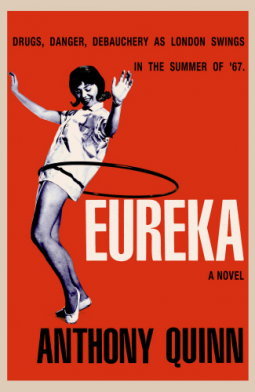
Eureka by Anthony Quinn

Acid trips and revelations: Eureka by Anthony Quinn
image

Eureka investigates an elusiveness about art whilst also being a Sixties caper. It follows the making of a new film by German director Reiner Werther Kloss: a very loose adaptation of a Henry James story being written by man-about-town screenwriter Nat Fane, a man who likes an exciting life more than getting work done. The film features fledgling actress Billie Cantrip, whose introduction to the world of cinema is not quite as she expected, with mystery, acid trips, fire, and many, many secrets featuring as the film ‘Eureka’ is slowly made.  The bustle of art, music, and gangsters in London in 1967 forms the backdrop for the book, which somehow balances the fun and danger of the period with meditations about obsession, artistic creation, and the hunt for real meaning.

Quinn gives all of the main characters extensive backgrounds and moves between focuses on them to weave together a long story, though the narrative doesn’t take place over more than a summer. Intercut between the chapters are snippets of the screenplay for the film that Fane is writing within the narrative, revealing the secrets of the film as the tension in the story rises. This technique gives good freedom for Quinn to counterpoint ideas about art and love in one story with another, and also to break up one narrative with another. This means that the book doesn’t feel as long as it might, and it stays gripping throughout with enjoyable characters and some surprisingly intriguing strands of plot.

As is discovered in the film being made, art should not give all the answers, and Quinn does not, giving his ending enough ambiguity to follow through with this message about the questioning of meaning. Eureka is a literary caper that delves into obsession with art and refuses to give definite answers to many of its major questions.
Christopher Wild by Kathe Koja

Kit Marlowe, three times over: Christopher Wild by Kathe Koja

image

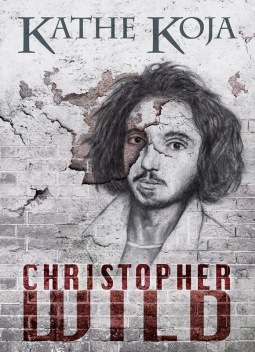
Christopher Wild is an imaginative historical novel, a menacing dystopia, and a grimy city tale in one. It tells a raucous life, a claustrophobic life, a poet’s life, three times over: the trajectory of Elizabethan poet Christopher Marlowe in his historical setting and beyond. The first third is Marlowe as he faces danger from the Service for his role as an intelligencer, his famous plays, and his infamous pronouncements about religion and beyond. The second part is a twentieth-century tale of a gritty poet’s life, tied up in gay bars and covert investigation. The final section is a near-future dystopia of intense surveillance, where the poet known as X04 is fighting for his freedom.

Koja’s book puts an unusual spin on a historical figure who has been the focus of plenty of written works previously, from conspiracy theory novels claiming that Marlowe wrote Shakespeare’s works  to Burgess’ delightfully playful A Dead Man in Deptford. The first section reads like another in this line, the fan fiction about the outrageous life of an apparent gay atheist spy turned poet and playwright from the late sixteenth-century. The fast-paced prose hurtles forward and the references are piled in, meaning that it can feel like a whistle-stop tour of every mention that needs to be made about Marlowe’s life. For fans of him and novels about him, this feels a bit too obvious, but the references are necessary for less knowledgable readers to be able to appreciate the later two parts.

The remaining two thirds of the novel tell two other stories, other outspoken Christophers who also write poetry, fight the authorities, and sleep with a complicated tangle of men. Koja takes advantage of the looseness of Elizabethan spelling to create new versions and echoes of characters and scenarios in a way that will probably delight some and annoy others. Every version reads Ovid and Lucan (the real Marlowe translated works by both of them), smokes tobacco (as per the infamous ‘all who love not tobacco and boys are fools’ line from Richard Baines’ list of accusations), and writes poetry. The prose style that captures a tumultuous Elizabethan London doesn’t slow down, and whilst it is slightly less effective in the later sections, it allows for a poetic style and an overlaying of words that matches the way the narrative and characters are overtly replicated.

This kind of transformative work is nothing new (and indeed there are plenty of examples in literature and on the internet of people doing similar not only with Marlowe, but with a whole range of historical figures), but Koja’s combination of the settings does feel fresh, particularly the final scenario in which the dark web and digital surveillance give a new meaning to the spy-intelligence-based drama of Marlowe’s probable life. Marlowe fans are likely to enjoy the ride, even if some of the ideas (like that he was forced into writing a new play about the secret service that led to his death) are somewhat out there. As novels, TV shows, and films about Shakespeare continue to proliferate (and often reduce Marlowe to a bit part), it is always good to see more attempts to present elements of Marlowe’s life in new fictional ways.

[And in case you missed it, here’s the drinking game I invented whilst reading this book.]

Spoonbenders by Daryl Gregory

Tricks of the mind: Spoonbenders by Daryl Gregory

image

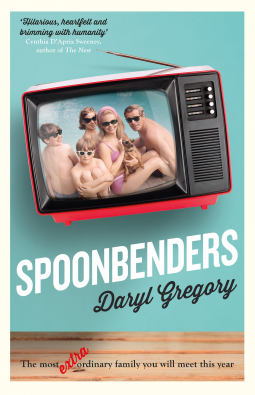
Spoonbenders is a quirky and amusing novel about a dysfunctional family of psychics and con artists. The Telemachus family—Teddy and Maureen and their three children—were a national sensation until the day they went on television and were less than magical. Twenty years after their fall from grace, grandson Matty discovers that he has some psychic powers like his family, and finds himself caught up in the middle on the ongoing family drama as they fight for money, power, and love.

The novel is told from the perspective of the main members of the family, jumping back and forth to show their different abilities and priorities. This gives it the classic feel of an intergenerational novel, with family secrets and troubles being hidden and revealed. The hijinks and troubles with the government, with the local mob, and with each other are amusing, but also carry the level of threat of a gangster story or similar to keep narrative tension. The writing is straightforward and Gregory carefully withholds small details and reveals them with dramatic or casual effect. Unsurprisingly, the characters are larger than life, especially charismatic trickster Teddy and outsider son Buddy, and their complex family relationships give the novel a fun humanity akin to any family drama.

Spoonbenders feels like a Wes Anderson film written down. It is imaginative and enjoyable, a great light read with some decent stakes and a combination of real powers and tricks.

Good As You – From Prejudice to Pride by Paul Flynn

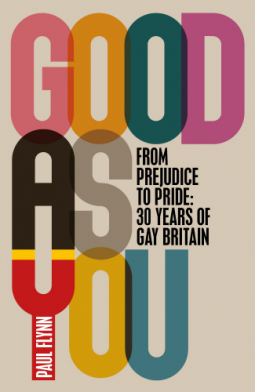
Good As You – From Prejudice to Pride: 30 Years of Gay Britain by Paul Flynn

image

Good As You is a powerful, sometimes funny, and emotional account of British gay culture from the hits of the 80s and the identification of HIV to the legalisation of same sex marriage. Flynn organises this into thematic sections—music, television shows, football, reality stars, politics—with personal anecdotes to introduce each part. There are interviews with various important figures, well-known and less so, and a wealth of detail, both factual and anecdotal, which makes the book a vivid account of the good and bad of gay men and popular culture across the last thirty years.

The format means that the book could be easily dipped in and out of, and it is a light and sometimes humourous read. The different chapters will have varying appeal depending on the reader—for instance, my personal interest leans more towards music and politics—but overall every section is interesting, highlighting things like the ongoing lack of acceptance in football and the connection of reality TV and gay culture in the 2000s. Of course, the spectres of AIDS, homophobia, and mental health loom large, and Flynn on the most part does not avoid them to make a nicer portrait of an upward struggle.

The book touches on most aspects of British culture, showing how ‘Gay Britain’ has evolved and changed over the past thirty years. Due to space constraints and readability, Flynn focuses on specific examples of important moments and figures (which may leave some people disappointed that their greatest influences aren’t included), creating a book that feels a bit like a documentary series, engaging and varied. Good As You is a book that needs to exist, part-personal memoir and mostly a look at the personal and larger effects of British gay culture until the present day.

The Party by Elizabeth Day

Privilege, obsessions, and the dark side of the high life: The Party by Elizabeth Day

image

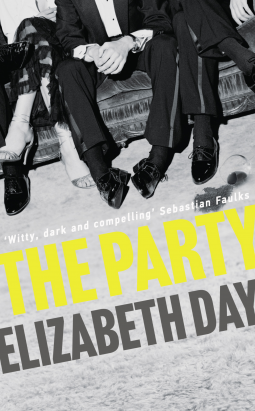
The Party is a dark and clever novel about privilege, obsession, and the immovable establishment in British society. Martin Gilmour went to school and university with the rich Ben Fitzmaurice and became an accepted part of his best friend’s family, but a secret in their past and their precarious relationship in the present threatens to blow apart this friendship forever and reveal that Martin was never really a part of the world he thought he had ascended to. Day’s novel exposes hypocrisy and lies in the upper classes, but also the frailty and delusion of human relationships, as Martin and his wife Lucy recount events in the past and present.

The narrative style of The Party is gripping, jumping between time in a flashback style whilst Day carefully controls how much information is given. The plot centres around a party that Ben holds for his 40th birthday and how this causes Martin to look back at the past and consider their secrets. It is a classic structure that allows a slow reveal of the past, tense as it becomes clear that this is not a simple case of boyhood friendship continued into adulthood. Martin is painted as an outsider, someone who learnt how to fit in through his relationship with Ben, leaving him reliant on his best friend, but it is clear to outsiders that this is not as simple as Martin might claim. He is an unreliable narrator and through this Day shows his obsession and how this could teeter on the edge of revenge. The other characters are less notably presented, often because Martin does not describe them objectively, but this gives the reader a sense that a lot is being covered up or rewritten.

The Party is a timely novel, poking fun at public school and Oxbridge educated, everything handed to them on a plate politicians as well as the institutions which allows those rich enough to get away with anyway. It is also a very enjoyable read for anybody who enjoys novels about the dark side of privilege and characters who get themselves into that world, but at a price.

Hings by Chris McQueer

Drink, drugs, and the uncanny: Hings by Chris McQueer

image

Hings is an adrenaline-paced collection of short stories with surreal twists and riffs on the everyday using puns, weird ideas, and ridiculous scenarios. Drones taking over a postman’s life, everyone’s knees on backwards, the korma police, and a shed with a banging techno night are just a few of the things that crop up in McQueer’s laugh-out-loud short stories. Lengths rang from a few short, sharp pages to a longer tale of a bowls rivalry told in little chunks, making Hings perfect to pick up for a laugh or two, or settle down for a binge on the dark and ridiculous fueled by drink, drugs, and the uncanny.

There are laughs from the first page and the book immediately grabs you in with a hilarious and disgusting story of Sammy deciding to try whelks for the first time. It is packed full of Scottishness, working class life, deadpan comments, and jokes about Harambe and Buzzfeed’s Scottish content. McQueer’s characters are mostly looking for ordinary things—a good time out, money, pals, get through another day at work—but the fucking weird turns up too, making Hings a witty take on everyday life if it got a bit stranger.

The comparisons with Irvine Welsh and Limmy are obvious when you read it, but McQueer is really a master of the hilarious short story, packing in twists and turns in very short spaces and making it hard not to laugh out loud (and cringe occasionally). Hings is one for anyone who likes provocative and fresh short fiction and Scottish humour, or wants to prove they’ve read more than just those Buzzfeed Scottish tweet articles.

[Note: Hings can be preordered here. Cheers 404 Ink for the proof copy!]

The Book of Harlan by Bernice L. McFadden

Sharp historical fiction: The Book of Harlan by Bernice L. McFadden

image

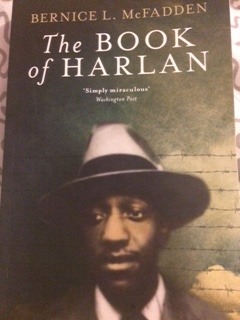
The Book of Harlan is a detailed and sweeping historical novel that follows the story of Harlan Elliot from his parents’ courtship in Macon, Georgia to the irrevocable effects that his time in the Buchenwald concentration camp had on the rest of his life. He grows up and becomes a musician in Harlem, ending up invited with his best friend Lizard to play in Paris with their band. However, they are still in Paris when the Nazi occupation begins, and so Harlan’s story turns from rising musician to a fight for survival, and the horrifying effects even once the war is over.

McFadden uses a combination of historical fact and research, the stories of her ancestors, and imagined characters and emotion to create the vivid historical narrative spanning decades. Though Harlan is the main focus, there is a large cast of characters, and they fade in and out as they would from Harlan’s life, giving a real sense of the way people come and go, and how lives can be close or far apart. The complex depiction of Harlan’s parents and their roles in his life is a notable element, showing how familial love can be both strong and complicated. The novel is written in short, sharp chapters, allowing McFadden to jump time and give devastating moments in concise lines. Overall, this makes for a highly readable historical narrative, which is detailed but also fast paced, and captures a sense of the music that is so important especially in the first half of the novel.

This is a refreshing historical novel, written in a distinctive style and with a focus on race both in twentieth-century America and in the context of the Holocaust. McFadden shows that there are still new historical narratives to be written about a period that has been much fictionalised, ones in which the highs and the horrors are both shown, and where lesser-known history can sit alongside that which must be remembered.

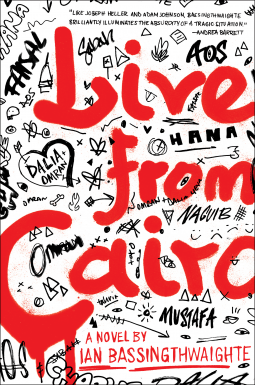
Live From Cairo by Ian Bassingthwaighte

Live From Cairo by Ian Bassingthwaighte

image

Live From Cairo is a gripping novel about Egypt after the revolution in 2011, told through the human consequences of one woman trying to escape Egypt on her path from Iraq to America to join her husband. The novel is about the way in which the characters – Dalia, her husband Omran, and those caught up in their story – hope and concoct a plan to try and get Dalia out of Cairo.

Despite the political realities of the book and the frequent depictions of the protesters and the army in Egypt, the novel is really focused not just upon Cairo but upon the whole situation in the Middle East and Africa and the way in which it affects individuals as people, with hope and love and friendship. Hana, the Iraqi-American UN worker tasked with dealing with Dalia’s case, has her own family trauma from previous conflict in Iraq, a reminder that the more recent conflicts are nothing new. The American lawyer fighting for Dalia, Charlie, and his Egyptian friend and colleague Aos complete the main cast of characters, all individuals from different places and backgrounds drawn together in Cairo.

The book’s style is light and straightforward; it gives a lot more weight to positive emotion and hope than despair or the harsh stories of both main and smaller characters. Live From Cairo is not a deep look at political unrest or a humanitarian crisis, but it a book about people and an enjoyable novel, all the whilst highlighting an issue that is just as prescient today as it was in 2011.

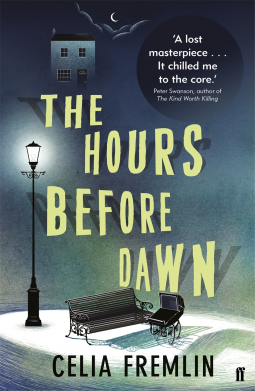
The Hours Before Dawn by Celia Fremlin

Forgotten psychological mystery from the 1950s: The Hours Before Dawn by Celia Fremlin

image

The Hours Before Dawn is a gripping psychological mystery originally published in 1958. This new edition of the book termed a “lost classic” is a fantastic chance to read a simple yet tense story about a woman who just wishes her baby would stop crying in the night so she could sleep. Louise is exhausted and this does not help her growing suspicions about their new lodger—suspicions that her husband does not share—or her ability to perform the role of a perfect Fifties housewife.

The mystery element of the novel follows the trope of a woman battling her own issues (in this case sleep deprivation and the pressures of being a woman, wife, and mother) whilst trying to prove that she is not becoming paranoid as a result of them. Though it was written fifty years ago, the book has a timeless kind of feel, without many time-specific details and with a general sense of the universality of a woman not being believed and struggling to deal with societal and familial pressures. In some ways, however, the novel says a lot about a woman’s position in the 1950s in particular, with comments about how different mothers view advice on raising their children for example, but it also shows that many elements do not change. Louise’s struggle to keep her house and children in order to stop the neighbours asking questions could have been written in the modern day.

This new edition has a preface talking about the reissue and a useful biographical note about Celia Fremlin that give context to the book. However, it does not need context, as it is a sharp-witted and timeless psychological story about crime, paranoia, and sleeplessness, which deserves to be discovered by new generations of readers.

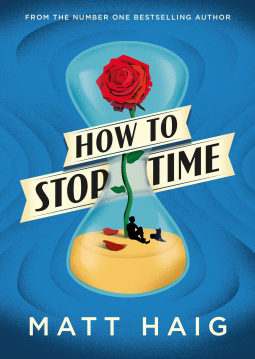
How To Stop Time by Matt Haig

Shenanigans with a near-immortal overthinker: How To Stop Time by Matt Haig

image

Calling a book life-affirming is an overused cliché. In How To Stop Time, Matt Haig once again creates a novel that holds up a mirror up to life and mental health issues to show a character dealing with their problems and coping with being different. He doesn’t so much affirm life as offer up a story about the freedom to live and to really feel like you are living.

Tom Hazard looks like he is a forty-one year old History teacher in a London comprehensive. Actually, he is older – a lot older – due to a rare condition that slows down aging. He was born in the sixteenth century and played lute for Shakespeare and piano amongst the Roaring Twenties, but now he is hiding from the past, trying to stop memories from catching up with him and not daring to think about having a future. For preservation, he is not allowed to fall in love. However, the past, the present, and the future have all decided that they have a date with him and Tom finds himself facing up to who he is and what he wants from his very long life.

Haig writes with a kind of honest straightforwardness that is similar to his other books, a style which brings the character’s insecurities and thoughts right to the surface and creates an emotional book. It is from Tom’s point of view and jumps between the present and his long past in a memory style. This means that much of the book is more focused on thoughts, introspection, and inaction than events occurring (perhaps Tom should’ve had a few words with Shakespeare about Hamlet). The narrative is simple and not particularly original – person alive for centuries runs into famous people, meditates on lost love, looks for others with similar longevity – but the real selling point is the way that Haig makes it more about learning to actually live life and not being fixated on the past or panicked about the future.

There are a number of particularly endearing details and characters, such as the Tahitian Omai becoming a modern surfing star who believes in living your life to the full. Haig’s descriptions of the Roaring Twenties stand out as getting across both the all-consuming feel of the period and poking slight fun at it appearing as an epitome in a similar vein to the opening of A Tale of Two Cities. The extended appearance of the sixteenth and early seventeenth centuries, with witchhunting and Shakespeare and the plague, are less exciting, but give a good base for Tom and his views of the world.

By the ending, Haig answers his promising title and shows a character learning to reclaim the chance to live his own life how he wants to, with less fear of the future or the past. The book’s messages will resonate with overthinkers and anxious individuals wanting to escape their own headspace and live, but also anybody who enjoys a character-focused tale of love, life, and history.