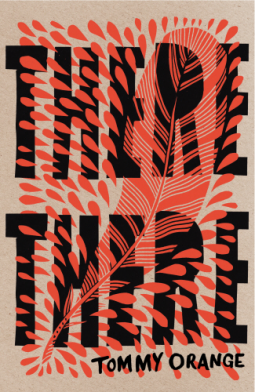
There There by Tommy Orange

There There is a gripping novel about a collection of people brought together by the Big Oakland Powwow, telling a story of cycles of violence and family. Jacquie Red Feather is newly sober and back in Oakland after a long time, not sure if she’s ready to see her grandsons and her sister Opal. Edwin is looking for his father and proving he can get out of the house and do things. Dene is collecting Native stories about Oakland to honour his uncle. Blue is organising the event and looking for her mother. And all the while, a plan to rob the powwow lurks beneath the preparations.

This is an explosive novel with a lot of energy. The narrative weaves the perspectives of a number of interconnected characters, telling the stories of how they ended up at the powwow and how their lives have unfolded in and around Oakland. It has a very distinctive sense of place as well as character, focusing on urban Native American life and identity. Oakland is really another character in the novel, and it is the location of the powwow that brings the characters all together, regardless of their connections.

There There is a thoroughly modern novel that looks backwards and forwards, bringing together the stories of a range of characters and how they relate to culture, identity, and violence. It is an impressive piece of literary fiction ideal for anyone looking for novels centred around place, identity, and character, or books that tell diverse stories from people with a multifaceted sense of culture and identity.
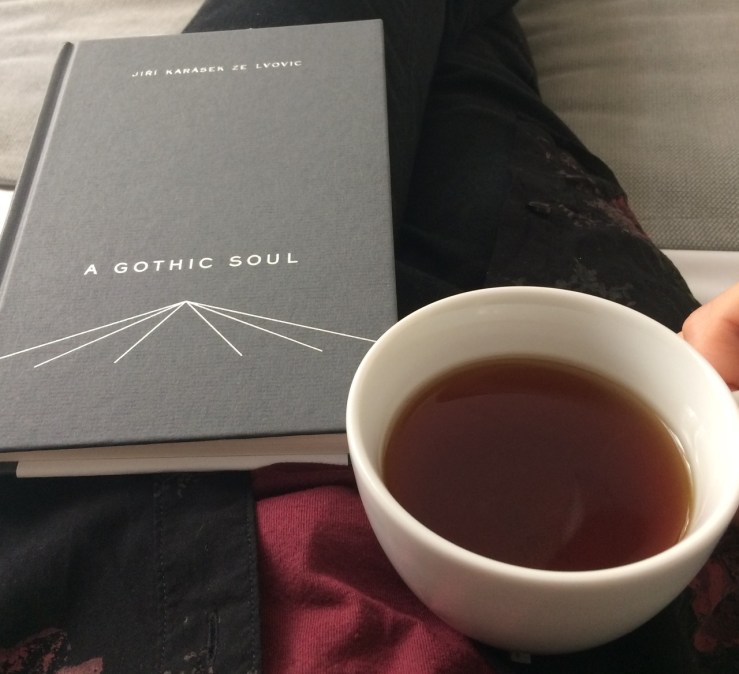
Czech Decadence in Prague: A Gothic Soul by Jiří Karásek ze Lvovic

An atmospheric piece of Czech Decadent writing, in which a nihilistic protagonist looks for meaning in life and compares his hopeless mindset to Prague, which he thinks of as a dead city. I picked up this translation at random whilst on holiday in Prague due to the title (and beautiful edition), and I’m glad I did. Lyrical and almost without plot, it won’t be for everyone, but this is a gothic novella that feels deeply connected to the city.

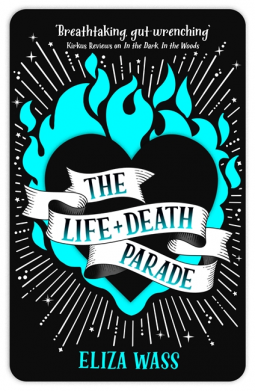
The Life and Death Parade by Eliza Wass

The Life and Death Parade is an atmospheric YA novel that combines an eerie secret travelling occult group with a depiction of grief across a family. Kitty had a complicated relationship with her sort-of boyfriend Nikki Bramley, who she grew up alongside and whose family home she now lives in following the death of her mother. However, now he’s dead, after a psychic told him he was going to die, and the Bramleys are all dealing with his death in different ways. Kitty tries to find the psychic who told Nikki his fate, but instead finds a strange medium, Roan. Roan seems like he could be the answer Kitty is looking for, with powers to talk to and maybe even bring back the dead, but she’s not sure he’s not a charlatan, even when the strange rituals and mysterious group lead her towards memories of her mother.

This is a novel filled with eerie and dark elements: the old castle that the rich Bramleys live in, the rituals and occult, intense obsession, and a strange group called the Life and Death Parade that Kitty decides she must track down for answers about Nikki and about her mother. Wass weaves a narrative that combines these with far more down to earth elements such as grief, love, and uncertainty. This makes The Life and Death Parade a book that feels far more real than its occult parts might suggest: something more like the fleeting magic of urban fantasy or the unnerving mysticism of the Bacchanalia from The Secret History.

Kitty is an interesting and unusual protagonist, who has lost almost everyone and needs to find something to fight for and a reason to keep fighting. Trying to work out what happened to Nikki and if there’s anything she can do about it may serve that purpose, but the novel—for all its occultism—ultimately shows that people need to find ways to move on. Nikki’s siblings Macklin and Holiday are also engaging, with Macklin’s struggle with guilt and Holiday’s extreme reactions helping to create the image of a messed up family in a moody old castle. And crucially, Roan works well as a mysterious and possibly dangerous figure, brooding over the death of his boyfriend and seeming to be a rock star medium who could solve the Bramleys’ problems.

The Life and Death Parade is a gripping novel, part story about grief with hints of magic and part thriller featuring a mysterious stranger. It will appeal to people who like their books with eccentric characters, complex love and obsession, and a dash of something otherworldly, whether young adult or otherwise. This is a book to read for the story, which becomes difficult to put down, and for the creation of an eccentric and intriguing cast and atmosphere.

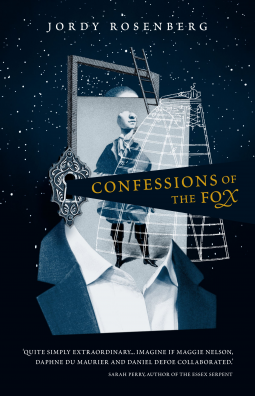
Confessions of the Fox by Jordy Rosenberg

Confessions of the Fox is a transformative, metafictional piece of historical fiction that takes the life of Jack Sheppard—infamous thief and gaol-breaker who provided inspiration for John Gay’s The Beggar’s Opera—and tells it afresh through a mysterious manuscript. A precarious professor, V. Roth, discovers a manuscript in a university clear out. The manuscript tells the story of Jack Sheppard, a transgender man indentured to a carpenter who turns thief and prison-breaker, and his love Bess Khan, who escaped the draining of the fenlands. Together they fight to uncover a strange secret that leads back to Jonathan Wild, Thief-Catcher General. However, the manuscript may not be as first appears, or so Roth seems to think through footnotes that lead the reader on another quest altogether, one that considers freedom, gender, and the archival text.

The novel blends a kind of eighteenth-century style—full of bawdy slang and thieves’ cant—with academic footnotes and personal reflection. Rosenberg’s Sheppard is a man motivated by love and freedom, in contrast to Roth, who talks of a lost ex and imprisonment within a corporate university system. And yet, Roth identifies with Sheppard, and the action of identifying with a subject of research becomes something else fictionalised within the novel.

Rosenberg’s novel is a difficult one to categorise. On the one hand, it is powerful historical fiction that carves a non-white, non-cis space in a certain point in eighteenth-century history. On the other, it is a postmodern consideration of oppression, theory, the archive, and what authenticity could possibly be. Within both of these strands, Confessions of the Fox fights for the untold story, for over throwing the masters, and for telling diverse stories for the people who have been left out of them. It is an exciting, powerful, postmodern book that forces the reader to look beyond its pages, but also keeping an adventure story of crime and love at its heart.

Hold by Michael Donkor

Hold is a moving, funny, and sad novel about friendship, shame, forgiveness, and growing up, that is set between Ghana and London. The protagonist is Belinda, a housegirl who moved from her village to Kumasi when the chance came. She works alongside Mary, a spirited eleven-year-old who became the sister Belinda never had, until Belinda is summoned to London to try and bring Amma out of her shell. Amma is a straight-A student who lives in south London with her Ghanian parents, but recently she has started to seem different to them, moody and uncommunicative. They hope that Belinda will be a good example on Amma, but Amma doesn’t want to be friends at first. And when they do start to get along, their own secrets might pull them apart again.

Belinda’s perspective is distinctive and holds the novel together as she discovers new ways to think and thinks back on the past. Donkor combines this with smaller parts from Amma’s perspective, which shows the differences in their lives and points of view and also how their friendship grows slowly. The way Donkor writes their friendship—how it is forced upon them, but also becomes more natural, something of a give and take—is crucial to the novel, which is full of different comparisons.

This is a multi-faceted novel with engaging and memorable characters, and vivid locations including a recognisably local south London centred around Brixton, Herne Hill, and Streatham. It is a story about growing up and coming of age across different cultures and positions in society, but also in relation to shame, sexuality, and grief. Hold is an exciting debut that combines gripping characters with vivid description to create a coming-of-age story with fresh perspectives.

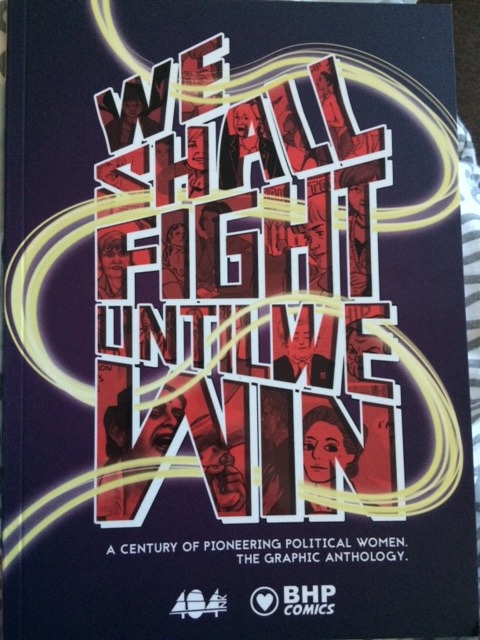
We Shall Fight Until We Win (pub. by 404 Ink and BHP Comics)

We Shall Fight Until We Win is a graphic anthology showcasing the lives of political women for the centenary of the first wave of women in the UK gaining the right to vote. Female writers and artists have come together to create short comics only a few pages long that tell the stories of women both well-known and lesser-known who have been engaged in politics in the UK and beyond.

The stories told in the book are wide-ranging, diverse, and often fascinating. This is an anthology that doesn’t shy away from the difficult topics, highlighting where the subjects of these comics have held questionable ideals. Many people may see the inclusion of Margaret Thatcher and question her place in the anthology, but actually the piece in question is about the fact she did not fight for women. Telling women’s political stories must include the less savoury elements as well. Alongside this, there is a focus on lesser-known figures and those often reduced to tiny notes in the margin of history (excellently covered in one comic) or silenced altogether.

It isn’t difficult to see that We Shall Fight Until We Win is an important anthology that engages with women involved in politics and activism in the UK. The short comics are moving and readable, making them an ideal way to engage people not interested or able to read a huge book about female political history, and the artwork is quirky and memorable. Once you read it, you’ll be thinking of more and more people in your life that need to read it as well.

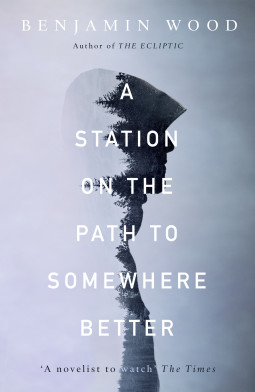
A Station on the Path to Somewhere Better by Benjamin Wood

A Station on the Path to Somewhere Better is an unnerving and raw novel about the aftereffects of violence and trauma. One morning in 1995, Daniel and his estranged father Francis set off on a road trip that is meant to help fix their relationship. Daniel’s mother doesn’t think it will, thinking that Francis will slide into his usual unpredictable ways. The further Daniel and his father drive, the more this turns out to be a trip unlike any other, and soon his father’s desperation and violence will be fully unleashed, and Daniel will bear the scars of these few days for the rest of his life.

It is hard to know what to expect from this novel when you start, but it quickly sets up the looking back on trauma and a tense situation that the narrator has obsessed over ever since. The story is not simple: Daniel tells it as remembered, but also with lies and bias and an intertwined audiobook that was engrained into the events. This makes the style intense and often visceral, but also musing on the impact of memory and how things are viewed by different people. The novel feels distinctive and unusual, menacing and focused on the description of the everyday English landscapes forever tied to violence for Daniel.

Wood’s novel is worth reading even if the sound of it doesn’t immediately grab your attention: it is more than its summary, an unnerving read that uses unreliability to depict childhood trauma and a lingering menace to build suspense for what must inevitably come.

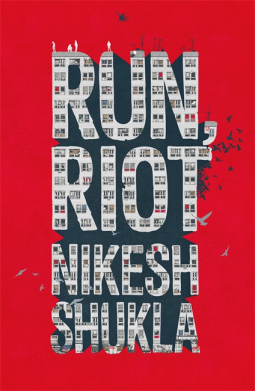
Run, Riot by Nikesh Shukla

Run, Riot is a fast-paced and tense YA novel about community, gentrification, and fighting to expose the system. Taran and her twin brother Hari live in Firestone House, a tower block near the centre of the city. It wasn’t where they would’ve chosen to live, but they have friends there and a life. When Hari gets caught up in police violence, the twins and their friends Jamal and Anna find themselves on the run in their own home, in a race to uncover what is really happening to Firestone House and how far the corruption really goes.

The novel is structured predominantly around one night with some flashbacks, which gives it an electrifying atmosphere as the reader is drawn into the world of Firestone House and the frantic anger and fear of the main characters. Shukla has created a gripping bunch of characters, particularly Taran who is chasing her dream of being an MC whilst her brother dreams of leaving the area for the potential jobs of London.

Run, Riot is for fans of books like The Hate U Give who would like a novel set in England, exposing racism, gentrification, and police brutality closer to home for British readers. It is also for anyone who is looking for a carefully-paced YA novel with characters who feel alive and varied, whilst also angry and learning how to effectively fight for themselves and their community.

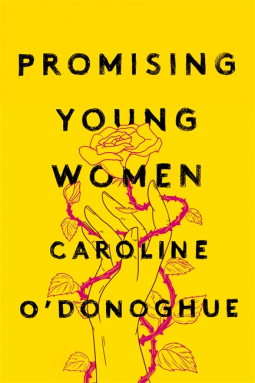
Promising Young Women by Caroline O’Donoghue

Promising Young Women is a witty and timely novel about a twentysomething woman living in London who is driven to doubting her sanity when she ends up involved with an older man at work, feeling like she’s turned into one of the people who submit problems to her anonymous blog. Jane works in advertising and an office party after a pitch starts off something with an older married man, but soon a promotion puts him as her mentor. Power and sex become blurred and Jane at first thinks everything is going well, but soon her friendships, her health, and her career seem to be tumbling down around her.

This novel is like Sally Rooney’s Conversations With Friends for the London office scene, where young women are forced to battle one another and older white men hold all the power. At first, it is readable for the millenial trash vibe that it exposes, but as the narrative moves forward, it spirals into something darker. Consent, online presence and abuse, and mental health come to the forefront as part of the difficult battleground that young women face. What is notable about this novel, which doesn’t depict a particularly fresh story, is that along with Jane, the main character, there is a whole host of varied female characters, flawed and fighting in an environment where men are holding much of the power.

Promising Young Women is a clever look at the male-dominated office culture world in London. It is also a biting look at mental health in young women and the difficulties of being listened to, taken seriously, and kept safe as a woman. Read it over an overpriced hipster cocktail in a pretentious bar and think about everything that is wrong with the world.

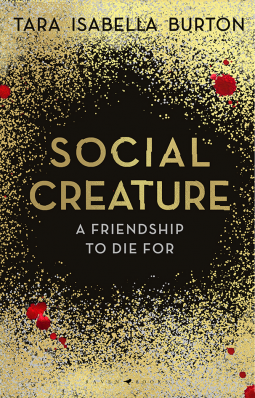
Social Creature by Tara Isabella Burton

Social Creature is an outrageous, biting novel that takes elements of Bret Easton Ellis and The Secret History and other detailed literary thriller-type books and gives them a modern twist. Louise lives in New York City in a shabby apartment in a sketchy location, working multiple jobs and barely even claiming to be a writer any more. In a twist of fate, she meets Lavinia: rich, fun, breathtaking, with a beautiful home and a social life to die for. Somehow, Lavinia pulls Louise into her world, sharing her clothes and paying for their Ubers as they party their way through the wannabe literati of NYC. However, this charmed life surely cannot last forever, and Louise might have to take drastic action if she wants to keep living like her new best friend.

Burton’s writing is fast and precise, using detail in a variety of ways to be both satiric and further the narrative. Instead of business cards and restaurant reservations, this is social media likes and ridiculous tea flavours. Online opinion writing is the big thing, selfies capture moments that barely even happen, and as long as someone keeps up an internet presence, no one will worry. This is an excessive world, parodic at times, but also the life that Louise wants is clearly one that could be real, if someone believed every article and photo they saw online and thought they too could have that.

The narrative is clever in its simplicity: not full of twists and turns, but a situation that continues beyond belief. Small moment of a fourth-wall breaking narrative voice may seem incongruous, but they give fleeting hints that they and the reader know the genre, the inevitability of this story. As with other similar books, it isn’t really a thriller, but also it has the pace of one in many ways, as well as the darkness. It addresses the homoerotic tension usually present in these kind of stories, as well as seeming to explore how a female friendship at the heart of the narrative might be different to tales of all-consuming male friendships.

Social Creature isn’t doing something new, but twisting a kind of book usually written or set in the nineties into a kind of millenial hell. There’s pretentious literary quotes and classical scholars, the desperation of trying to become part of a rich world you can’t afford to be in, an all-consuming new friend with an overpowering personality, but there’s also Instagram, secret hipster speakeasy bars, and opinion websites called Misandry!.