The Killing of Butterfly Joe by Rhidian Brook

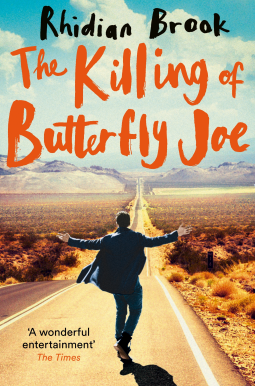
The Killing of Butterfly Joe cover

The Killing of Butterfly Joe is a quirky novel about butterflies, lies, and a road trip. Llew Jones is a Welshman in America, looking for an American adventure he could write about. A chance encounter with Joe Bosco, charismatic butterfly salesman with an unusual family and morphing past, sets Llew—newly christened Rip Van Jones—across 1980s America in search of butterfly fortune. However, all does not go to plan, and telling the truth becomes vital.

Filmic in its combination of road trip, thriller, and morality tale elements, this is a novel that is bold and charming like its titular character. Considering it is centred around selling dead butterflies, it is surprisingly gripping, using a framing device of Llew telling the story to prove his innocence combined with a story that doesn’t seem like it’s going to end in death. A real focus of the novel is upon truth, lies, and telling your own versions of stories, from sales techniques to finding out people might be exactly as described. This gives it a nice metafictional aspect along with a narrator clearly trying to craft a narrative. 

It is the combination of elements—characters, tension, road trip, telling stories—that really make The Killing of Butterfly Joe come together into an unusual novel, a charming and fun read. It is a book for people who enjoy personal mythology and a character being pulled into the world of an eccentric family, but also a narrative with tension and entertainment.

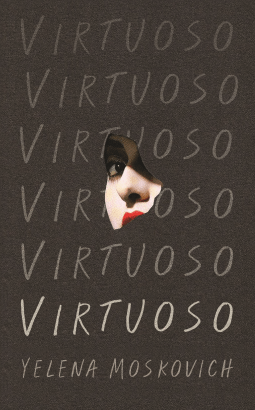
Virtuoso by Yelena Moskovich

Virtuoso book cover

Virtuoso is a stylistic piece of literary fiction that circles around the lives of a number of women. Jana’s Czech childhood was interrupted by raven-haired Zorka, a whirlwind who then disappeared. Jana is now an interpreter in Paris for a Czech medical company, where she meets Aimée, who is mourning the death of her wife. And in an internet chatroom, an American girl plots to rescue a Czech housewife from her husband.

Dreamlike in its narrative and in many of its descriptions, the novel moves between the stories and perspectives in a way that, surprisingly, mostly isn’t that confusing. When it is confusing, it feels like part of the style and the way that the fluctuations make the boundaries uncertain. The pace can sometimes be slow and sometimes fast, which again makes it feel like a series of dreams. The characters, particularly Jana and Zorka, are engaging, though at times it feels like you drift away from them and then return.

The artsy quality of Virtuoso, created through its style and interconnected narratives, will mean it isn’t for everyone. However, this is what makes it stand out, and it manages to make the characters’ narratives gripping even when it isn’t clear where anything is going.

Paul takes the form of a mortal girl by Andrea Lawlor

Paul takes the form of a mortal girl is a sharp and fun novel about 90s identity politics and LGBT culture. Paul Polydoris is a bartender at a gay bar in an Iowa university town, but he has a secret: he can shapeshift. As the narrative moves from Iowa to Michigan to Provincetown to San Francisco, Paul finds music, excitement, struggle, and intimacy, but what is key to keep that freedom to transform.

The novel digs deep into Paul’s emotions and connections with other people, but also stays witty and observational. It doesn’t so much have a narrative as it is a picaresque that follows Paul’s existence and journeying, bartender to bookseller, body transforming and style changing. Short inset stories feel like myths and the book has a slightly mythic feel, but ultimately the shapeshifting feels very real, just a fact of life. Lawlor fills the novel with music and pop culture, so that it almost feels like it has a soundtrack as you read it. There’s a lot that different people could take and interpret from it personally, about histories, identities, love, narrative, and a whole lot more.

Paul takes the form of a mortal girl has a carefully created and specific time setting and really creates a sense of place wherever Paul is. It also is a kind of timeless novel, which embraces transformation in a way that is exciting and riotous.

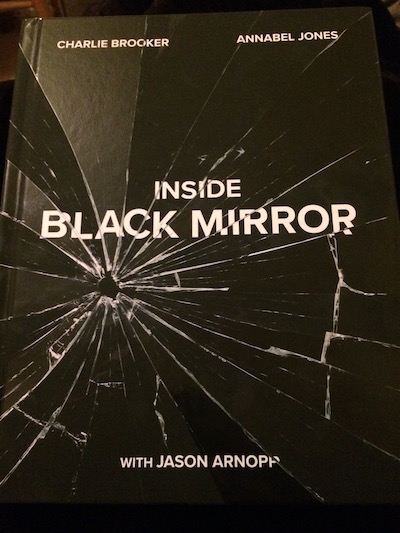
Inside Black Mirror by Charlie Brooker, Annabel Jones, and Jason Arnopp

Inside Black Mirror is, unsurprisingly, the story of TV series Black Mirror, told in oral history fashion by its creators, directors and actors amongst others. Due to the anthology format of the series, the book goes through each episode individually, with relevant people’s comments and discussion, and it is all held together by the voices of Charlie Brooker (creator, writer, executive producer etc) and Annabel Jones (co-show runner and executive producer). The writing is combined with stills and design images, which form a useful way of remembering key elements of the wildly differing episodes whilst reading the book.

TV tie-in books can be a bit naff. The sort of thing that make an easy gift. However, this one is less naff. Basically, it is very interesting, an in-depth look at both the process of creating an anthology show and fighting to get further series made, and how the cast and crew managed to actualise the weirdness that is Black Mirror. Brooker’s comments on the ideas and how plot lines evolved are particularly good, showing how much editing, rethinking, collaboration, and being forced by circumstance can make amazing narrative elements. It’s also worthwhile to read about the issues with getting Channel 4 to keep making episodes, for something that so notably moved to Netflix. Naturally, the book can veer towards self-congratulatory (all these famous actors wanting to be in it, oh look at the Emmys we won, etc, etc), but is kept from going too far due to Brooker’s trademark self-deprecation and the banter between him and Jones, who are longtime collaborators.

Seeing as the world has “gone a bit ‘Black Mirror'” (as Brooker says in the book), it’s nice to remember that the series is created as an entertaining art form, playing with genres and characters, rather than a collection of predictions we should all be worrying about.

Black Chalk by Christopher J. Yates

Part psychological game narrative with lashings of unreliability, part Secret History, and part all novels set at Oxford, Black Chalk is a tense and enjoyable book from my favourite subgenre, ‘group of friends in a closed off/privileged/academic setting Do Bad Things’. Six friends at Oxford University invent a game, a game for only six players that will span longer than just a few hours. Each week they must meet, play, and be given consequences, forfeits they must fulfil so as not to lose the game. As these get more humiliating and personal, it becomes clear it isn’t a game at all. And fourteen years later, the game still isn’t quite over.

Yates combines a plot that shows the underlying nastiness of people with a complex narrative structure, in which the story is being told but maybe not reliably, and maybe not just by who you think. This gives the tension an extra level, though the story isn’t as full of twists as might be assumed. As a literary thriller (and with characters falling into their own stereotypes), it can be possible to predict, but that doesn’t feel like a problem. In some ways, its similarity to The Secret History—in terms of psychological games, guilt, and narrators painting themselves in certain ways—defines it even though it is quite different, far more based around the tension of the game and an unfolding dual narrative than the kind of aesthetics and academia of Tartt’s novel. Its psychological element is probably one of its best traits, with a student game about humiliation slipping into something else.

Yates invents a kind of mirror Oxford, with fake colleges and streets and details changed or stolen, and in some ways the narrative involves a kind of mirror sense, of what happened to the characters and how they changed due to the game, how they might’ve been different without it. Black Chalk doesn’t always quite live up to its promise, but it is a gripping and atmospheric book that manages to combine a narrator with a questionable grip on reality with a tale of student recklessness and human darkness.

The Odyssey by Homer, translated by Emily Wilson

Odyssey cover

Here’s a quick review of Emily Wilson’s Odyssey translation, which I finished reading today (Christmas Day) after a Loot (the Joe Orton play) reread as an alternative to a Carry On film:

A hugely engaging translation of Homer’s Odyssey that works both as a readable version for those who’ve never picked it up, and an interesting take for those who have. As someone who has only read some of the big names in Greek and Roman literature in translation (thanks to one undergrad module and an enjoyment of Anne Carson), I found the introduction a good way in to the text, and Wilson’s book summaries and light notes highlighted interesting bits of wordplay and Greek mythology. In particular, her focus on assumptions made by previous translations,  one example being gendered insults, makes this an engaging act of translation that will hopefully pave the way for more translations of famous classical texts that open up some of this debate for a wide audience and question what has been usually translated before.

I read the new paperback edition, which still has the beautiful cover of the hardback plus uncut edges for decorative style, making both a good gift or treat as it’s a book you’ll want to keep.

My Sister, The Serial Killer by Oyinkan Braithwaite

My Sister, The Serial Killer cover

My Sister, the Serial Killer is a dark comedy about the bond between siblings. Korede is a nurse in Lagos and lives with her sister, Ayoola, and her mother. Her mother thinks Ayoola can do no wrong, but Korede knows otherwise. When her dinner is interrupted by a call from Ayoola saying a third boyfriend of hers is dead and she needs help clearing up, Korede goes to help. However, when Ayoola meets the cute doctor from Korede’s work, Korede has to think about whether she can continue to cover up her sister’s crimes.

This is a brilliantly pitched novel, a black comedy that delves into the darkness of Korede and Ayoola’s past and their father whilst also creating this image of Ayoola, the clothes-designing, social media loving serial killer sister. The chapters are short and the pace fast, like a thriller or a high stakes sitcom. Due to Ayoola targeting her boyfriends, the book will probably get comparisons with novels like Gone Girl, but it is far more focused on the sisters than on any of the men, on their bond than on revenge or anger at any man.

Clever and unputdownable, this is one to recommend to everyone who likes black comedy or wants a story about sisters with a bit of a twist. It could clearly be adapted for film or TV, but it works very well as a short, incendiary book that plays with the expectations of sibling rivalry and hiding crimes.

The Furies by Katie Lowe

The Furies cover

The Furies is a dark literary thriller about friendship and the artistic history of female power and revenge. After an accident claims the lives of her father and sister, Violet ends up at a private girls’ school for her A Levels, Elm Hollow Academy. It has a grisly history of witchcraft and Violet isn’t sure she cares about being there, but then she’s drawn into the world of Robin, a charismatic girl with red hair, and her friends Grace and Alex. Together they take extra classes with Annabel, an art teacher who follows the tradition of teaching a few students about mythology, art, and literature. The strange power she describes starts to sound like it could be real, and just when it does, the body of a missing former student and member of Annabel’s study group is found on campus.

This is The Secret History crossed with a girls’ school in the 90s and a sharp gothic edge. It follows a classic kind of structure for stories about a group in an isolated environment (here, a private school in a run down seaside town), with the narrator lonely and easily obsessed with their new friends. The narrative style is distinctive, causing purposeful confusion at times as Violet narrates with hindsight and leaving elements ambiguous. Notably, the witchcraft history—and the apparent summoning of the Furies of Greek mythology—is more of an inspiration and catalyst than the entire plot, and the story itself follows the tangles of friendship, violence, and revenge. 

Violet and Robin’s friendship is crucial and well-written, tinged by Violet’s perspective and her lack of self-awareness around it. Grace and Alex are also great characters, though it is a little frustrating that Violet often ignores them in favour of Robin, meaning they don’t get as much exploration as they could. Otherwise, Violet’s single-mindedness works well to create an atmosphere in which she doesn’t notice much else going on outside of their circle, intoxicated by what they’re doing and by drink and drugs.

The Furies may seem at first like it could be a young adult novel about toxic friendships, it turns into something much darker, in which the academic view of the teacher is essentially turned into reality by the students who aren’t so captivated by the art and literature as by the meaning. This gives it a different edge to other reference-laden literary thrillers, as it is the drinking, dancing, and revenge that means most to the teenage protagonists. This is a book that fans of The Secret History, Heathers, and the new Netflix reboot of Sabrina (preferably of all three) will likely devour.

Death in Paris by Emilia Bernhard

Death in Paris is a charming murder mystery novel set in Paris, in which two best friends turn  amateur sleuths when a former boyfriend of one of them drowns in a bowl of soup. When Rachel hears that Edgar Bowen is dead, she is reminded of their time together many years ago and how he helped her grow as a person. The details she hears about his death don’t add up: surely Edgar, who previously hated rosé, wasn’t drinking it with his soup? With her best friend Magda, Rachel starts to delve into the case, as the police won’t listen to her suspicions, but amateur sleuthing isn’t as easy as TV makes it appear.

This is a classic kind of mystery novel that is suffused with references to fictional detectives and literature. Rachel and Magda are trying to think like the protagonists of mystery stories, but also finding out how difficult it can be to get information out of people and lie where necessary to get them to talk. Their friendship is a key element of the book: it is their partnership that allows them to think over the facts and fictions of Edgar’s death. They’re clearly depicted as friends who, as two Americans who’ve made their lives in Paris, have been supporting each other for a long time and are genuinely there no matter what. Another major part of the book and related to them being Americans is its depiction of Paris: this is a novel that invites you to take a trip down the streets of Paris, trying to give the reader a sense of living there too.

Ideal for murder mystery fans and especially anyone looking for female led fiction that prizes friendship highly, Death in Paris is a fun read that would go well with a glass of red wine (or, in my case, homemade French onion soup).

The Gunners by Rebecca Kauffman

The Gunners is a meditative novel that looks at friendship, life difficulties, and difference. Mikey, Sam, Lynn, Alice, Jimmy and Sally were childhood friends, united by their relative freedom as latchkey kids and the abandoned house they made their den. When they were sixteen, Sally disappeared from their lives, no longer their friend seemingly without reason. Years later, they reunite for the first time for her funeral, and it turns out there were plenty of unspoken secrets about the time when Sally left.

The premise of The Gunners doesn’t sound particularly original, but the novel itself is quirky and thoughtful. It goes down routes that might not be expected, showing the differences in friendships and the ways in which people’s lives diverge and come together. It has a real focus on friendship that isn’t undercut as it can be in other novels and it really engages with the weirdness of drifting away from a group you were very close with and then coming back together. The ensemble cast is handled well, with the narrative looking into the childhood of each character alongside the present day.

A novel about friendship and hardship that keeps the focus on the friends, The Gunners was an enjoyable read, if at times as elusive with the past narrative as the characters were.