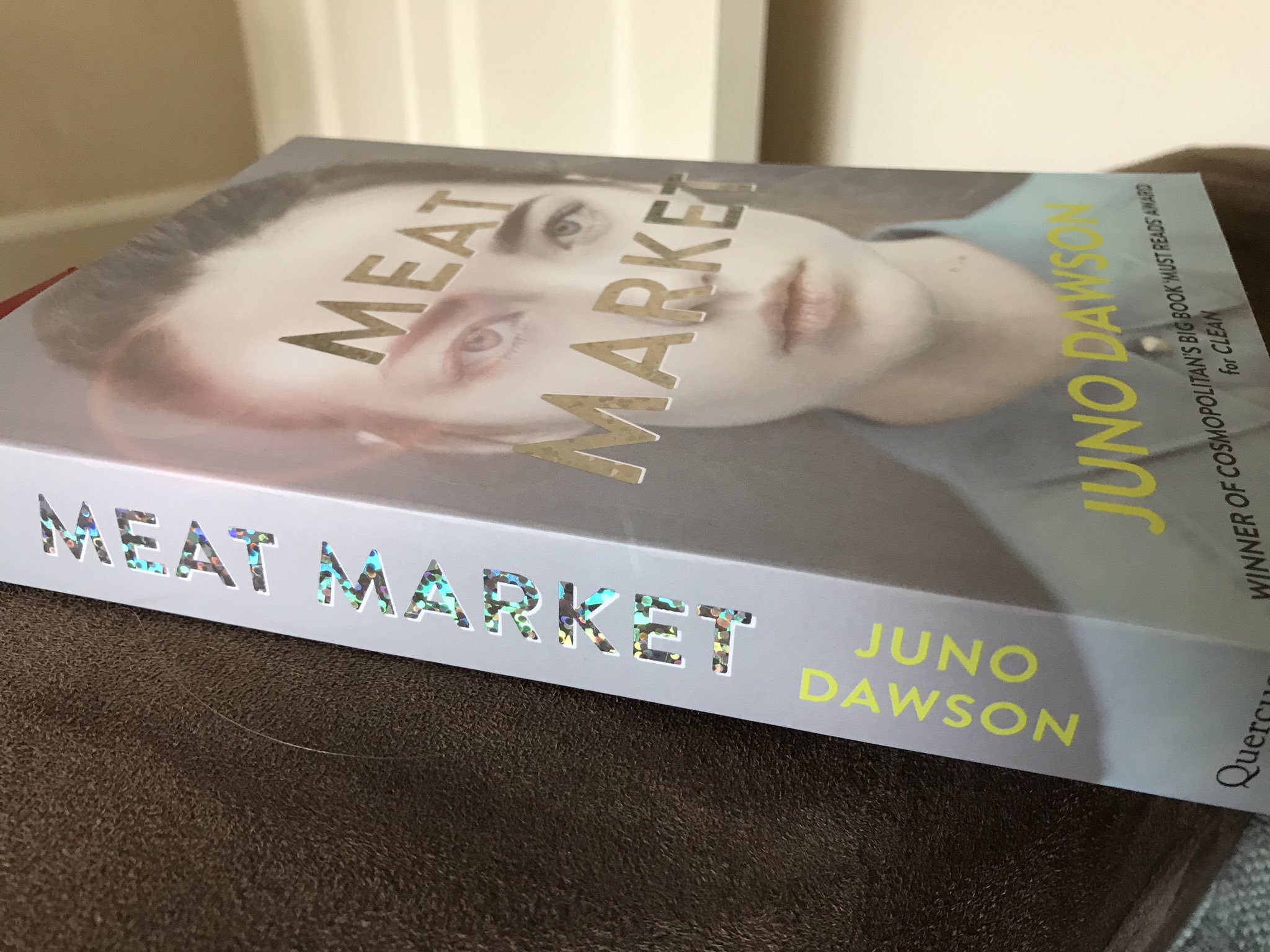
Meat Market by Juno Dawson

Meat Market cover

Meat Market is a gripping novel about the modern fashion industry and how a whirlwind success story can expose its dark side. Jana Novak is sixteen, lives on a south London estate, and is about to start sixth form when she is scouted at Thorpe Park by a modelling agency. She’s always been mocked for her height, but now it seems it’s a good thing. Soon she is learning the ways of the fashion industry—castings, shoots, fashion week—and being catapulted into the spotlight, but the fashion industry has a dirty side beneath the veneer and Jana quickly becomes acquainted with it.

Dawson turns her trademark bite towards the fashion industry, creating a YA novel that doesn’t shy away from topics such as drugs, sexual assault, and eating disorders, but also looks deeper at the loneliness of the industry and of teenagers becoming famous. What makes Meat Market distinctive is both the no-nonsense approach to these topics and the details of being a teenager. Jana is trying to stay grounded, but the details make the novel itself stay grounded despite the storyline that will be far beyond most readers’ experiences. Jana’s friendships twist and change in a realistic way, but also show that despite the often horrible and seemingly competitive nature of the fashion world, she does make some real connections with people in it that allow the narrative to reach its climax.

As she did in Clean, Dawson shows the young adult novels can (and should) tackle some intense themes, not hiding behind dystopia or alternate universes but make the world feel realistic and yet something most readers won’t experience. For some the subject matter might be a bit too much, but for others it will show the world beyond the Instagram photos.

Water Shall Refuse Them by Lucie McKnight Hardy

Water Shall Refuse Them cover

Water Shall Refuse Them is an retro coming-of-age novel with a horror edge, set in a heatwave in 1970s rural Wales. Sixteen-year-old Nif, her little brother Lorry, and her parents are spending the summer in a cottage in Wales following the death of her sister. Instead of healing, the sweltering atmosphere and isolation only exacerbates their problems: her mother’s grief, her father’s frustration, Nif’s own belief in strange rituals that might bring her answers. Nif meets a strange teenage boy, Mally, who has his own secrets, but neither he nor his mother Janet seem to be quite what the family need and the locals seem to hate them.

The sense of atmosphere in the novel is impressive and unnerving, a kind of haze where heat and grief and twisted rituals float like logic. The combination of mundane and folk horror elements with retro coming-of-age give the story a real charge, and it feels like a very British twist on a style that may seem more American, from authors like Shirley Jackson. Grief and adolescence are made strange, whilst the logic of superstition and the power of belief are almost tangible. The senses are crucial too, with sound and scent prevalent and there being a feeling of the heatwave hanging over the entire story.

This is a debut novel that allows for ambiguity and doesn’t tell the reader everything, building up atmosphere and a really eerie sense of what might happen. In her wild and unsettled protagonist, Lucie McKnight Hardy creates a character both sympathetic and menacing, and in some ways the whole novel feels like following a trail littered with bad omens, much like the dead animals littered throughout the book. The writing and atmosphere is what really makes it memorable, as well as the unnerving line between superstitious horror and twisted human nature and emotion.

Fabulous by Lucy Hughes-Hallett

Fabulous cover

Fabulous is a collection of short stories that retell famous myths in modern Britain, twisting ancient tales into relatable modern snippets. Orpheus, Psyche, Tristan and Isolde, the Pied Piper, and Mary Magdalen are just some of the figures given fresh new versions of their stories, mixing criminal gangs, immigration, estate agents, pest control, love and more.

The stories are knowing and witty, using observations and comments on modern society to try and make these very famous tales fresh. As expected, they vary in how they engage with the source tale, but the original myth is always central to the narrative and characters. Stand out highlights include the story of Diana and Actaeon with estate agents, Pasiphae and the minotaur with seaside gangsters, and adding further complications and some pink pills to the story of Tristan and Isolde. The two Biblical ones—Joseph and Mary Magdalen—are interesting, but may be more appreciated by someone who doesn’t have more knowledge of Greek myth and Arthurian legend than Biblical material.

It is the kind of book that is perfect for picking up and reading single stories, dipping in or choosing the figures that most interest you. The modern retellings are clever and fun, and the end has a quick guide to the original tales for anyone who didn’t know (or Google) them previously. There’s a delight in how famous the original stories are and how ordinary the characters in these versions can be. 

On Earth We’re Briefly Gorgeous by Ocean Vuong

On Earth We're Briefly Gorgeous cover

On Earth We’re Briefly Gorgeous is a raw and lyrical novel, written as a letter from a son to a mother who cannot read. It unfolds, non-chronologically, the story not only of a man in his twenties looking back at growing up, but of his mother and grandmother, of a family who came to America from Vietnam, and of trauma travelling across time and generations. The narrator tells, through the letter form, parts of his life that his mother didn’t know about, particularly his relationship with Trevor which was marred with addiction and the realities of life.

Vuong’s move to prose in this, his first novel, bears deep traces of his poetry, with the same powerful use of imagery and words that leave an imprint on the reader. The style helps the structure—which moves across time and brings flashbacks into accounts of particular scenes—to flow, and recurring images leave a memorable impression. Powerful and raw topics—race, class, sexuality, violence, opioid addition, death—are explored in a way that is both immediate and poetic.

This is a novel about unfolding your story and getting the chance to tell it as it is. Fans of Vuong’s poetry will enjoy the lyrical prose and the way he weaves a kind of narrative out of the letter format, and just the title hints at the poetic nature of the novel. On Earth We’re Briefly Gorgeous is a powerful book people will be talking about, and rightly so.

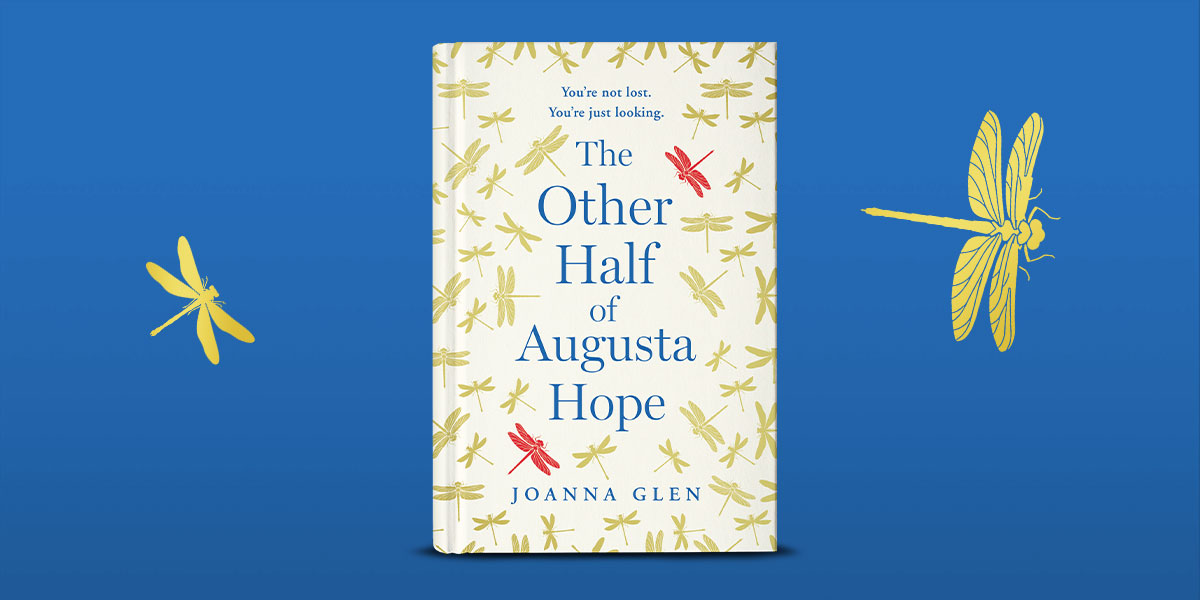
The Other Half of Augusta Hope by Joanna Glen

The Other Half of Augusta Hope cover with dragonflies

The Other Half of Augusta Hope is a novel about fitting in, loss, and the people you really have connections with. Augusta loves words and the dictionary. She chooses her favourite country—Burundi—based on its sound and learns all about it. And she’s different to her twin sister Julia. They grow up and when tragedy comes, Augusta realises that she really can’t stay in her hometown with her parents. Alongside this narrative is the story is Parfait, a boy in Burundi who wants to go to Spain, and becomes a man in Spain dealing with what has happened to his siblings.

This is a character-focused novel that has a lot of emotional power. The split narrative that moves between Augusta and Parfait works well to show their parallels and connections, and the narrative in general is well-crafted to foreshadow events. From reading the blurb, the novel sounded less multi-faceted than it actually is, and it was a pleasant surprise to have Parfait’s story as well. It sounded like it could just be a quirky novel similar to others with unusual character names in the title, but actually it covers topics like migrants in Europe and suicide as well as having main characters who don’t fit in.

It is the kind of powerful novel that a lot of people will find resonates with them after they’ve finished it, but which has a hopeful ending to match Augusta’s name.

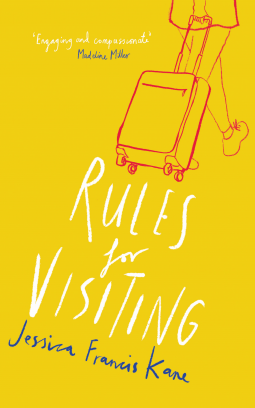
Rules for Visiting by Jessica Francis Kane

Rules for Visiting cover

Rules for Visiting is a novel about friendship, a meditative novel and focused on travel and home. May’s life is a series of routines: she lives with her elderly father, doesn’t see her brother, and doesn’t really talk to her neighbours. Though she enjoys her gardening career at the local university, she feels she needs something more, and some paid leave sparks off a chance to revisit some old friendships. As May visits her friends one by one, she reflects on their lives and her own, comparing classic literature and modern communication as she searches for what friendship is.

This is a calming sort of read, light and quirky but with some real meaning sown throughout. It has a precise and distinctive style, reflecting May’s thought processes, but leaving gaps for the reader to notice her loneliness and what she isn’t saying. The plant and book references are another distinctive feature, again very much linked to May’s character but also about how we use different points of reference to track our lives and our friendships.

Rules for Visiting is a quietly quirky book that looks at human connections and dealing with the past and the present. Maybe fittingly, it would make a good book to keep in a spare room or give to a visiting friend: a quick, understated yet moving novel that makes you think about friendship across time.

The Rapture by Claire McGlasson

The Rapture cover

The Rapture is a novel about a real life English religious cult and how one deeply entwined member finds something outside of what she knows. Dilys is a member of the Panacea Society, a group of mostly single women who lives across a number of houses in Bedford under the direction of their zealous leader, Octavia. When Dilys meets Grace, a new recruit to the society, it feels as if God has brought them together. As the society prepares for the moment of their salvation, and Dilys’ feelings for Grace deepen, Dilys must attempt to find the truth and protect herself from the others and her own mind.

McGlasson combines real documents and people with a fictional narrative that is gripping and powerful. The world and Dilys’ thoughts are immersive, and the reader into brought into the society as Grace is, seeing the message and slowly behind the veneer. Much of the tension is around Dilys’ personal struggles, but also a lingering sense of what the society might do next, as Octavia’s right hand woman Emily gains more power. Everything comes together in a satisfying way, but also leaving enough ambiguity as Dilys’ point of view can be unreliable.

This is a novel that takes a fascinating and little known bit of history and turns it into a moving story of finding yourself and finding love whilst fighting against all you know. The fact that a story like this is taken from historical fact and documents and happened in Bedford gives it an additional dimension, showing the reality of closed off zealotry and the line between faith and delusion.

Vicky Romeo Plus Joolz by Ely Percy

Vicky Romeo Plus Joolz cover

Vicky Romeo Plus Joolz is a romcom novel set in Glasgow in 2001, in which Vicky Romeo—heartbreaker of the gay scene who dreams of making her way as an actor—meets her match in Julie Turner, who isn’t falling at her feet as expected. Romeo can’t get her Juliet out of her head, but the course of true love does not run smooth, with stereotypes crushed, prejudices faced up to, and personal dramas abound in their friendship circle. At the same time, Vicky wants to pull off getting a role and performing in an all-female production of The Importance of Being Earnest, and falling in love wasn’t a complication she expected.

This is a charming novel that is incredibly detailed and really paints a picture of the characters and the time period (to the extent it’s hard not to come away from it with Atomic Kitten in your head). Vicky is a hilarious, flawed protagonist who is forced to confront some of her own prejudices and selfishness whilst navigating her own feelings about love, family, and who she is. There is a vein of learning greater acceptance and kindness running underneath the novel, which doesn’t shy away from characters’ views on sexuality and stereotypes and the need for greater understanding even from people who face prejudice themselves. To balance this, there is also a lot of witty banter and romance, and it is a fun read that allows characters to be loud, brash, and themselves.

If you’re looking for a funny novel with personality and a vivid setting and characters, Vicky Romeo Plus Joolz fills the brief, and proves that romantic comedy is not just the domain of straight, posh characters and scenarios.

Saltwater by Jessica Andrews

Saltwater cover

Saltwater is a novel that tells the story of a girl who moves from Sunderland to London to an Irish cottage in a fragmented, lyrical style. Lucy grows up with a somewhat dysfunctional family and stories of what other family members did before her. She discovers the joys of gigs and drinking as a teenager in the North East, and when she gets a place at university, nothing seems better than moving to London, the home of indie icons and cool bars. Once in the capital city, however, things are harder than she thought, and when family issues come to a head after her graduation, she ends up in her grandfather’s old cottage in Ireland, trying to put herself back together.

Told in a non-chronological way that jumps between time and place very quickly, it is a novel that feels fresh and raw. The method of putting together bits of Lucy’s story out of order, amongst stories about her family members as passed down through the family, uses disorientation to get across Lucy’s mindset and the complicated ways lives are similar and different. At the same time, the pleasingly detailed story of how she was a typical teenager in the 2000s dreaming of meeting bands and how she then turned up in Camden too late for the scene (which is told, with interruptions, in chronological order) forms a strangely moving heart to the novel. It gives a real sense of the hopes of being a teenager and how her hopes and dreams of London were then not quite the same as reality.

Saltwater is perhaps most distinctive for its non-chronological narrative and fluid style, but its highlight is the way it depicts growing up and how provincial dreams of London don’t match up to living there, using the detail of 2000s popular culture and trends. There’s something very relatable and touching in elements of Lucy’s experience, weaved in with family issues and her own need to recover from London.

Plume by Will Wiles

Plume cover

Plume is a a novel about contemporary London, truth, and alcoholism, tinged with a darkly comic writing style and an ominous atmosphere. Jack Bick writes features for a magazine and pretends that his drinking isn’t a problem. When a column of smoke appears on the London skyline outside his office, it feels like an omen, particularly along with Jack smelling smoke all the time. He tries to ignore this and goes to interview reclusive writer Oliver Pierce, who reveals a secret about his most popular book that could save Jack’s job, if he can only get it written. Drawn into a partnership with Pierce against the city and tied to a new app that tracks people’s location, Jack must work out what is real and what is only imagination.

This is a surprising novel in many ways. It was quite slow to start and felt like it could have sparks of brilliance without a compelling plot (particularly some laugh out loud imagery and cutting depictions of London), but then turned into something much better than it first seemed. Particularly the way in which Jack’s alcoholism, which could’ve been a hackneyed trope that wasn’t really dealt with properly, was crucial and faced full on. In fact, though the book could be marketed as one about modern London and about what is real, it could just as easily be seen as a book about addiction and about how it makes people view the world. The underlying message about tech companies and big data was perhaps more predictable, but it worked well with the other plot elements, turning psychogeography into the digital as a recommendations app looks for urban myth.

What could’ve been a dull story about trying to write turned into a gripping look at addiction and space, which satirises London media culture and gentrification whilst taking its topics seriously. The desperation of living in London and the pain of addiction seem to blur, showing the psychological effect of both whilst questioning the line between truth and lies. Plume felt more than its blurb, with an unnerving sense of smoke lingering after you put it down.