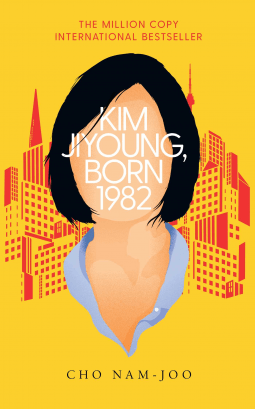
Kim Jiyoung, Born 1982 by Cho Nam-Joo

Kim Jiyoung, Born 1982 is a novel about a normal South Korean woman and the reasons why she starts acting strangely. Jiyoung’s life story isn’t anything unusual: the second daughter born to a family who wanted a boy, made to share a room with her sister while her younger brother has his own, a good student tormented by boys and male teachers at school, goes to university but doesn’t get put up for internships, and who is expected to give up everything else to become a mother. The book charts that life, up until the present day when, with a young daughter and a husband, she seems to have a breakdown. What has caused this to happen to Kim Jiyoung, and is her story more than just one person’s life?

The novel is being marketed as a sensation in South Korea now translated into English, and it is clear why is so: this is a book that uses the story of one woman to look at misogyny and systematic oppression on a large scale, raising important points using the everyday details of life. The narrative is fast-paced and descriptive, going through the stages in Jiyoung’s life and showing how they aren’t exceptional, but also feel in many ways inevitable, even without knowing that she ends up a depressed mother. Society has given her certain paths to take, and even her fighting against the rigid walls of these paths is contained, decisions both hers and not hers at all. These themes aren’t surprising, but the style of the narrative works to show how everyday it is and how it can wear women down.

This is a short book that makes powerful points about the institutions that contain South Korean women, and indeed women all over the world, using the lens of one character and her relatively usual life. It is both an insight into one country’s society and a reflection of many others, and it is clear why it has been so popular.
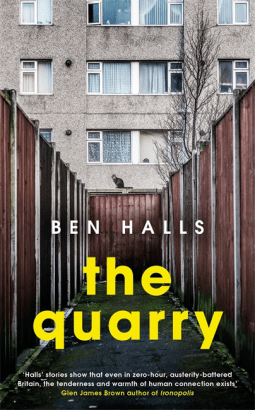
The Quarry by Ben Halls

The Quarry is a collection of short stories all told by men and centred around a housing estate in West London. The Quarry Lane estate is a pretty generic estate: dodgy pub, club that changes name, bookies, and people dealing with lost families, addiction, sexuality, and relationships. The stories are all centred around the estate and the people who live there, with locations and people straying across stories and building up a picture both of modern Britain and of the different ways people from the same place live.

Short story collections can sometimes feel disjointed and not part of a whole, but this isn’t the case in The Quarry, which has a real focus and a sense that it could almost be a novel that just happens to only show small snippets of each person’s life. Some of the stories end with a twist or revelation and others are more meditative, like the postman returning to the estate he grew up on for the first time. Halls tells these characters’ stories in individual voices, trying to get across the sense of different ages and lives, but it comes together well in a way that makes the stories gripping rather than too fleeting or not fleshed out enough.

The Quarry is an impressive thing, as a short story collection that feels very much like a whole work. It is at its best when tackling things like addiction, but also very good at showing the ways that the male characters don’t realise what things are like for other people in their lives.

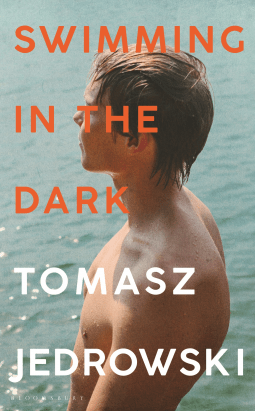
Swimming in the Dark by Tomasz Jedrowski

Swimming in the Dark is a love story set in Communist era Poland, in which two young men meet one summer at agricultural camp, but then must return to the realities of the city. Ludwik is just graduating university and is worried about the future, both his and the country’s. When he meets Janusz they spend time adventuring through forests, swimming in lakes, and falling in love, but then they must return to Warsaw and their very different takes on their own lives.

This is a short, captivating novel that combines a love affair with the grim realities of living somewhere where people can’t get enough food, can’t get a doctor’s appointment, and where bribes and ‘contacts’ are how you get anywhere. It gives an insight into Poland’s history, but also a very personal look into a character full of anxieties and disillusionment. The narrative is told with hindsight, a classic method with a story of love and sacrifice, but the time gap is short so it feels more like reflection after the fact than looking back with nostalgia. Jedrowski combines a lot of detail and elements into a concise narrative that really focuses on Ludwik.

Swimming in the Dark is a Cold War era love story about life in a Communist country and realising you make very different choices even to someone you love. Readers will likely be drawn in by the love story, but then also get caught up in the tension and detail of the setting.

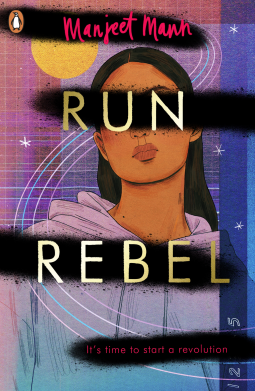
Run, Rebel by Manjeet Mann

Run, Rebel is young adult novel in verse about a girl looking for a way to start a revolution in her life. Amber lives on a council estate with her parents, her abusive, alcoholic father and her mother who works long shifts at an exploitative job. She used to have her sister, but she’s married now, her dreams of university long gone, and Amber is left to read out receipts to her illiterate mum and go to appointments to translate for her father. She can’t tell her friends exactly what goes on at home and she can’t explain to her teachers why she’s not allowed to continue athletics training despite her love of running. Now, though, Amber is ready to fight, inspired by learning about revolutions and by her mum’s growing rebellions.

The verse style is vital to the novel, allowing the story to flow forward and the narrative to cut deep into Amber’s emotions. It makes it a very readable book, despite the difficult subject matter, and feels like it is pulsing forward like the running that keeps Amber going. The story is a powerful one that shows that people can find ways to get out of terrible situations and that it isn’t always as simple as wanting to leave. Run, Rebel will hopefully not only share an important narrative, but also give teenager readers examples of how poetry can be used to fight back and to tell a story in a fast-paced, engaging way.

The Reality Game by Samuel Woolley

The Reality Game, subtitledHow the next wave of technology will break the truth and what we can do about it’, is a book about what Woolley and his colleagues have termed ‘computational propaganda’, or what other people might think of as online disinformation or ‘fake news’. Rather than focusing mostly on what has already happened, Woolley tries to sketch out where different areas—deep fakes, VR, machine learning—might go in the future, and then suggests ways that this might be combatted in the fight against this ‘computational propaganda’ that threatens our sense of what is true and real. The book looks at tools, but also the human side: what people do and the choices they make that affect how these tools and techniques have been developed and are used.

This is a book about technology that is both pessimistic and trying to offer up possible responses, and is not confined to the usual main points of similar books which focus on AI, big data, and the spread of disinformation on Facebook, but also looks at faked videos and how virtualising humans—through voice or otherwise—may be the future of this kind of falsified content. Woolley does occasionally fall back to imagining (or recounting, at one point) plots for Black Mirror, but he uses this as a way to engage the audience with the occasionally dry topic of technological threat to politics. What makes The Reality Game engaging is both the way that Woolley talks with people involved with many different areas of the issues and tech covered, meaning that the book goes beyond his research, and the way that the concepts are clearly laid out and the buzzwords explained, furthering one of Woolley’s later points that digital literacy is crucial for the future of reality.

There are a lot of books out now about ‘fake news’ or various threats that technology poses to politics, democracy, and reality, but The Reality Game is a good one to go to for a clear summary of some of the existing tech, some speculation about where it could go, and discussion of what might need to be done to improve the prospects for ‘reality’. The message isn’t that all technology is bad, but that humans have been utilising it in bad ways, and that something needs to change.

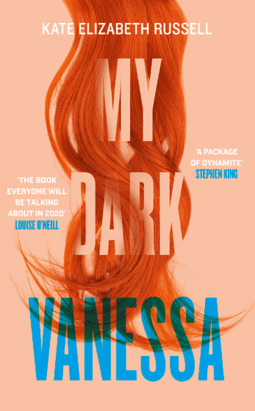
My Dark Vanessa by Kate Elizabeth Russell

My Dark Vanessa is a novel about a relationship between a fifteen year old girl and her English teacher, looking at what happens when she has to confront what occurred between them in the wake of various sexual abuse allegations against powerful men coming to light. Vanessa is fifteen and lonely at her new boarding school. Her English teacher seems to understand her, though. When they end up in a relationship, she believes that it is love, and he desperately tells her that. But now she’s thirty two and the teacher, Jacob Strane, is being accused of sexual abuse by another ex-student, she has to think about everything that has happened between them, through layers of trauma and what he managed to convince her was true.

This is no easy book to read. It has been described as a kind of reworking or subversion of Lolita, and Nabokov’s novel is a central theme throughout as Strane uses it as a way of grooming Vanessa to see herself as the one with the power, and it is important that people are aware of this similarity and of the content of My Dark Vanessa before picking it up. It is, intentionally, deeply uncomfortable, as the novel is from Vanessa’s point of view so the reader gets to see the ways in which she is manipulated and how this cannot be undone years later. Russell does well to get across the trauma and abuse that Vanessa suffers through the prose style, making scenes between her and Strane disturbing even whilst Vanessa is claiming it is love and it is what she wants.

It was difficult to read the novel without keeping an eye towards how it might end and how it would present Vanessa’s story as a whole. Overall, it delves into the complexity of what Vanessa suffers, including the hard facts of facing up to a movement standing up to sexual abuse when someone was groomed to believe it wasn’t abuse. In some ways, it feels like it highlights how certain elements of art— like Lolita, but also other references made in the novel—can be wilfully misread or interpreted to justify abuse and to manipulate people. It isn’t a novel that ends with a big, unambiguous statement, and there is a lot to take in and think about rather than easy answers given.

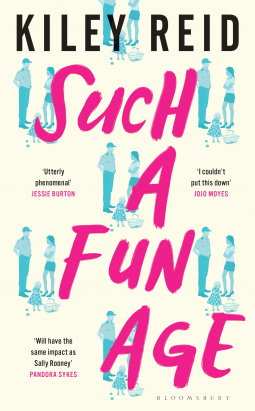
Such a Fun Age by Kiley Reid

Such a Fun Age is a novel about transactional relationships, race, and making the right decisions. Emira is nearly twenty-six, about to lose her health insurance, and works as a babysitter for Alix Chamberlain, a wealthy white woman who built a brand around female confidence. One night, Alix asks Emira to take two-year-old Briar to an upmarket supermarket whilst they deal with a situation at home, but whilst there Emira is confronted by a security guard who thinks Emira has kidnapped Briar. In the aftermath, Emira deals with the fact a bystander filmed the moment and Alix desires to help Emira but doesn’t know how, and things are complicated when Emira meets someone from Alix’s past.

This is a clever novel that looks at the ways interpersonal relationships work and how they can be seen differently by the people involved, using Emira and Alix’s viewpoints to unfold the narrative but also get across the gulf between how they view their lives. Emira is a complex and relatable character, aimless but given purpose by the bond she has formed with Briar whilst babysitting, particular as Alix ignores her eldest daughter in favour of her younger one. This relationship formed of necessary mirrors the way Alix desperately wants to be friend with Emira, all whilst Emira isn’t really aware of this fact. Reid writes the characters and situations carefully to show not only how Alix tries to be a ‘white saviour’, but how Emira views her actions and ultimately uses it to work out what she wants. Summary-style endings can be a let down, but in this case it feels important to cast a look at what happens to the characters after the events of the main narrative.

Such a Fun Age is social commentary with gripping character and a protagonist who you really want the best for, and is being quite rightfully hyped as a book that shines a light on power and race in a fresh, sharp way.

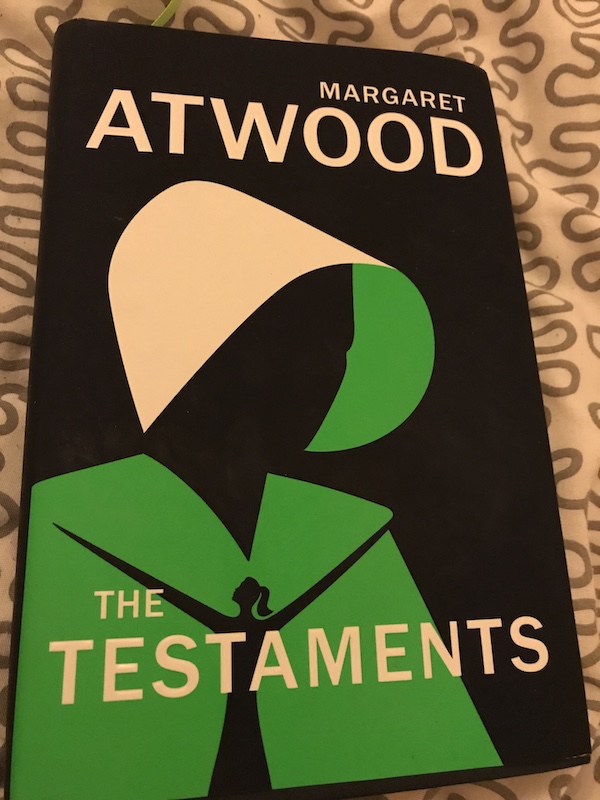
The Testaments by Margaret Atwood

The Testaments was a surprise in some ways, and not at all surprising in others. As a sequel to The Handmaid’s Tale, it is positioned as containing the narratives (‘testaments’) of three more characters, women tied up in some way with Gilead and a particular point in its history. Most of the plot is standard dystopian fare, and it goes over many of the things found in The Handmaid’s Tale but with more of a focus on Wives, Aunts, and other elements of the power structure that aren’t Handmaids. One of the narratives is by a character who has a lot more power and knowledge about the regime, which gives more context to Gilead and gives the book quite a different feel to its precursor, which slowly unveils elements of Gilead rather than assuming readers are already aware of most elements.

At this stage it is worth saying that I’m not a huge fan of The Handmaid’s Tale. I read it (multiple times) for my AS Level English Literature coursework, found the writing annoying and too obvious, and then reread it last year and came to the same conclusions. I think Atwood has written better things, and better dystopian fiction (the MaddAddam books are at least occasionally more subtle than the puns and concepts in Gilead). I was therefore surprised to discover that I got quite engrossed in The Testaments, with the writing style less grating and the movement between three different narratives providing tension. Initially it took some time to get into the world of the books again, and it was hard to know at first if I was missing a lot from not remembering The Handmaid’s Tale well enough, but after a while I settled into it.

The story is predictable and clearly written to provide elements of hopefulness in light of how prescient The Handmaid’s Tale is sometimes thought as being in relation to the modern day. This doesn’t stop it from being a gripping read, perhaps partly because I wasn’t invested in how good it was as a sequel but just interested to see if I liked it more than its precursor. However, after finishing it, it does seem a bit too neatly tied up and lacking in the kind of dramatic moments that at least make The Handmaid’s Tale hard to forget. The Testaments is bonus material to The Handmaid’s Tale which fleshes out more wider context and how society works and has a narrative which makes a decent read but doesn’t really do anything interesting.

Wilder Girls by Rory Power

Wilder Girls is a dark YA novel that combines a kind of lockdown tension with body horror and female relationships. It is a year and a half since Raxter School for Girls was put into quarantine after everyone there was slowly turned by the Tox, become wild and strange and having their bodies morphed in different ways. Trapped in the school’s boundaries on an island off Maine, they wait for a cure and live under the new rules forged by those remaining. When Hetty’s best friend Byatt disappears, she’s determined to find her, but the horrors of their situation don’t just seem to be the feral animals outside the fence also taken by the Tox.

Rory Power takes the mysterious outbreak trope and uses it to explore the bonds between teenage girls—friendships, romance, power struggles—whilst implying a lot about the darkness not only within people, but that might come from the outside when disaster strikes. This is a different kind of book set at a girls’ school, and it is not one for the squeamish, with much of the horror being around what happens to their bodies and the violence of what they must do. The tension is gripping, and the narrative is more focused on the here and now than on explanations or deep exploration of characters’ pasts; it is easy to see from this how it could be adapted into an (admittedly pretty dark) film. The romantic subplot and the depiction of Hetty and Byatt’s friendship are two elements that make it more than just a kind of shock horror story, and though some people might not like the ambiguity of the ending, it suits the outbreak narrative to not have a neat conclusion.

This is visceral YA fiction, real in its character relationships and bloody and dark in its content. It combines some of the best thing about young adult novels with cleverly used body horror, and though it will make some readers wish there was more explanation, it is a thrilling read.

Foul is Fair by Hannah Capin

Foul is Fair is a gripping teenage revenge thriller based on Macbeth set in an elite LA world. Jade Khanjara and her three best friends Mads, Summer, and Jenny are powerful and dazzling, rich and always there for each other. When Jade’s drink is spiked at a party and she is attacked by a group of boys from a different school, the four know that these boys will face no consequences unless they take matters into their own hands, and they scheme a plot to bring them down. Jade has to disguise herself, go into their school, and rip them apart from within, using their muddled conscience Mack to enact the violence.

This is a vicious and dark book, combining the danger of teenage horror and thriller books with the revenge violence of Kill Bill, and taking the control back from fate into the hands of teenage girls who know how to do damage. Jade and her best friends are the heart of the book, ruthless and clever, though the story is about what they do rather than focusing on who they are. The narrative is clearly Macbeth in many ways, but also Capin takes it in different directions, playing around with Jade’s role in particular, and there’s a lot of potential for people who study and love Macbeth to look at how Foul is Fair plays with the original. On the other hand, you don’t necessarily need to know Shakespeare’s play to get into the novel, which has been compared to a range of TV series based variously around revenge, violence, assault, and teenagers.

The writing style is unusual, giving Jade a specific voice and combining elements from different genres, and the use of character feels quite cinematic, where certain shorthands or details are shown to build character rather than more in-depth depictions. The pace of the narrative and events match the sense of time in the play, and bring a sense of unreality which suits the novel as a revenge fantasy. Foul is Fair could easily be adapted into a TV series or film (TV series would allow the space to give Jade’s friends space for their characters too, and it would be good to see more of Mads, Summer, and Jenny and their privileged yet complex lives).

Foul is Fair is gleefully dark and vicious as it depicts teenage girls having the power to enact bloody revenge. Take heed of content warnings and be aware that some people are going to find the violence too much or too unrealistic, but this is a book worth picking up if you’re interested in Macbeth meets Heathers with a scheming, diverse quartet enacting vengeance.