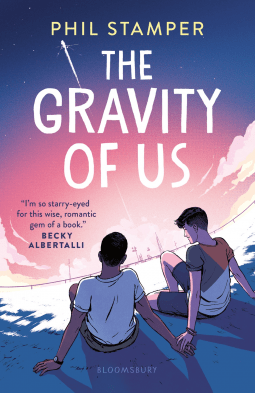
The Gravity of Us by Phil Stamper

The Gravity of Us is a YA novel about journalism, media coverage, and astronauts with a romance at its heart. Cal has amassed a lot of followers on the FlashFame app reporting on NYC news and election candidates and is all set for an internship at Buzzfeed as he prepares for his final year at school. However, when his father is selected for an astronaut training programme for the highly-publicised Mars mission, Cal’s life is upended as he moves to Texas and becomes part of the astronaut families reality show. Feeling like he has to give up his dreams, Cal finds an alliance with the children of another astronaut, Leon and Kat, and quickly finds himself falling for Leon. The new life he’s found in Texas might be over before it begins though, as the coverage around the Mars mission becomes complex and fraught.

A YA romance with astronauts as a narrative point will undoubtedly attract a lot of people, though actually the NASA elements are perhaps less important to the overall feel of the book than the way a media outlet wants to paint the astronauts and their families as full of drama and intrigue. The highlight of the book was the look at mental health, through depictions of mental illness and also looking at the need to ‘fix’ people and how life can’t work like that. The message that Cal needed to learn that he couldn’t just fix everything was important, though clearly the character had further to go with that. In general, Cal can be a difficult protagonist to like as he makes a lot of rash or self-centred decisions that affect those around him, but that really brings to the forefront the fact he needs to stop trying to fix people and listen to what they actually need.

The narrative is fast-paced and the romance happens perhaps more quickly than you might expect from conventions of other YA romance books, but it therefore focuses more on the burgeoning relationship than the stage before that. Particularly considering the circumstances, it makes sense in the book, but some readers might prefer it to be more drawn out. The side characters are interesting and Stamper does try to work in little snippets of detail around their lives and skills, though again, Cal’s shortcomings occasionally make you wish you could see more of what they’re doing.

The Gravity of Us is a romance with a drizzle of space that is a good light read with a few messages that hit home. It will probably delight fans of similar YA romance novels, though perhaps not any looking for more of a sci-fi feel.
Catherine House by Elisabeth Thomas

Catherine House is a lingeringly sinister novel about an American college cut off from the rest of the world. Students can only attend Catherine House, an elite college with conspicuously successful alumni and free tuition and board, if they agree to be cut off from the outside world. Catherine House is full of rules about meals and clothing, with the threat of the school’s ‘tower’ if rules are broken, but is also a place full of wine and sex and discovery. Ines is a new student, on the run from her past and directionless in this place of intense academic study. She skips classes and lacks interest, but when her roommate Baby doesn’t return from the tower, she becomes more intrigued by the school’s mysterious new materials research.

Thomas has written a dreamlike, ambiguous novel with a writing style that seems to really reflect Ines’ state of mind (and frequent intoxication). The book combines the low claustrophobia of exclusive environments with the kind of decadent detail often found in books set in universities, and this results in something that is quite a compulsive read even though not a huge amount happens in it. Ines is a messed up protagonist, and probably people will be put off by her unlikeable nature and the way she just drifts through everything, but her character added to the atmosphere, and it would’ve been a quite different novel with a more likeable main character.

People will probably either really get into the novel, or not get along with it at all, due to the detailed yet meandering writing style, strange protagonist, and lack of answers. In tone and details it has similarities to The Secret History, though the writing style and narrative are very different, and it makes for an eerie read if you’re not looking for it to answer why things are happening, or why Catherine House has the rules it does. Maybe not one for lasting effect, but the reading experience was enjoyable.

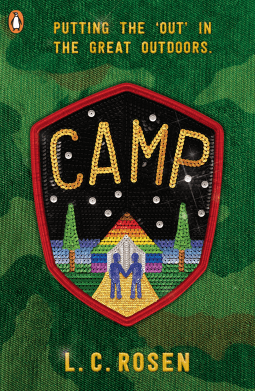
Camp by L. C. Rosen

Camp is a charming YA novel set at a summer camp that looks at toxic masculinity, friendship, and being yourself. Randy is sixteen and the highlight of his year is spending his summers at Camp Outland, a summer camp for LGBTQ teenagers. He has his best friends, he stars in the yearly musical, and it’s where he first painted his nails. This year, however, he’s set his sights on getting his camp crush, Hudson, to fall in love with him, but Hudson is very masculine and seems to only like other masculine guys, so Randy reinvents himself as ‘Del’, a sports-playing guy with no interest in theatre or clothes. With his plan working, Randy has to work out whether his friends are right, and ‘Del’ isn’t really who he is.

This is very much a romcom novel: fun, happy, and with a narrative that works to bring everyone together. The premise can make it a bit frustrating to see Randy making the choices he does, but that is part of the book’s power, that Randy makes the kind of bad decisions teenagers (and indeed adults) make to try and impress someone. The range of supporting characters are great and it was a shame to not see more of a lot of the characters, partly due to the fact that Randy was so focused on Hudson that sometimes he forgot his friends. Showing the different friendships and the way the teens fell back into them each summer was a real highlight of the book, and it almost feels like Camp needs an ensemble-style sequel to give more of them a chance to shine. The setting works really well to highlight some of the issues around gender stereotypes and masculinity within a specifically LGBTQ space, but also make mention of other issues in a light way.

After Rosen’s previous Jack of Hearts (And Other Parts), it’s not surprising to see another YA novel that tries to address issues for teenagers but also be funny and modern. Camp is on the cheerful, romcom end of that scale, and the predictable happy ending is what you want from it. I could see it being adapted into a film (or a Netflix series expanding some of the supporting characters), as it feels like a very visual novel with a lot of colour and excitement, but also would benefit from a soundtrack (I finished reading it with The Shoop Shoop Song stuck in my head).

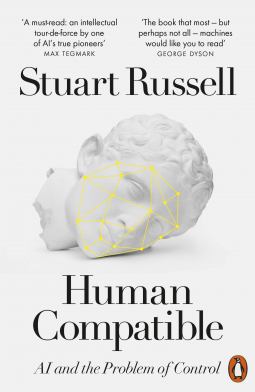
Human Compatible: AI and the Problem of Control by Stuart Russell

Human Compatible is a book by an eminent AI researcher that looks at how AI works and the questions that need to be considered, philosophically and practically, to try and ensure AI follows the right objectives and control. Russell runs through ideas of intelligence, how AI might be used and misused, key debates in AI, and the complications of humans themselves, in a mostly approachable way, with more complex explanations put in appendices at the end. As someone who co-wrote a popular textbook on AI, Russell knows how to point towards examples and thought from a range of fields to consider the problems of AI, defining goals, and trying to create AI that has regulations and can handle the complexity of human thought and preferences.

There are a few sections and explanations that need either a bit more concentration or some prior knowledge, particularly around logic, but in general the book serves as an in-depth look at how artificial intelligence works and might work, and the issues around the choices AI does and might make. What makes the book particularly good as either an introduction to AI or as an introduction to the philosophy and ethics around AI is that Russell believes in the importance of AI research, but also on the need to look at the ethical issues and background from other disciplines to inform choices made about AI. The fusion of explaining the past, present, and future of AI, and also laying out of the complexity of issues including bias, ethics, and preferences, makes this book both harder to read at times and more useful than other popular science type books on AI.

As someone who reads about AI rather than understands or works on it from a technical point of view, I don’t know if what Russell raises here can be included in the AI of the future, but that doesn’t necessarily seem like the point. The book is here to present these key issues and to suggest how, broadly, different kinds of thinking may be needed to further artificial intelligence in ways that are actually useful to humanity.

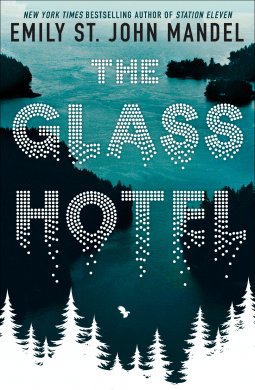
The Glass Hotel by Emily St. John Mandel

The Glass Hotel is a novel about connections, guilt, and how the past bleeds into the present. One day at Hotel Caiette, a hotel on Vancouver Island designed so rich people can see the views without stepping outside, the bartender Vincent meets financier Jonathan Alkaitis who owns the hotel. Things suddenly change for her as she becomes part of his life, but his dealings are not all they seem. Also in the hotel bar at that time, her brother Paul is accused of writing a threatening message on the hotel window, and a shipping executive is disturbed by it. Their lives unfurl, together and alone, and their coming together at the hotel at that time becomes a lens for how theirs and others’ lives connect.

The narrative spans the 1990s to the future, moving between characters and foreshadowing or teasing events as the ghosts of the past haunt people. The atmosphere can be strangely eerie, whether on a remote ship, a strangely desolate hotel, or in the midst of finance in New York City, and it is this atmosphere and the mysteries with answers lurking not far from the surface which make the book an enjoyable read. At times the different narrative voices get confusing, but the book in general comes together well to form what is not quite a complete story told from different perspectives.

This is an intriguing book which leaves you still asking questions after it ends and wondering what it all means, a business scheme wrapped up in isolation and asking what is real. From the description, and indeed from the start of the novel, it can be hard to know what to expect, but it is worth giving The Glass Hotel a try as it keeps evolving as the narratives progress.

Antigone Rising: The Subversive Power of the Ancient Myths by Helen Morales

Antigone Rising is a look at how Greek and Roman myths can influence radical and rebellious thought and narratives in the modern day. Classicist Helen Morales goes through a selection of myth (starting and ending with Antigone) to think about modern parallels and reimaginings and where myths or elements of them might be reclaimed or reused to look at modern issues around feminism, race, and gender. Some chapters look at rape culture and gender fluidity in mythology, especially Ovid’s Metamorphoses, and how this relates to the modern day, including the issues in these texts and how people have or might reclaim them, and another considers art, race, and the figure of Venus in relation to Beyoncé.

There’s nothing new in drawing contemporary comparisons with Greek and Roman mythology, but what Morales tries to do is to highlight some of the ways this can be done in resistance and for particular issues, and also suggest some of the problems with doing this too. It would’ve been interesting to get more about the problems of using myths like this (the book is quite short), but where she does engage with the complexity is more interesting than a ‘this classical figure could be feminist’ kind of analysis. The topics vary and the pace is quite fast, which makes this an easy book to read, and keeps it engaging. She doesn’t assume knowledge of any of the myths, which is useful for a general audience, and the book would make a good introduction to looking deeper at where mythology can be updated and used in modern contexts for elements of protest and resistance.

Antigone Rising presents a slightly more complex idea of looking at Greek and Roman myths for modern day resonance, and touches on some interesting ideas, including on some of the limitations of doing this. It felt like it could’ve gone on for a lot more chapters covering other myths and topics, but the length makes it good as an introduction, and it has notes and mentions of other texts people could follow up on afterwards.

Tongues of Fire by Seán Hewitt

Tongues of Fire a collection of poetry that focuses on viewing life through nature, on physicality and reality but also the sacred and untouchable, and on grief, loss, and illness. The poems are mostly short lyric poems, weaving together ideas of nature, belief, and personal connection. What is particularly vivid as you read the collection is the ways in which the natural world is returned to, and offers an escape from the world, and how the poems show this through moments and details of plants and settings as ways of encapsulating feelings, from sex and desire to sadness and grief. This felt particularly notable in poems like ‘Adoration’, which moves from a nature walk to a Berlin club and back again, and it really gives a sense of how the personal can also be part of something much larger about life and earth.

These poems feel like an escape into the tiny details of outside, a kind of mechanism of looking for the natural and the meaning when things seem random or difficult. This was a great collection to sit down with and become immersed in the senses and physicality, but also the emotions of the poems.

The Voice in My Ear by Frances Leviston

The Voice in My Ear is a collection of stories about ten women called Claire, all with different ages and relationships. The stories are all distinct, but also have connecting themes (and the connecting name) which make it the kind of story collection that feels like a complete whole rather than stories put together. Relationships and mothers recur throughout the stories, which are mostly slices of contemporary life (though there is one about an android).

Some of the stories feel more like snapshots that separate stories, and generally the collection feels like you are moving between each Claire rather than having distinct start and end points for each. The writing draws you in and is easily readable, and the stories offer a sometimes bleak and unsettling look at different women’s lives. From the blurb I had expected more of a connection, or maybe more of a sense of an overall meaning or resolution, but if you go in expecting slightly linked short stories it’ll make more sense.

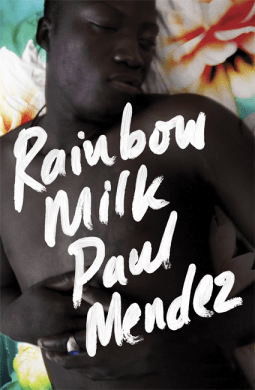
Rainbow Milk by Paul Mendez

Rainbow Milk is the story of a young man growing up and dealing with race, sexuality, class, and the after effects of having been brought up a Jehovah’s Witness. At the start of the millennium, Jesse leaves the Black Country and his planned out life in religion to discover London, sex, drugs, love, and freedom. He does sex work and works as a waiter, he looks for friendships and purpose, and most of all, he forms new meaning for his life and who he is. And ultimately, reaching out from the past is a family connection he never knew that might give him a wider sense of belonging.

This is a gripping coming of age novel that really highlights the intersectional nature of oppression and identity, particularly how race affects both sexuality and religious upbringing. The narrative structure moves forward but also flashes back to show how Jesse’ life progresses by focusing on key moments. There is also an initial section focused on Norman, who moves to the Black Country from Jamaica in the 1950s, and places Jesse’s story within a wider picture of the Windrush generation and the treatment of black people in Britain. A lot of the novel is dialogue-focused, with many of the main scenes featuring lengthy conversations, and Mendez makes this very real and immediate, using characters’ respective linguistic styles and dialects to show their complicated relationships and identities.

The content is sex, drugs, and Jehovah’s Witnesses, and Mendez tells it in a bold, sometimes sad, and also heartwarming way. What makes Rainbow Milk feel distinctive is that it is full not only of exploration of big issues of race and sexuality and religion, but it is also full of hope, and forging your own future and family even when it might not fit what you or your upbringing had anticipated.

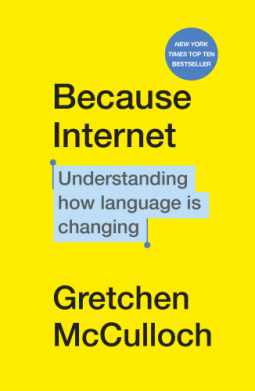
Because Internet: Understanding how language is changing by Gretchen McCulloch

Because Internet is a look at how the internet is changing the language we speak. The book covers elements of internet language, how it relates to spoken and other written language, how it varies across internet use, and how emojis and memes fit in. McCulloch predominantly focuses on English, but also looks at some examples from other languages, or where elements from other languages have come into how English is written online.

It’s tempting to write this review more informally, more internet, than others, but I’ll hold back. The style of the book is accessible and informal, but still points towards other linguistic work for those looking for more of the linguistics and less of the general look at the internet and language. As someone who thinks and reads about use of the internet, the chapter about different demographics of internet use, centred around internet social spaces and where people first socialised on the internet, was particularly interesting, offering a number of things to reflect on around how people use different websites and apps for different purposes (it led me to casually refer to the sites I grew up with, like Myspace and Neopets, as ‘not shiny, but sparkly’, as in their functionality wasn’t slick like now, but people did overuse sparkles in web design).

The book is an introduction to a lot of ideas around changing language and how that is impacted by different elements of the internet, offering space to think and discuss these issues further rather than offering all the answers. Ultimately, the book celebrates language change, and the differences in how we talk online. There’s definitely some areas for reflection (the impact of different kinds of spell check and autocorrect is interesting, as is how the small reflection on video calling will change due to current circumstances) and Because Internet is an accessible look at internet language that doesn’t take itself too seriously.