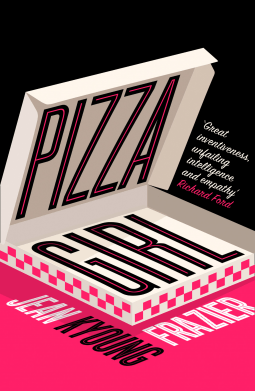
Pizza Girl by Jean Kyoung Frazier

Pizza Girl is the story of a pregnant pizza delivery girl who becomes obsessed with a woman she delivers pizzas to. The protagonist is eighteen, lives with her mother and overly doting boyfriend, and works delivering pizzas whilst avoiding thinking about the future, whether that’s her baby or what she’s going to do beyond each day. When Jenny, a mother whose son demands pickle-covered pizzas, orders from the pizza shop, the protagonist becomes obsessed with delivering their weekly pizza and seeing Jenny, but this doesn’t bring her stability either.

This book has a similar feel to other modern novels with a young, lost protagonist who makes questionable choices and obsesses over a particular thing or person. In Pizza Girl, this is used to look at young pregnancy, grief, and living in denial of your worries and future, and it makes for a gripping novel that has a sense of drifting through just as the main character drifts through her life. You have to watch as she cuts everyone out of her life and feelings, falls down the rabbit hole of obsession with a married woman who is constantly moving house, and thinks about the death of her father and the bad side of him. Not a huge amount happens, but that’s the point in many ways, and it feels like a well-crafted narrative.

Unexpectedly moving, Pizza Girl will appeal to fans of books like My Year of Rest and Relaxation where you watch a flawed protagonist deal (or fail to deal) with their life, but with an underlying look at the problems they face.

So Hormonal, edited by Emily Horgan & Zachary Dickson

So Hormonal is a collection of essays about hormones and the varied roles they play in people’s lives. With essays covering periods, menopause, transition, steroid use, and fertility amongst other things, there’s a wide range of topics covered, with personal anecdotes and reflection alongside highlighting key information about health conditions and experiences. Each of the 36 essays ends with a suggestion for following it up, either with reading or websites for charities and support groups, giving people action to take if motivated by the content of the writing.

This is a gripping collection that provides insight into a huge range of issues and realities, forcing you to reflect on bodies, medical care, and how we understand ourselves. It’s hard to pick certain ones to highlight, but there was some particularly enlightening looks at comorbidity of conditions affected by or affecting hormones and on the complexities of things that some people might think are simple. The essays around the complexity for trans men and non-binary people when accessing healthcare for gynaecological problems were also interesting, and it was good to see essays on hormones not just written by or focusing on cis women. Some of the essays also challenge particular ideas, for example around ‘teenage hormones’ or steroid use, which are good chances for readers to reflect on their own assumptions.

There are a lot of essays in So Hormonal, a lot more than I was expecting, and this brought welcome variety and the chance for a wide selection of voices—I wouldn’t have wanted it to be any shorter. It’s the sort of book you want to recommend and lend to other people seeing as it is both insightful and will contain essays that different people will find relatable in different ways. The inclusion of further information at the end of each essay makes it a starting point rather than the final answer, and it’s good to have collections like this coming out.

(So Hormonal can be bought from the Monstrous Regiment website)

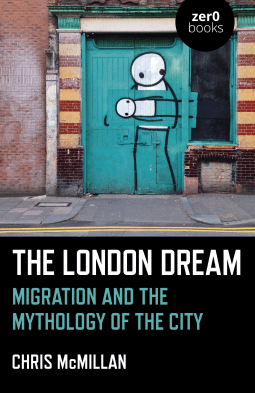
The London Dream: Migration and the Mythology of the City by Chris McMillan

The London Dream is a look at the mythology around London as a city and the dreams of success that people have for living there. McMillan looks at a range of jobs and dreams and the ways in which myths have been structured to bring people to London, to contribute to its economy and to its ‘cool’ status, and how these use certain versions of capitalism and precarious work. Various Londoners have been interviewed and their experiences sit alongside the analysis of the image of ‘cool capitalism’ and how the labour of precariously employed and badly paid people keeps the cool, creative image of London going.

This is an engrossing book, not because the symbiotic relationship between the ‘cool’ image of London, which comes with dreams of making it big, and the underpaid, not-officially-employed labour that is needed to make London this way is a revelation, but because McMillan lays out these ideas in a clear, interesting way and combines them with the real stories of people who believe London is their place to be, but have also had to deal with many of its downsides. What feels particularly important is the fact the book covers both the dreams of aspiring creative types trying to break into industries due to the opportunities in London and the dreams of people looking to do often service industry jobs to support themselves and their families, and both groups have ‘migrated’ to London in some way from somewhere else, on the hope of work and experiences. The history of London in these areas is charted at relevant points, but the book feels very focused on the present, a kind of warning about the labour and personal realities of the dream of the big city.

As someone who did move to London for a couple of years and found some of the content very relatable (I worked alongside aspiring and out-of-work actors in hospitality), The London Dream was particularly satisfying, as a kind of proof that the image of London isn’t all it is cracked up to be. The book’s specific focus on particular areas of labour, notably the gig economy and the creative industries, means that it leaves you wanting more of a look at other broader and more specific issues, to tear down the ‘London dream’ and leave behind a reality where things could be better for thousands of people living in the city.

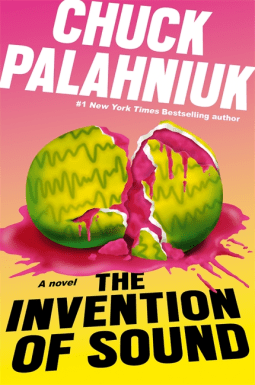
The Invention of Sound by Chuck Palahniuk

The Invention of Sound is, as expected from Palahniuk, a dark story of a dangerous scream, a desperate father searching for his missing daughter, and a foley artist using more than effects. Foster  Gates’ daughter went missing years ago, and he still clings to the thought he can find the truth, at his support group and on the dark web. Mitzi Ives is a famed foley artist with a difference, known for creating the screams needed for Hollywood films, but this comes at a price: the screamer’s life. When Foster hears a scream that sounds like his daughter’s, their paths are set to collide, but at the same time Mitzi is losing control, and has created a scream with larger power than expected.

I haven’t read any of Palahniuk’s books in a while (apart from a reread of Fight Club), mostly having read them during a teenage love of reading stuff with shock value like him and Bret Easton Ellis, and I found this one gripping and readable, with a sharply honed narrative. The twists and horror of the novel worked well (a foley artist that uses real death screams is a great concept, but even more so when it’s a reluctant family business) and, without wanting to give anything away, Foster’s story is tied in nicely. The opening was confusing, which tends to be the case with any Palahniuk novel, but this one felt easier to get into quickly and figure out what you needed to know, and the short length kept it sharp and distinctly not sweet.

This is a great Palahniuk novel, with a lot of elements that might be expected—fame, violence, questions over what is real or not, and some dark topics—but without becoming too horrific. It all comes together in a satisfying way and has a sense of control and precision. And finally, it seems silly to put this in a review of a Chuck Palahniuk novel, but obviously, this isn’t for the faint-hearted.

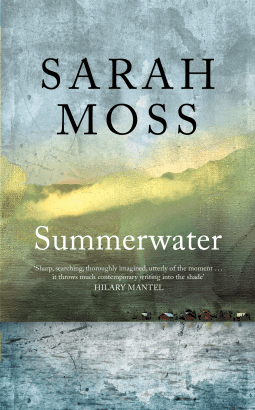
Summerwater by Sarah Moss

Summerwater is a short novel exploring the people at a Scottish cabin park on a single day, with simmering tensions amidst the wet weather. There’s various families and children, cooped up indoors; an old couple thinking about the past; a young couple unaware of how each other are feeling; and, as noticed by everyone else, a woman and her daughter who some of the others don’t think fits in. As the narrative moves between the perspective of different people and the day goes on, the question is, what will happen by nighttime?

This is an easily immersive novel, that moves quickly between each character, only giving you each person’s perspective once. It paints a picture of the similarities and differences between people’s mindsets and the way that they all watch each other out of their patio doors, like nosy neighbours but temporary. There’s sharp moments of exposure about modern Britain, from xenophobia to environmental concerns, and a sense of privilege amongst the less-than-ideal holidays the characters are having.

Summerwater is a kind of study of the contemporary moment from within a Scottish holiday park, showing lingering judgement and prejudice under the surface. Similarly to Moss’ previous novel Ghost Wall, it takes a group of people outside of their usual setting, with a distinct nature backdrop, and observes what happens when they come together.

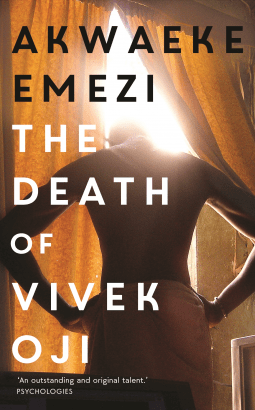
The Death of Vivek Oji by Akwaeke Emezi

The Death of Vivek Oji is a powerful novel about how the child parents think they know might not be the child they really have, focusing on the childhood, adolescence, and death of Vivek Oji. In Nigeria, a mother finds her only child dead on her doorstep, wrapped in material, and desperately wants to know what happened to them. Mixed in with this story of that of Vivek’s upbringing, showing how finding who you truly are may mean keeping secrets from your family, and that love, gender, and sexuality aren’t always simple.

Having read and enjoyed both of their previous novels, Freshwater and Pet, I knew I needed to read Emezi’s new book, and it didn’t disappoint, being a story of identity, personal relationships, and how people’s lives were affected by one person. The exploration of identity and secrets is combined with elements of social commentary, around what is spoken and unspoken and how people find community, but the main focus is on Vivek, and on the impact that someone’s life and death can have. This is important, as despite the title the book doesn’t have a huge amount of Vivek’s point of view, but instead uses others’ perspectives to get across the different ways of seeing people and the complexity of self in relation to other people.

This is a gripping novel that told an entrancing story, and though the title is about death, the book is also about life, about living as yourself, finding people to be around, and the complexity of emotion.

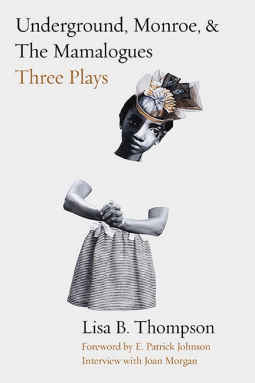
Underground, Monroe, & The Mamalogues: Three Plays by Lisa B. Thompson

Underground, Monroe, & The Mamalogues is a collection of three plays by playwright and scholar Lisa B. Thompson that cover a range of topics and themes, including protest, motherhood, migration, trauma, and the black middle class. Underground features two old friends discussing politics and protest in the post-Obama era, with a tension lying underneath. Monroe is a 20th century period play that looks at the impact of a lynching on a family and dreams of leaving 1940s Louisiana. And The Mamalogues features three black middle class single mothers sharing stories at a support group, thinking about their children’s lives from birth to leaving home.

This is an engrossing selection of plays that are quite different, but all look at the black middle class (which is what Thompson works on) and different elements of race, gender, and respectability. Underground is the most gripping, a play that draws you into one evening when two old friends find themselves back together in a snowstorm discussing the best methods for bringing about change and their thoughts on radical politics. Kyle and Mason are complex characters and their viewpoints become particularly charged and important given current Black Lives Matter protests and action. The Mamalogues also focuses on a single discussion in a single point in time, and really considers the intersection of race and class, but is also funny and frank. Even reading both of these plays gives a real sense of the dialogues happening, but it would be great to see them performed.

Monroe is different again, a play that spans a period of time just after the lynching of Cherry’s brother, and looks at the dream of migrating away from Louisiana to somewhere that might be better. The historical setting and greater number of characters onstage makes it feel more traditional, but it also has a lot of ambiguity. All three plays have detailed notes on performance, including suggested playlists, so this copy would be useful for those studying theatre, but the plays are accessible and enjoyable so this text shouldn’t be confined only to academic reading. All three plays are relevant to current discussions, but in particular Underground is vital reading for thinking about radical politics and race, as well as being a great, tense play.

True Story by Kate Reed Petty

True Story is a surprising and inventive novel that blends genres and conventions to look at how we tell stories and what the truth is. One night during high school, Alice was driven home from a party by two boys. She was drunk and passed out, and doesn’t remember what happened, but the rumours say a lot, despite what the boys tell the police. One of their friends, Nick, hears a different version of the story. And as both Alice and Nick get older, and deal with abusive relationships, addition, and other challenges, the truth of that night stays hidden, until it finally seems like it is going to come out.

The structure and narrative of True Story are impressive: it blends a novel, thriller and horror and drama, with screenplay and college essay, as different chunks of time are told from Alice and Nick’s points of view. At first, this seems like it could be a bit of a gimmick, but it is only later that it starts to make sense why the novel is written like this. The book is visceral—particularly around abusive relationships and addition—and tense, playing around with the heart-racing genres of horror and thriller whilst ultimately telling a story of how to tell a story. The different elements are weaved together well and the ending was unexpected.

This is a dark novel that touches on some intense subjects and looks at contemporary questions of how women and men are treated, but also has a playful edge that messes around with genre and possibly has an underlying message about not underestimating genre fiction.

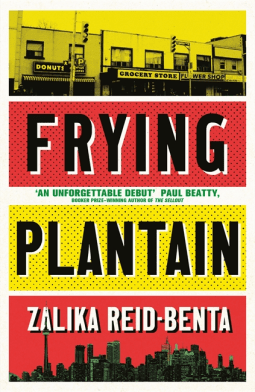
Frying Plantain by Zalika Reid-Benta

Frying Plantain is a book of twelve interconnected stories about a girl growing up in Toronto, balancing her Canadian nationality and her Jamaican heritage and dealing with the expectations of her mother and grandmother. The stories, told both as present narrative and flashback, follow Kara, the protagonist, from childhood to graduating and starting university, as she navigates identity, family, friendships, and dealing with different worlds and rules.

Though the book is a series of interconnected stories, it felt almost like an episodic novel, as you delved deep into Kara’s life and saw her relationships develop and change over time. The book looks particularly in the tensions in Kara’s life between different elements of her self, not Jamaican enough but also not like the white Canadians her mother warns her she can’t act the same as. There’s also a lot of focus on familial expectations, and how Kara seems at times to fight a losing battle to be what her family wants her to be. Overall, the depiction is sharp and memorable, with a lot of detail that draws you in to Kara’s world, and the book is a gripping look at growing up caught between expectations, rules, and identities.

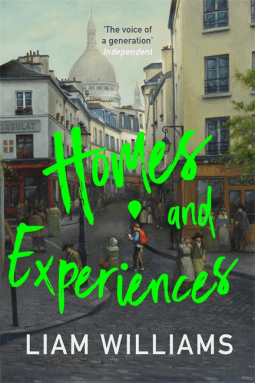
Homes and Experiences by Liam Williams

Homes and Experiences is a bittersweet comic novel about travel, experiences, and what really matters. Mark works for Urb, a travel start up for booking stays in people’s homes and travel experiences (guess which company it is satirising), where he writes copy and lives a mundane London life. When he’s offered to spend the summer travelling across Europe visiting some of Urb’s offerings to write non-travel-expert copy, he sees it as a chance to finally do the travelling he never has, and invites his posher, more worldly cousin Paris to come along with him. A big argument puts a stopper in this plan, but as Mark travels, he emails Paris with the details of his trip: the highs and lows in his quest to balance Urb’s need for catchy copy with his desire to try and actually see something authentic.

Williams has created an email epistolary novel that uses the format to cleverly expose Mark’s feelings about his trip and incorporate a twist to change the perspective on what Mark does during his travels. The tone is charming, exposing Mark’s naive outlook on travel on one hand and his conflict around gentrification and the impact of Urb/Airbnb on local cities and communities. The novel does well to satirise millennial culture and guilt whilst also showing actual difficulties and emotion that go along with these (the travel issues that come along with not flying are a key example, though they are also reminiscent of the BBC travel show Race Across The World, in which the participants can’t fly either). Alongside the satire and humour is a real emotional side coming from the interpersonal relationships in the book, and particularly friendships: from Mark’s idolising friendship with his cousin Paris to others that develop throughout the book, there’s a real focus on the importance of these relationships not just romantic ones.

On the one hand, the novel appeals to me as a millennial who does like travelling to European cities (though, admittedly, I’ve never stayed in an Airbnb), and on the other hand, it’s a clever way of presenting some of the issues with this kind of start up tourism and gentrification, but through the lens of someone at a loss with what they’re doing with their life and trying to make the most of an unusual opportunity. It can be funny and relatable, but also bittersweet, and the format has a good payoff.