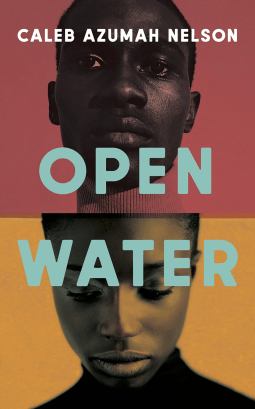
Open Water is a novel about two people falling in and out of love, and the impact of race and how you’re viewed in society. A man and a woman with a lot in common—both black British artists who got scholarships to predominantly white private schools—meet in south-east London. They become friends and, slowly, lovers, but their story is tied up with wider realities of race, masculinity, and fear, and the vulnerability of being known.
This is a tender and incisive novel, written in a distinctively poetic second person style with unnamed main characters. It is full of pop culture references and geographical touch points that make it feel very real, though the writing also has a kind of sweeping unreality as you follow their love story. Most of all, Open Water feels like the story of softness in a hard world, and the complexity of love when you must exist in the wider world, and the elements all come together to make it feel like you got a lot from such a short novel.
Caleb Azumah Nelson takes a story of a young man and woman falling in and out of love and gives it a philosophical, political, and poetic edge that feels insightful and exciting. It’s a book you can read in one sitting and deserves to be a hyped debut novel (you can imagine the TV adaptation too).
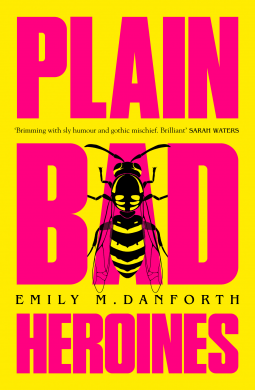
Plain Bad Heroines is a dual narrative gothic novel about a girls school, a curse, and how to tell a horror story, as well as love between women in both the 1900s and the present day. In 1902, Brookhants School for Girls is struck by tragedy, as students Flo and Clara—madly in love and both obsessed with a scandalous memoir of the day—are found dead in the woods after a wasp attack. And then in the present day, Brookhants becomes the set for a film starring a celebrity lesbian actress and a B movie star’s daughter, but the production seems cursed itself.
I had no idea what to expect from this novel, except a vague awareness it had a blurb from Sarah Waters and having read Danforth’s earlier YA book, and as I was reading an ebook, I wasn’t even aware quite how long it was. Plain Bad Heroines opens with a distinctive, opinionated narrator who gives extra comments in the footnotes (the tone quietens down a little as the novel goes on, but not much), moving between the two narratives and the numerous main characters (three in the present day, and a handful in the 1900s) to set up everything. The present day story is deeply linked to the older one, but refreshingly isn’t focused on the characters finding out the secrets of the past; instead, it makes jokes about the popularity of historical lesbian films and looks at the horror tendency to make the actors go through horrific experiences (often in the name of a ‘curse’).
With dual narrative books, it is often the case that you’ll prefer one narrative to the other, and perhaps controversially (seeing as this is marketed as a dated gothic story) I preferred the present day story, following Harper, Audrey, and Merritt as they become the (partly unexpected) focus of the making of an experimental film. Though some of the humour and satire felt a bit forced, it is a classic story of clashing personalities and unnerving happenings combined with some ideas of what is consent on a film set or for celebrity social media. In contrast, the 1900s narrative was more of a feminist gothic tale, blurring the line between curses and jealousy and students gripped by a craze. The two teachers and lovers, Libbie and Alex, have a fully sketched out backstory, but it felt like the narrative could be a bit slow and not really about the girls school after a certain point.
This is two stories combined with a metafictional twist into one book, and whilst it doesn’t always come together, it is bold and fun and does leave you with a lingering sense of buzzing. Instead of just being one book, it seems like many, and though this may leave you wishing you got more of your favourite (I would read another book just watching Harper, Audrey, and Merritt make bad choices), it makes Plain Bad Heroines feel like something a bit different. One not just for fans of gothic horror, and coming with knowing hints of Bret Easton Ellis and some YA elements, this book probably should come with a warning not to read if you’re scared of wasps.
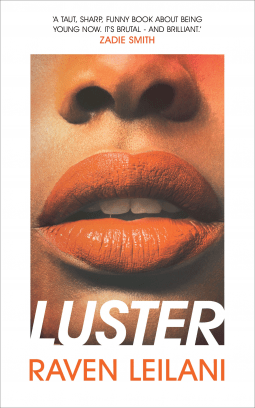
Luster is a novel about a young woman trying to survive in New York City who finds herself entangled with a family after she has an affair with Eric, a white man whose wife has agreed to an open marriage. Edie is twenty-three, works half-heartedly in a publishing office, lives in a run down, infested apartment, and sleeps with the wrong men. After a virtual flirtation with Eric, a middle-aged white archivist, they meet, and go on a series of dates. He’s in an open marriage and his wife has set rules, but Edie finds herself drawn into the family’s world, not only Eric but his wife Rebecca and their adopted black daughter who has no one to help her navigate race.
This book is a gripping, sharp dive into Edie’s life, cleverly providing commentary on the modern world and the realities of being young and black and having no direction in life, but also unfolding a complicated and weird interpersonal situation with ever changing nuances and rules, as Edie ends up in the family’s home. There’s some really fantastic images and lines, like her beating a pregnant woman to a subway seat or her experiences doing gig economy deliveries, and Edie is a vividly imagined character, from whom you get glimpses of backstory but mostly stay in the present. She can be harsh, but also sweet, especially as she attempts to make Eric and Rebecca’s adopted daughter like her by playing video games and engaging with her fandom interests.
Luster is a brilliantly observed, well written novel about being young, about navigating sexual and racial politics, and about finding a place to be, even just for a while.
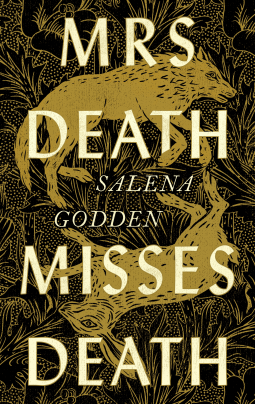
Mrs Death Misses Death is a transformative, thought-provoking novel that looks at death, storytelling, and what really matters in the world. Mrs Death has spent eternity doing her job, but things have gotten a bit much, and she finds herself sharing her story with Wolf, a young writer in London who has an acquaintance with death but not Mrs Death. Through Wolf, we learn about past deaths and about what Mrs Death thinks makes life worth living.
This is a difficult book to describe, written in different styles and blending prose, poetry, and script at times. The move between short prose chapters and short poems is particularly good, bringing a sense of seeing into Mrs Death’s thoughts through poetry as well as seeing Wolf’s narration in prose. Despite being a novel, there’s also a lot you can take as have non-fiction elements, with reflections on the common depiction of Death as male and on various issues as they come up, and this makes the novel more powerful, as it becomes not only the story of a strange unreal friendship, but a look at good and bad, life and death.
If you enjoy books that blend prose and poetry and that muse on larger issues whilst focuses on two main characters, this one is for you. It is fast-paced, easy to read quickly, and unlike most other novels you’ll read.
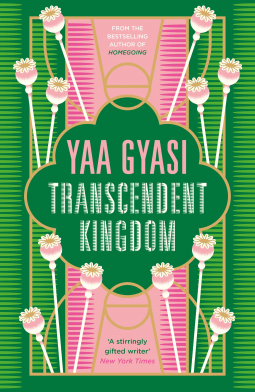
Transcendent Kingdom is a novel about a woman tracing her own history and reckoning with the realities of America and being from an immigrant family. Gifty was born in Alabama, after her parents came over from Ghana with her young brother, and grew up with the struggles that torn her family apart until it ended up just her and her mother. Now doing a PhD at Stanford trying to understand the addiction that killed her brother, her mother comes to stay with her, and she starts to look back at her life and that of her family, seeing the trauma that led them there.
This novel combines a deep look at issues affecting modern America, particularly the opioid crisis and mental health, with an interesting exploration of religion, spirituality, and science, as Gifty’s religious upbringing and scientific academic career come together. The impact of personal emotions and even trauma on scientific research really stands out, as she tries to explain her connection to the mice she’s experimenting on in attempts to understand addiction and work out if anything could’ve been done to help her brother.
The narrative is told a lot through flashbacks, with the present day leading back into Gifty’s memories to flesh out what happens to her and her family, and though some people might find this slows down the present story, it works well to get across how reticent Gifty is to share her past with people. This structure also makes some things, particularly her brother’s addiction, have a horrifying inevitability, as you know what is coming as soon as he gets injured playing basketball and is given painkillers.
Transcendent Kingdom feels more like a novel of reflection than one where the protagonist does a lot in the present day narrative, and through this it touches upon a lot of interesting and powerful topics that affect people in America and beyond. It was also refreshing to have a novel where the main character’s scientific research was going well, and the focus was more on what led them to study that area and other things happening in their life. Sharp and engrossing, the book draws you into Gifty’s life and asks a lot of questions about how complicated and entangled different aspects of life can be.
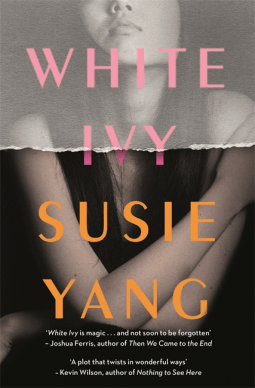
White Ivy is a complex novel about family, class, and getting what you want, with a flawed protagonist searching for something elusive. Ivy Lin is a Chinese immigrant to came to America aged five and lives with her parents, younger brother, and grandmother in Massachusetts. She can’t match their expectations, but she does dream of winning the heart of her blond, white classmate, Gideon, a boy with a politician family and seemingly charmed life. Her grandmother teaches her to shoplift, and she gets a taste of what she could have. Now an adult, she meets Gideon and his family again, and it seems she can build a privileged life away from her parents, now with a flourishing business, but stepping into that role might not be so easy.
Susie Yang combines a range of elements in this book, from a look at the insecurities of white New England America similar to that found in books like The Goldfinch to a love triangle with unexpected twists. Ivy is a memorable protagonist, whose thievery I expected to be a larger plot point than it is, but whose personality is complicated and her motivations often questionable. This makes her a great character, suited to the slow pace with underlying darkness, with her actions often coming out of nowhere. One of the most compelling features of the book is the Lin family, especially how the reader sees them from Ivy’s point of view, and the subplot about how they don’t know how to deal with Ivy’s brother Austin was surprisingly moving.
A book that looks at immigrant experiences and seeking success in America, White Ivy is gripping and sits well alongside many other American novels of the last twenty years or so that follow a protagonist growing up and looking for success among those richer than themselves.
Detransition, Baby is a witty, cutting, and clever novel about relationships and motherhood, as three characters try to navigate if they’re having a baby. Detransitioned Ames thought he was infertile, until he got his boss, Katrina, pregnant. Not sure about the role he’d take in parenting, he contacts his ex, Reese, with a proposition—to raise the baby with them. Since their breakup a few years ago, Reese has been lonely and sleeping with married men, feeling a like a trans elder with no one to mother, so this could be her chance for what she’s dreamed of: a child.
One of the greatest things about this book for me was the writing, particularly the tone and detail. It can be blunt and brutal in deconstructing characters’ ideas and lives, but also has a real emotional side (there’s even some meta-commentary on this as characters make jokes at a funeral). This is literary fiction about negotiating relationships given a new breath of life, but also self-aware about the people who aspire towards the directions it takes the narrative, such as how middle class cis women might love the idea of something more unconventional without being able to deal with some of the realities of it (giving much more detail might be giving small spoilers, so I’ll refrain). The ebbs and flows of the three main characters’ relationships are fascinating to be drawn into, especially the connection with Katrina and Reese, and how Ames finds it difficult to navigate his own sense of getting someone pregnant amidst the murky waters of gender and trauma.
From even just the title, it’s clear it’s a book that is taking a bold approach to the age old stories of relationships and motherhood, and Peters does a great job of creating the right, wry tone to pull it off. There is something joyful, even through the issues and self-destruction you see in the characters, in the reading experience, and it might be at least in part just the sense of getting the kind of complicated break up literary novel but with biting trans comedy thrown in. It is refreshing and I hope for more contemporary literary fiction that can bring quite such a combination of spot-on references and commentary, cutting jokes, and emotional reckoning.
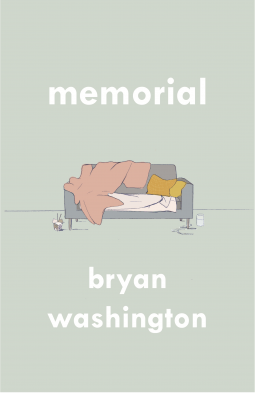
Memorial is a novel about a relationship breakdown, family, and the path that life takes. Benson, a Black daycare teacher, and Mike, a Japanese-American chef, have been together for a few years, but things between them haven’t been going so well. When Mike’s mother comes over from Japan to visit their Houston apartment just as Mike flies out to Japan to visit his estranged father who is dying, their relationship becomes even more strained, with Benson suddenly living with Mike’s mother. Their relationship with each other and with their families starts to change, and it seems that maybe love isn’t everything.
This is a complex novel that delves into different emotions and looks at a relationship where the characters still love each other, but also don’t seem to be getting along. The narrative balances this with their respective relationships with their families, and the different ways they interact with people in their lives, to give a detailed picture of the two protagonists. A notable element of the novel is the fact that Benson is HIV positive but it isn’t a big deal; rather, it has strained his connection with his family, but doesn’t restrict his life. All of the characters are flawed and often selfish and self-absorbed, and this works well with the structure of telling the story from the POV of Benson, then Mike, then Benson again to show their complex emotions and lack of sympathy a lot of the time.
Memorial is a bittersweet look at a relationship that isn’t working out, and at slowly rebuilding familial relationships. It gives the protagonists space to potentially move on and change, or to not really change, and was emotional and powerful (though not one if you want a book where everything works out unambiguously).
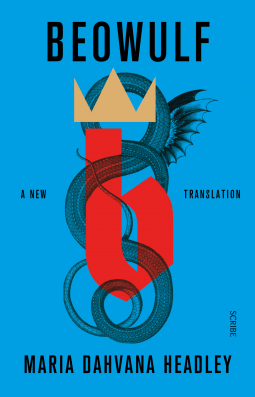
As Maria Dahvana Headley states in the introduction to this book, there have been a lot of translations of Beowulf, the Old English epic poem about a warrior fighting monsters. This is a new translation, focusing on updating the verse rather than preserving its antiquity and giving some of the female figures—particularly Grendel’s mother—a somewhat better treatment. Perhaps most notably, this version of Beowulf focuses a lot on the modern parallel of oral storytelling and frames the poem like some guy is telling you it in a bar (the poem’s opening word, ‘hwæt’, becomes ‘bro!’).
I’ve studied Beowulf both in translation at secondary school and in the original during my undergrad English degree, so the story and general feel of the poem are very familiar, but this translation brings something else to the poem. Possibly it’s the clash of old and new—modern slang like ‘Hashtag: blessed’ and archaisms like ‘wyrm’—and the use of swearing and colloquial phrases to get across the meaning of certain lines and phrases which feels quite different to the Beowulf people might be used to. Occasionally the use of ‘bro’ throughout gets a bit grating, but it’s interesting to see which parts could be translated into something much more modern and which stay sounding older.
There’s probably some clever things to be said about some of the translation choices and the way this translation is framed, though it’s too long since I’ve actually read another version of it for me to think of anything. I liked the fact that the repetitive nature of the storytelling in Beowulf is foregrounded by giving it the feel of some guy telling you a boring story, only the story is about fighting Grendel and his mother and a dragon.
As someone who loved Emily Wilson’s translation of the Odyssey, it was enjoyable to get another modern translation that focuses on updating the language and making the concepts reverberate through time, rather than something that is a reimagining or retelling. This is a readable Beowulf in verse and one that really makes you think about why these warrior men spend so much time sitting around telling heroic stories to one another. I’m not sure what it would be like as an introduction to Beowulf but it’s fun if you already know it and can imagine rolling your eyes as some guy tries to tell you the story.
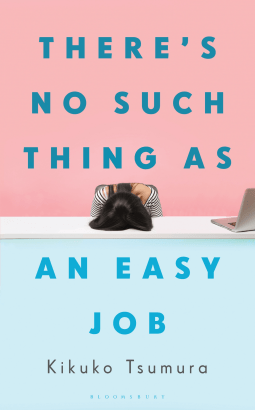
There’s No Such Thing As An Easy Job is a novel about looking for meaning and escape in the modern world, as a young woman looks for the most suitable job for her. After burnout in her previous career, a woman asks an employment agency for an easy job: namely, one that involves no reading, little thinking, and is close to where she lives. She finds herself sitting for hours watching hidden camera footage of an author suspected of having contraband in his home, in a job that is opposite where she lives, but she gets drawn into the author’s life and also into how she can manage her own life alongside watching his. The narrative follows her as she moves between suitable jobs found for her by the agency, ending up in absurd situations like writing bus ads for shops that seem to appear out of nowhere, but it doesn’t seem like an easy job is so easy to find.
This feels like a thoroughly modern novel, a fresh look at ideals of workplaces and fulfilment and looking for meaning as a young woman without direction. It is translated from Japanese and set in Japan, but a lot of the issues are universal, as she needs to find appropriate times to be in if she wants to get deliveries and deals with weird workplace politics. The book also has a fantastical sense, with the absurdity of some of the jobs and the weird circumstances bringing a kind of dark comedy to burnout and to modern ideas of what you should want from a job. It is amusing and clever, and easy to enjoy the eccentric characters, but also feel for the narrator, especially as the book draws to a close.
I don’t really want to say this is a very millennial book that captures a moment of people being consumed by work in different ways, but it’s hard not to want to write that. It has a kind of darkly comic existentialism about looking for meaning, even when the narrator is mostly looking for maté tea.


 Fiendfully Reading
You must be logged in to post a comment.