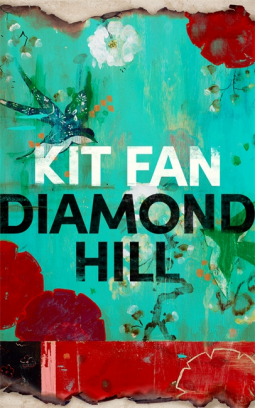
Diamond Hill by Kit Fan

Diamond Hill is a fascinating novel about a place disappearing and a city changing, set in Hong Kong in the late 1980s. Diamond Hill is a run down shanty town with a Buddhist nunnery, drug addiction, and a faded memory of being a place for making films. When a man, nicknamed Buddha and a recovering heroin addict, takes refuge in the nunnery when he returns to his home of Hong Kong from Bangkok, he meets a strange selection of people, like the severe Iron Nun, Quartz who has forgotten her past, and Boss, a teenage gang leader who dreams of her escape. All the while, Diamond Hill is under threat from the various people and power across it, and looming redevelopment.

Kit Fan really draws you into the world of the novel, Hong Kong with looming knowledge of the handover from Britain to China coming in 1997, and into the issues of colonialism, displacement, and self that run through the characters’ lives.The characters in general are heavily tied to language and place—Cantonese and English, Hong Kong and England and Thailand, Diamond Hill and elsewhere—and this gives a sense of some of the kinds of tension at play. Power is crucial: who has it and who doesn’t, but also how it can be a presence in different ways. Buddha, as a protagonist drawn into others’ lives to avoid thinking about his own, is an interesting viewpoint into the narrative, suggesting how hard it is to ignore both the past and the future.

Both a look at distinctive characters dealing with their past and what they might do next, and a wider commentary on Hong Kong at this particular moment, Diamond Hill is an eye-opening novel that I found gripping and atmospheric. I enjoyed the chance to find out more about Hong Kong’s recent history too.
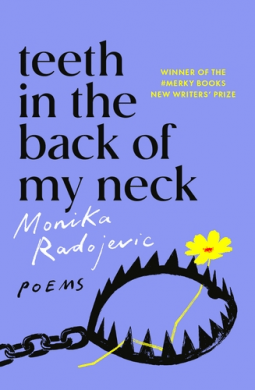
Teeth in the Back of my Neck by Monika Radojevic

Teeth in the Back of my Neck is a collection of poetry that focuses on anger and sadness, on identity and history, and on the societal structures that hold us. Split into two parts—’The Teeth’ and ‘The Neck’—the poems explore things the violence and trauma that women face, the way women’s bodies are seen, and how race and belonging are constructed and viewed in society. 

The collection manages to feel varied whilst having clear themes, and the poems are written in an immediate and forthright way that gets across the anger and power behind them. Poems like ‘Hell Will Fall Apart for You’ and ‘A Few Brown Bodies’ look at how people react and how to get angry (or not) about things, and how to enact change, feeling immediate and memorable. The second half of the collection focuses even more on personal identity, history, and people’s relation to others in how these are built. I found the poems that explore the importance of names (‘Jane’) and the idea of DNA testing and the self (’23andme’) particularly interesting, questioning what makes a person and how other people react to that.

It’s hard, despite the pun, not to call Teeth in the Back of my Neck poems with bite, because that’s what they feel like: they’re sharp, witty, and emotional, and even just looking quickly back through the book to write this review makes me want to read them again and again.

Las Biuty Queens by Iván Monalisa Ojeda

Las Biuty Queens is a book of interconnected stories about a group of trans Latinx friends who live in New York City, looking for clients and highs, and dealing with the realities of immigration policies and the harshness of America. The stories follow their interpersonal drama, difficulties with the law, and the brutal realities of being someone in such a liminal space, but also their joy and friendship. 

Chilean writer Iván Monalisa Ojeda draws on his/her own experiences for the book, and you can really feel the real pain and happiness throughout, especially when situations are described that seem impossible to win. The format—short stories that are all held together by the same narrator, moving between different times in a non-linear way—works well to paint a picture rather than tell a single story, and despite being individual stories, the book felt more cohesive than some novels. 

Exploring sex work, drugs, and immigration, Las Biuty Queens sits well alongside other books that explore trans lives in New York City, and it has a witty immediacy that brings you straight into each story. It’s a rare occasion on which I wish a book was longer, because I definitely would’ve read more of this.

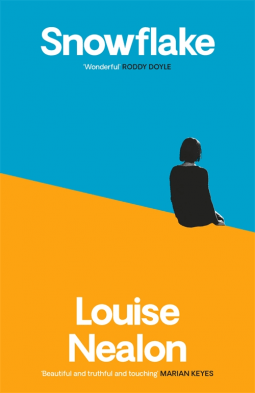
Snowflake by Louise Nealon

Snowflake is a novel that looks at feeling like an outsider, mental health, and knowing your home, as an eighteen-year-old from the Irish countryside starts at university. Debbie lives on a dairy farm with her mother and Uncle Billy, having grown up with Billy’s stories and her mother’s seeming eccentricities. When she starts at Trinity College, commuting into Dublin from the farm, she finds the two worlds hard to inhabit, whether it’s dealing with things with her family not going well or navigating her new friendship with Xanthe and Debbie’s own relationship with going out drinking.

This book was a bit unexpected in some ways, as the start feels like any novel about an outsider figure starting university and some of the difficulties of being caught between the countryside and the city, but then later on there’s quite a lot of serious tragedy and mental health stuff, including someone diagnosed with bipolar disorder and an attempted suicide. The novel has a lot to say about mental health (like Debbie’s feelings about her own failed attempt at university counselling when her friend seems to be easily diagnosed with depression, and the fact that when one of the characters from the countryside needs mental health care they have to go into the city) and maybe the blurb’s focus on ‘eccentricity’ and weirdness recreate some of the issues within the novel about the intersection between mental health and seeming “weird” or an outsider.

The novel itself is an engaging read with quite a fast pace that doesn’t dwell on particular events for long, though it takes place over only a number of months. In spite of the sometimes sad subject matter, it has a general positivity, especially from the ending, that shows how people can feel at home and in the right place even when they don’t feel “normal”.

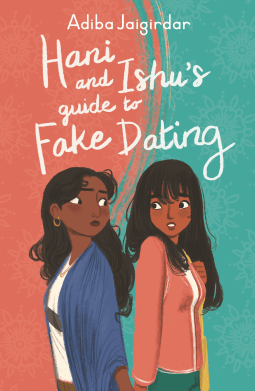
Hani and Ishu’s Guide to Fake Dating by Adiba Jaigirdar

Hani and Ishu’s Guide to Fake Dating is a young adult love story as the two Bengali girls in their Irish school end up pretending to be in a relationship to help each other out, despite being seemingly opposite. Hani is known for being friendly and popular, even if her friends don’t really understand her being Muslim, whereas Ishu is known for being a standoffish overachiever, and they’ve never really got on. When Hani tells her friends she’s bisexual and they don’t believe her, she accidentally makes up a relationship with Ishu. This turns into something that could be mutually advantageous, as Ishu wants to become head girl and therefore needs some popularity at the school, but what if they actually get along better than they expected?

This book combines fake dating and vaguely enemies-to-lovers tropes (they’re more like people who don’t get on, but have been forced together previously due to both being Bengali) with an exploration of common teenage issues like dealing with friends who’ve grown into different people and navigating family tensions. Despite the main narrative being around the fake dating, the various plots woven throughout mean it doesn’t just feel like a romance, and in fact the romance’s conclusion is more understated than the importance of the resolution of other parts of the plot. Both protagonists (the story is told from alternating points of view) get their own stories and character development, and in particular Ishu’s story around learning to aim for things she wants rather than what her parents want and repairing her relationship with her sister is well-rounded and interesting.

Other than the opening plot point about Hani’s friends having issues about her bisexuality when she comes out to them, the book isn’t really focused on coming out, either at school or to family, and that gives it a lot of space to explore the other plot points and also have their romance going on throughout. It’s also nice that even being friends/’fake dating’ each other means that both Hani and Ishu stand up for themselves and work out more about themselves, showing that sometimes other people can help you gain perspective on things.

A YA novel featuring a love story between two Bengali girls with very different lives, Hani and Ishu’s Guide to Fake Dating is a fun book that manages to pack a lot into its narrative. Fans of Jaigirdar’s debut The Henna Wars will probably like this one as well (I actually liked it more), and it’s a book for readers looking for both cute romance and other plot going on too.

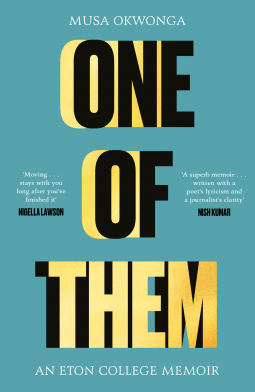
One of Them: An Eton College Memoir by Musa Okwonga

One of Them is a memoir about being a Black student at Eton in the 1990s, and also a reflection on how so much power is concentrated in people who went there. Musa Okwonga was a middle class boy from a small town in Greater London who dreamt of going to Eton, and this book charts his time there from dreams and prep school to leaving, and also looks at the impact of Eton on his own life and how it reflects wider society. Issues of race, sexuality, and privilege run through the memoir and it becomes clear that with hindsight, the distribution of power and the ‘boys club’ of Tory government aren’t surprising to someone who went to Eton.

This is a highly readable memoir broken into short chapters that provide vignettes of Musa Okwonga’s experiences, not only at Eton but also growing up in a town very unlike where most of his classmates lived but still seeming out of place there due to going to boarding school. The depiction of Eton probably won’t surprise people who’ve heard about the people who’ve come out of it, but it was surprising to see a more balanced view at times that gives the positive experiences one man had, but also the negative (and those that were more negative with hindsight). There’s a lot to think about in terms of class and race and why the people in government are set on increasing inequality, but through a personal lens with conflicted thoughts at times.

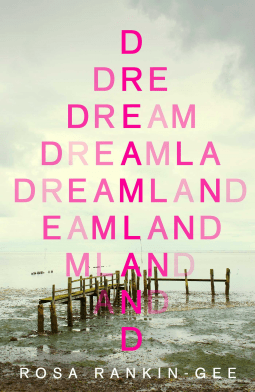
Dreamland by Rosa Rankin-Gee

Dreamland is a novel about inequality, family, and the way society could go, set in a near-future Margate. Chance, her brother, and her mum move to Margate after being offered money to leave London, where they were living in a series of temporary accommodation. The sea is meant to be a fresh start for them, but the waters are rising, and the new politicians have found some new ways to deal with run-down areas.

Rosa Rankin-Gee takes the reality of the present and pushes a few threads towards further extremes to build the backdrop of this novel, in which local areas must fend for themselves and there’s no help from central government (with an author’s note at the end highlighting the current policies that make this vision of the future not so far fetched). What we see is a grim existence, in which Chance and others in Margate have to adapt to things like blackouts and huge waves and flooding whilst newly powerful politicians plot what to do with deprived areas. The everyday reality might seem shocking, but the wider decisions that got places there is not.

We see everything through Chance’s perspective, from her dealing with what happens to her brother and when his business partner Kole comes on the scene to her sudden connection to Franky, a girl who seems linked to the outsiders from London who try and offer help to the community. The narrative covers quite a few years, sometimes moving at a fast pace and sometimes a slower one, and you can’t help being drawn into the characters’ lives and becoming frustrated and angry at what happens. As with other ‘dystopian’ type books, there’s a point later in the novel when Chance reads about the plans the government used and it becomes clear that policies are not accidental, but part of horrific larger strategies, and this serves as a good reminder that this isn’t a near-future based on ‘chance’, but on choices.

An up-to-date (there’s references to the pandemic) near-future novel about the housing crisis, social welfare, and climate change that feels very immediate, Dreamland shows where division and individualistic thinking can get society, whilst at the same time showing a protagonist just trying to survive. There are moments of hope, a pivotal love story that hinges on class and privilege, and a sense of being able to fight, but this is also a grim vision of a future to be avoided at all costs.

The Loop by Jeremy Robert Johnson

The Loop is a horror novel about a conspiracy in a small Oregon town that threatens to take over all of the residents, and a group of outcasts who have to fight to survive. Turner Falls is a little desert town with a large medical tech firm housed within it. For Lucy, it’s a place where she’s seen as an outsider: not originally from there, not white, and not one of the rich kids. When she goes to an underground cave party with her best friend Bucket, she doesn’t expect much, but she definitely doesn’t expect it to be the start of a fight for survival as teenagers start turning into murderers thanks to a strange signal.

The narrative centres around Lucy, with her the focus of the third person narration other than a few inserted podcast transcripts to get across the conspiracy side of things, and it has a classic horror-thriller plotline of a group of people coming together and then being under constant threat. Without wanting to give everything away, it follows a typical structure of a story in which people are ‘turned’ into something else, with a lot of violent deaths just as you get used to characters being there. The main horror element of the story starts quite soon into the novel, giving you chance to meet Lucy but unlike some horror books, not spending too long building up tension.

Though the main narrative is quite predictable (the blurb compares it to Stranger Things and The X-Files, though for me it was closest to the Sims 4 game ‘Strangerville’), there were a lot of details that I particularly liked, including how the book dealt with Lucy’s trauma both from her childhood and from the events currently unfolding. There was also a focus on class, both in terms of how it was people who were more privileged who were actually turned by “the loop” (as their families had jobs at the big tech/science company who was working on the project) and in terms of how it affects the lives of the residents of Turner Falls and how it gets ingrained in people and how they see themselves.

The Loop is both a readable horror story about a town impacted by an experimental science project and also a look at trauma and survival instincts. It’s quite brutal at times so isn’t for the faint-hearted and though the blurb mentions Stranger Things, it doesn’t have its fun cheesiness, but rather a more bleak tone and more of an apocalypse vibe. 

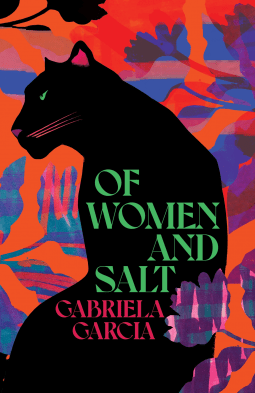
Of Women and Salt by Gabriela Garcia

Of Women and Salt is a novel about choices, immigration, and motherhood that moves from 19th century Cuba to 21st century Miami. In 1866 in Cuba, Maria Isabel is the only woman working at the cigar factory, but war is coming. And in Miami in 2016, Carmen, a first generation Cuban immigrant, is trying to get her daughter Jeannette to stay sober, whilst Jeanette wants to go to Cuba to understand the past her mother doesn’t talk about. And a few years previous, a chance act by Jeanette affects the life of Ana, a young girl who lives across the street with her mother who is about to be deported back to El Salvador.

Told in episodes that move between points of view, time, and place, this is a rich novel that looks at different immigrant circumstances (particularly at the experience of Cubans coming to America and then people from Central American countries like Mexico and El Salvador) and how choices impact people’s lives. It is woven together well, with Carmen and Jeanette’s strained relationship taking an important place in the novel, especially around the reasons behind each of their perspectives and what they’ve faced and the difficulty they have in telling the truth to each other. Through Jeanette, the novel looks at drug addiction and the opioid crisis in Florida, and also at how she longs for Cuba though she’s never been, and doesn’t find it quite what she expects.

The other narratives in the novel bring in other elements, from a contemporary tale of detention centres and the difficulties of making it to the US and staying there to moments from 1866 and 1959 in Cuba which show political moments through the eyes of individual women who have to fight to survive on a more personal scale. The different stories are brought together cleverly to give an overall picture of women battling for themselves and their families and how their individual struggles reflect wider political and social events.

Of Women and Salt is a vivid and powerful novel that grips you as it shows you major moments in its protagonists’ lives. The focus on these individuals and their place in the wider world made it easier for me to keep up with than some other multi-generational novels and I found myself reading it more quickly than I expected.

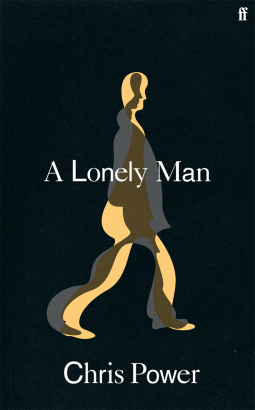
A Lonely Man by Chris Power

A Lonely Man is a novel about a writer in Berlin who becomes drawn into the life of a stranger he meets in a bookshop, who may or may not be being chased by Russians. Robert lives in Berlin with his wife and two daughters, where he spends his time trying and failing to write a follow up to his debut book of short stories. At an event in a bookshop, he meets Patrick, who seems drunk and unpredictable, but after he helps Patrick out, they meet for drinks and Robert discovers that Patrick is a ghostwriter for a recently-dead Russian oligarch. Robert doesn’t believe Patrick is really in danger, but maybe his story could give Robert so much needed content for a novel.

The atmosphere of this novel really drew me in, with a vividly described Berlin and a real sense of this British man who still sees the novelty of living there (he does know much German, much less than his Swedish wife). At first, it was hard not to be like ‘oh great, another novel about a writer struggling to write another book’, and I think this feeling would’ve been worse if I knew that Chris Power is also known for writing a book of short stories, but after a while I got more engaged with the narrative, especially the way it stays mundane whilst also having underlying threat. 

The narrative is broken up by sections that Robert has supposedly written as he turns Patrick’s story into fiction, which both unfold the story (unreliably of course) and bring up questions about what is the truth and what writers can write about. It was quite apparent this was what the novel was going to engage with seeing as quite early on it becomes clear that Robert’s short stories were mostly just anecdotes from other people he fictionalised. This did make the ‘novel about a struggling writer’ stereotype a little more palatable, as it brought up some questions about what people write about and even by implication if writers should write so many books that just fictionalise people they know (and, indeed, themselves).

Though I did enjoy reading A Lonely Man for the Berlin setting and the low level tension, it didn’t do enough to subvert or play with the kind of novel it is, especially with a writer protagonist. There was a momentary flirting with having an affair which I didn’t see why the novel needed, especially as most of the other narrative elements felt controlled and very much like they’d all been purposefully chosen for symmetry and comparison throughout the novel as a point about how writers turn stories into something better for fiction. Overall, I appreciated the execution (the sections of Robert’s writing about Patrick were a bit dull, but necessary for the concept) and the atmosphere as a low key literary thriller and it had quite a noir feeling that I think people will enjoy.